How big do scorpions get?
Short answer
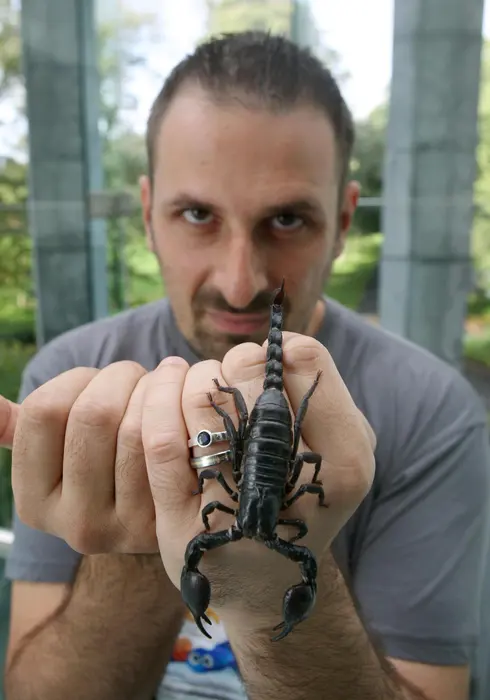
Scorpions vary significantly in size, ranging from tiny species under an inch long to massive specimens exceeding eight inches. While the average scorpion measures between two and three inches, the largest species, such as the giant forest scorpion, can reach lengths comparable to a human hand, including their pincers and tail.
On this page
How big do the largest scorpions get?
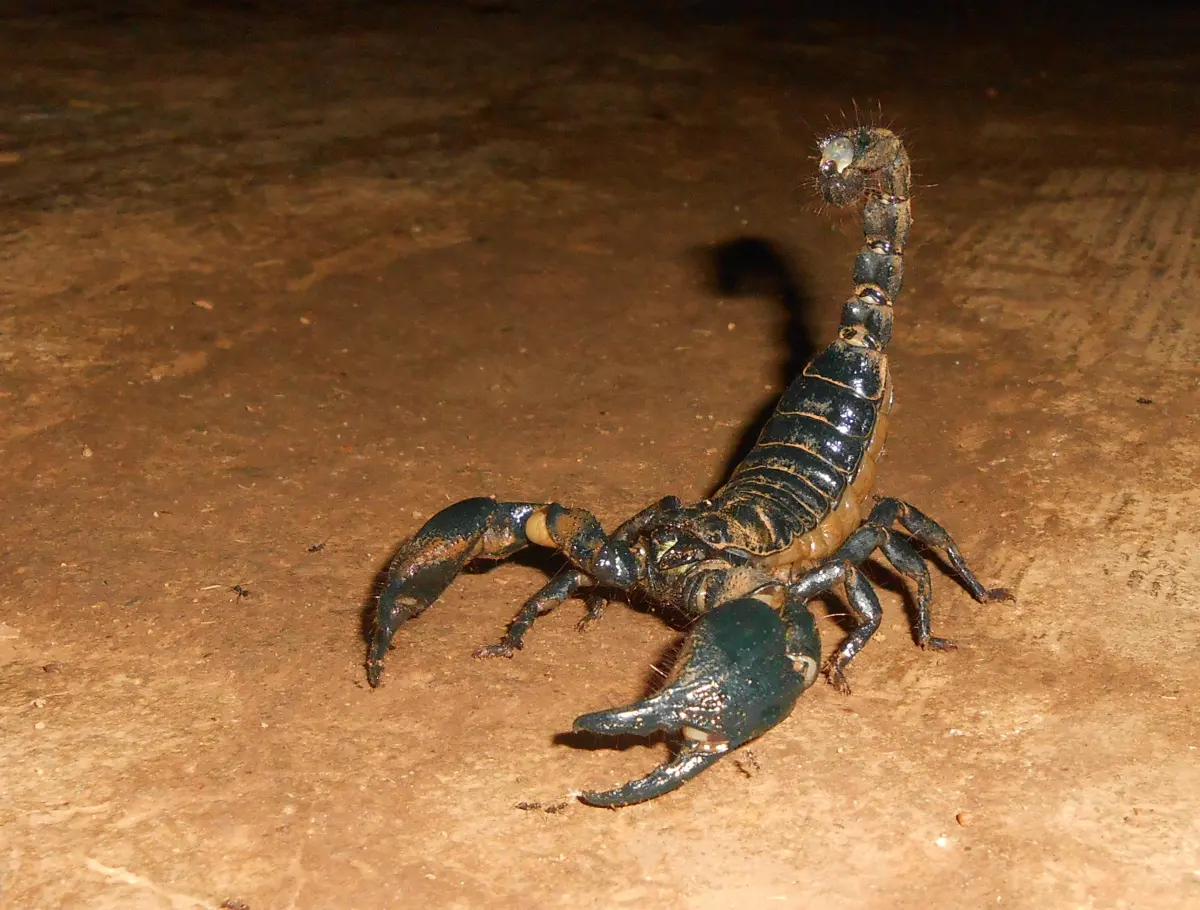
The record for the largest scorpion in the world is held by the giant forest scorpion (Heterometrus swammerdami). These impressive arachnids can grow to lengths of approximately 9 inches (23 centimeters). Native to India and Sri Lanka, they are robust creatures that rely on their sheer size and powerful pedipalps, or pincers, to subdue prey rather than relying solely on venom. Despite their intimidating appearance, they are generally considered less venomous to humans than many smaller, more slender species.
Other notable giants include the emperor scorpion (Pandinus imperator), which is a popular choice among exotic pet enthusiasts. These scorpions typically reach lengths of 6 to 8 inches. They are known for their docile temperament and heavy, dark bodies. Because of their significant size, they require specialized enclosures that provide ample space for burrowing and movement. While they are large, they remain relatively slow-moving compared to the more agile, smaller desert species found in arid regions.
How small are the tiniest scorpions?
At the opposite end of the spectrum, some scorpion species are remarkably diminutive. Many species in the Microtityus genus, found in the Caribbean, measure less than 0.5 inches (12 millimeters) in total length. These tiny arachnids are often overlooked by casual observers due to their size and cryptic coloration, which allows them to blend seamlessly into leaf litter or soil. Despite their small stature, they possess the same basic anatomy as their larger cousins, including a segmented tail and a venomous stinger.
The size of a scorpion is often an evolutionary trade-off related to its environment and hunting strategy. Smaller scorpions often inhabit niche environments where being compact is an advantage for hiding from predators or navigating tight spaces. Their venom is frequently more potent relative to their size, serving as a critical defense mechanism. When searching for these small creatures, enthusiasts often use specialized equipment like UV flashlights, which cause the chitin in a scorpion's exoskeleton to fluoresce a bright, neon blue-green color.
Why do scorpion sizes vary so much?
Scorpion size is largely determined by genetic factors, but environmental conditions play a significant role in how large an individual specimen grows. Factors such as food availability, temperature, and humidity levels throughout the molting process are crucial. Scorpions must shed their exoskeleton to grow, a process known as ecdysis. If a scorpion does not receive adequate nutrition during these growth phases, it may remain smaller than its genetic potential.
The following factors influence the final size of a scorpion:
- Nutritional intake: Consistent access to prey allows for more frequent and successful molts.
- Habitat climate: Warmer temperatures often accelerate the metabolic rate, leading to faster growth cycles.
- Species-specific biology: Each species has a predetermined maximum size range encoded in its DNA.
- Predation pressure: In areas with high predator density, smaller individuals may be more successful at hiding, though this does not necessarily limit their growth potential.
How to identify a scorpion by its size
Identifying a scorpion based solely on size can be misleading because juveniles of large species may appear similar to adults of smaller species. To accurately identify a scorpion, one must look at the proportions of the body parts, specifically the thickness of the pincers versus the thickness of the tail. Generally, scorpions with thick, heavy pincers rely on physical strength to crush prey, while those with thin, delicate pincers often possess more potent, medically significant venom.
- Observe the body length from the front of the carapace to the tip of the telson.
- Examine the pedipalps (pincers) to determine if they are bulbous or slender.
- Check the color and texture of the exoskeleton, as these are often more reliable markers than size alone.
- Note the geographic location, as many species are endemic to specific regions and cannot be found elsewhere.
Common mistakes when measuring scorpions
A frequent error when measuring scorpions is failing to account for the tail's position. Because scorpions often curl their tails over their backs in a defensive posture, measuring them while they are alive and active is difficult. To get an accurate measurement, the scorpion must be fully extended. Attempting to force a live scorpion into a straight position is dangerous for both the handler and the animal, as it can cause stress or injury to the delicate segments of the tail.
Another common mistake is assuming that a larger scorpion is inherently more dangerous. In reality, there is no direct correlation between physical size and venom toxicity. Some of the most dangerous scorpions, such as those in the Centruroides genus, are relatively small but possess highly potent neurotoxic venom. Conversely, many of the largest scorpions have mild venom that causes only localized pain similar to a bee sting. Always prioritize safety and avoid handling unknown specimens, regardless of their size, as even a small sting can cause severe allergic reactions in sensitive individuals.
Key facts
- The giant forest scorpion (Heterometrus swammerdami) is the world’s largest species, reaching lengths of up to 9 inches.
- Most common scorpion species range between 2 and 4 inches in length.
- Size is not a reliable indicator of venom toxicity; some of the smallest species are the most dangerous.
- Scorpions grow by molting, shedding their hard exoskeleton multiple times before reaching full adult size.
- You can identify a scorpion's approximate size by measuring from the tip of the tail to the front of the pincers.
- Always shake out shoes and clothing if you live in a scorpion-prone area, as they hide in small, dark spaces regardless of their size.
The bottom line
Scorpions exhibit a wide range of sizes, with the largest species reaching nearly 9 inches while many common varieties remain under 4 inches. It is essential to remember that physical size does not determine the danger level of a sting. Regardless of their dimensions, all scorpions should be treated with caution, and homeowners should maintain clear, clutter-free environments to discourage these arachnids from nesting nearby.
People also ask
Are larger scorpions more dangerous than smaller ones?
No, there is no direct correlation between physical size and venom potency. In fact, some of the deadliest scorpions, such as the deathstalker, are relatively small compared to the giant forest scorpion.
How long do scorpions live?
Most scorpions live between 3 and 5 years in the wild, though some species can live up to 10 years or more. Their lifespan is influenced by environmental conditions, food availability, and predation.
Do scorpions grow throughout their entire lives?
Scorpions stop growing once they reach sexual maturity and complete their final molt. After this stage, they focus their energy on reproduction and hunting rather than physical expansion.
How can I tell if a scorpion is an adult?
Adult scorpions are generally fully colored and have reached their maximum size for their specific species. Juveniles are often paler and appear disproportionately small compared to the size of their pincers.
What should I do if I find a large scorpion in my home?
Do not attempt to handle it, as all scorpions possess a stinger. Use a long-handled tool or a container to safely relocate it outside, or contact a professional pest control service.
Do all scorpions have the same body shape?
While they share the same basic anatomy, body proportions vary significantly between species. Some have thick, heavy pincers for crushing prey, while others have thin, delicate pincers and rely more heavily on their venomous stingers.
This answer was created with the help of AI research tools and reference sources. Spotted an error? Let us know — we correct mistakes quickly. See our editorial policy.