Who invented the violin?
Short answer
The violin was not invented by a single individual but evolved in 16th-century Italy. It emerged from earlier bowed string instruments like the rebec, the vielle, and the lira da braccio. Andrea Amati is widely credited with establishing the standard four-string design around 1555, setting the template for the modern instrument.
On this page
How did the violin evolve?
The violin did not appear spontaneously; it resulted from a gradual refinement of medieval bowed instruments. During the early 1500s, musicians in Northern Italy sought an instrument that combined the portability of the rebec with the melodic versatility of the lira da braccio. By modifying the body shape, thinning the wood, and standardizing the tuning to fifths (G-D-A-E), luthiers created a distinct sound that projected well in both intimate chambers and larger halls.
This evolution was driven by the changing requirements of Renaissance music, which demanded greater agility and dynamic range. The transition from the viol family—which featured frets and a flat back—to the violin family introduced a curved bridge and a rounded back. These structural changes allowed for more expressive bowing techniques. By the mid-16th century, the instrument had solidified into the core design that remains largely unchanged today.
Who were the famous early violin makers?
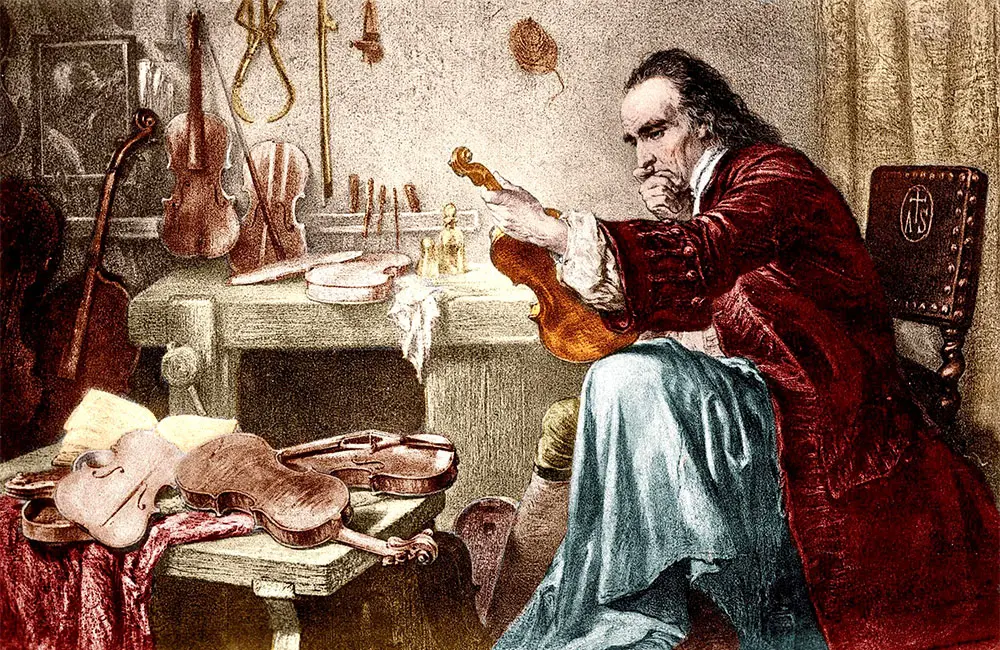
The Cremonese school of violin making became the gold standard for craftsmanship, centered around a few legendary families. Andrea Amati, working in Cremona, is often cited as the creator of the first true violins. His workshop produced instruments for the French royal court, establishing a reputation for elegance and tonal clarity. His descendants and students, including the Guarneri and Stradivari families, later refined these techniques to perfection.
Antonio Stradivari remains the most famous name in the field. His instruments, produced in the late 17th and early 18th centuries, are prized for their unparalleled acoustic properties. The mastery of these early luthiers relied on specific trade secrets:
- Selection of high-altitude spruce for the top plate to ensure resonance.
- Use of maple for the back and ribs to provide structural stability.
- Application of complex oil-based varnishes that protected the wood while allowing it to vibrate freely.

How to choose a violin for beginners
Selecting a first violin requires balancing quality with playability. Beginners should avoid extremely cheap, mass-produced instruments that often have poorly fitted bridges or pegs that slip. A well-setup student instrument should be easy to tune and comfortable to hold, as a frustrating experience can discourage a new player. It is generally recommended to rent a high-quality student instrument before committing to a purchase.
When evaluating a potential instrument, look for these key indicators of quality:
- Ensure the bridge is correctly arched, allowing the bow to play one string at a time.
- Check that the pegs turn smoothly without sticking or slipping.
- Inspect the fingerboard to ensure it is made of ebony or another dense hardwood, which prevents grooves from forming over time.
- Verify that the bow hair is taut and the stick is straight.
Why does the violin sound so unique?
The violin’s distinct voice is a product of its complex physics and construction. When a bow is drawn across the strings, the friction creates a stick-slip motion that generates vibrations. These vibrations travel through the bridge into the hollow body of the instrument, which acts as an acoustic chamber. The f-shaped holes on the top plate allow the air inside to vibrate, amplifying the sound and adding rich harmonic overtones.
The internal "sound post"—a small wooden dowel wedged between the top and back plates—is critical to this process. It acts as a structural support and a conduit for sound, transferring vibrations throughout the entire body. Without this tiny piece of wood, the violin would sound thin and lifeless. The interaction between the arching of the top wood and the tension of the strings creates the warmth and projection that define the instrument's character.
Common mistakes when learning the violin
Many beginners struggle because they focus on finger placement while neglecting their overall posture. A rigid neck or shoulder can cause tension, which limits the fluidity of the bow arm and leads to poor tone quality. Proper posture should feel relaxed, with the instrument supported by the jaw and collarbone rather than the left hand. This allows the left hand to move freely up and down the neck without gripping the instrument too tightly.
Another frequent error involves improper bow hold and pressure. Beginners often press too hard against the strings, resulting in a scratchy, choked sound. Instead, the focus should be on the weight of the arm and the speed of the bow. To improve, follow these guidelines:
- Keep the wrist flexible to allow for smooth changes in bowing direction.
- Practice long, slow bows on open strings to develop a consistent tone.
- Use a mirror to monitor your shoulder height and ensure you are not hunching over the instrument.
Key facts
- The modern violin evolved in northern Italy during the early 16th century, likely emerging from earlier stringed instruments like the rebec and the lira da braccio.
- Andrea Amati, working in Cremona around 1555, is widely credited with creating the first instruments that possess the definitive shape and four-string configuration of the modern violin.
- No single individual "invented" the violin in a vacuum; it was the result of a gradual refinement process by generations of luthiers.
- To maintain a violin, always loosen the bow hair after playing to prevent the wood from warping under constant tension.
- When buying a student violin, avoid instruments with painted-on purfling, as this is a sign of poor craftsmanship and inferior sound quality.
- Always store your violin in a hard-shell case with a hygrometer to ensure the wood remains stable in changing humidity levels.
The bottom line
The violin emerged in 16th-century Italy through the collaborative evolution of stringed instruments, with Andrea Amati establishing its standard form. Rather than a singular invention, it represents centuries of craftsmanship refinement. Today, the violin remains a cornerstone of classical music and global folk traditions. Whether you are a beginner or a collector, understanding its history and proper maintenance is essential for preserving its beautiful sound.
People also ask
What is the difference between a violin and a fiddle?
Physically, there is no difference between a violin and a fiddle; they are the same instrument. The term "fiddle" typically refers to the style of music being played, such as folk, bluegrass, or country, rather than a specific construction.
Read the full answer →Why are Stradivarius violins so expensive?
Antonio Stradivari, a student of the Amati family, refined the violin's design to achieve unparalleled acoustic resonance and tonal complexity. Because only about 650 of his instruments survive today, their rarity and historical significance drive their multi-million dollar price tags.
How long does it take to learn the violin?
Learning the violin is a long-term commitment that requires years of daily practice to master intonation and bowing technique. Most students can play simple melodies within a few months, but achieving professional proficiency often takes a decade or more of dedicated study.
What are the main parts of a violin?
The violin consists of a hollow wooden body, a neck, a fingerboard, a bridge, and four strings tuned in fifths. The sound is produced by drawing a horsehair bow across the strings, which causes the body of the instrument to vibrate and amplify the sound.
Can you play the violin if you are left-handed?
While most violins are designed for right-handed players, left-handed violins do exist. However, most teachers recommend learning the standard right-handed configuration because it provides better access to high-quality instruments and follows established pedagogical methods.
How do I know if a violin is the right size for me?
To check for size, hold the violin in playing position and extend your left arm to wrap your fingers around the scroll. If your fingers can comfortably curl around the scroll without straining, the instrument is likely the correct size for your reach.
This answer was created with the help of AI research tools and reference sources. Spotted an error? Let us know — we correct mistakes quickly. See our editorial policy.