Who invented the telescope?
Short answer
Hans Lippershey, a Dutch spectacle maker, is credited with inventing the telescope in 1608. He filed the first patent for a device capable of magnifying distant objects. While others like Jacob Metius and Zacharias Janssen also claimed discovery, Lippershey’s official patent application remains the primary historical evidence for the telescope's formal invention.
On this page
Who actually invented the telescope?
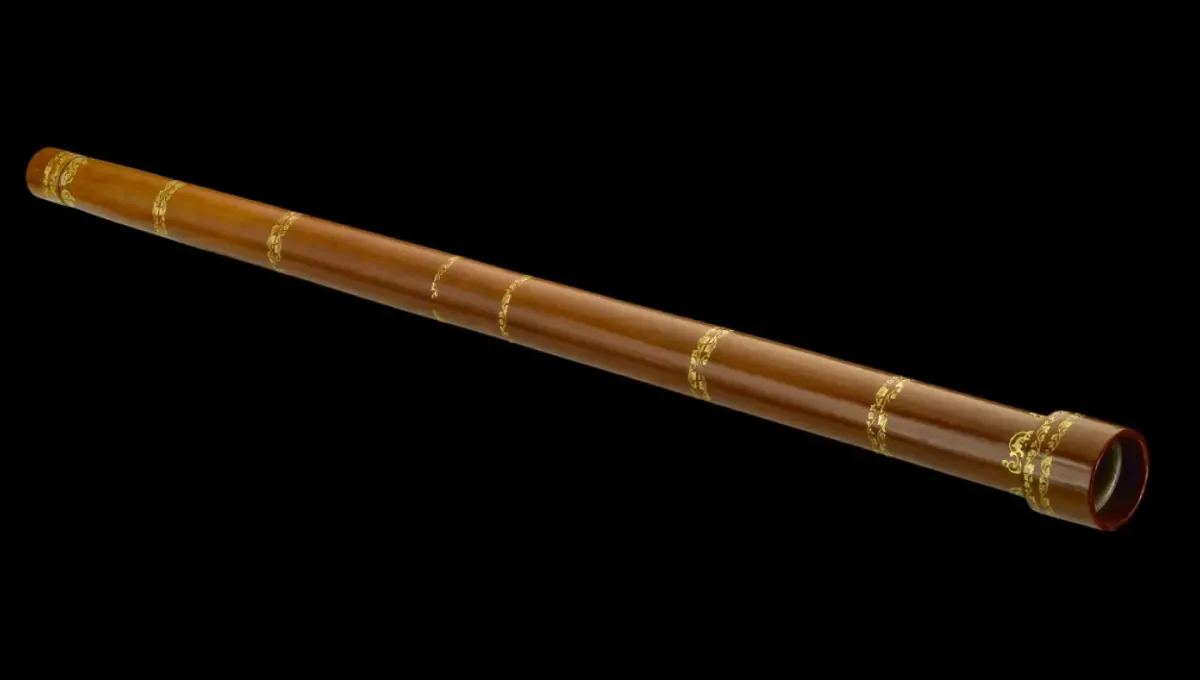
The invention of the telescope is often attributed to Hans Lippershey, a German-Dutch lens grinder living in Middelburg. In October 1608, he submitted a patent application to the States General of the Netherlands for an instrument that made distant objects appear closer. His design utilized a convex objective lens and a concave eyepiece, a configuration now known as a Galilean telescope.
Historical debates persist because two other Dutch opticians, Jacob Metius and Zacharias Janssen, also claimed to have developed similar devices around the same time. Metius applied for a patent shortly after Lippershey, while Janssen’s supporters argued he had built a prototype earlier. Ultimately, the Dutch government denied all patents, citing that the device was too easy to replicate, but Lippershey’s documentation remains the earliest verified record.
How did the first telescope work?
The earliest telescopes were refractive instruments, meaning they used glass lenses to bend light and create a magnified image. When light passes through the convex objective lens at the front, it converges toward a focal point. The concave eyepiece then intercepts these light rays, spreading them out so the human eye perceives a larger, upright image of the distant object.
These early models were primitive by modern standards, offering a magnification power of only about three times. Because they used simple, non-achromatic lenses, the images suffered from significant chromatic aberration, which manifests as blurry, rainbow-fringed edges. Despite these limitations, the invention triggered a scientific revolution by allowing observers to see details previously invisible to the naked eye.
Why did Galileo become famous for it?
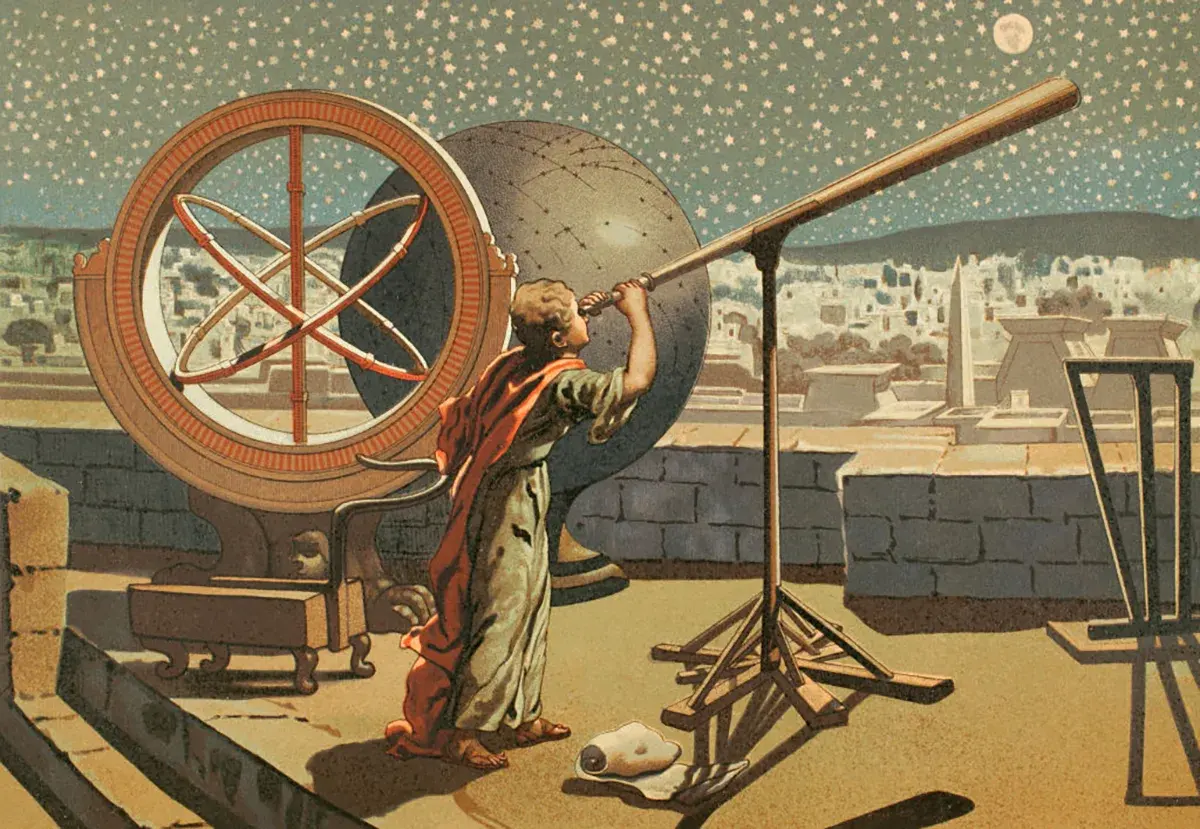
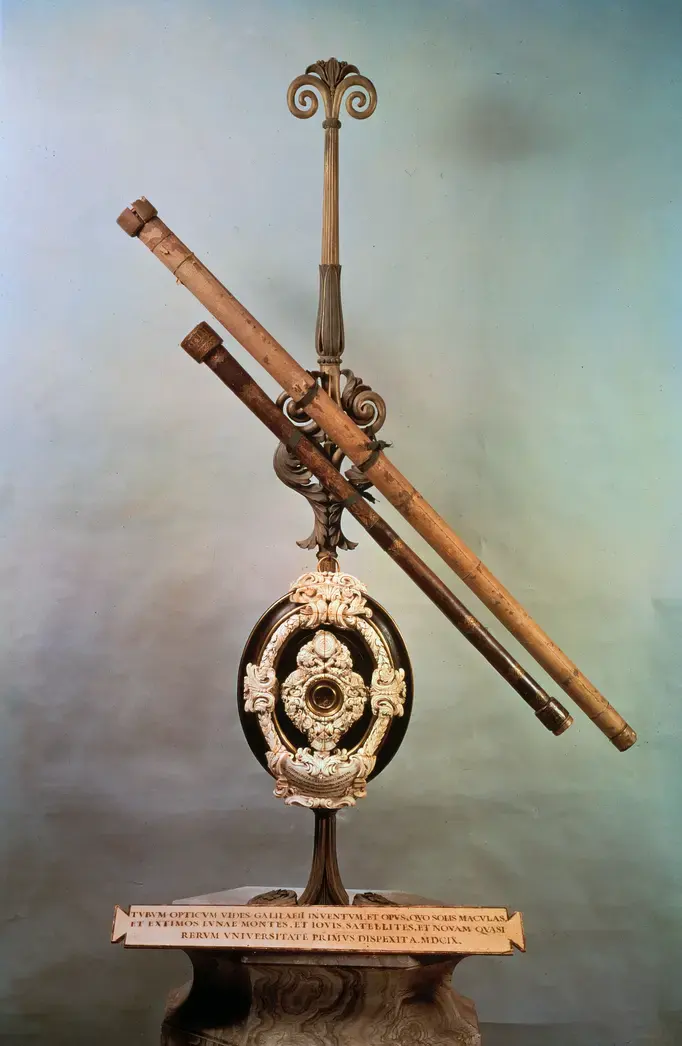
Although Galileo Galilei did not invent the telescope, he is the figure most responsible for its scientific application. Upon hearing reports of the Dutch device in 1609, he constructed his own improved version using his knowledge of optics. Galileo was the first to systematically point his instrument toward the night sky, fundamentally changing humanity’s understanding of the universe.
Through his observations, Galileo provided empirical evidence that shattered long-held astronomical beliefs. His discoveries included:
- The craters and mountains on the surface of the Moon.
- The four largest moons orbiting Jupiter, proving not everything revolved around Earth.
- The phases of Venus, which supported the heliocentric model of the solar system.
- The existence of countless stars in the Milky Way that were invisible to the naked eye.
How to use a telescope for beginners
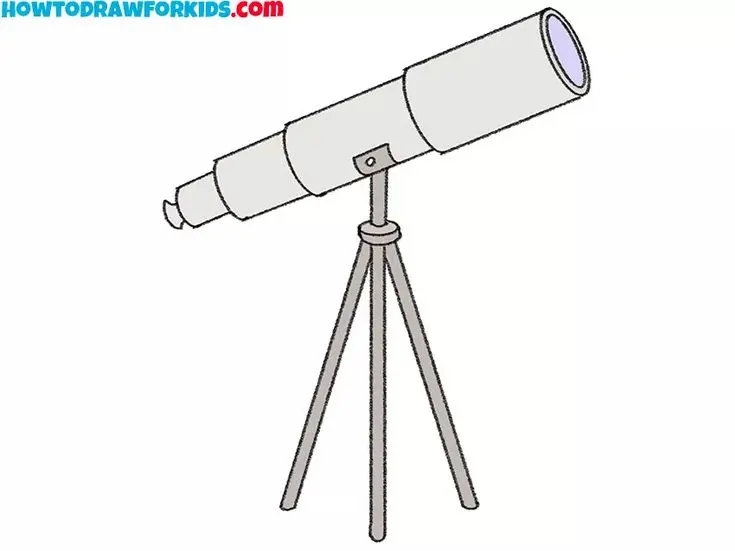
If you are interested in astronomy, starting with the right equipment is essential for a positive experience. Beginners often make the mistake of purchasing high-magnification telescopes with poor-quality mounts, which make it nearly impossible to keep an object in view. A stable tripod and a low-magnification eyepiece are far more effective for learning to navigate the night sky.
To begin your observations, follow these simple steps:
- Set up your telescope on a flat, stable surface away from direct artificial light.
- Align your finderscope with the main telescope during the day by centering a distant object like a chimney or tree.
- Start by observing the Moon, as it is the brightest and easiest target to locate.
- Allow your eyes to adjust to the darkness for at least twenty minutes before attempting to find fainter objects.
Common mistakes when using a telescope
One of the most frequent errors beginners make is trying to use a telescope from inside a house through a closed window. The glass in windows is rarely optically flat, which distorts the light and ruins the clarity of the image. Furthermore, temperature differences between the indoor air and the outdoor environment cause air currents that make the view shimmer and blur.
Another common pitfall is over-magnifying the image. Many entry-level telescopes are marketed with claims of high power, but increasing magnification also narrows the field of view and dims the image significantly. To achieve the best results, always start with the lowest power eyepiece you own. This provides a wider field of view, making it much easier to locate celestial targets before zooming in to examine specific details on planets or lunar terrain.
Key facts
- Hans Lippershey, a Dutch spectacle maker, filed the first patent for a refracting telescope in October 1608.
- Galileo Galilei heard of the invention in 1609 and independently built his own improved version, which he used for astronomical observations.
- Early telescopes used a convex objective lens and a concave eyepiece, resulting in a narrow field of view and upright images.
- A common mistake for beginners is trying to use high magnification on a cheap telescope, which often results in a blurry, dark image.
- When choosing a telescope, prioritize aperture size over magnification power, as aperture determines the amount of light gathered.
- Always stabilize your telescope on a sturdy tripod, as even minor vibrations will make viewing distant objects nearly impossible.
The bottom line
While Hans Lippershey is credited with the first patent for the telescope in 1608, the instrument’s evolution was a collaborative effort involving various Dutch lens makers and Galileo Galilei. Understanding the distinction between aperture and magnification is essential for any observer. By focusing on light-gathering power and stability rather than high-power claims, you can successfully explore the wonders of the night sky with clarity.
People also ask
Did Galileo invent the telescope?
No, Galileo did not invent the telescope, but he was the first to use it systematically for scientific astronomical study. He significantly improved the design and was the first to document craters on the Moon and the moons of Jupiter.
Why are there different types of telescopes?
Different designs serve different purposes, such as refracting telescopes for viewing planets and reflecting telescopes for deep-sky objects. Reflectors use mirrors to gather light, which avoids the color distortion issues found in early, simple lens-based designs.
What is the difference between a refractor and a reflector?
A refractor uses glass lenses to bend and focus light, while a reflector uses a curved primary mirror to collect and focus light. Refractors are generally easier to maintain, whereas reflectors offer more light-gathering power for a lower cost.
Can I see galaxies with a small telescope?
Yes, you can see several nearby galaxies like the Andromeda Galaxy if you are in a location with very little light pollution. However, they will appear as faint, fuzzy patches rather than the detailed, colorful images seen in professional space photography.
What is the most important part of a telescope?
The aperture, or the diameter of the primary mirror or lens, is the most critical feature. A larger aperture collects more light, allowing you to see dimmer objects and resolve finer details in the night sky.
How do I keep my telescope lenses clean?
Avoid touching the glass surfaces, as oils from your skin can damage coatings. Use a specialized air blower to remove dust and only use lens-cleaning fluid and microfiber cloths when absolutely necessary to prevent scratching.
This answer was created with the help of AI research tools and reference sources. Spotted an error? Let us know — we correct mistakes quickly. See our editorial policy.