Who was Galileo?
Short answer
Galileo Galilei was an influential Italian astronomer, physicist, and engineer born in 1564. Often called the father of modern observational astronomy, he pioneered the use of the telescope to study celestial bodies. His support for the heliocentric model, which placed the Sun at the center of the universe, fundamentally challenged established scientific doctrines.
On this page
What were Galileo's major scientific discoveries?
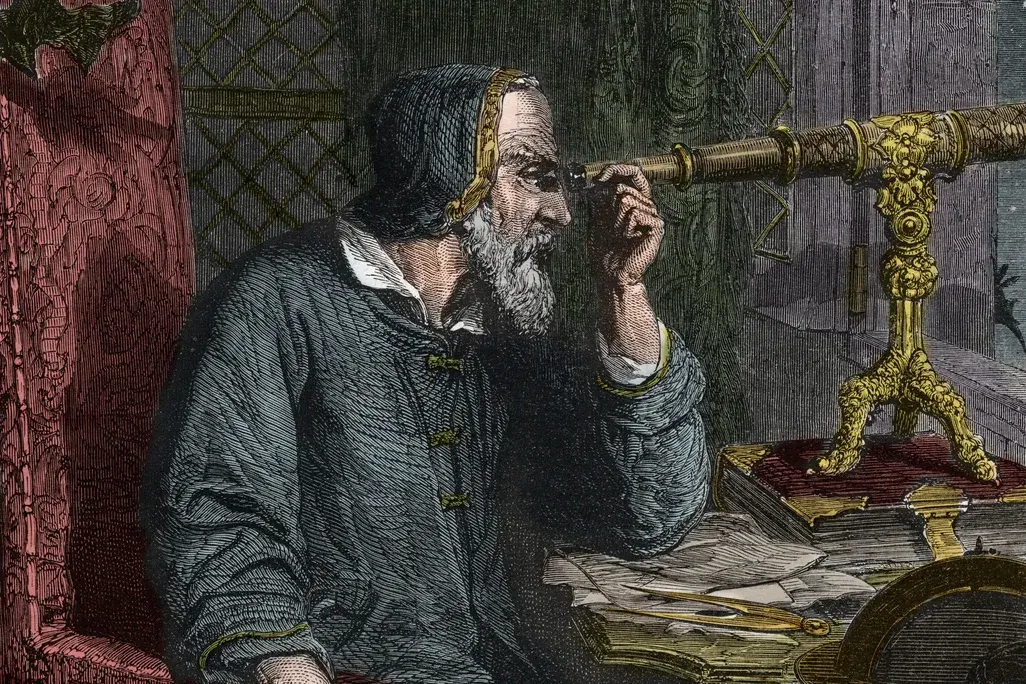
Galileo’s work fundamentally changed how humanity understood the cosmos. In 1609, he improved the design of the telescope, allowing him to observe the night sky with unprecedented clarity. He was the first to document the rugged, mountainous surface of the Moon and the four largest moons orbiting Jupiter, which proved that not everything revolved around the Earth.
His observations provided critical evidence for the Copernican system, which posited that Earth and other planets orbit the Sun. He also studied the phases of Venus, which changed in a way that was only possible if the planet orbited the Sun rather than the Earth. These findings were revolutionary and provided the empirical foundation for modern physics. Key discoveries included:
- The craters and mountains on the Moon.
- The four largest satellites of Jupiter (Io, Europa, Ganymede, and Callisto).
- The phases of Venus.
- The existence of sunspots on the surface of the Sun.
- The realization that the Milky Way consists of countless individual stars.
Why did Galileo get in trouble with the church?
Galileo’s advocacy for heliocentrism placed him in direct conflict with the Roman Catholic Church, which held the geocentric view that Earth was the stationary center of the universe. In 1616, the Church declared heliocentrism to be heresy, and Galileo was warned to abandon his defense of the theory. He initially complied but continued his research and writing.
In 1632, he published "Dialogue Concerning the Two Chief World Systems," which presented a debate between proponents of the Copernican and Ptolemaic models. The work was perceived as a mockery of Pope Urban VIII and a blatant disregard for the earlier injunction. Consequently, the Roman Inquisition tried him in 1633. He was forced to recant his scientific findings and spent the remainder of his life under house arrest at his villa in Arcetri.
How to use a telescope like Galileo?
To experience the night sky as Galileo did, you do not need a professional observatory. Modern amateur telescopes are far more powerful than the instrument he used, which had a very narrow field of view and significant optical distortion. Start by identifying bright targets like the Moon or Jupiter, which remain the best subjects for beginners.
To observe effectively, follow these steps:
- Allow your eyes to adjust to the darkness for at least 20 minutes before looking through the eyepiece.
- Use a tripod or a stable surface to mount your telescope to prevent shaking, as even minor vibrations will blur the image at high magnification.
- Begin with a low-power eyepiece to locate your target before switching to higher magnification for detail.
- Keep a logbook to sketch what you see, just as Galileo documented his observations of Jupiter's moons over several nights.
Common mistakes when studying astronomy?
Many beginners make the mistake of expecting to see images as clear and colorful as those produced by the Hubble Space Telescope. In reality, most celestial objects appear as faint, gray, or monochromatic blurs through a standard telescope. Another frequent error is attempting to observe the sky from a location with high light pollution, such as a city center, which washes out dim stars and nebulae.
Avoid these common pitfalls to improve your experience:
- Failing to align your finderscope, which makes it nearly impossible to point the main telescope at specific objects.
- Using too much magnification, which reduces the brightness of the image and makes it harder to focus.
- Touching the eyepiece or the telescope tube while observing, which introduces vibrations that ruin the view.
- Neglecting to check the weather or moon phase, as a bright full moon can overwhelm the view of fainter deep-sky objects.
What is the legacy of Galileo today?
Galileo is remembered as a martyr for the scientific method, which prioritizes empirical evidence and observation over dogma and tradition. His insistence that the book of nature is written in the language of mathematics remains a cornerstone of modern science. By separating scientific inquiry from theological interpretation, he paved the way for the Enlightenment and the subsequent scientific revolution that defined the modern era.
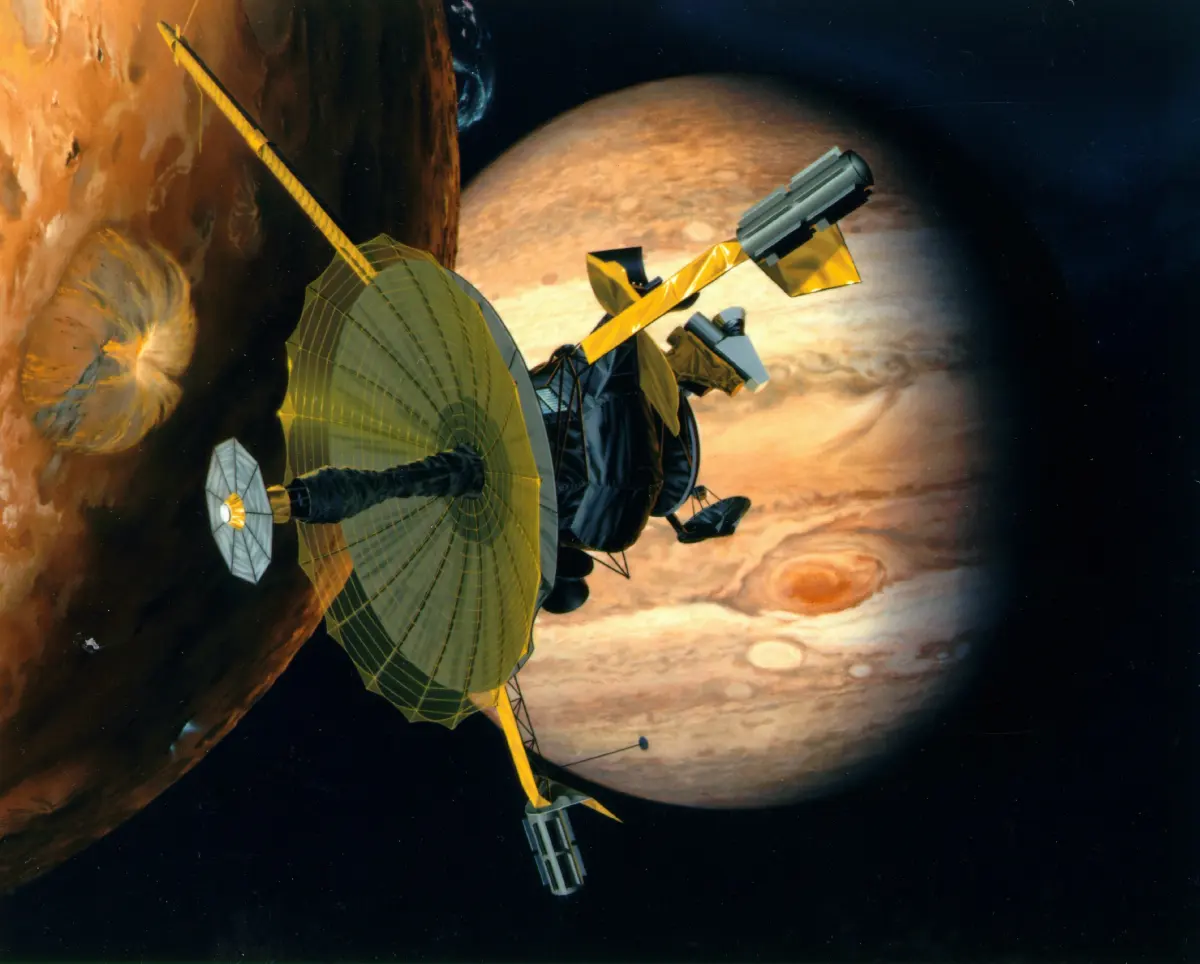
Today, his legacy is honored in various ways, ranging from the naming of the Galileo spacecraft that explored Jupiter to the widespread adoption of his experimental techniques in classrooms worldwide. He taught us that questioning established authority is essential for progress. Although he faced immense personal hardship, his refusal to abandon the truth of his observations ensured that his work would eventually be recognized as the bedrock of our understanding of the physical world. His life serves as a permanent reminder of the importance of intellectual courage in the face of institutional pressure.
Key facts
- Galileo Galilei was an Italian astronomer, physicist, and engineer born in Pisa in 1564.
- He is widely credited with perfecting the spyglass into a telescope that could magnify objects up to 30 times.
- In 1610, he discovered four of Jupiter's moons, now known as the Galilean satellites: Io, Europa, Ganymede, and Callisto.
- He provided observational evidence for the heliocentric model, which posits that the Earth revolves around the Sun.
- When using a telescope, always ensure the lens is clean and avoid looking directly at the sun to prevent permanent eye damage.
- Galileo spent the final years of his life under house arrest after the Roman Inquisition forced him to recant his scientific findings.
The bottom line
Galileo Galilei remains a towering figure in the history of science, bridging the gap between ancient philosophy and modern empirical research. By championing the heliocentric view of the universe through rigorous observation, he fundamentally changed our understanding of Earth's place in the cosmos. His life serves as a profound example of the tension between scientific discovery and established authority, leaving an enduring legacy of intellectual courage.
People also ask
Did Galileo invent the telescope?
Galileo did not invent the telescope; he improved upon designs created by Dutch lens makers. By refining the grinding process, he created a device powerful enough to observe celestial bodies in detail.
Why was Galileo put on trial by the Catholic Church?
The Church viewed his support for heliocentrism as contradictory to biblical passages that suggested the Earth was stationary. In 1633, he was tried for heresy and forced to renounce his work.
What is the significance of the Leaning Tower of Pisa experiment?
Legend suggests Galileo dropped two spheres of different masses from the tower to prove they hit the ground simultaneously. While historians debate if he performed this exact test, it effectively demonstrated that gravity accelerates all objects at the same rate.
How did Galileo’s work influence modern science?
He pioneered the use of the scientific method, emphasizing experimentation and mathematical proof over traditional philosophical speculation. This shift laid the essential groundwork for classical physics and modern astronomy.
What was the "Sidereus Nuncius"?
Published in 1610, this short treatise, or "Starry Messenger," documented his groundbreaking telescopic observations. It included his findings on the Moon's craters and the phases of Venus.
Is it true that Galileo was blind in his later years?
Yes, Galileo suffered from severe vision problems in his final years, eventually becoming completely blind by 1638. Scholars believe his sight may have been damaged by years of observing the sun through his telescopes.
This answer was created with the help of AI research tools and reference sources. Spotted an error? Let us know — we correct mistakes quickly. See our editorial policy.