Who was Marie Curie?
Short answer
Marie Curie was a pioneering physicist and chemist who conducted groundbreaking research on radioactivity. She was the first woman to win a Nobel Prize, the only woman to win twice, and the only person to win in two different scientific fields: physics in 1903 and chemistry in 1911. Her discoveries fundamentally changed modern science.
On this page
Who was Marie Curie and why is she famous?
Marie Curie, born Maria Skłodowska in Warsaw, Poland, in 1867, was a trailblazing scientist whose work defined the early study of radioactivity. After moving to Paris to study at the Sorbonne, she met and married Pierre Curie, a fellow scientist who became her primary collaborator. Together, they investigated the mysterious rays emitted by uranium, eventually discovering two new chemical elements: polonium and radium.
Her fame stems from her relentless dedication to experimental science and her ability to overcome significant gender barriers in academia. She became the first female professor at the University of Paris and established the Radium Institute, which became a global hub for medical and physical research. Her legacy is not just in the elements she discovered, but in the pioneering methods she developed for isolating radioactive isotopes, which paved the way for modern oncology and nuclear physics.
How did Marie Curie discover radioactivity?
The discovery of radioactivity was a laborious process that required the Curies to process tons of pitchblende, a uranium-rich ore, in a makeshift laboratory. Marie hypothesized that the intense radiation levels observed in the ore could not be explained by uranium alone, suggesting the presence of unknown, highly active elements. By systematically separating the chemical components of the ore, she successfully isolated radium and polonium.
To conduct this research, she utilized an electrometer invented by Pierre and his brother to measure the faint electrical currents produced by the samples. Her process involved several key stages:
- Crushing and dissolving large quantities of ore in boiling vats.
- Repeatedly crystallizing the solutions to concentrate the radioactive material.
- Measuring the radiation intensity of each fraction to identify the most potent samples.
- Refining the final product until pure radioactive salts were obtained.
What were Marie Curie's major scientific achievements?
Curie’s career was marked by unprecedented achievements that shattered glass ceilings in the scientific community. In 1903, she shared the Nobel Prize in Physics with Pierre Curie and Henri Becquerel for their combined research on radiation phenomena. Following Pierre's tragic death in 1906, she continued their work, earning a second Nobel Prize in 1911, this time in Chemistry, for the discovery and isolation of radium and polonium.
Beyond her laboratory work, she applied her science to practical humanitarian efforts during World War I. Recognizing the need for rapid medical diagnostics on the battlefield, she developed mobile radiography units, known as "Little Curies." These vehicles allowed doctors to use X-rays to locate shrapnel and fractures in wounded soldiers. Her efforts are estimated to have assisted over one million soldiers, demonstrating the direct, life-saving potential of her scientific discoveries.
How can students learn from Marie Curie's research methods?
For those interested in following in her footsteps, understanding her rigorous methodology is essential. Curie was known for her meticulous record-keeping and her refusal to patent her isolation processes, believing that scientific knowledge should be free for the benefit of humanity. Students today can emulate her approach by focusing on the following principles:
- Formulate a hypothesis based on observed anomalies in existing data.
- Design experiments that isolate variables, even when working with complex materials.
- Maintain detailed logs of every measurement and chemical reaction performed.
- Collaborate across disciplines to solve multifaceted problems.
A common mistake when studying her work is focusing only on the discoveries rather than the process. Beginners often overlook the importance of the "drudgery" of science, such as the years of purifying ore. Success in science is rarely a sudden epiphany; it is usually the result of sustained, repetitive effort and the patience to refine one's data until the results are undeniable.
What are common mistakes when studying the history of radioactivity?
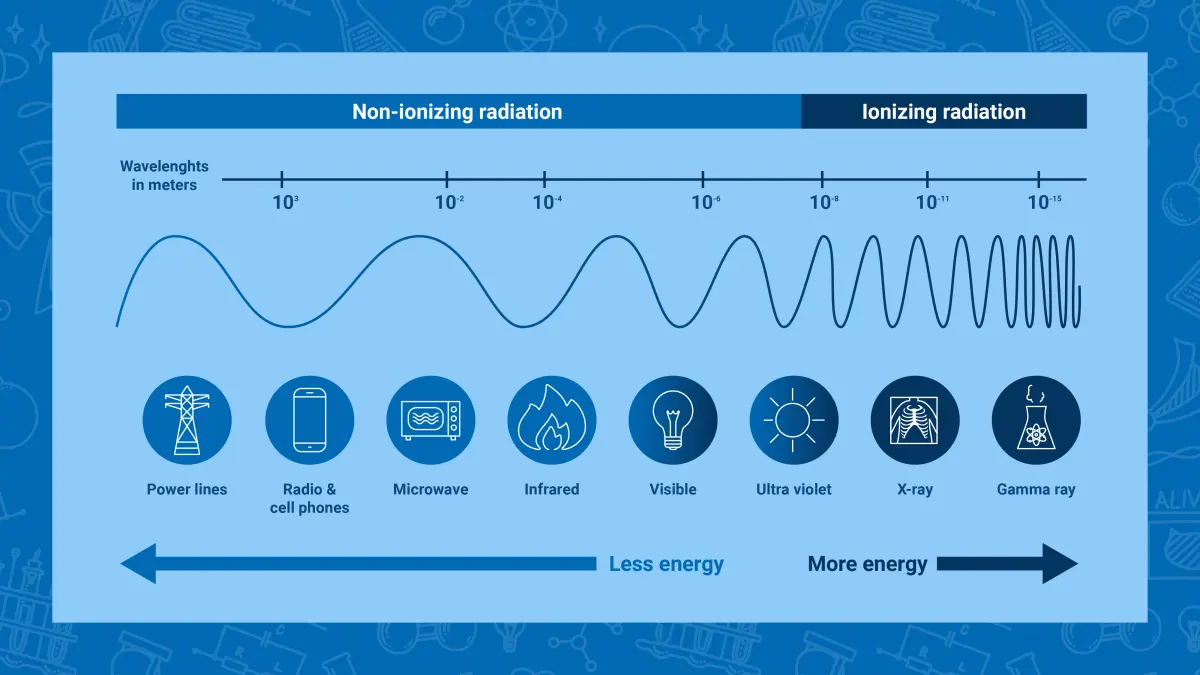
A frequent error is assuming that the dangers of radiation were understood during the early 20th century. Marie Curie and her contemporaries handled radioactive materials without the lead shielding or protective protocols standard in modern laboratories. Because they were unaware of the long-term biological damage caused by ionizing radiation, they often carried test tubes of radium in their pockets or stored them in desk drawers.
Another common misconception is that Curie worked entirely in isolation. While she was a singular genius, her work was deeply collaborative, relying on the partnership with Pierre and the support of the broader scientific community in Paris. When researching her life, avoid the myth of the "solitary hero" and instead look at how she navigated institutional politics, secured funding for her research, and mentored a new generation of scientists. By viewing her life through the lens of her professional challenges and triumphs, one gains a more accurate understanding of her immense contribution to human knowledge.
Key facts
- Marie Curie was born Maria Skłodowska in Warsaw, Poland, on November 7, 1867.
- She was the first woman to win a Nobel Prize and the only person to win Nobel Prizes in two different scientific fields: Physics (1903) and Chemistry (1911).
- Along with her husband Pierre Curie, she discovered the chemical elements polonium and radium in 1898.
- She coined the term "radioactivity" to describe the phenomenon of spontaneous radiation emitted by unstable atomic nuclei.
- During World War I, she developed mobile radiography units, known as "petites Curies," to provide X-rays to wounded soldiers on the front lines.
- To safely handle radioactive materials, always use lead shielding, maintain distance, and minimize exposure time to prevent long-term radiation damage.
The bottom line
Marie Curie was a trailblazing physicist and chemist whose relentless dedication to science transformed modern medicine and nuclear physics. By discovering polonium and radium, she unlocked the secrets of radioactivity, despite facing immense gender barriers and health risks. Her legacy remains a testament to intellectual courage, proving that rigorous scientific inquiry can fundamentally alter our understanding of the natural world and save countless human lives.
People also ask
How did Marie Curie die?
She died on July 4, 1934, from aplastic anemia, a condition caused by her prolonged exposure to high levels of radiation during her research.
What was Marie Curie's greatest contribution to science?
Her pioneering research on radioactivity fundamentally changed the understanding of atomic physics and led to the development of life-saving cancer treatments using radiation therapy.
Did Marie Curie have children?
Yes, she had two daughters, Irène and Ève. Irène Joliot-Curie followed in her mother's footsteps and won a Nobel Prize in Chemistry in 1935.
Where is Marie Curie buried?
In 1995, her remains were moved to the Panthéon in Paris, making her the first woman to be honored there on her own merits.
Can you visit a museum dedicated to her work?
Yes, the Musée Curie in Paris is located in the laboratory where she conducted much of her research and offers exhibits on her life and discoveries.
Why are her laboratory notebooks still considered dangerous?
Her personal belongings, including her notebooks and cookbooks, remain highly radioactive due to contamination and must be stored in lead-lined boxes for safety.
This answer was created with the help of AI research tools and reference sources. Spotted an error? Let us know — we correct mistakes quickly. See our editorial policy.