How do bees make honey?
Short answer
Bees make honey by collecting nectar from flowers, which they store in a specialized honey stomach. Back at the hive, they regurgitate the nectar and pass it between bees to break down complex sugars. Finally, they deposit it into honeycomb cells and evaporate excess water by fanning their wings until it thickens.
On this page
How do bees collect nectar from flowers?
Worker bees, known as foragers, are responsible for gathering the raw materials for honey. They use their long, straw-like tongues, called a proboscis, to lap up nectar from the blossoms of flowering plants. This nectar is a sugary liquid that serves as the primary energy source for the colony. Once collected, the nectar is stored in a secondary organ called the honey stomach, which is separate from the bee's digestive tract.
A single bee can carry about 40 milligrams of nectar, which is nearly equal to its own body weight. During this process, bees also collect pollen, though this is primarily used as a protein source for developing larvae. Foragers must visit thousands of flowers to fill their honey stomachs completely. This intensive labor is essential for the colony's survival, especially during the peak of the spring and summer blooming seasons.
How is nectar transformed into honey?
Once the forager returns to the hive, it transfers the nectar to house bees through a process called trophallaxis, or mouth-to-mouth regurgitation. This transfer is critical because it allows the house bees to add specific enzymes, such as invertase, to the nectar. These enzymes break down complex sucrose into simpler sugars, specifically glucose and fructose, which are easier for bees to digest and less prone to crystallization.
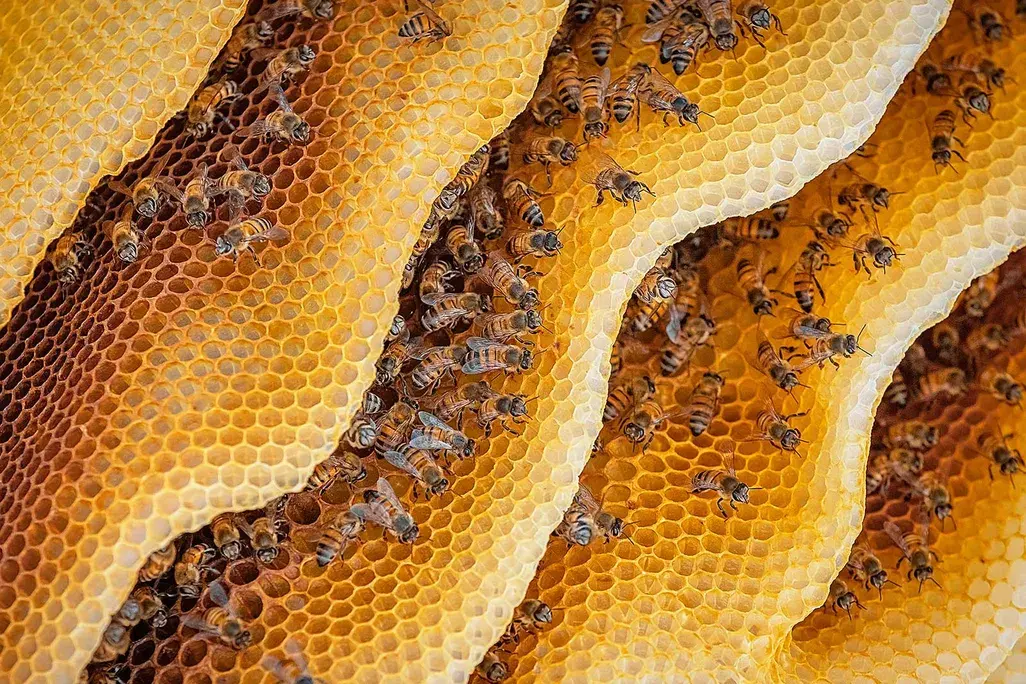
The nectar is then deposited into the hexagonal cells of the honeycomb. At this stage, the substance has a high water content, often around 70 percent. To prevent fermentation, the bees must reduce this moisture level significantly. They achieve this by rapidly fanning their wings near the cells, creating a constant airflow that evaporates the water. This process continues until the honey reaches a stable moisture content of approximately 17 to 18 percent.
How long does it take to make honey?
The time required to produce honey depends on several environmental factors, including the availability of nectar-producing plants and the strength of the colony. On average, a healthy hive can produce a surplus of honey within a few weeks during a strong nectar flow. However, the transformation from raw nectar to stable honey is a continuous cycle that occurs throughout the active foraging season.
- Foragers locate and collect nectar from local flora.
- House bees process the nectar and deposit it into cells.
- Bees fan the cells to reduce moisture content to below 20 percent.
- Once the honey is cured, bees seal the cell with a protective wax cap.
Once the honey is properly cured, the bees seal the honeycomb cells with fresh beeswax. This cap acts as an airtight seal, preserving the honey indefinitely. A single colony may produce between 30 and 100 pounds of surplus honey in a single season, depending on the climate and the health of the local ecosystem.
Why do bees store honey in the hive?
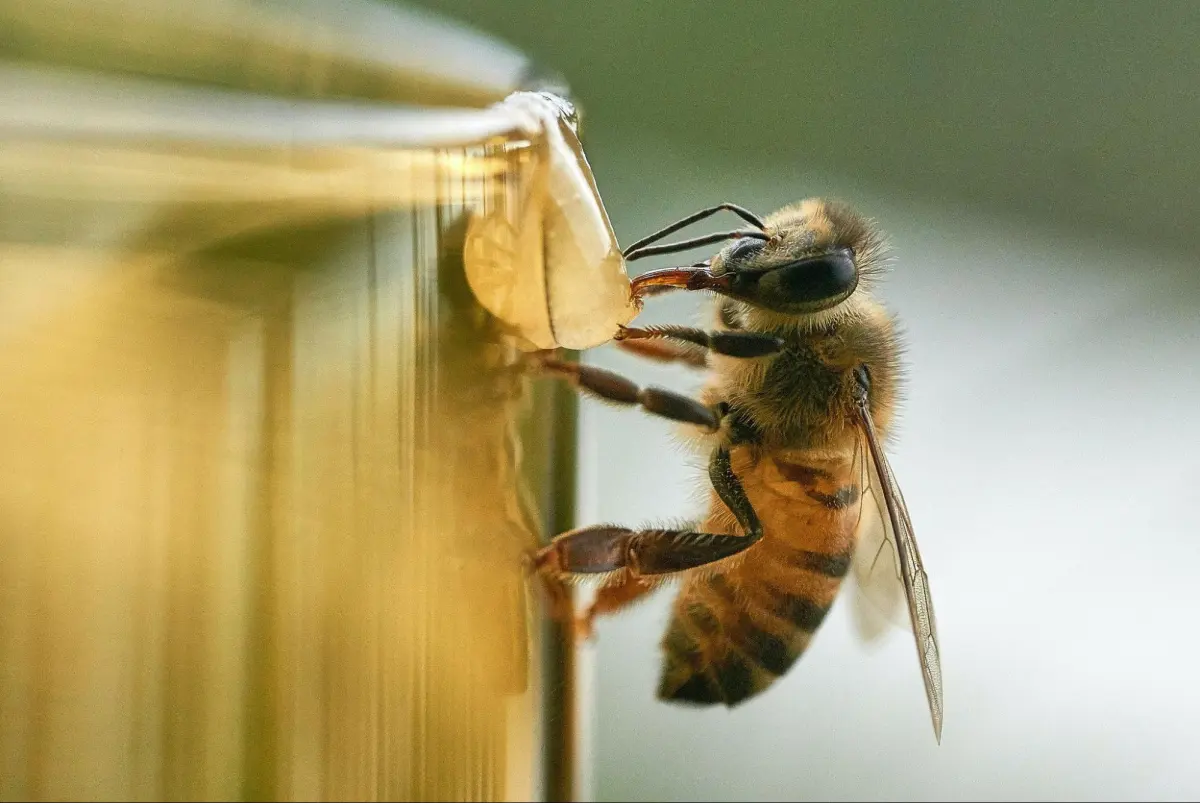
Honey serves as the primary food reserve for the honeybee colony during periods when fresh nectar is unavailable. In temperate climates, bees cannot forage during the winter months, so they rely entirely on their stored honey to maintain their metabolism and body temperature. Without this concentrated energy source, the colony would starve during the cold season.
The hive functions as a sophisticated climate-controlled environment. During winter, the bees cluster together and vibrate their wing muscles to generate heat, fueled by the consumption of their stored honey. This behavior allows the colony to survive sub-zero temperatures. Because honey is naturally acidic and low in moisture, it is resistant to bacterial growth, making it a perfect long-term storage solution. This evolutionary adaptation ensures that the colony can survive from one year to the next, provided they have gathered enough resources before the first frost.
Common mistakes when harvesting honey
For beginners interested in beekeeping, the most common mistake is harvesting honey too early or taking too much from the hive. If a beekeeper removes honey before the bees have capped the cells, the moisture content remains too high, which can lead to the honey fermenting and spoiling. Always ensure that at least 80 percent of the frame is capped with wax before attempting to extract it.
- Removing honey during a nectar dearth, which leaves the bees without food.
- Failing to leave enough winter stores, typically 40 to 60 pounds depending on the region.
- Using excessive smoke during inspection, which can stress the colony and affect production.
- Neglecting to monitor for pests like the Varroa mite, which weakens the bees' ability to forage effectively.
To avoid these errors, always maintain a consistent inspection schedule and use a refractometer to check the moisture content of your honey. By respecting the bees' need for their own food supply, you ensure the long-term health and productivity of your apiary while enjoying the harvest.
Key facts
- Honey bees collect nectar, a sugary liquid produced by flowers, using their long, straw-like tongues called proboscises.
- A single honey bee must visit approximately two million flowers to produce just one pound of honey.
- Bees store nectar in a specialized "honey stomach" separate from their digestive stomach to transport it back to the hive.
- Inside the hive, bees pass the nectar mouth-to-mouth to enzymes that break down complex sugars into simple sugars like glucose and fructose.
- Bees fan the nectar with their wings to evaporate excess water, reducing the moisture content to below 18 percent to prevent fermentation.
- Properly sealed honey has an indefinite shelf life because its low water content and acidic pH inhibit the growth of bacteria and yeast.
The bottom line
Honey production is a sophisticated biological process that relies on the tireless labor of thousands of bees. By gathering nectar, enzymatic transformation, and precise moisture evaporation, bees create a stable, nutrient-rich food source. Understanding this cycle highlights the importance of protecting bee populations, as their work is essential not only for the production of honey but for the pollination of countless global food crops.
People also ask
Why does honey sometimes turn solid or sugary?
This process is called crystallization and is a natural occurrence, not a sign of spoilage. It happens because glucose separates from the water in the honey, forming stable crystals that can be reversed by gently warming the jar in a water bath.
Can honey be toxic to humans?
Honey is generally safe for adults, but it should never be fed to infants under one year old. It may contain dormant spores of Clostridium botulinum, which can cause infant botulism, a rare but serious form of food poisoning.
What is the difference between raw and processed honey?
Raw honey is extracted directly from the honeycomb and strained, preserving natural pollen and enzymes. Processed or commercial honey is often heated and ultra-filtered to remove particles, which creates a clearer, slower-crystallizing product but removes beneficial nutrients.
Do bees make honey from anything other than flower nectar?
Yes, some bees produce "honeydew honey," which is derived from the sugary secretions of aphids and other sap-sucking insects. This type of honey is typically darker in color and contains higher levels of minerals than floral honey.
How much honey does a single bee produce in its lifetime?
An average worker bee will produce only about one-twelfth of a teaspoon of honey during her entire life. This highlights the immense collective effort required for a colony to store enough food for the winter.
Is it harmful to bees to harvest their honey?
Responsible beekeeping involves harvesting only the surplus honey that the colony does not need for survival. If beekeepers take too much, they must provide supplemental sugar syrup to ensure the bees do not starve during the winter months.
This answer was created with the help of AI research tools and reference sources. Spotted an error? Let us know — we correct mistakes quickly. See our editorial policy.