What is a totem pole?
Short answer
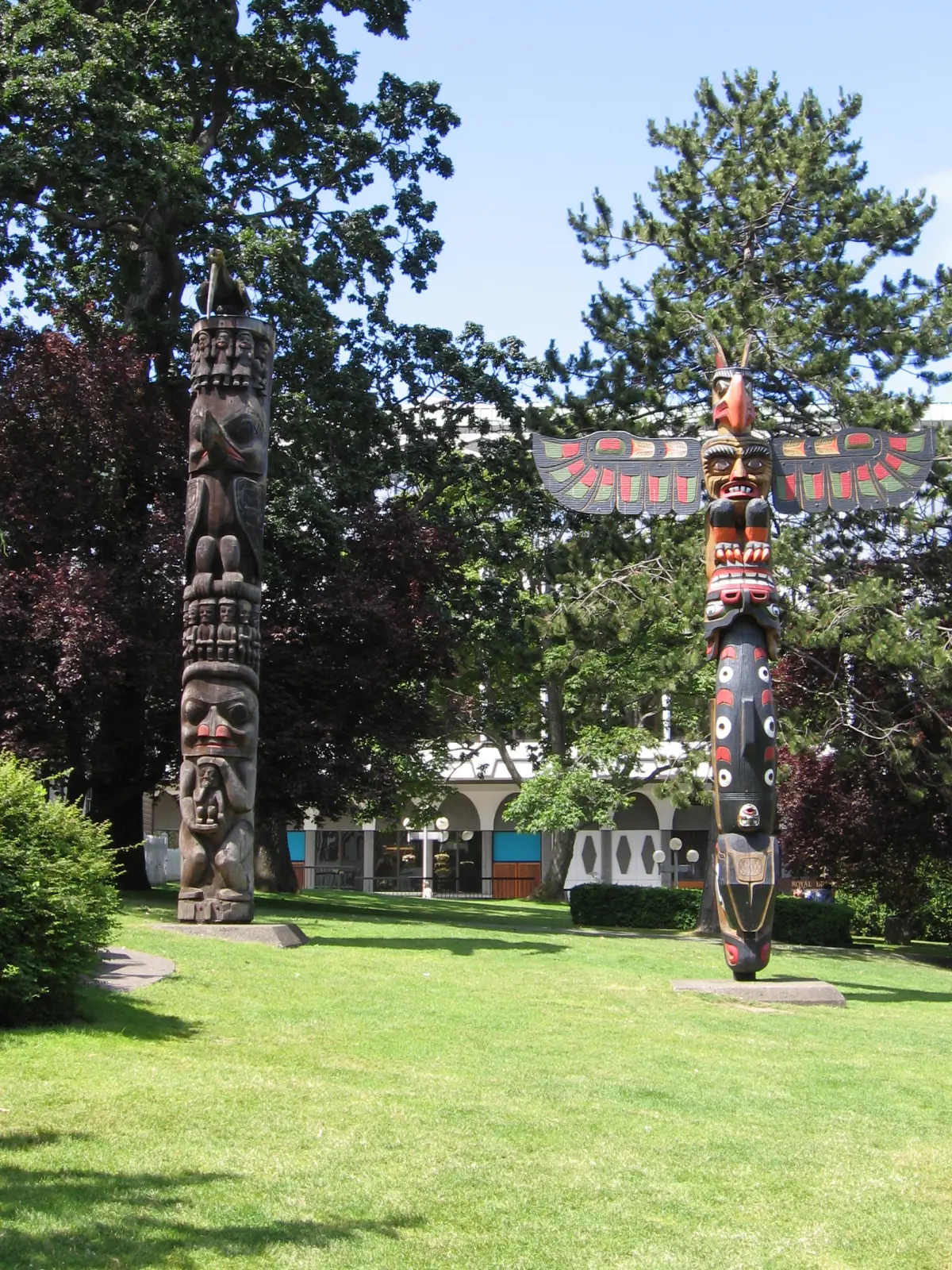
Totem poles are monumental sculptures carved from large cedar trees by Indigenous peoples of the Pacific Northwest Coast of North America. These poles serve as visual records of ancestral history, clan lineages, and cultural heritage. They are not objects of religious worship but function as significant markers of identity, prestige, and storytelling.
On this page
What is the cultural purpose of a totem pole?
Totem poles are sophisticated historical documents that communicate the social structure and oral traditions of Indigenous nations such as the Haida, Tlingit, Tsimshian, and Coast Salish. Rather than being religious idols, these poles function as heraldic displays. They often feature crests, which are animal or supernatural figures representing a family’s lineage, social standing, and rights to specific territories or resources. By standing in front of a longhouse, a pole publicly validates the owner's status and commemorates significant events like potlatches or the naming of a new chief.
These carvings are deeply tied to the concept of the potlatch, a ceremonial feast where wealth is distributed to guests to witness and validate legal claims or social transitions. When a chief commissioned a pole, it served as a permanent, physical record of the events celebrated during these gatherings. The figures carved into the cedar are not random; they follow strict artistic conventions that relate to specific myths and historical accounts passed down through generations.
How are totem poles made?
The creation of a totem pole is a labor-intensive process that begins with the selection of a western red cedar tree. This wood is prized for its straight grain, resistance to rot, and ease of carving. Historically, artisans used stone, bone, or shell tools, but modern carvers utilize steel knives, adzes, and chainsaws to shape the log. The process involves several distinct stages that require both physical strength and artistic precision.
- Select a high-quality, straight-grained red cedar log of appropriate size.
- Remove the bark and shape the log using an adze to create a smooth surface.
- Sketch the intended figures directly onto the wood, ensuring the proportions align with the pole’s height.
- Carve the primary forms, working deep into the wood to create bold, relief-style features.
- Apply traditional pigments—often black, red, and blue—to highlight specific design elements.
- Raise the pole during a community ceremony, often involving the entire village to pull it upright.
What do the figures on a totem pole represent?
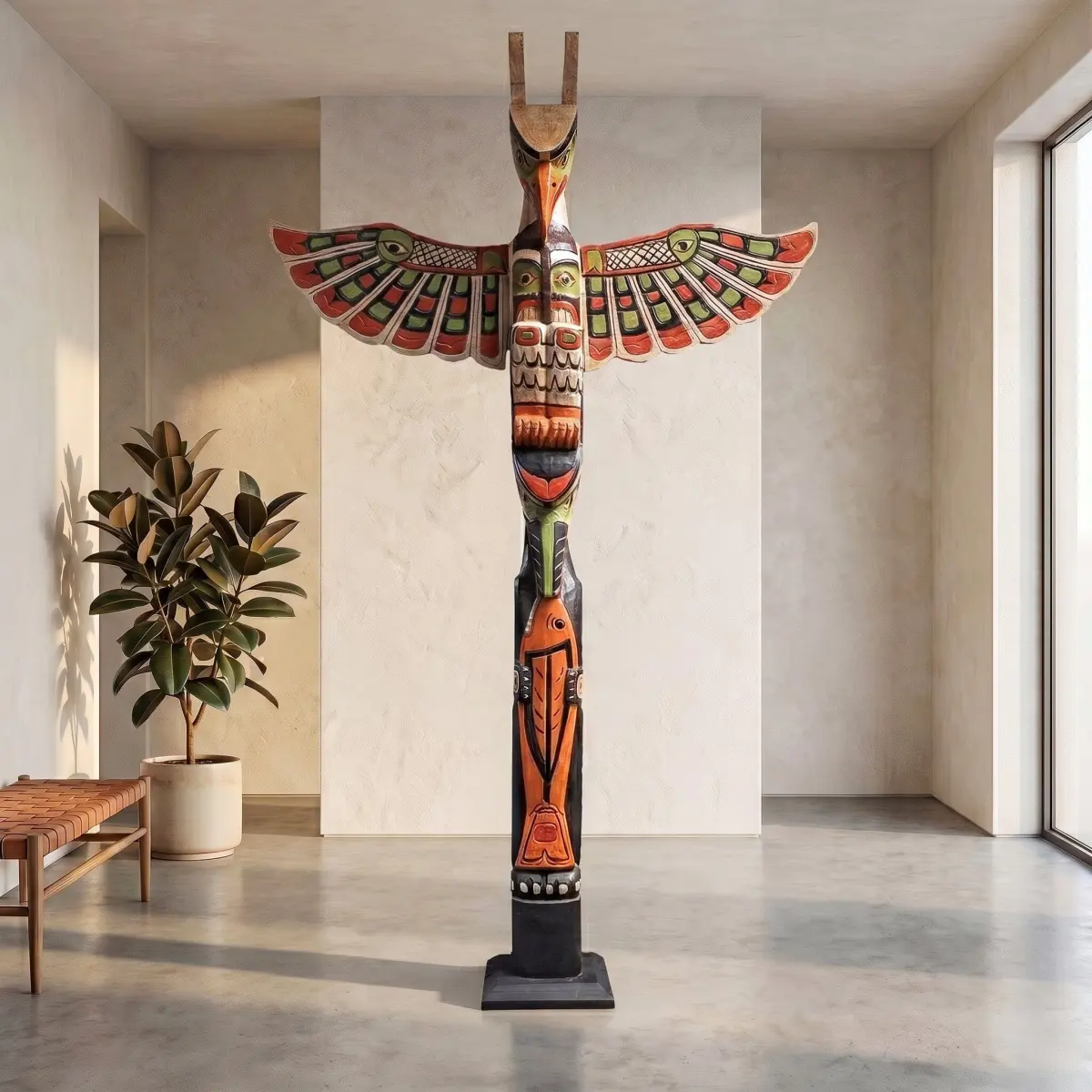
The imagery on a totem pole typically depicts figures from the natural world and the supernatural realm. Common subjects include the raven, eagle, bear, wolf, frog, and the killer whale. Each of these animals possesses specific traits and roles within the oral histories of the clans. For example, the raven is often depicted as a trickster and creator, while the eagle represents wisdom and leadership. These figures are stylized to fit the vertical space of the pole, often stacked in a way that narrates a specific sequence of events.
It is a common misconception that the figures are stacked in order of importance from bottom to top. In reality, the arrangement is dictated by the narrative being told or the artistic preference of the carver. Some poles feature a single, large figure, while others are crowded with multiple characters. The style of representation—characterized by ovoid shapes and U-forms—is a hallmark of Northwest Coast art, ensuring that the figures remain recognizable even when viewed from a distance or from below.
Common mistakes when interpreting totem poles
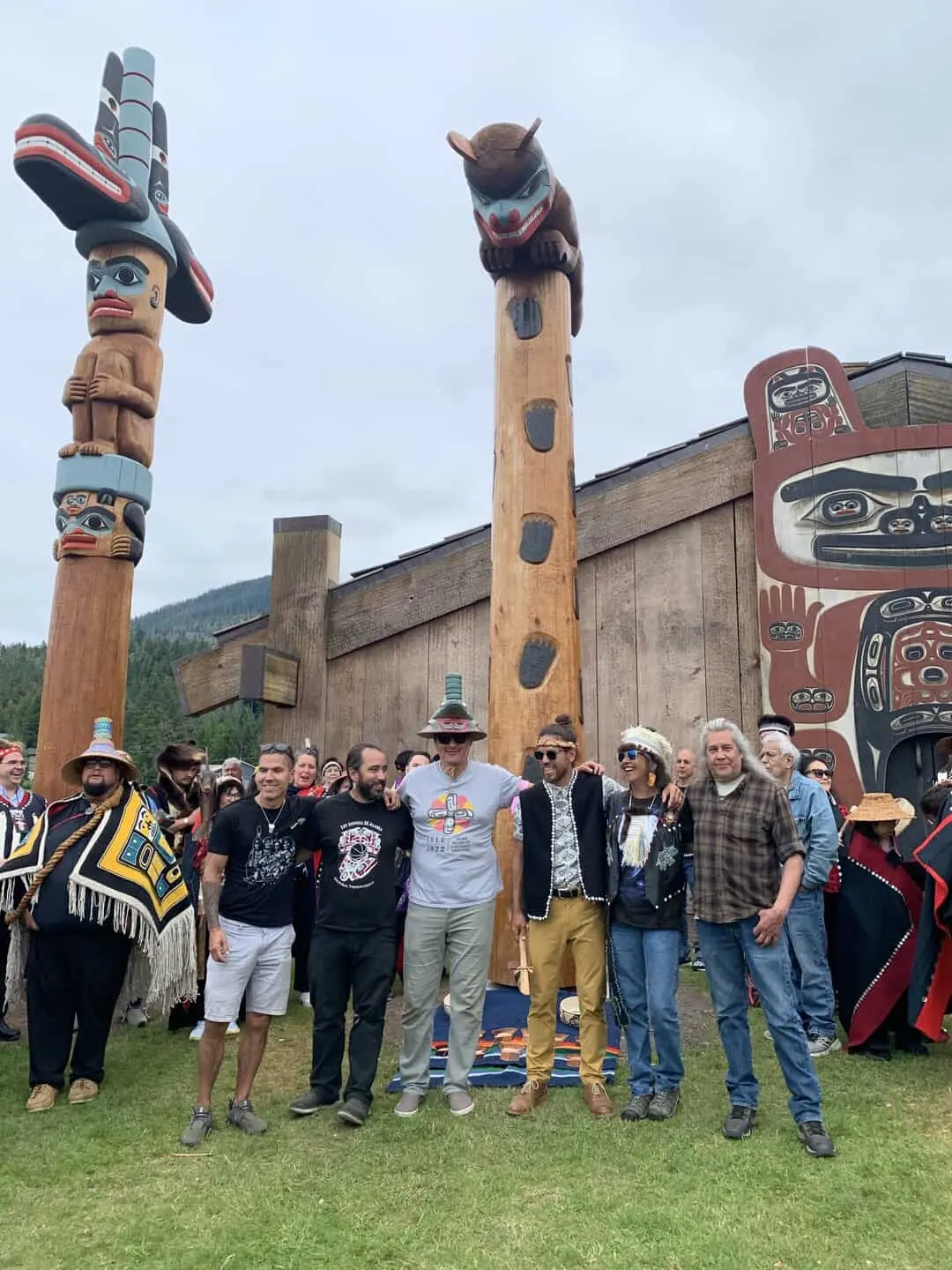
One of the most frequent errors observers make is referring to totem poles as objects of worship or "totems" in a spiritual sense. They are not religious icons, and people do not pray to them. Another common mistake is assuming that all poles look the same or serve the same function. There are several distinct types of poles, each with a unique purpose:
- House frontal poles: Placed against the front of a house, often featuring an entrance hole at the base.
- Mortuary poles: Erected to hold the remains of high-ranking individuals in a cavity at the top.
- Memorial poles: Raised to honor a deceased chief or individual, often placed away from the house.
- Shame poles: Commissioned to publicly ridicule someone who failed to pay a debt or committed a social transgression.
Misinterpreting the figures is also common. Without an understanding of the specific clan's history, a viewer cannot accurately decode the meaning of a pole. The figures represent specific rights and ancestral claims, not universal symbols that apply to all Indigenous groups across North America.
Where can you see authentic totem poles today?
To see authentic, historically significant totem poles, one should visit cultural centers and museums located in the Pacific Northwest, particularly in British Columbia, Canada, and Southeast Alaska. Many Indigenous communities now operate their own cultural centers, which provide the most accurate context and respectful viewing experience. These locations often feature carvers who are willing to discuss their work and the traditions that inform it.
When visiting these sites, it is important to observe a few guidelines to ensure a respectful experience:
- Always ask for permission before taking photographs of poles, especially if they are located near contemporary longhouses or cemeteries.
- Do not touch the wood, as the oils from human skin can damage the paint and accelerate the decay of the cedar.
- Listen to the guidance provided by local cultural interpreters, as they offer the only accurate explanation of the pole's history and significance.
- Respect any signs indicating restricted areas, as some poles are located on private family lands or in sensitive ceremonial spaces.
By engaging with these monuments through the lens of the people who created them, visitors can gain a profound appreciation for the enduring legacy and artistic mastery of the Northwest Coast nations. The poles continue to stand as powerful symbols of cultural resilience and identity that remain vital to the communities that raise them today.
Key facts
- Totem poles are monumental carvings traditionally created by Indigenous peoples of the Pacific Northwest Coast of North America.
- They are typically carved from large western red cedar logs, chosen for their durability and straight grain.
- The carvings often feature stylized animals, supernatural beings, and ancestral figures that represent family lineage or historical events.
- A common mistake is assuming totem poles were objects of religious worship; they were primarily used as status symbols, heraldic markers, or architectural supports.
- Poles are not meant to be maintained indefinitely; they are traditionally left to decay naturally as a reflection of the cycle of life.
- When commissioning or viewing a pole, respect cultural protocols, as many designs are owned by specific families or clans and cannot be reproduced without permission.
The bottom line
Totem poles are sophisticated works of art serving as historical and social records for Indigenous peoples of the Pacific Northwest. By depicting ancestral crests and significant narratives, these cedar monuments affirm identity and lineage. Understanding their role as cultural markers rather than religious icons is essential. When engaging with these powerful symbols, one must prioritize respect for the intellectual property and traditions of the original creators.
People also ask
Are all totem poles the same height?
No, totem poles vary significantly in size depending on their function. House frontal poles can reach 60 feet or more, while smaller interior house posts or mortuary poles are much shorter.
Do the colors on a totem pole have specific meanings?
Historically, colors were derived from natural materials like ochre, charcoal, and copper, with red, black, and white being most common. While some colors have cultural significance, their primary purpose was to enhance the visibility and aesthetic detail of the carvings.
Can anyone carve a totem pole?
Carving is a highly specialized skill passed down through generations of master carvers within Indigenous communities. It is considered cultural appropriation for non-Indigenous individuals to carve or sell "totem poles" for commercial gain.
What is the difference between a totem pole and a house post?
A totem pole is typically a free-standing monument placed outside a dwelling. A house post is an integral structural element that supports the roof beams of a traditional longhouse.
Why are some totem poles painted and others left natural?
The choice depends on the specific traditions of the coastal nation and the intended purpose of the pole. Some cultures prefer the natural finish of the cedar, while others use vibrant paints to highlight the intricate crests and figures.
How long does it take to carve a totem pole?
The time required depends on the complexity of the design and the size of the log. A large, intricate pole can take several months or even years of dedicated work by a master carver and their apprentices.
This answer was created with the help of AI research tools and reference sources. Spotted an error? Let us know — we correct mistakes quickly. See our editorial policy.