How is watercolor paint made?
Short answer
Watercolor paint is made by grinding finely milled pigments into a suspension of gum arabic, a natural binder derived from acacia trees. This mixture is combined with additives like glycerin to maintain moisture, honey to improve flow, and ox gall to increase surface tension, creating a stable, water-soluble medium for artistic application.
On this page
What ingredients are in watercolor paint?
The fundamental composition of high-quality watercolor paint relies on a precise balance of three primary components: pigment, binder, and wetting agents. Pigments are the core of the paint, providing the color through finely ground minerals, synthetic organic compounds, or metal oxides. The quality of the pigment—its lightfastness, transparency, and particle size—directly dictates the professional grade of the final product.
The binder, most commonly gum arabic, acts as the glue that holds the pigment particles together and adheres them to the paper surface. To ensure the paint remains workable and does not crack, manufacturers add humectants like glycerin or honey. These substances prevent the paint from drying out completely in the pan, allowing it to re-wet easily. Finally, a surfactant such as ox gall is often included to break the surface tension of the water, ensuring the paint spreads smoothly across the paper.
- Pigment: Provides color and determines opacity or transparency.
- Gum Arabic: The natural binder that hardens the paint.
- Glycerin/Honey: Humectants that keep the paint moist and flexible.
- Ox Gall: A wetting agent that improves flow and consistency.
- Preservatives: Small amounts of agents to prevent mold growth.
How is watercolor paint manufactured?
The production process is a labor-intensive endeavor that requires precision machinery to ensure consistency across batches. First, the dry pigment is weighed and mixed with the binder solution to create a thick, paste-like substance. This mixture is then passed through a three-roll mill, which uses heavy steel rollers to crush any remaining pigment clumps and ensure every particle is thoroughly coated in the binder. This stage is critical for achieving a smooth, buttery consistency that will not feel gritty when diluted with water.
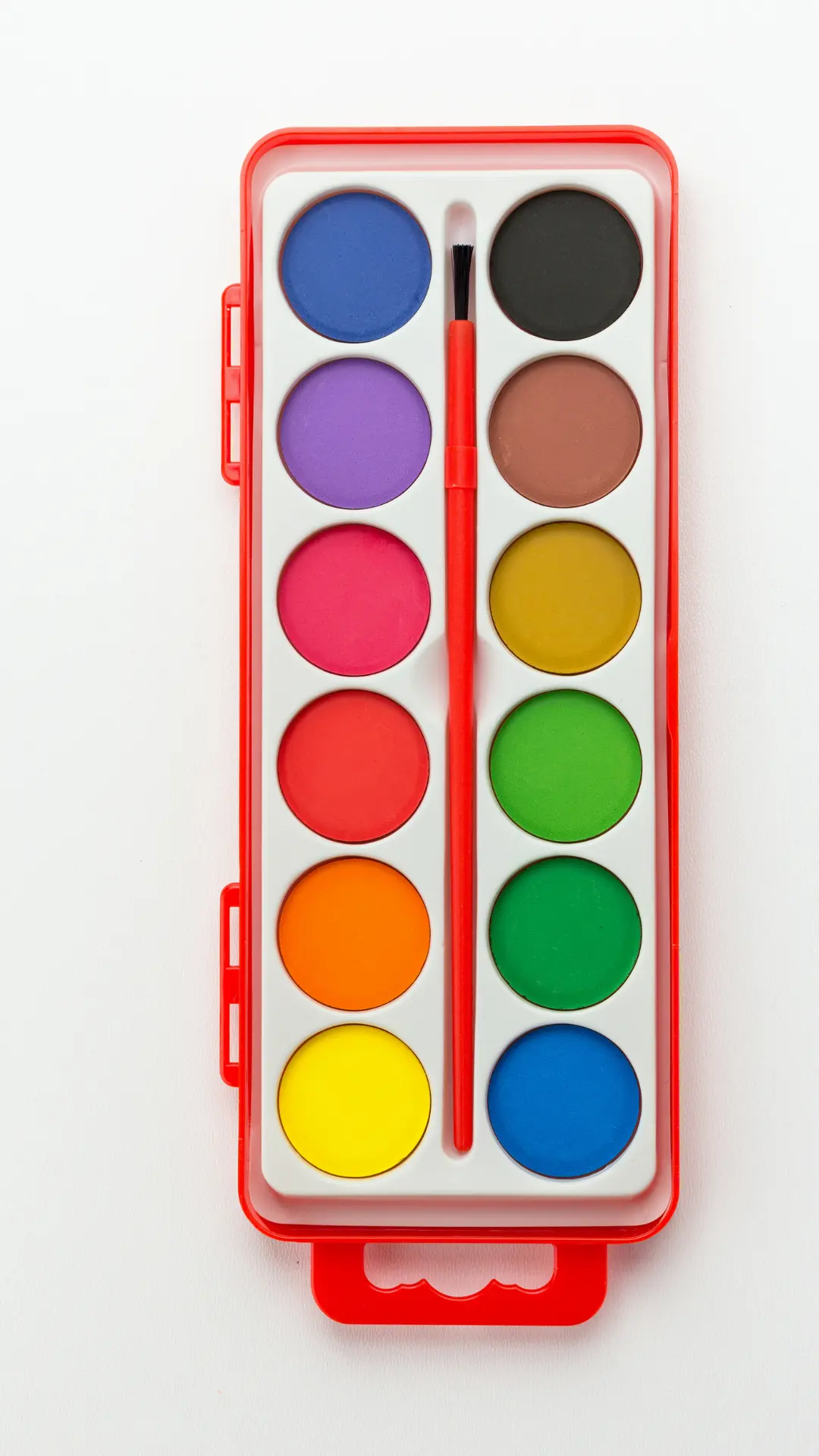
Once the pigment is properly dispersed, the paint is tested for its "grind," a measure of particle fineness. If the mixture meets quality standards, it is either poured into small plastic pans and left to dry over several days or filled into metal tubes. Tube paint contains a higher proportion of humectants to keep it in a semi-liquid state, whereas pan paint is dried until it reaches a solid, concentrated form that can be reactivated with a wet brush.
How to make watercolor paint at home
Creating your own watercolor paint is a rewarding process that allows for complete control over the color palette. You can source raw pigments from art supply stores or natural mineral suppliers. The process requires a glass muller and a tempered glass slab to grind the pigment into the binder. By controlling the ratio of binder to pigment, you can create custom paints that suit your specific painting style.
- Measure one part dry pigment onto the glass slab.
- Add a small amount of gum arabic binder and a drop of distilled water.
- Use the glass muller to grind the mixture in a circular motion for several minutes until it reaches a smooth, consistent texture.
- Add a drop of glycerin or honey to improve the paint's flexibility.
- Transfer the finished paint into a small pan and allow it to air dry for at least 48 hours before use.
Best practices for storing watercolor paint
Proper storage is essential to maintain the longevity and usability of your watercolor collection. Tube paints should be capped tightly to prevent the humectants from evaporating, which would turn the paint into a hard, unusable block. If a tube becomes difficult to open, run the cap under warm water to dissolve any dried paint residue that may have acted as a glue. Always store your paints in a cool, dry environment away from direct sunlight to prevent the pigments from fading or the binders from degrading.
For pan sets, it is important to clean your brushes thoroughly before touching the surface of the dry paint. Introducing dust, dirt, or leftover paint from other colors into the pan can contaminate the mixture and dull the vibrancy of your colors over time. If you notice a film of mold forming on the surface of your paints, it is usually a sign that the paint has been kept in a humid environment or that the binder has begun to spoil.
Common mistakes when making watercolor paint
A frequent error in homemade watercolor production is using too much binder, which results in a glossy, sticky finish that resists water. Conversely, using too little binder causes the dry paint to become chalky and flake off the paper once it is applied. Achieving the "Goldilocks" ratio requires experimentation, as different pigments have varying oil-absorption rates and densities. Always start with a small amount of binder and add more gradually until the paint feels smooth and adheres well to a test swatch of watercolor paper.
Another common mistake is failing to grind the pigment sufficiently. If the particles are too large, the paint will appear grainy and will not flow evenly across the paper's surface. Additionally, neglecting to use distilled water can introduce impurities or minerals that interfere with the chemical stability of the binder. By using distilled water and ensuring a thorough grinding process, you can produce professional-grade watercolors that rival the quality of expensive, mass-produced brands found in art supply stores today.
Key facts
- Watercolor paint consists of finely ground pigment particles suspended in a binder, typically gum arabic, which is a hardened sap from the acacia tree.
- Glycerin or honey is added to the mixture to act as a humectant, keeping the paint moist and preventing it from cracking in the pan.
- High-quality paints use a high pigment-to-binder ratio, whereas student-grade paints often contain more fillers like dextrin to reduce production costs.
- The milling process uses a glass muller on a stone slab to grind pigment into the binder until the texture is perfectly smooth and free of grit.
- Letting watercolor pans dry for at least 48 to 72 hours is essential to ensure they are stable and ready for travel.
- Avoid using excessive amounts of gum arabic, as too much binder creates a glossy, sticky finish that resists water re-activation.
The bottom line
Creating watercolor paint is a precise process of blending finely milled pigments with a gum arabic binder and a humectant like honey. By balancing these components, you achieve a medium that is both vibrant and easily re-activated with water. Whether you are a professional artist or a curious hobbyist, understanding these chemical properties allows you to better control the flow, transparency, and longevity of your artwork.
People also ask
What is the difference between pan and tube watercolors?
Tube watercolors contain more glycerin to keep the paint soft for immediate use, while pan watercolors are dried cakes that require water to rehydrate. Both are made from the same base ingredients but differ in their moisture content and intended application.
Can I make my own watercolor paint at home?
Yes, you can mix dry pigment powder with a binder of gum arabic, water, and a drop of honey or glycerin. Use a glass muller to grind the mixture thoroughly until it reaches a buttery consistency before pouring it into pans.
Why does my homemade paint crack after drying?
Cracking usually occurs if there is insufficient glycerin or honey in the mixture to maintain flexibility. Adding a tiny amount of humectant helps the paint retain moisture and prevents it from becoming too brittle as the water evaporates.
What is the purpose of ox gall in watercolor?
Ox gall is a wetting agent added to paint to reduce surface tension, allowing the color to flow more smoothly across the paper. It is particularly useful when working with heavily sized papers or when creating large, uniform washes.
How do I know if a pigment is lightfast?
Lightfastness refers to a pigment's resistance to fading when exposed to sunlight over time. Most professional manufacturers use an ASTM rating system, where I is excellent and III is considered fugitive or prone to fading.
Does the quality of the pigment affect the transparency of the paint?
Yes, finer, high-quality pigments disperse more evenly, allowing for greater transparency and luminosity. Lower-quality pigments often contain fillers that make the paint appear opaque or chalky when applied to paper.
This answer was created with the help of AI research tools and reference sources. Spotted an error? Let us know — we correct mistakes quickly. See our editorial policy.