What is watercolor paint made of?
Short answer
Watercolor paint consists of finely ground color pigments suspended in a water-soluble binder, typically gum arabic. This mixture is often combined with additives like glycerin to improve moisture retention and ox gall to increase flow. When mixed with water, the binder dissolves, allowing the pigment to adhere to paper fibers.
On this page
What is watercolor paint made of?
The primary component of watercolor paint is pigment, which provides the color. These pigments can be derived from natural minerals, such as ochre or ultramarine, or synthesized through industrial chemical processes. The quality of a watercolor paint often depends on the lightfastness and transparency of these pigments, which determine how well the color resists fading over time.
To hold these pigments together, manufacturers use a binder, most commonly gum arabic. This natural resin, harvested from the acacia tree, acts as a glue that fixes the pigment to the paper once the water evaporates. To enhance the paint's performance, chemists add several functional ingredients:
- Glycerin: Prevents the paint from becoming too brittle and helps it re-wet easily.
- Ox gall: Acts as a wetting agent to improve the flow of paint on the paper.
- Preservatives: Prevent mold or bacterial growth within the tube or pan.
How is watercolor paint manufactured?
The production of high-quality watercolor paint is a precise mechanical process. Manufacturers first mix the dry pigment with the binder and additives to create a thick, consistent paste. This paste is then passed through a three-roll mill, which grinds the pigment particles to a microscopic size. This ensures that the paint is smooth and free of grit, allowing for even washes of color.
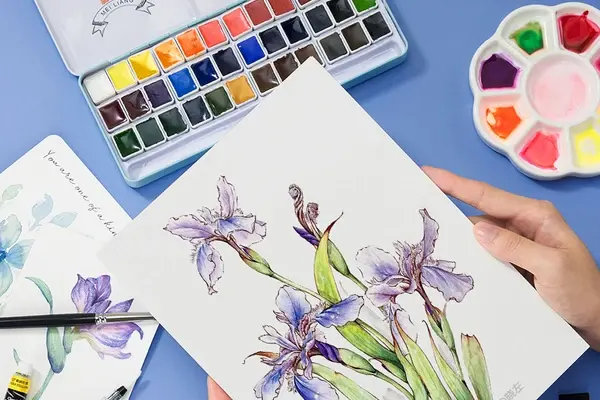
Once the milling process is complete, the paint is either packaged into metal tubes or poured into small plastic pans. Pan paints undergo a drying process in a humidity-controlled room, where they are poured in layers and dried over several weeks. This layering technique ensures that the resulting cake is dense and concentrated, providing a high pigment load that artists can easily lift with a wet brush.
What are the differences between student and professional grades?
The primary difference between student and professional grade watercolors lies in the pigment-to-binder ratio. Professional paints contain a higher concentration of pure pigment, which results in more vibrant, intense colors that can be diluted significantly without losing their hue. Student-grade paints often use more binder and filler, such as dextrin, to reduce costs, which can make the colors appear duller or chalky when dry.
Beyond the pigment load, professional paints are often formulated with single-pigment colors rather than mixtures. This allows artists to mix their own secondary and tertiary colors without creating "muddy" tones, which often happen when too many pigments are combined. When choosing between these grades, consider these factors:
- Lightfastness: Professional paints are tested for long-term resistance to UV light.
- Granulation: Professional paints often exhibit natural textural effects as pigment particles settle into the paper's grain.
- Consistency: Professional lines maintain the same performance standards across every color in the range.
How to properly mix and apply watercolor paint?
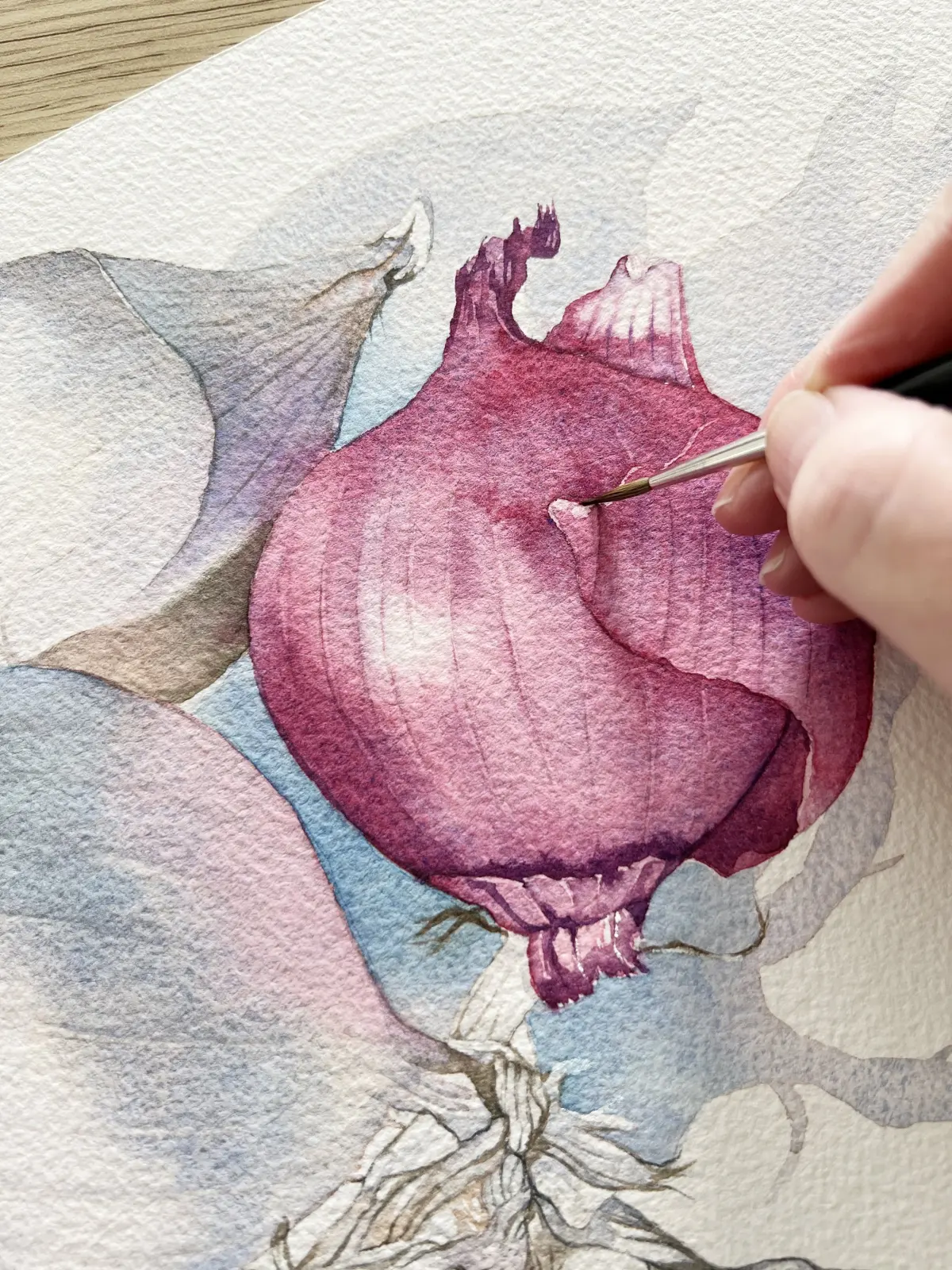
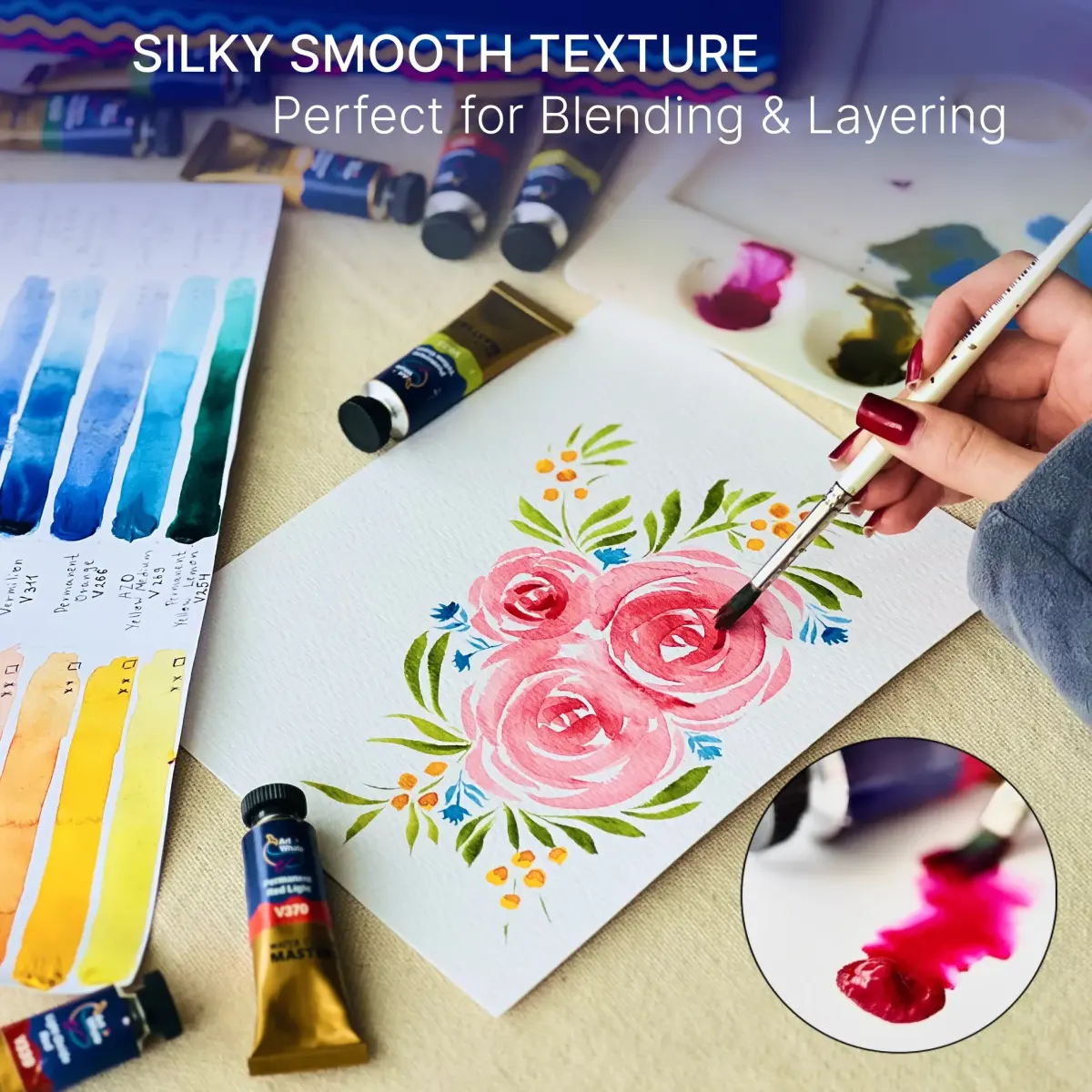
Achieving the best results requires understanding how to manipulate the paint-to-water ratio. Start by wetting your brush and picking up a small amount of concentrated paint from your palette. Gradually add water to the pigment until you reach the desired transparency. For a light wash, use a high water-to-paint ratio; for deep, saturated shadows, use more concentrated pigment.
When applying paint to paper, the surface must be slightly damp or dry depending on your intended effect. To ensure a professional application, follow these steps:
- Prepare your palette by placing a small amount of paint in the wells.
- Wet your brush thoroughly and swirl it into the paint to create a puddle.
- Test the color on a scrap piece of paper before applying it to your main work.
- Use a clean, damp brush to soften any hard edges while the paint is still wet.
Common mistakes when using watercolor paint?
One of the most frequent errors beginners make is using too much paint and not enough water, which leads to thick, opaque layers that lack the characteristic luminosity of the medium. Conversely, using too much water can result in "cauliflowers" or backruns, where a new, wetter wash pushes the existing pigment aside, creating unsightly blooms. Learning to control the moisture content of your brush is the most critical skill for any watercolorist.
Another common mistake involves overworking the paper. Watercolor paper has a delicate surface sizing that can be damaged by excessive scrubbing, causing the fibers to pill and the color to look uneven. To avoid this, apply your washes with confidence and avoid going back over the same area repeatedly. If you make a mistake, it is often better to lift the color gently with a clean, damp brush or allow the area to dry completely before attempting a correction.
Key facts
- Watercolor paint consists of three primary components: finely ground pigment, a binder (usually gum arabic), and a solvent (water).
- Gum arabic, a natural resin harvested from acacia trees, acts as the glue that holds the pigment particles together on the paper surface.
- Glycerin is often added to the mixture to keep the paint moist in the pan and to improve its flow and solubility.
- Modern manufacturers frequently include additives like ox gall, a wetting agent that helps the paint spread evenly across the paper.
- Unlike oil paint, which requires chemical thinners, watercolors are purely water-based and dry through evaporation.
- Avoid using "student grade" paints with excessive fillers, as these lack the vibrant color intensity found in professional-grade pigments.
The bottom line
Watercolor paint is a elegant, transparent medium defined by its simplicity. By combining high-quality pigments with a gum arabic binder, artists create a versatile tool that relies on water to control opacity and flow. Understanding the relationship between your materials and the paper is essential for mastering the medium. With the right supplies and a light touch, you can achieve beautiful, luminous results in your work.
People also ask
What is the difference between pan and tube watercolors?
Pan watercolors are dried cakes of paint that require water to reanimate, while tube watercolors are moist pastes. Tubes are generally easier to use for mixing large washes of color, whereas pans are convenient for travel and sketching.
Can I mix different brands of watercolor paint?
Yes, you can safely mix different brands of watercolor paint because they share the same basic chemical composition. Ensure that the pigments are compatible to avoid muddy colors or unexpected chemical reactions.
Why does my watercolor paper buckle when I paint?
Paper buckles because the cellulose fibers expand when they absorb water. To prevent this, use heavier weight paper, typically 300 gsm or higher, and stretch it by soaking and taping it down before you begin.
How do I keep my watercolor brushes in good condition?
Always rinse your brushes thoroughly with clean water after each session and reshape the bristles with your fingers. Never leave brushes standing in a jar of water, as this will permanently damage the delicate tips.
Is watercolor paint toxic?
Most modern watercolor paints are non-toxic, but some traditional pigments like cadmium or cobalt can be harmful if ingested or inhaled as dust. Always check the label for the AP (Approved Product) seal and avoid eating or smoking while painting.
How do I fix a mistake in a watercolor painting?
Watercolor is notoriously difficult to "erase," but you can lift wet paint with a clean, damp brush or a paper towel. Once the paint is dry, you can sometimes gently scrub the area with a stiff brush and water to lighten the color.
This answer was created with the help of AI research tools and reference sources. Spotted an error? Let us know — we correct mistakes quickly. See our editorial policy.