What is the difference between cold press and hot press watercolor paper?
Short answer
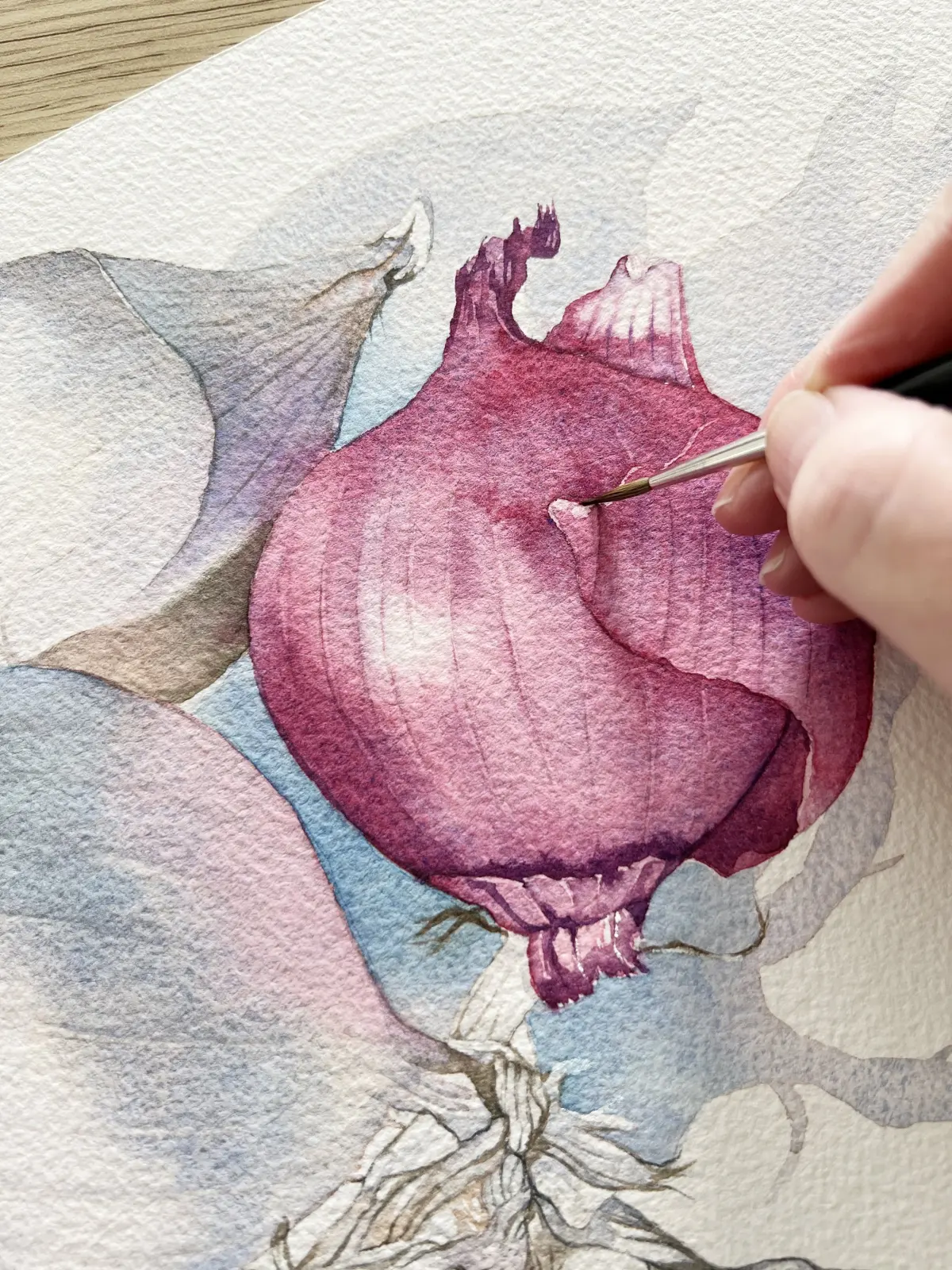
Cold press watercolor paper features a textured, slightly bumpy surface created by cold metal rollers, making it ideal for most traditional techniques. Hot press paper is passed through heated rollers to produce a smooth, hard surface. This finish is better suited for detailed ink work, precise illustrations, and fine-line watercolor applications.
On this page
How is watercolor paper manufactured?
The primary difference between these two types of paper lies in the finishing process after the initial sheet formation. During production, wet paper pulp is pressed between large rollers to remove moisture and compress the fibers. Cold press paper is processed at room temperature, which preserves the natural, toothy texture of the fibers. This texture is essential for capturing pigment in the small valleys of the paper.
In contrast, hot press paper undergoes a secondary step where the rollers are heated to high temperatures. This intense heat and pressure iron the paper fibers flat, resulting in a surface that is nearly as smooth as standard drawing paper. Because the surface is so dense, it does not absorb water or pigment as quickly as cold press varieties. Understanding this manufacturing distinction helps artists predict how their paint will behave on the surface during the application process.
Why use cold press paper for watercolor?
Cold press is the most popular choice for watercolorists because of its versatility and ability to hold large amounts of water. The textured surface, often referred to as "tooth," allows the paper to grab onto pigment particles, which helps in creating beautiful washes and soft, blended edges. It is particularly forgiving for beginners who are still learning how to manage water-to-paint ratios.
When working on cold press paper, artists can utilize several techniques that rely on the paper's physical structure:
- Dry brushing: Dragging a semi-dry brush across the surface to catch pigment on the high points of the texture.
- Granulation: Allowing pigments to settle into the tiny pits of the paper for a textured, atmospheric effect.
- Layering: Building up multiple washes without the paper becoming overly saturated or buckling too quickly.
When to choose hot press paper?
Hot press paper is the preferred surface for artists who prioritize fine detail, crisp lines, and precise control over their medium. Because the surface is smooth, the brush glides effortlessly across the paper, allowing for intricate pen-and-ink work or tiny, controlled brushstrokes. It is frequently used by botanical illustrators and architectural painters who need to render sharp edges that would be impossible to achieve on a rougher surface.
However, using hot press paper requires a different approach to water management. Because the surface is less absorbent, paint tends to sit on top of the paper rather than sinking into the fibers. This can lead to puddling if the artist uses too much water. To work effectively on hot press paper, consider these steps:
- Use less water in your initial paint mixture to prevent unwanted blooming.
- Apply paint in thin, deliberate layers rather than large, sweeping washes.
- Allow each layer to dry completely, as the smooth surface makes it easier to accidentally lift previous layers of paint.
Common mistakes when choosing paper
A frequent error among new painters is selecting the wrong paper weight or texture for their specific project. While texture is a matter of preference, weight is a matter of performance. Regardless of whether you choose cold or hot press, ensure the paper is at least 140lb (300gsm). Anything lighter will likely warp and buckle when exposed to the water required for professional-grade watercolor techniques.
Another common mistake is failing to account for the drying time differences between the two surfaces. Because cold press paper is more porous, it generally dries faster and holds color differently than the non-porous hot press surface. If you are accustomed to the way paint moves on cold press, you may find the "slide" of hot press frustrating at first. Avoid these pitfalls by testing a small swatch of both types with your favorite pigments before committing to a large, complex painting.
Best watercolor paper for beginners
For those just starting their journey, cold press paper is almost universally recommended. Its ability to handle water and pigment makes it the most reliable surface for practicing fundamental techniques like wet-on-wet and wet-on-dry painting. Most art supply manufacturers offer "student grade" cold press blocks that provide a high-quality experience without the premium cost of professional cotton-based paper.
If you are unsure where to start, consider these guidelines for your first purchase:
- Look for "cold press" or "not" (not hot pressed) on the packaging label.
- Choose a weight of 140lb to ensure the paper remains stable during your practice sessions.
- Start with a pad or block of smaller sheets, such as 9x12 inches, to keep your focus on learning techniques rather than filling large, intimidating spaces.
- Experiment with both surfaces once you feel comfortable with your brush control, as your personal style may eventually lean toward the precision of hot press.
Key facts
- Cold press paper is passed through cold rollers, resulting in a textured, slightly bumpy surface known as "tooth."
- Hot press paper is passed through heated rollers under high pressure, creating a smooth, flat surface.
- Cold press is the most popular choice for general watercolor painting because the texture helps hold pigment and water.
- Hot press is ideal for detailed work, pen-and-ink combinations, and scanning, as the smooth surface allows for precise lines.
- Watercolor paint behaves differently on each; it pools in the dimples of cold press but dries more evenly on hot press.
- Beginners should start with cold press paper, as it is more forgiving and easier to control for standard washes.
The bottom line
The primary difference lies in the surface texture created by the manufacturing process. Cold press offers a versatile, textured finish that excels at holding water and creating soft washes, making it the industry standard for most watercolorists. Conversely, hot press provides a smooth, refined surface perfect for intricate detail and mixed media. Choose your paper based on your specific artistic style and the level of precision required.
People also ask
Can I use acrylics on watercolor paper?
Yes, you can use acrylics on both types, but hot press is often preferred for acrylics because the surface does not absorb as much paint, allowing for smoother brushwork.
Does paper weight matter more than texture?
Weight refers to the thickness of the paper, with 140lb (300gsm) being the standard; it is equally important because lighter paper will buckle when wet regardless of the texture.
Why does my paint look streaky on hot press paper?
Because hot press lacks texture, the water and pigment sit on the surface rather than settling into grooves, which can cause uneven drying if you do not manage your brushstrokes carefully.
Is there a middle ground between cold and hot press?
Yes, some manufacturers offer "rough" paper, which has an even more pronounced texture than cold press, and "not" paper, which is simply another name for cold press.
Which paper is better for masking fluid?
Cold press is generally better for masking fluid because the texture provides a better grip for the rubberized medium, whereas it can sometimes peel off too easily from slick hot press surfaces.
Do I need to stretch my paper before painting?
If you are using paper lighter than 140lb, you should stretch it by soaking and taping it down to prevent warping, though 140lb or heavier often holds up well without this step.
This answer was created with the help of AI research tools and reference sources. Spotted an error? Let us know — we correct mistakes quickly. See our editorial policy.