What is the easiest way to draw a panda?
Short answer
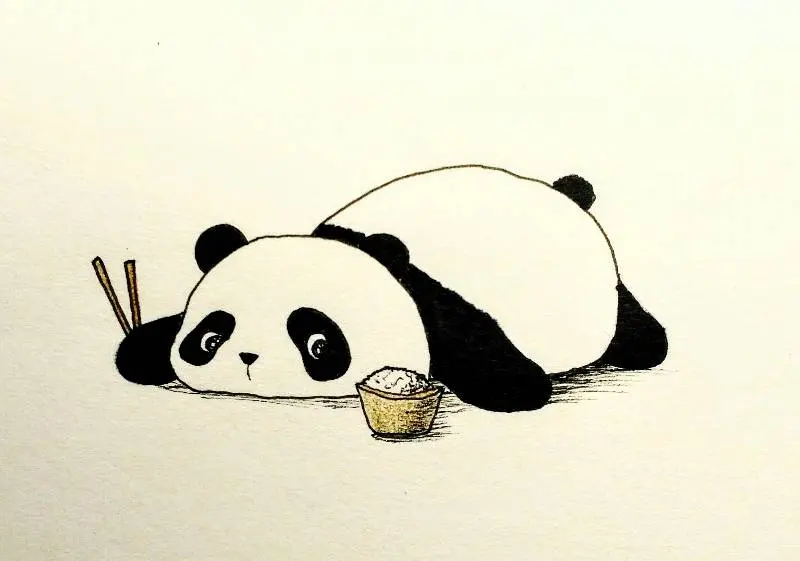
The easiest way to draw a panda is to use the "three-circle method." By sketching a large circle for the body, a smaller one for the head, and two ovals for the ears, you establish a simple foundation. Add two dark patches around the eyes and a small nose to complete the iconic look.

On this page
How to draw a panda for beginners
Drawing a panda is highly accessible because the animal’s physical features are composed of basic, rounded geometric shapes. Start by drawing a large, soft-edged circle to represent the torso. Place a slightly smaller circle on top, overlapping it slightly, to serve as the head. This structure provides the necessary proportions for a seated or standing bear without requiring complex anatomical knowledge.
Once the primary shapes are set, focus on the limbs and ears. Add two smaller circles at the top of the head for the ears and four ovals attached to the body for the arms and legs. Because pandas have a naturally plump and rounded appearance, you do not need to worry about sharp angles or rigid lines. Keeping your initial sketches light allows you to refine the silhouette later, ensuring the final drawing looks soft and approachable.
Steps to sketch a panda face
The face is the most recognizable part of a panda, and capturing its expression relies on simple symmetry. Focus on the distinct black patches that surround the eyes, which are essentially tilted ovals. By placing these patches correctly, you define the panda's gaze and character. Follow these steps to achieve the correct look:
- Draw two tilted ovals in the center of the head circle for the eye patches.
- Place small, solid black circles inside these patches to represent the pupils.
- Sketch a small, inverted triangle between the eye patches to serve as the nose.
- Draw a gentle, curved line extending downward from the nose to form a simple mouth.
Using this sequence ensures that the facial features remain centered. If the eyes are too far apart, the panda will lose its characteristic cute appearance. Always keep the features close together to maintain the proportions of a real giant panda.
Best tools for drawing pandas
Using the right materials can significantly simplify the process, especially when you are working with black and white subjects. Graphite pencils are ideal for the initial sketch because they allow for easy erasing and layering. A 2B pencil provides enough darkness for the initial lines, while a softer 6B pencil is perfect for filling in the dense black fur patches.
For the final outline, consider using a fine-liner pen or a marker to create clean, bold edges. Because pandas are defined by high-contrast colors, using a deep black ink helps the drawing pop against the white paper. Avoid using gray for the fur patches; instead, use a solid black medium to ensure the contrast is sharp. If you prefer a softer look, charcoal or soft pastels can be used to blend the edges of the fur patches into the white body.
Common mistakes when drawing pandas
One of the most frequent errors is making the eye patches too round or perfectly symmetrical. In nature, panda eye patches are irregular and vary in shape, often looking like teardrops or elongated ovals. If you draw them as perfect circles, the panda will look like a cartoon character rather than a bear. Another common mistake is neglecting the thickness of the limbs. Pandas have sturdy, powerful legs, so ensure your ovals are wide enough to support the weight of the body.
Another issue involves the placement of the ears. Beginners often draw the ears too low on the side of the head, which makes the panda look like a different species. The ears should be positioned at the very top of the head circle, slightly angled outward. By placing them high and wide, you maintain the iconic silhouette of the giant panda. Always step back from your work periodically to check that the ears and limbs appear balanced in relation to the head.
How to add detail to panda drawings
Once the basic structure is complete, you can add texture to make the drawing look more realistic. Instead of drawing every individual hair, focus on adding "fur marks" along the edges of the body. Use short, quick strokes with your pencil or pen to suggest the fluffiness of the coat. This technique adds depth and prevents the drawing from looking like a flat, solid shape.
You can also enhance the drawing by adding simple environmental elements. Pandas are almost always associated with bamboo, which is very easy to draw. Simply sketch a few vertical stalks with horizontal lines to represent the nodes. Adding a single bamboo leaf near the panda's mouth provides a clear focal point and adds context to the drawing. By combining these simple textures and props, you transform a basic geometric sketch into a complete, professional-looking illustration that captures the essence of the animal.
Key facts
- Use a soft graphite pencil to lightly sketch shapes before finalizing lines with a darker marker.
- Start with a large circle for the head and a slightly larger oval for the body.
- Panda eyes are represented by two dark, tilted ovals placed near the center of the face.
- Keep the ears small and rounded, positioned at the top corners of the head circle.
- Add limbs as thick, rounded rectangles to maintain the panda's signature stocky appearance.
- Focus on the contrast between black patches and white fur by using solid shading for the ears, eyes, and legs.
The bottom line
Drawing a panda is best approached by breaking the animal down into simple geometric shapes like circles and ovals. By focusing on the iconic black-and-white color blocking, you can create a recognizable figure with minimal effort. Remember to keep the limbs thick and the ears small to capture the panda’s unique proportions. With practice, these basic steps will help you master this classic wildlife illustration.
People also ask
Why do pandas have black patches around their eyes?
In the wild, these dark markings help pandas identify one another and may assist in signaling aggression or status to rivals. Biologists also suggest the patches help regulate body temperature by absorbing more sunlight.
Should I use charcoal or ink for drawing a panda?
Ink is ideal for beginners because it creates the high-contrast, bold black-and-white look characteristic of a panda. Charcoal is better for artists who want to blend shadows and create a softer, more realistic fur texture.
How do I make a panda look more realistic?
Focus on the fur texture by using short, overlapping strokes rather than solid blocks of color. Adding a small white highlight inside the black eye patches creates a sense of depth and life.
What is the most common mistake when drawing a panda?
The most frequent error is making the limbs too thin or spindly. Pandas are bulky animals, so their arms and legs should appear thick, sturdy, and well-rounded to match their torso.
Do I need to draw the panda's claws?
While pandas have sharp claws for climbing and stripping bamboo, they are often hidden by thick fur. Unless you are aiming for a highly detailed anatomical study, it is easier to draw rounded paws.
Can I draw a panda sitting down?
Yes, drawing a sitting panda is often easier than a standing one. Simply overlap the legs in front of the body and place the head directly on the chest to create a compact, stable pose.
This answer was created with the help of AI research tools and reference sources. Spotted an error? Let us know — we correct mistakes quickly. See our editorial policy.