Who was Captain James Cook?
Short answer
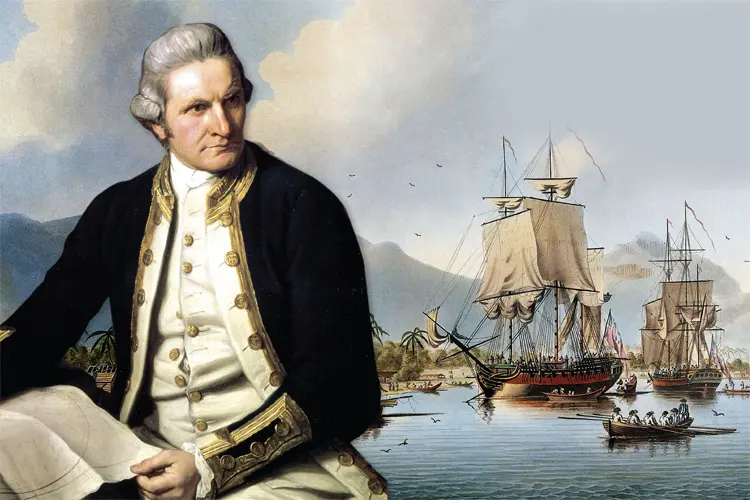
Captain James Cook was an 18th-century British explorer, navigator, and cartographer who led three major voyages across the Pacific Ocean. He is credited with mapping New Zealand and the Great Barrier Reef, documenting the Hawaiian Islands, and providing the first accurate European charts of vast regions of the southern hemisphere.
On this page
Who was Captain James Cook?
Born in 1728 in Yorkshire, England, James Cook rose from humble beginnings as a farmhand's son to become one of history's most accomplished maritime explorers. He joined the Royal Navy in 1755, where his exceptional skills in mathematics and surveying quickly earned him a reputation as an expert cartographer. His meticulous work mapping the St. Lawrence River during the Seven Years' War proved vital to British military success, setting the stage for his later exploration career.
Cook’s legacy is defined by his three Pacific voyages between 1768 and 1779. Commissioned by the British Admiralty and the Royal Society, he sought to expand geographical knowledge and scientific understanding. He utilized the latest technology, including the Harrison chronometer, to determine longitude with unprecedented accuracy. By the time of his death in Hawaii in 1779, he had transformed European understanding of the world’s geography, effectively closing the era of major Pacific exploration.
How did Cook change navigation and cartography?
Before Cook, maritime navigation was often imprecise, frequently leading to disastrous shipwrecks and lost vessels. Cook revolutionized this field by prioritizing rigorous data collection and the use of advanced instrumentation. He insisted on maintaining detailed logs, which allowed him to produce charts that remained the standard for sailors for over a century. His ability to navigate through uncharted waters, often under extreme weather conditions, made him a model for future generations of naval officers.
To achieve such precision, Cook relied on a systematic approach to surveying:
- Establishing a baseline measurement along a coastline using triangulation.
- Taking frequent celestial observations to calculate latitude and longitude.
- Using lead lines to measure depth and identify potential hazards like reefs.
- Drawing detailed coastal profiles to assist future ships in identification.
- Maintaining strict discipline to ensure the health and cooperation of his crew.
What were the main goals of his voyages?
Cook’s voyages were not merely about discovery; they were multi-disciplinary scientific expeditions. His first voyage in 1768 was primarily intended to observe the transit of Venus from Tahiti, which helped astronomers calculate the distance between the Earth and the Sun. Subsequent voyages were tasked with searching for the elusive "Terra Australis Incognita," a hypothetical southern continent that many Europeans believed must exist to balance the landmasses of the north.
Beyond astronomy and geography, Cook’s ships carried botanists and artists to document new species. Joseph Banks, a prominent naturalist on the first voyage, collected thousands of plant specimens, significantly expanding European botanical knowledge. These missions were fundamentally about information gathering, providing the British government with strategic data on potential trade routes, natural resources, and the viability of establishing future colonies in the Pacific region.
Common mistakes when studying Cook's legacy
A frequent error in evaluating Cook is viewing his voyages solely through a modern lens of colonial expansion. While his expeditions paved the way for British imperialism, his primary instructions were scientific and exploratory. It is also a mistake to assume his interactions with Indigenous peoples were uniform. Cook’s journals reveal a complex range of encounters, from peaceful trade and mutual curiosity to violent skirmishes, often stemming from cultural misunderstandings regarding property and social customs.
To gain a balanced understanding of his impact, consider these steps:
- Examine his original journals to see his personal observations of Pacific cultures.
- Review the perspectives of the Indigenous peoples he encountered, such as the Māori or the Native Hawaiians.
- Compare his scientific contributions to the geopolitical goals of the 18th-century British Empire.
- Distinguish between the intentions of the Admiralty and the actual outcomes of his landings.
- Acknowledge the long-term consequences of European contact, including the introduction of diseases that devastated local populations.
Why did his voyages end in Hawaii?
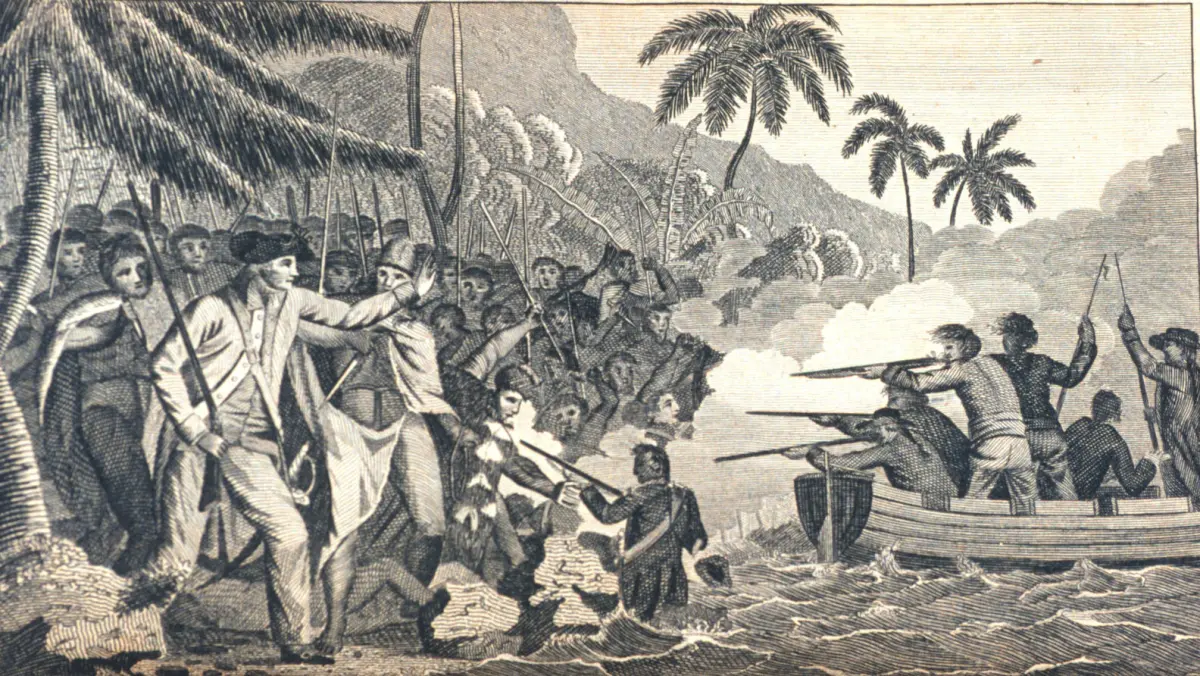
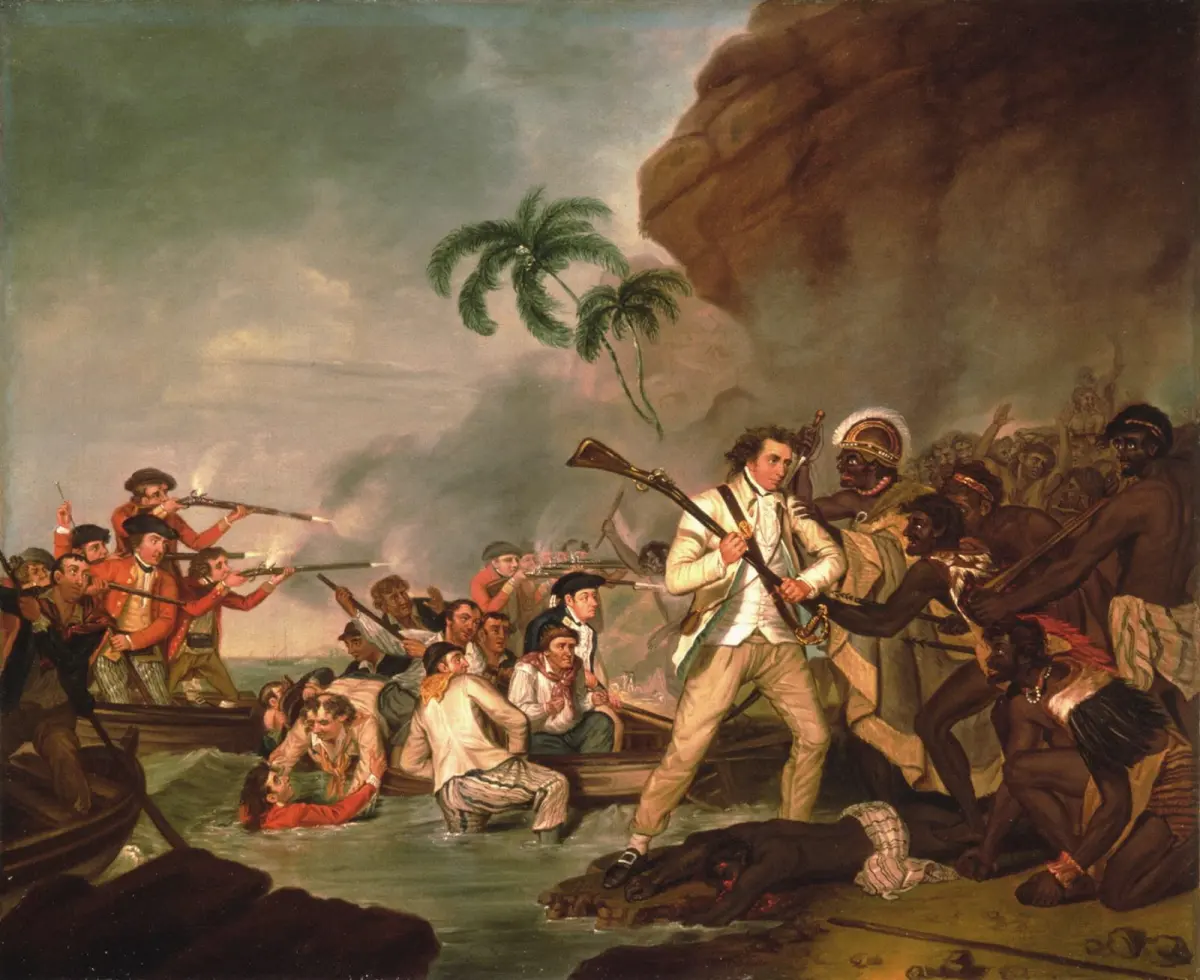
The final chapter of Cook’s life occurred during his third voyage, which aimed to find the Northwest Passage. After failing to find a viable route through the Arctic, he sailed south to the Hawaiian Islands, which he had previously encountered. Tensions escalated during this visit due to a series of thefts and misunderstandings regarding the return of a stolen cutter. The situation deteriorated rapidly when Cook attempted to take a local chief hostage to ensure the return of the vessel.
On February 14, 1779, a confrontation at Kealakekua Bay resulted in the death of Cook and several of his crew members. This event marked a tragic conclusion to a career defined by exploration and scientific rigor. While his death shocked the British public, his maps and logs survived, ensuring that his influence on navigation and world geography would endure for centuries. His voyages remain a foundational element in the history of global exploration, serving as a bridge between the isolated maritime traditions of the past and the interconnected world of the modern era.
Key facts
- James Cook was an 18th-century British explorer, navigator, and cartographer who completed three major voyages to the Pacific Ocean.
- He was the first European to map the coastline of New Zealand and the eastern coast of Australia in 1770.
- Cook is credited with being the first European explorer to reach the Hawaiian Islands in 1778.
- He successfully used the chronometer, a precise timepiece, to calculate longitude accurately while at sea, revolutionizing navigation.
- To prevent scurvy, Cook enforced a strict diet of sauerkraut and citrus fruits, significantly improving the health of his crew.
- When studying historical maps, always verify if they were created before or after Cook’s expeditions, as his work corrected many previous geographic errors.
The bottom line
Captain James Cook remains one of history’s most influential explorers, transforming our understanding of the Pacific through rigorous scientific observation and precise cartography. By successfully combating scurvy and mastering long-distance navigation, he expanded the British Empire’s reach and provided the world with its first accurate maps of Australia, New Zealand, and Hawaii. His legacy is a complex mix of remarkable maritime achievement and significant colonial impact.
People also ask
How did James Cook die?
Cook was killed on February 14, 1779, during a confrontation with Native Hawaiians at Kealakekua Bay. The conflict arose following the theft of a small boat from his ship, leading to a violent skirmish on the beach.
What was the primary purpose of Cook's first voyage?
The British Admiralty commissioned the 1768 expedition to observe the transit of Venus across the Sun from Tahiti. This scientific data was intended to help astronomers calculate the distance between the Earth and the Sun.
Did James Cook discover Australia?
Cook did not discover Australia, as Indigenous Australians had inhabited the continent for tens of thousands of years. He was, however, the first European to map its eastern coastline, which he named New South Wales.
What ships did James Cook command?
His most famous ship was the HMS Endeavour, used during his first Pacific voyage. Later, he commanded the HMS Resolution and the HMS Adventure during his second and third expeditions.
Why is Cook considered a significant figure in cartography?
Cook produced highly accurate charts of the Pacific, including detailed coastlines that remained standard for navigation for over a century. His meticulous attention to detail and use of advanced instruments set a new benchmark for maritime mapping.
How can I identify a "Cook-era" navigational tool?
Look for instruments that utilize the lunar distance method or early marine chronometers, which were essential for determining longitude. Avoid confusing these with later 19th-century equipment, which often featured more complex brass housing and standardized optical lenses.
This answer was created with the help of AI research tools and reference sources. Spotted an error? Let us know — we correct mistakes quickly. See our editorial policy.