Who invented the traffic light?
Short answer
John Peake Knight, a railway signaling engineer, invented the first traffic signal in 1868. Installed in London, it used gas-lit semaphore arms for daytime and colored lamps for night. However, the modern electric traffic light was patented by James Hoge in 1914 and later refined by Garrett Morgan in 1923.
On this page
Who invented the first traffic signal?
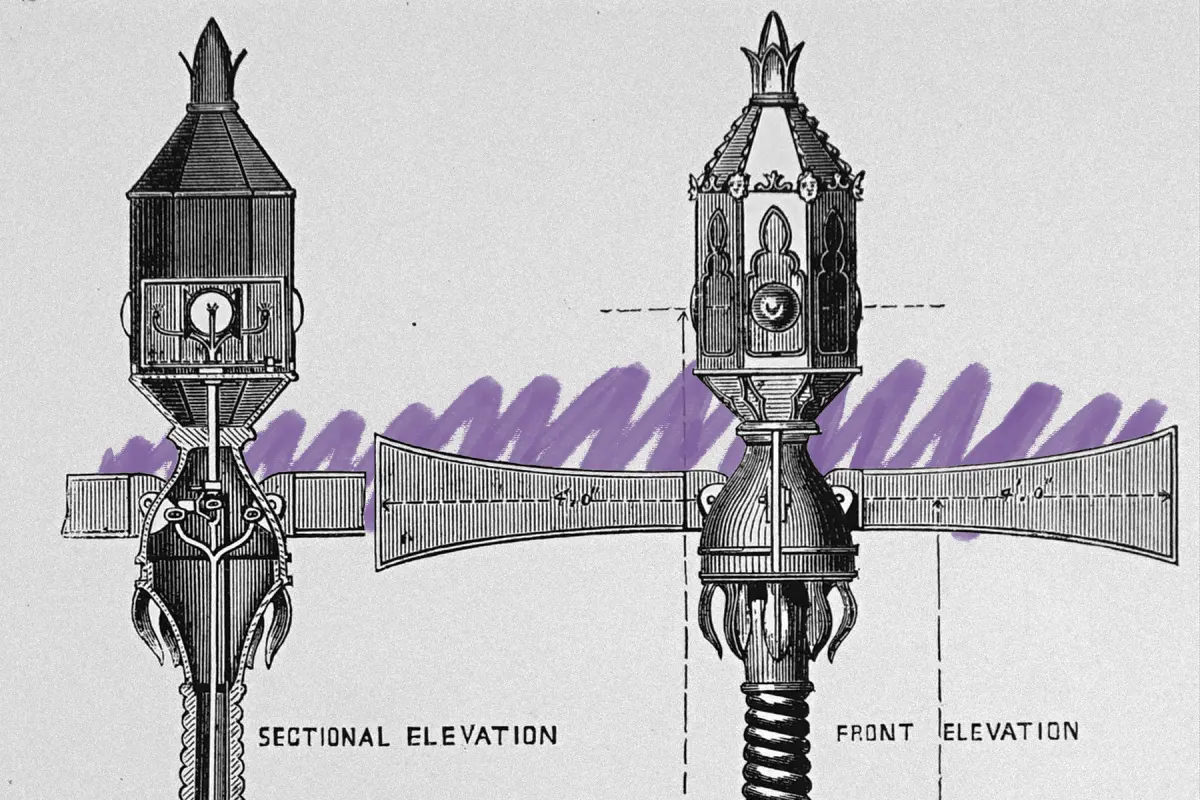
The origins of traffic control date back to the Victorian era when London faced severe congestion due to horse-drawn carriages. John Peake Knight, who had previously designed railway signals, adapted his expertise to road safety. In December 1868, he installed a device outside the Houses of Parliament that featured semaphore arms to direct traffic. During the day, these arms signaled drivers to stop or proceed, while gas-powered red and green lamps provided visibility after dark.
Although the invention was initially considered a success, it proved dangerous in practice. In 1869, a gas leak caused the signal to explode, severely injuring the attending police officer. This incident led to the immediate removal of the signal and a long hiatus in the development of automated traffic management. It would take several decades of technological advancement before cities revisited the idea of mechanical traffic control systems on public roads.
How did electric traffic lights evolve?
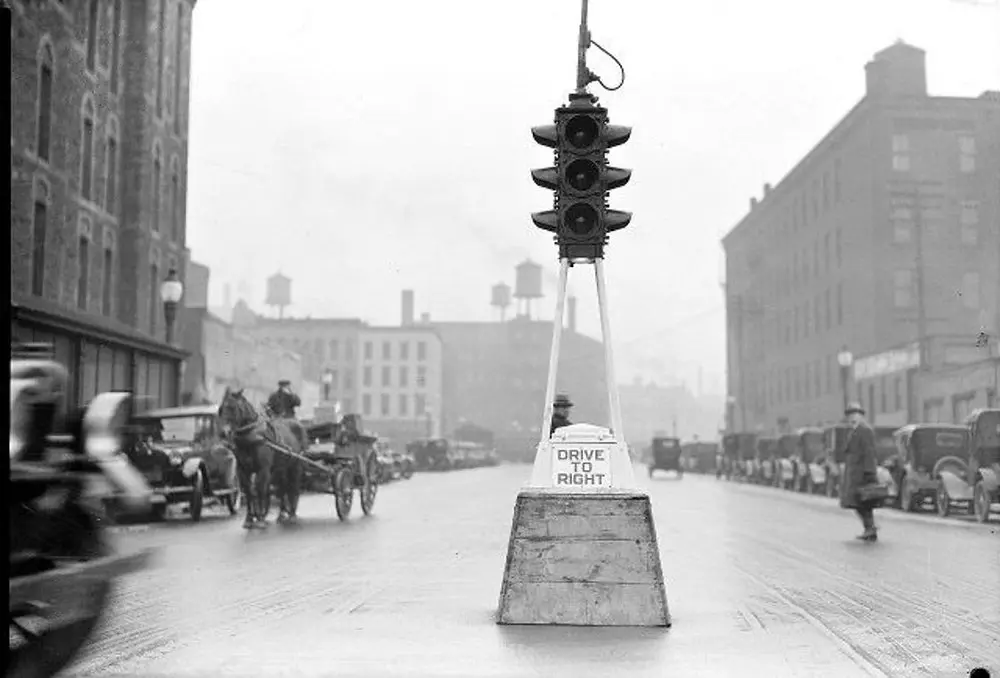
As the automobile became a common sight in the early 20th century, the need for a reliable traffic management system became critical. In 1914, James Hoge installed the first electric traffic light system in Cleveland, Ohio. This system was manually operated by a police officer in a booth, who switched the lights between "stop" and "go" based on the flow of traffic. It was a significant improvement over previous mechanical attempts, though it still relied on human intervention.
The system gained widespread attention for its ability to reduce collisions at busy intersections. Soon after, inventors began experimenting with automatic timers to remove the human element from the process. This evolution was essential because manual operation was prone to error and could not account for the rapid increase in vehicle volume. The transition from manual booths to automated, timed signals marked the birth of the modern urban traffic infrastructure that remains in use today.
Why did Garrett Morgan improve the design?
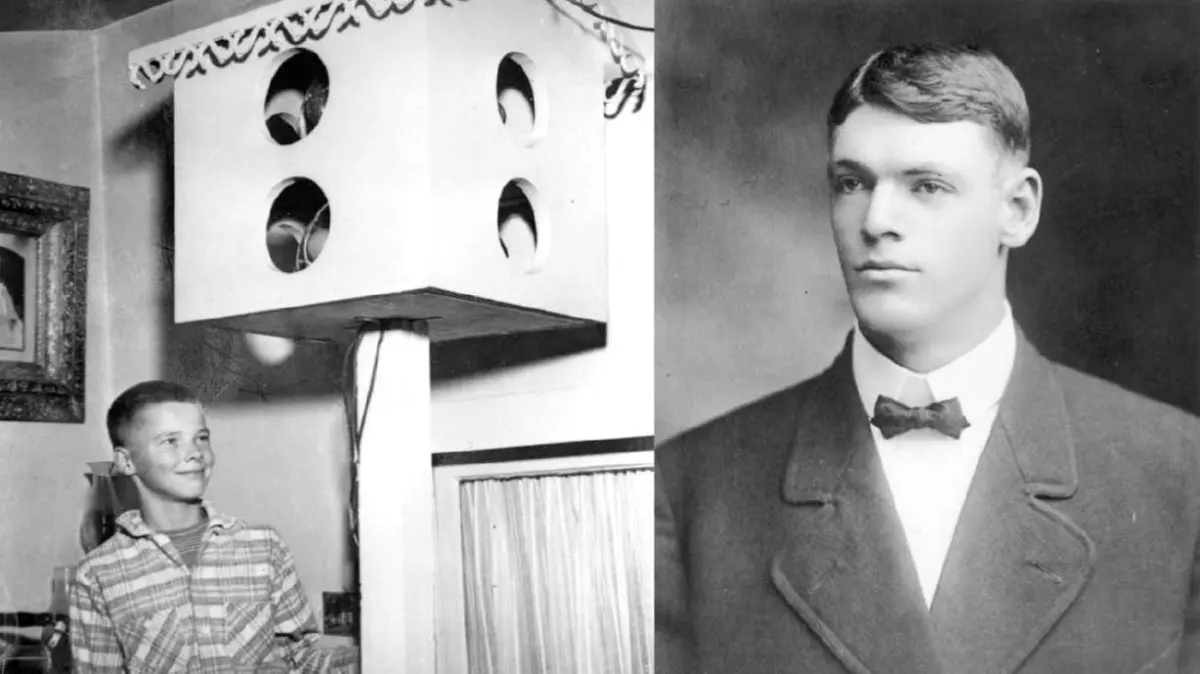
Garrett Morgan, an African American inventor, recognized that existing two-color signals were insufficient for safety. Because there was no warning period between "stop" and "go," drivers often collided when the lights changed abruptly. In 1923, Morgan patented a three-position traffic signal that included a "caution" light. This addition allowed drivers to clear the intersection safely before cross-traffic was permitted to move, significantly reducing the frequency of accidents at busy crossings.
Morgan’s design was revolutionary because it introduced the concept of a standardized transition phase. His invention was so effective that he eventually sold the rights to the General Electric Company for $40,000. This invention solidified the three-light sequence—red, yellow, and green—that is now the global standard for traffic management. His contribution remains one of the most important safety advancements in the history of road transportation.
How do modern traffic lights work?
Modern traffic signals are highly sophisticated systems that use sensors and computer algorithms to manage vehicle flow. Unlike the early timed signals, which operated on fixed cycles regardless of traffic density, current systems often use inductive loops or cameras to detect the presence of vehicles. These sensors allow the controller to extend green lights for busier lanes or shorten them when no cars are waiting.
- Sensors detect a vehicle approaching the intersection.
- The controller processes the data and adjusts the timing cycle.
- The signal switches to green to facilitate the flow of traffic.
- If no vehicles are detected, the system defaults to a pre-programmed cycle.
This dynamic approach minimizes unnecessary idling and improves fuel efficiency for drivers. By prioritizing traffic based on real-time demand, cities can move more vehicles through an intersection in a shorter amount of time, reducing overall congestion and improving road safety.
Common mistakes when navigating traffic lights
Drivers often make errors that compromise safety and efficiency at signalized intersections. One of the most frequent mistakes is "stale green" anxiety, where drivers accelerate prematurely when they see a light turn yellow. Another common issue is failing to clear the intersection during a turn, which blocks cross-traffic and causes gridlock. To navigate these systems effectively, drivers should follow these practical guidelines:
- Always treat a flashing yellow light as a signal to proceed with extreme caution.
- Never enter an intersection if you cannot clear it before the light turns red.
- Wait for a full second after your light turns green before entering the intersection to allow for late-running vehicles.
- Do not stop in a crosswalk, as this forces pedestrians into the path of moving traffic.
Avoiding these behaviors helps maintain the flow of traffic and prevents dangerous T-bone collisions. By understanding that traffic lights are designed to protect all road users, drivers can contribute to a safer and more predictable driving environment for everyone sharing the road.
Key facts
- John Peake Knight installed the first gas-lit traffic signal outside the British Houses of Parliament in London in 1868.
- The 1868 signal exploded after only one month of operation, severely injuring the policeman operating it.
- Garrett Morgan patented a T-shaped traffic signal in 1923, which introduced a crucial "all-stop" warning phase.
- James Hoge installed the first electric traffic light system in Cleveland, Ohio, in 1914.
- Modern traffic lights use sensors, such as induction loops or cameras, to detect vehicle presence and optimize timing.
- When approaching a yellow light, drivers should stop if it is safe to do so rather than accelerating to beat the signal.
The bottom line
The invention of the traffic light was an evolutionary process rather than a single moment of discovery. From London's dangerous gas-lit experiments to the sophisticated electronic systems of today, these signals have become essential for urban safety. By integrating automated sensors and standardized color sequences, traffic lights effectively manage the complex flow of modern vehicles, reducing accidents and ensuring orderly movement on our busy roads.
People also ask
Why did early traffic lights use gas?
Electricity was not yet widely available for public infrastructure in the late 19th century. Gas lamps provided a bright, visible light that could be seen from a distance by horse-drawn carriages.
What was the purpose of the third light color?
The yellow or amber light was introduced to provide a transition period between green and red. It allows drivers to clear the intersection safely before cross-traffic receives a green signal.
Did Garrett Morgan invent the first traffic light?
No, he did not invent the first one, but he significantly improved safety. His 1923 patent introduced a third position that stopped traffic in all directions, preventing accidents at busy intersections.
How do traffic lights know when to change?
Many lights use induction loops buried in the asphalt that detect the metal mass of a vehicle. Others use video cameras or radar to monitor traffic flow and adjust timing based on real-time demand.
Why are traffic lights red, yellow, and green?
Red was adopted from railroad signals because it was the most visible color and historically associated with danger. Green was chosen as the "go" signal because it provided enough contrast against red to avoid confusion.
Can traffic lights be hacked?
While modern smart traffic systems are connected to networks, they are protected by cybersecurity measures. However, researchers have demonstrated that poorly secured systems could theoretically be manipulated, which is why municipal departments prioritize network encryption.
This answer was created with the help of AI research tools and reference sources. Spotted an error? Let us know — we correct mistakes quickly. See our editorial policy.