Why do we see colors?
Short answer
We see colors because the human eye detects specific wavelengths of visible light reflected off objects. Specialized cells in the retina, called cones, absorb these light waves and send electrical signals to the brain. The brain then interprets these signals as distinct hues, creating the vibrant visual experience of the world.

On this page
How does the human eye perceive color?
The process of seeing color begins when light enters the eye through the cornea and pupil. This light hits the retina, a thin layer of tissue at the back of the eye that contains millions of photoreceptor cells. Among these are rods, which detect light intensity, and cones, which are responsible for color vision. Most humans possess three types of cone cells, each sensitive to different ranges of light wavelengths: short (blue), medium (green), and long (red).
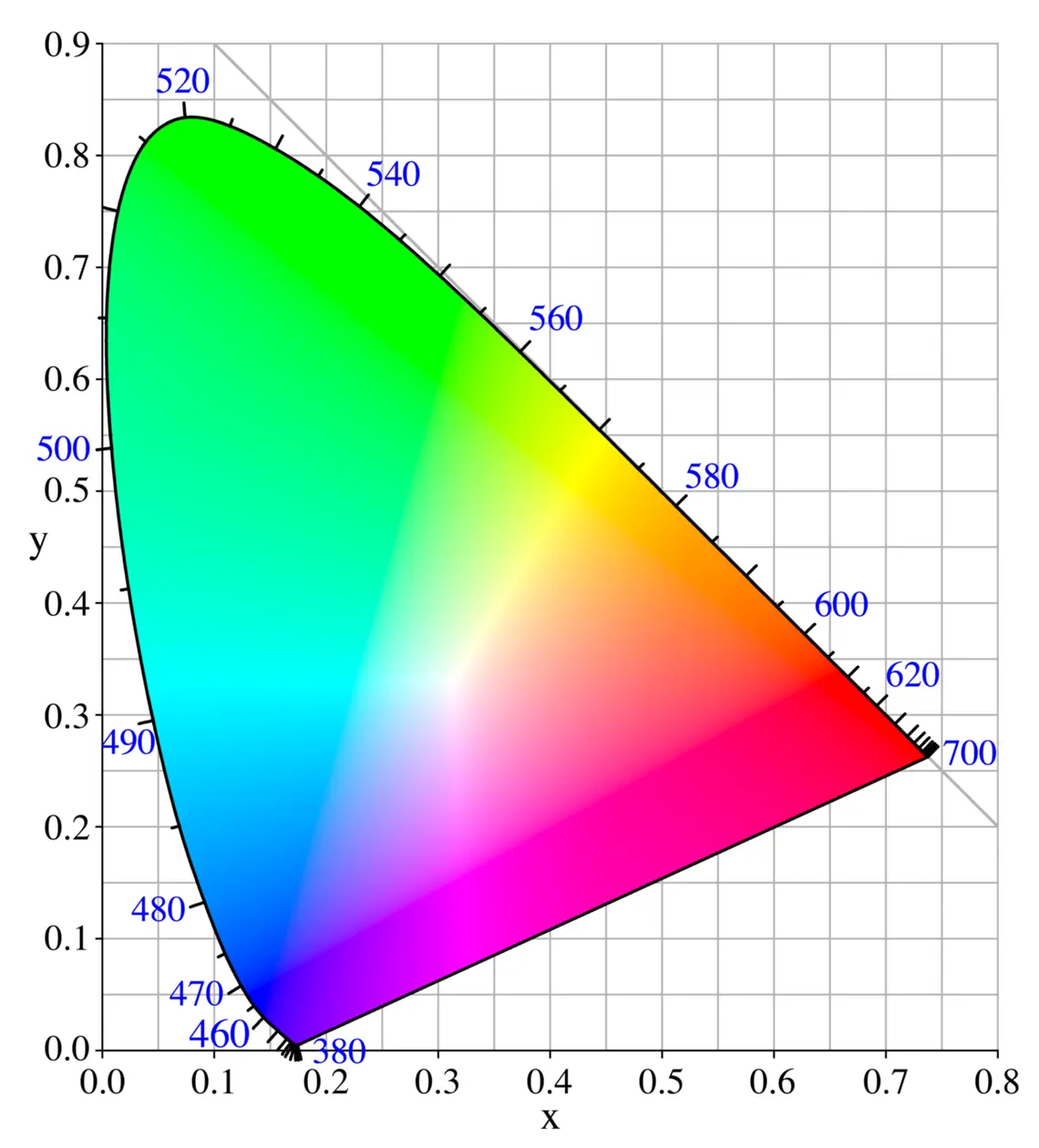
When light strikes these cones, they trigger chemical reactions that convert light energy into electrical impulses. These signals travel along the optic nerve to the visual cortex in the brain. The brain compares the relative stimulation of the three cone types to determine the specific color being viewed. This process happens near-instantaneously, allowing us to perceive millions of color variations across the visible spectrum, which ranges from approximately 380 to 750 nanometers.
Why do objects have different colors?
Objects appear colored because of how their surfaces interact with light. When white light—which contains all colors of the rainbow—hits an object, the material absorbs some wavelengths and reflects others. The color we perceive is determined by the specific wavelengths that bounce off the surface and reach our eyes. For example, a red apple absorbs most light colors but reflects red wavelengths, which our eyes then detect.
Transparent objects, such as glass or clear water, work differently because they allow light to pass through them rather than reflecting it. If an object appears black, it is absorbing nearly all visible light wavelengths, reflecting almost nothing back to the eye. Conversely, white objects reflect almost all wavelengths equally. This interaction is influenced by the physical properties of the material, such as its molecular structure and chemical composition.
- Pigments: Substances that absorb specific light wavelengths and reflect others.
- Structural color: Color produced by the physical arrangement of surfaces rather than pigments, such as in peacock feathers.
- Fluorescence: The emission of light by a substance that has absorbed light at a different wavelength.

What is the visible light spectrum?
The visible light spectrum is the narrow portion of the electromagnetic spectrum that the human eye can detect. It sits between ultraviolet radiation, which has shorter wavelengths, and infrared radiation, which has longer wavelengths. Sir Isaac Newton famously categorized this spectrum into seven distinct colors in 1672: red, orange, yellow, green, blue, indigo, and violet. While these colors blend into one another seamlessly, they represent the progression of light from longer to shorter wavelengths.
Because our eyes are tuned to this specific range, we are blind to the vast majority of the electromagnetic spectrum. Other animals have evolved to see different ranges; for instance, many bees can perceive ultraviolet light, which helps them locate nectar in flowers that appear plain to humans. Understanding this spectrum is essential for fields ranging from physics and astronomy to graphic design and medical imaging, as it defines the boundaries of human visual experience.
- Identify the light source (e.g., sunlight, LED, or incandescent bulb).
- Observe the object's surface texture and material composition.
- Note the ambient lighting conditions, as they shift the perceived color.
- Compare the reflected light against a known reference, such as a color wheel.

Common mistakes when identifying colors
One frequent error is assuming that color is an inherent property of an object rather than a result of light interaction. People often forget that color perception is highly dependent on the light source illuminating the object. If you view a blue shirt under a yellow light, the shirt may appear green because the light source lacks the blue wavelengths necessary for the shirt to reflect its true color. This phenomenon is known as metamerism, where two colors appear identical under one light source but different under another.
Another mistake is ignoring the role of the brain in color processing. The brain does not just receive information; it actively interprets it based on context, surrounding colors, and past experiences. This is why optical illusions involving color can be so effective. Relying solely on your eyes without considering the lighting environment or the surrounding contrast often leads to inaccurate color identification. Always use controlled lighting when precision is required, such as when painting or color-matching fabrics.
How to improve your color perception
Improving your ability to distinguish and name colors requires practice and an understanding of color theory. Start by studying the color wheel, which organizes colors based on their relationship to one another, including primary, secondary, and tertiary hues. By learning how colors mix and interact, you can better predict how light will affect the appearance of objects. Regularly testing your skills with online color-sorting games or professional color-blindness tests can also sharpen your visual acuity.
When working on creative projects, utilize standard lighting conditions to ensure consistency. Avoid working in environments with mixed light sources, such as a room with both natural daylight and warm artificial lamps, as this will distort your perception. If you are struggling to identify subtle shades, try placing the object next to a neutral gray background to eliminate visual noise. Consistent practice and a methodical approach to lighting will significantly enhance your ability to perceive and utilize the full spectrum of color in your daily life.
Key facts
- Light is composed of electromagnetic waves, and the human eye perceives different wavelengths as different colors.
- Visible light ranges from approximately 380 nanometers (violet) to 750 nanometers (red) in wavelength.
- Cones are specialized photoreceptor cells in the retina that detect color; humans typically have three types sensitive to red, green, and blue.
- Objects appear colored because they absorb certain wavelengths of light and reflect others back to our eyes.
- White light, such as sunlight, contains all visible wavelengths combined, which is why a prism can split it into a rainbow.
- To improve color perception, ensure your environment has high-CRI (Color Rendering Index) lighting, which mimics the full spectrum of natural daylight.
The bottom line
We see colors because our eyes and brains work together to interpret specific wavelengths of light reflected from objects. By utilizing specialized cells called cones, our visual system translates these physical waves into the rich, vibrant spectrum we experience daily. Understanding this process helps us appreciate how light interacts with the world, proving that color is not just a visual trait, but a complex interaction of physics and biology.
People also ask
Why do some people have color blindness?
Color blindness usually occurs when one or more types of cone cells are missing or malfunctioning. The most common form is red-green color blindness, which is typically an inherited genetic condition.
Do animals see the same colors as humans?
No, animal vision varies significantly; for example, many insects see ultraviolet light, while dogs possess only two types of cones, limiting their color range. This difference is an evolutionary adaptation for their specific survival needs.
Why does the sky look blue during the day?
The sky appears blue due to Rayleigh scattering, where shorter blue wavelengths of sunlight are scattered more strongly by molecules in Earth's atmosphere. This phenomenon directs more blue light toward our eyes from all parts of the sky.
Is black a color?
In the context of physics, black is the absence of visible light, meaning an object absorbs all wavelengths. However, in art and pigment mixing, black is treated as a color because it is created by combining various pigments.
Read the full answer →How does a rainbow form?
A rainbow occurs when sunlight enters raindrops and undergoes refraction, reflection, and dispersion. The water droplet acts like a tiny prism, separating the white light into its component colors based on their distinct wavelengths.
Can colors affect human mood?
Color psychology suggests that colors can influence emotions and behavior, though these effects are often subjective and culturally dependent. For instance, cool tones like blue are often associated with calmness, while warmer tones like red can signify excitement or urgency.
This answer was created with the help of AI research tools and reference sources. Spotted an error? Let us know — we correct mistakes quickly. See our editorial policy.