What do alligators eat?
Short answer
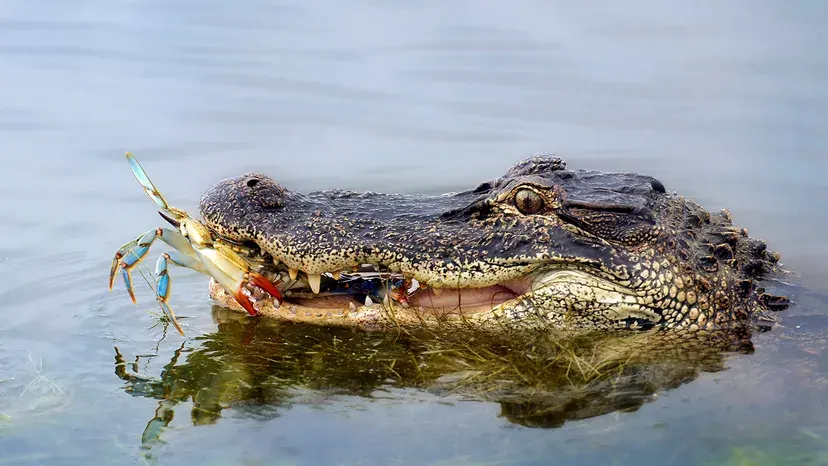
Alligators are opportunistic apex predators that consume a wide variety of prey depending on their age and size. Their diet primarily consists of fish, crustaceans, amphibians, reptiles, and mammals. While younger alligators focus on small insects and snails, adults regularly hunt larger animals like deer, wild hogs, and waterfowl.
On this page
What do alligators eat in the wild?
Alligators are generalist carnivores, meaning they consume almost any animal they can overpower. Their diet shifts significantly as they grow from hatchlings to massive adults. Young alligators, typically under three feet long, rely on small prey such as aquatic insects, snails, crayfish, and small minnows. This high-protein diet supports their rapid growth during the first few years of life.
As they mature, their hunting strategy becomes more sophisticated and their prey selection expands. Adult alligators are apex predators, capable of taking down animals much larger than themselves. Their common prey items include:
- Freshwater fish like gar, bass, and catfish
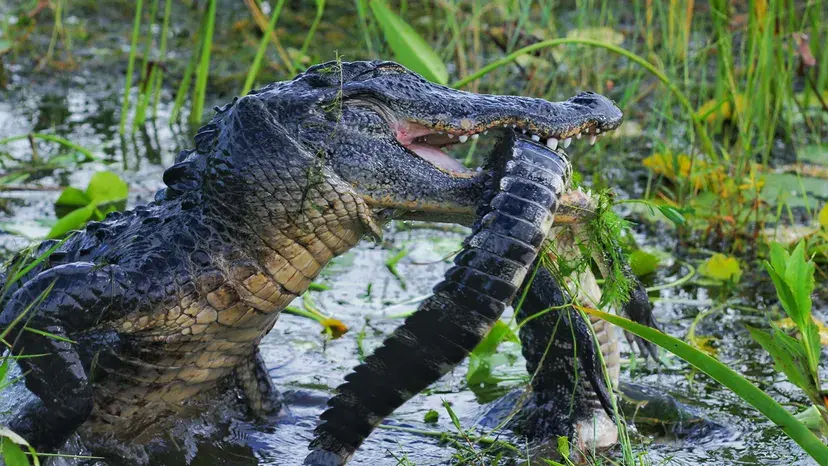
- Turtles, snakes, and smaller alligators
- Waterfowl such as ducks, herons, and egrets
- Mammals including raccoons, opossums, nutrias, and occasionally deer
Because they are cold-blooded, alligators do not need to eat as frequently as mammals of similar size. An adult alligator may only eat once a week or even less during the cooler winter months when their metabolism slows down significantly.
How do alligators hunt their prey?
Alligators are ambush predators that utilize stealth and patience to secure a meal. They often remain motionless in the water, with only their eyes and nostrils visible above the surface, waiting for an unsuspecting animal to approach the shoreline. Once the prey is within range, the alligator launches a sudden, explosive strike, using its powerful tail to propel itself forward.
Once they secure their prey, alligators use a specific set of behaviors to consume it:
- Grip the prey firmly with their powerful jaws, which exert thousands of pounds of pressure.
- Drag the animal underwater to drown it, as alligators can hold their breath for up to an hour.
- Perform a "death roll" to tear off manageable chunks of meat if the prey is too large to swallow whole.
This hunting style allows them to conserve energy while maximizing the effectiveness of their physical strength. They are highly sensitive to vibrations in the water, which helps them detect movement even in murky conditions.
Why do alligators eat human food?
Alligators are naturally wary of humans, but they are also highly intelligent and opportunistic. When humans feed alligators, the animals quickly learn to associate people with food. This behavior, known as habituation, is dangerous because it removes the alligator's natural fear of humans and encourages them to approach docks, boat ramps, and swimming areas in search of handouts.
Feeding alligators is illegal in most jurisdictions, including Florida, Louisiana, and Texas, because it creates a public safety hazard. Once an alligator becomes habituated, it may become aggressive or territorial, eventually requiring management by wildlife officials. In many cases, these "nuisance" alligators must be euthanized because they have lost the ability to hunt naturally and pose a persistent threat to the public.
- Never throw food scraps into the water near where alligators live.
- Avoid cleaning fish or discarding fish remains near swimming or fishing areas.
- Keep pets on a leash and away from the water's edge in alligator-inhabited regions.
Common mistakes when living near alligators
Many people underestimate the speed and agility of an alligator on land. A common mistake is believing that alligators are slow or sluggish; while they lack stamina, they can sprint very quickly for short distances. Another error is assuming that an alligator is safe to approach simply because it appears to be sunning itself on a bank. These animals are often guarding territory or waiting for a chance to strike.
People frequently fail to realize that alligators are most active during the dawn, dusk, and night hours. Swimming or walking near water during these times significantly increases the risk of an encounter. Additionally, many residents mistakenly believe that small bodies of water, such as golf course ponds or decorative fountains, are free of alligators. In reality, alligators can travel long distances over land to colonize new bodies of water, meaning any freshwater habitat in their range should be treated as potentially occupied.
How to stay safe around alligators
Safety around alligators relies on maintaining a respectful distance and understanding their behavioral patterns. If you see an alligator, the best practice is to stay at least 30 to 50 feet away at all times. Never attempt to poke, harass, or feed them, as this triggers defensive or predatory responses. If an alligator hisses or lunges, it is a clear warning that you have entered its personal space.
To ensure your safety when recreating near water, follow these steps:
- Scan the water's edge before approaching, especially in tall grass or vegetation.
- Keep your pets away from the water, as they often resemble the size and movement of natural prey.
- Avoid swimming in areas known to have alligator populations, particularly during the dusk and dawn hours.
- If you are chased by an alligator, run in a straight line away from the water; they are built for short bursts of speed, not long-distance endurance.
By respecting their space and avoiding behaviors that encourage their presence near human activity, you can coexist safely with these ancient reptiles. Always report aggressive or unusually bold alligators to your local wildlife management agency immediately.
Key facts
- Alligators are opportunistic carnivores that consume almost any animal they can catch and swallow.
- Juvenile alligators primarily feed on insects, snails, crustaceans, and small fish to support rapid growth.
- Adult alligators frequently hunt turtles, snakes, birds, mammals, and occasionally other smaller alligators.
- They possess powerful jaws designed for crushing, allowing them to easily consume prey with hard shells like turtles.
- Alligators do not chew their food; they swallow smaller prey whole and tear larger prey into manageable chunks.
- Never feed wild alligators, as this causes them to lose their natural fear of humans and associate people with food.
The bottom line
Alligators are highly adaptable apex predators that play a vital role in wetland ecosystems by controlling prey populations. Their diet shifts from small invertebrates in youth to large vertebrates in adulthood, reflecting their opportunistic nature. Because they can survive long periods without eating, they are masters of energy conservation. Always maintain a safe distance and never attempt to feed them to ensure both human and animal safety.
People also ask
Do alligators eat humans?
While alligators are apex predators, unprovoked attacks on humans are rare. Most incidents occur when people swim in murky waters or approach alligators that have been habituated to human feeding.
How often do alligators need to eat?
Their metabolism is highly efficient, meaning they can survive for long periods without food. In warm weather, they may eat several times a week, but during winter, they can go months without a meal.
Can alligators eat poisonous snakes?
Yes, alligators have a robust immune system that allows them to consume venomous snakes without suffering ill effects. They frequently hunt cottonmouths and other water snakes found in their habitat.
Do alligators eat plants?
While they are strictly carnivores, alligators may occasionally ingest plant matter while capturing prey. This is usually accidental and provides no nutritional value, as their digestive systems are built for protein.
How do alligators hunt their prey?
They are ambush predators that wait submerged near the water's edge. Once prey is within range, they strike with explosive speed, dragging the animal underwater to drown it.
Why do alligators store food?
Alligators often wedge large kills under logs or banks to let the carcass soften. This process, known as caching, makes it easier for the alligator to tear off pieces of meat later.
This answer was created with the help of AI research tools and reference sources. Spotted an error? Let us know — we correct mistakes quickly. See our editorial policy.