What do herons eat?
Short answer
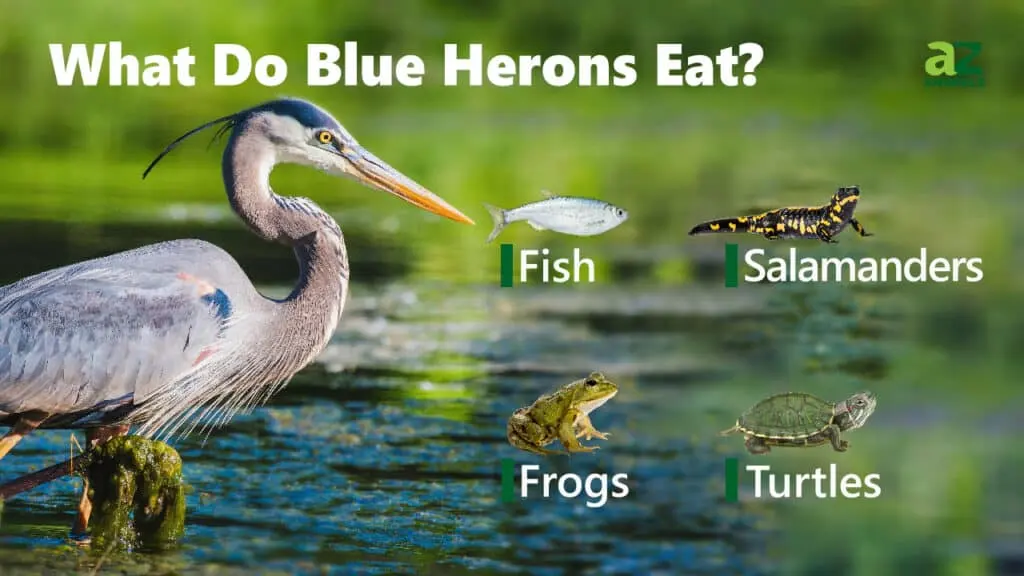
Herons are opportunistic carnivores that primarily consume fish, amphibians, reptiles, crustaceans, and small mammals. These wading birds use their sharp, dagger-like bills to strike prey in shallow water or grassy fields. While their diet varies by species and habitat, they generally hunt whatever small, protein-rich animals are most readily available.
On this page
What do herons eat in the wild?
Herons are highly adaptable predators that consume a wide variety of aquatic and terrestrial prey. Their diet is dictated largely by their environment, whether they are hunting in freshwater marshes, coastal estuaries, or inland meadows. Fish typically form the bulk of their intake, but they are far from picky eaters. They are known to consume almost anything they can swallow whole, provided it fits within their throat capacity.
The following list highlights the primary food sources for most heron species:
- Fish: Minnows, sunfish, perch, and carp are common targets.
- Amphibians: Frogs, tadpoles, and salamanders.
- Crustaceans: Crayfish, crabs, and shrimp.
- Reptiles: Snakes, lizards, and small turtles.
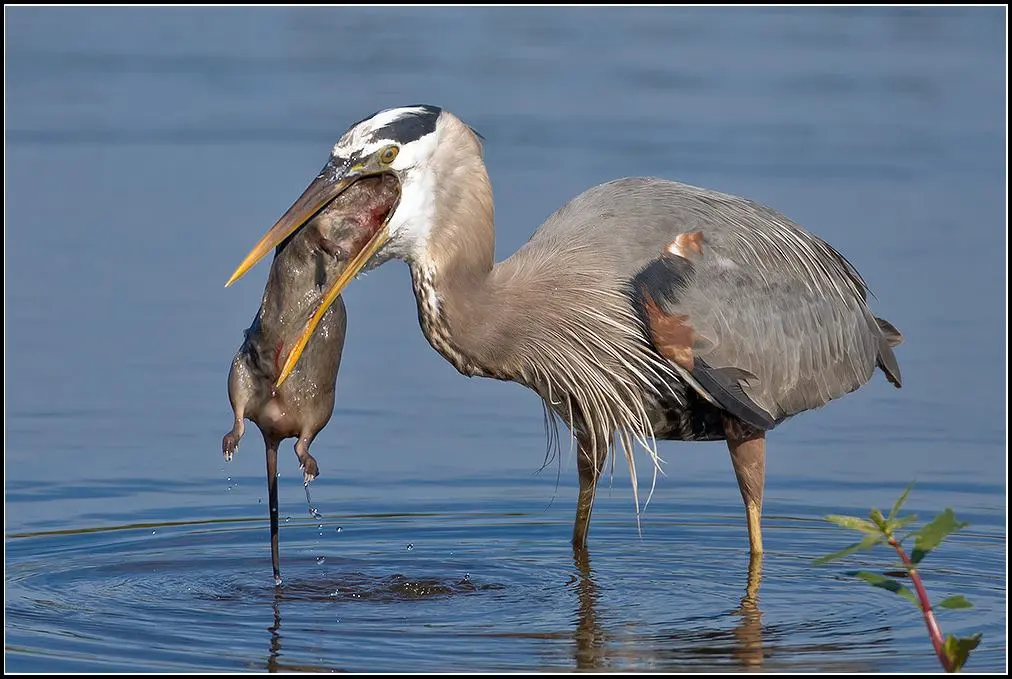
- Small Mammals: Voles, mice, and occasionally young birds.
- Insects: Dragonflies, grasshoppers, and large water beetles.
Because they are opportunistic, herons do not rely on a single food source. If a specific population of fish declines, they quickly pivot to hunting insects or rodents in nearby fields. This flexibility allows them to thrive in diverse ecosystems, from urban ponds to remote wilderness wetlands.
How do herons hunt for food?
Herons utilize a patient, "stand-and-wait" hunting strategy that relies on extreme stillness. They often stand motionless in shallow water for long periods, blending into the reeds or shadows. Once a target moves within range, they strike with lightning speed, using their long, flexible necks to propel their bills forward. This motion is so rapid that it is often difficult for the human eye to follow.
Beyond the wait-and-strike method, herons also employ active hunting techniques:
- Wading slowly: The bird moves through the water with deliberate, slow steps to avoid disturbing the surface.
- Foot-stirring: Some species drag their feet through the mud to flush out hidden crustaceans or fish.
- Canopy-feeding: Certain herons spread their wings to create shade, which attracts fish looking for a cool, dark spot.
This combination of patience and precision allows them to conserve energy while maximizing their success rate. By carefully choosing their hunting grounds based on water clarity and prey density, they ensure a consistent intake of protein throughout the day.
Where do herons find their meals?
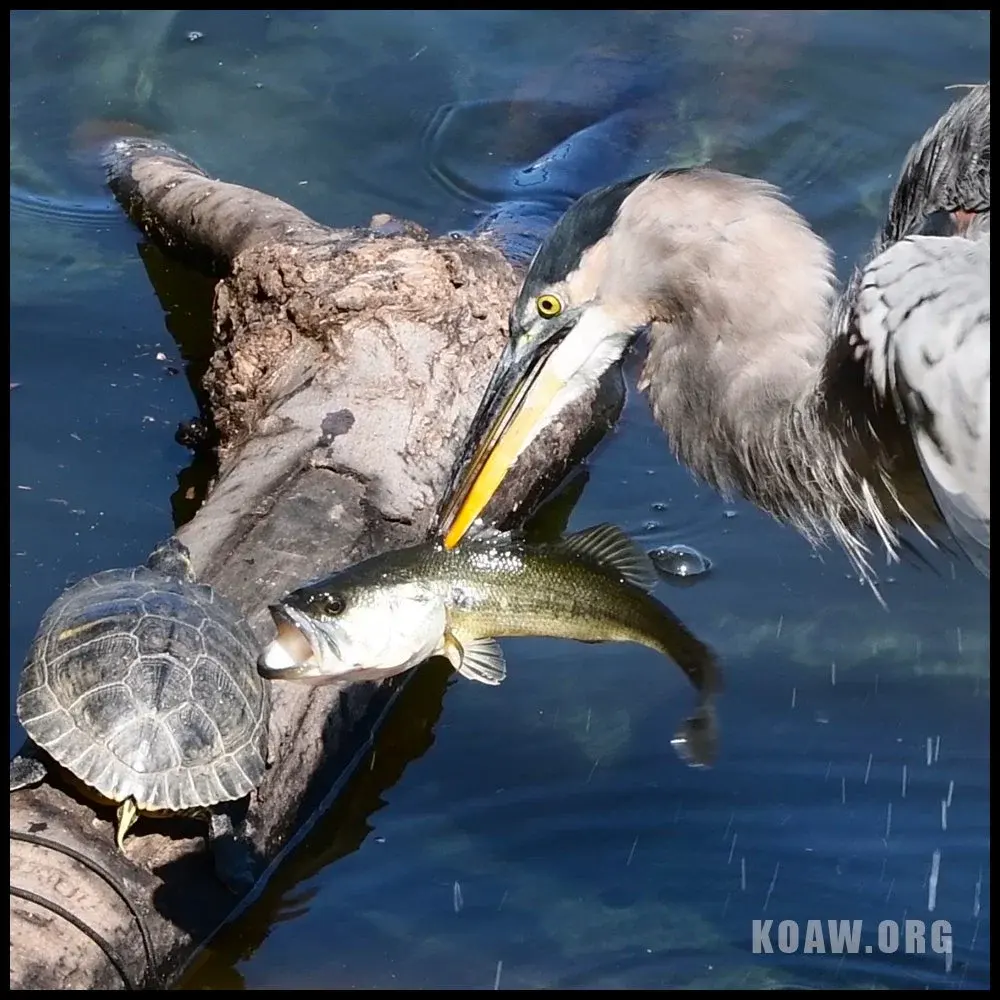
Herons are most frequently associated with aquatic environments, where they occupy the "wading bird" niche. Shallow water is essential for their hunting style, as it allows them to stand firmly on the bottom while keeping their eyes near the surface. You will often see them along the edges of lakes, rivers, ponds, and salt marshes. These zones provide the perfect intersection of cover and prey availability.
However, many species, such as the Great Blue Heron, are also common in terrestrial settings. It is not unusual to spot them in large, open fields or golf courses hunting for gophers or field mice. These birds are highly territorial regarding their hunting grounds and will often defend a prime fishing spot from other herons. Their ability to switch between aquatic and terrestrial foraging makes them one of the most successful avian predators in North America.
Common mistakes when observing heron feeding
One of the most frequent mistakes observers make is assuming that herons only eat fish. While fish are a staple, focusing solely on the water can cause you to miss their complex hunting behaviors in grassy areas. Another common error is approaching too closely during a hunt. Herons are incredibly sensitive to motion; even a slight movement of a nearby person can cause them to abandon a prime hunting site and fly away.
To observe them effectively, follow these guidelines:
- Maintain a distance of at least 50 feet to avoid disrupting their natural behavior.
- Use binoculars or a camera with a telephoto lens to capture details without intrusion.
- Remain silent and avoid sudden movements, as herons have excellent vision and hearing.
- Avoid feeding herons human food, such as bread or processed snacks, which lack necessary nutrients and can be harmful to their digestive systems.
Respecting their space ensures that you can witness their remarkable hunting techniques without interfering with their survival.
Why do herons swallow prey whole?
Unlike many raptors that use talons to tear prey into smaller pieces, herons lack the physical anatomy to rip apart their food. Instead, they have evolved to swallow their catch entirely. This is why they are so selective about the size of the animal they target. If a fish is too large or has sharp, protruding spines, the heron may struggle to manipulate it into the correct position for swallowing.
They typically maneuver the prey so that the head is facing down their throat, which prevents fins or limbs from snagging on the way down. If a heron catches a fish that is too big, it may drop the item and wait for a smaller target. This biological limitation is a critical factor in their daily survival, as they must balance the energy required to catch a large meal against the risk of choking. By swallowing whole, they process nutrients efficiently, allowing them to remain light and aerodynamic for flight.
Key facts
- Herons are opportunistic carnivores that primarily hunt by standing perfectly still in shallow water to ambush prey.
- Their diet consists mostly of fish, but they also regularly consume crustaceans, amphibians, insects, and small mammals.
- A great blue heron can swallow fish up to 12 inches long, often manipulating the prey to swallow it head-first.
- When observing herons, avoid approaching them, as they are easily spooked and will abandon a prime hunting spot if they sense a threat.
- Herons sometimes hunt in fields for rodents, proving they are not exclusively tied to aquatic environments.
- To attract herons to a pond, ensure the water depth is varied, as they need shallow edges to wade comfortably while searching for food.
The bottom line
Herons are highly adaptable, opportunistic predators that rely on patience and precision to secure a diverse diet of fish, amphibians, and small mammals. Whether hunting in shallow wetlands or open fields, these birds play a vital role in balancing local ecosystems. By understanding their hunting habits, observers can better appreciate their contribution to nature and take necessary precautions to protect vulnerable backyard pond life.
People also ask
Do herons eat garden fish like koi or goldfish?
Yes, herons are well-known predators of backyard pond fish. They can quickly deplete a collection of expensive koi if the pond lacks adequate hiding spots or protective netting.
How do herons catch their prey?
They use a patient "wait-and-see" technique, standing motionless for long periods. Once prey is within range, they strike with lightning speed, using their sharp, dagger-like beaks to pierce or grasp the target.
Do herons eat snakes?
Yes, herons are capable of eating snakes, including venomous species. They are skilled at subduing reptiles by shaking them or striking them against the ground before swallowing them whole.
Are herons harmful to the environment?
No, herons are a natural part of the ecosystem and help control populations of fish, frogs, and rodents. They are considered apex predators in many wetland habitats and are protected by law in many regions.
Do herons hunt at night?
While they are primarily diurnal, some species like the black-crowned night heron are specialized for nocturnal hunting. Most other herons will hunt at dusk or dawn if food is abundant.
How much food does a heron need to eat daily?
A large heron, such as the great blue heron, typically requires about one pound of food per day to maintain its body weight. This amount can vary depending on the season and the energy spent during migration or nesting.
This answer was created with the help of AI research tools and reference sources. Spotted an error? Let us know — we correct mistakes quickly. See our editorial policy.