What is a group of elephants called?
Short answer
A group of elephants is primarily called a herd. While there is no formal collective noun like a "pride" of lions or a "murder" of crows, "herd" is the standard scientific and common term. Occasionally, people use the term "parade" of elephants in literary or whimsical contexts, but it is not scientific.

On this page
What is a herd of elephants?
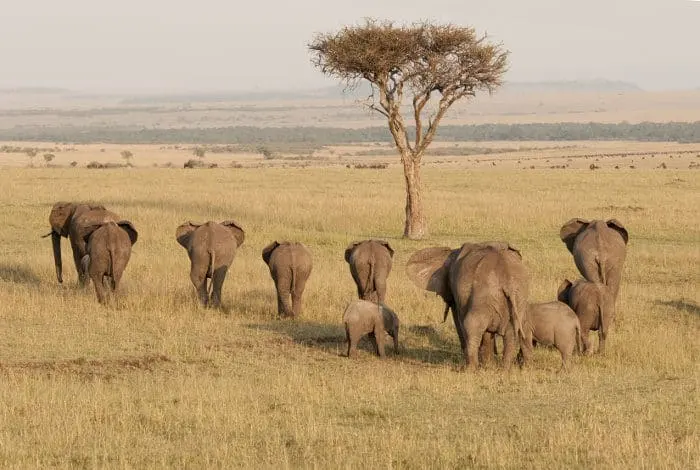
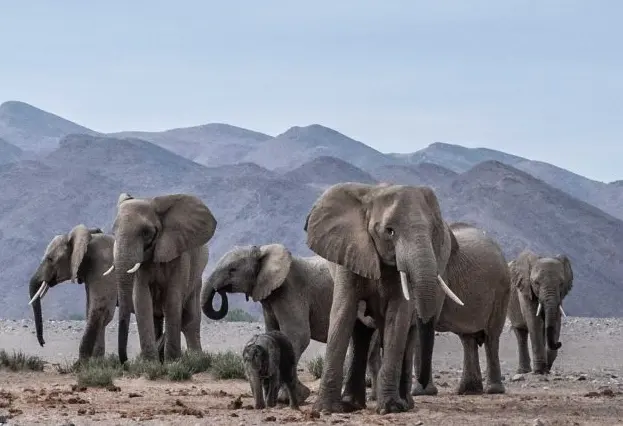
A herd of elephants is a complex social unit defined by its matriarchal structure. These groups are typically composed of related females, including a grandmother, her daughters, and their offspring. This structure ensures that the younger generation learns essential survival skills, such as locating water sources and identifying safe foraging grounds, from the most experienced elder in the group.
The size of a herd can vary significantly based on environmental conditions and the availability of resources. While a typical family unit may consist of 8 to 15 individuals, these smaller groups often congregate into larger "bond groups" during periods of migration or when resources are abundant. These social structures are highly fluid, allowing elephants to maintain connections with extended family members across vast landscapes.
- Matriarchal leadership: The oldest female leads the group.
- Social bonding: Strong emotional ties exist between mothers and calves.
- Cooperative care: All females in the herd often assist in protecting and raising the young.
How do elephant social structures work?
Elephant social organization is often described as a "fission-fusion" society. This means that groups frequently split apart into smaller units to forage efficiently and then rejoin later to socialize or defend against threats. This flexibility allows the elephants to adapt to the changing availability of food and water in their habitat, which is crucial for their survival in often harsh environments.
Males, known as bulls, follow a different social trajectory than females. Upon reaching adolescence, usually between 10 and 15 years of age, young males leave their natal herd. They may lead a solitary life or form loose, temporary associations with other bulls. These male groups, sometimes called "bachelor herds," lack the rigid, long-term stability of the female-led family units but provide essential social interaction and hierarchy building for the males.
Why do elephants travel in groups?
Traveling in a group offers significant survival advantages for elephants. The primary benefit is protection, as a large, coordinated group is much more capable of deterring predators like lions or hyenas than a solitary individual. The presence of multiple adults ensures that calves are always surrounded by protective figures, significantly increasing their chances of reaching maturity in the wild.
Beyond physical safety, group living facilitates the sharing of collective knowledge. Elephants possess remarkable memories, and the oldest females serve as living libraries of environmental data. By staying together, the group benefits from the matriarch's memory of where to find water during severe droughts or which plants are safe to consume during different seasons. This shared wisdom is the key to the species' long-term endurance in challenging ecosystems.
- Locate water holes through ancestral memory.
- Coordinate defense against predators using size and numbers.
- Teach social norms and communication to younger calves.
Common mistakes when identifying elephant groups
One common mistake is assuming that all elephants seen together are part of a single, permanent family unit. Because of the fission-fusion nature of their society, observers often see temporary aggregations that may look like one large family but are actually several distinct groups meeting at a watering hole. Distinguishing between a true family unit and a temporary gathering requires long-term observation of individual interactions and social hierarchies.
Another frequent error is the belief that males are always solitary. While mature bulls often spend significant time alone, they are social creatures and frequently seek out other males. Labeling any group of elephants as a "herd" is technically correct, but understanding the nuance between a family unit and a bachelor group provides a much clearer picture of their complex social lives and behavioral patterns.
How to observe elephant herds safely
When observing elephants in the wild, maintaining a respectful distance is the most critical safety rule. Elephants are highly intelligent and sensitive to perceived threats, especially when they have calves in the group. Always remain inside your vehicle or behind designated barriers, and never attempt to approach a herd on foot. Sudden movements or loud noises can startle the animals, potentially triggering a defensive reaction.
- Keep a distance of at least 50 to 100 meters at all times.
- Turn off your engine to minimize noise and stress for the animals.
- Watch for signs of agitation, such as ear flapping, trumpeting, or head shaking.
- Back away slowly if the elephants stop feeding and focus their attention on you.
If you notice a matriarch turning toward you or spreading her ears wide, she is signaling that you are too close. Respect these warnings immediately by retreating, as a charging elephant is a powerful and dangerous force. By following these guidelines, you can enjoy the privilege of watching these magnificent creatures interact within their natural social structures without causing them unnecessary distress or risking your own safety.
Key facts
- A group of elephants is officially known as a herd.
- These herds are matriarchal, led by the oldest and most experienced female.
- Adult males, or bulls, typically live alone or in small, temporary bachelor groups.
- A typical family unit consists of related females and their offspring.
- Herds communicate over long distances using low-frequency rumbles that travel through the ground.
- When observing elephants in the wild, always maintain a distance of at least 100 meters to avoid triggering defensive behavior.
The bottom line
The most accurate term for a group of elephants is a herd, which functions as a complex, matriarchal society. These groups are defined by strong emotional bonds and shared survival knowledge passed down through generations. Understanding this social structure is essential for anyone interested in wildlife conservation, as it highlights the importance of protecting family units to ensure the long-term health and stability of elephant populations.
People also ask
How many elephants are usually in a herd?
A typical family herd consists of 8 to 15 individuals, though larger groups can form during the dry season. Sometimes, multiple family units congregate to form "super-herds" numbering in the hundreds.
Do elephants ever leave their birth herd?
Female elephants usually stay with their birth herd for their entire lives. Male elephants typically leave their family unit when they reach sexual maturity, usually between the ages of 12 and 15.
Why do elephants live in herds?
Living in a group provides essential protection against predators and allows for cooperative calf-rearing. The collective knowledge of the matriarch helps the group locate water and food sources during times of scarcity.
Are elephants aggressive toward other herds?
Elephants are generally social and peaceful toward other family units. They often greet each other with elaborate displays of trunk touching and vocalizations when their paths cross at water holes.
Can a herd survive without a matriarch?
The matriarch is vital because she holds the group's "social memory" regarding migration routes and survival tactics. If she dies, the herd may struggle to find resources, and younger, less experienced females must assume leadership roles.
Do elephants recognize members of their extended family?
Yes, elephants have remarkable memories and can recognize dozens of other individuals. They maintain long-term social bonds and show signs of distress or mourning when a member of their extended group passes away.
This answer was created with the help of AI research tools and reference sources. Spotted an error? Let us know — we correct mistakes quickly. See our editorial policy.