What is a group of foxes called?
Short answer
A group of foxes is most commonly called a skulk or a leash. While foxes are generally solitary animals, these collective nouns are used by naturalists to describe them when they are occasionally seen together. Other, less common terms for a group of foxes include an earth, a troop, or a pack.

On this page
Why are foxes considered solitary animals?
Unlike wolves or domestic dogs, foxes do not rely on complex pack structures to survive or hunt. They are primarily nocturnal, opportunistic hunters that thrive by foraging alone across diverse landscapes, ranging from dense forests to urban environments. Because they do not hunt cooperatively, they lack the social evolutionary pressures that lead to the formation of permanent groups.
Most fox species, such as the red fox, maintain a solitary lifestyle for the majority of the year. They establish individual territories that they defend against other foxes to ensure a consistent food supply. While they are highly intelligent and capable of complex communication, their social interactions are typically limited to mating rituals and the period during which a mother fox, known as a vixen, raises her kits. This independent nature is the primary reason why observing a large group of foxes in the wild is an exceptionally rare occurrence.
What is the difference between a skulk and a leash?
The terms "skulk" and "leash" are specific collective nouns originating from the traditions of hunting and natural history. A "skulk" is the most frequently cited term, derived from the verb "to skulk," which means to move stealthily or hide. This accurately reflects the fox's reputation as a cunning and elusive predator that prefers to remain out of sight.
A "leash" is a more archaic term, historically used by hunters to describe a set of three animals, particularly hounds or foxes. While these terms are linguistically interesting, they are rarely used in scientific literature, where researchers prefer to describe foxes based on their specific family units. Understanding these distinctions helps clarify how human language has attempted to categorize the behavior of wildlife over several centuries.
- Skulk: The most common term, emphasizing the animal's secretive movement.
- Leash: Traditionally refers to a group of three foxes.
- Earth: Sometimes used to describe a fox and its denning site.
- Troop: An infrequent term used to describe a small gathering of foxes.
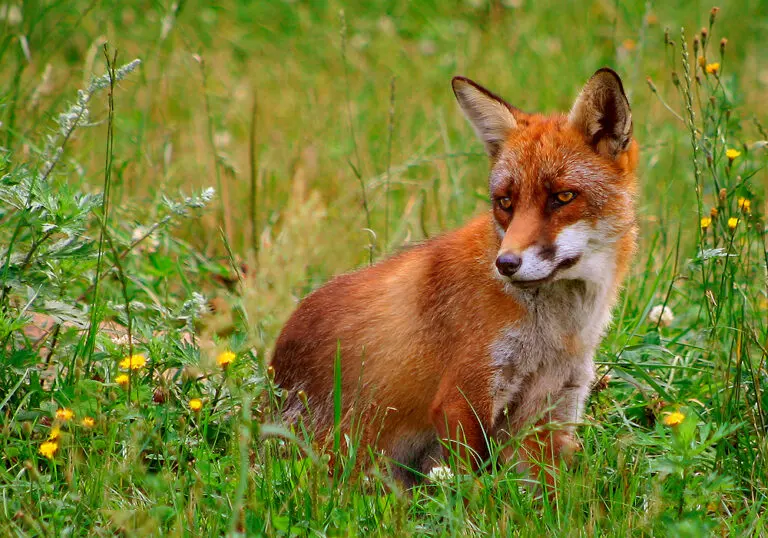
How to observe foxes in the wild
Observing foxes requires patience, silence, and a deep understanding of their habits. Because foxes are naturally wary of humans, the best approach is to remain stationary and blend into the environment. Early morning or late evening are the most productive times, as these are the peak hours for fox activity.
To increase your chances of a successful sighting, follow these practical steps:
- Research local habitats to identify areas with high prey density, such as fields near woodland edges.
- Wear neutral-colored clothing that masks your scent and breaks up your silhouette against the landscape.
- Position yourself downwind from the fox’s suspected path to prevent them from detecting your presence.
- Use binoculars to maintain a significant distance, ensuring you do not disrupt their natural behavior or cause them to flee.
Common mistakes when identifying fox behavior
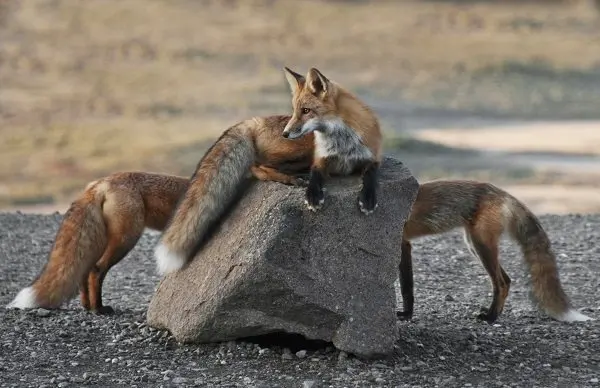
A frequent error is misinterpreting the presence of multiple foxes as a permanent social group. Often, what appears to be a "skulk" is actually a mother teaching her nearly grown kits how to hunt or navigate their territory. These kits remain with the vixen until they reach independence, typically around six to nine months of age, creating a temporary gathering that is not a true pack.
Another mistake is assuming that foxes are aggressive toward one another if they are seen together. While they are territorial, they also engage in complex social signaling to avoid direct conflict. If you observe two foxes together, they may be a mating pair or siblings interacting in a playful manner. Misidentifying these temporary social bonds as permanent pack behavior can lead to incorrect assumptions about the species' social structure and their overall ecological role in the local food web.
Why do foxes gather during the breeding season?
The breeding season, which usually occurs in mid-winter, is the only time when foxes actively seek out consistent social interaction. During this period, males, known as dogs, travel extensively to find a mate, and the solitary nature of the species is temporarily set aside. Once a pair is formed, they may spend several weeks together, sharing food and preparing a den for the upcoming litter.
After the kits are born, the father often assists in bringing food to the den, though he rarely enters it, preferring to leave the prey at the entrance for the vixen. This cooperative effort is essential for the survival of the offspring, but it remains a temporary arrangement. Once the kits are weaned and capable of hunting on their own, the family unit disperses, and the foxes return to their solitary existence. This cycle of brief social cohesion followed by long-term independence is the defining characteristic of the fox's life history.
Key facts
- A group of foxes is most commonly referred to as a "skulk" or a "leash."
- You may also hear a group of foxes described as an "earth," which specifically refers to their underground den.
- While foxes are often social in family units, they are primarily solitary hunters and rarely congregate in large packs.
- The term "skulk" originates from the Middle English word "skulken," meaning to lurk or hide.
- A family group consisting of a vixen and her cubs is technically called a "drey" or a "litter."
- Avoid confusing fox terminology with dog packs; foxes are distinct from wolves and coyotes, which exhibit true pack behavior.
The bottom line
While the collective noun for a group of foxes is a skulk or a leash, these animals are fundamentally solitary creatures. They do not form packs like wolves or dogs, preferring to hunt alone and only gathering in small family units during the breeding season. Understanding these distinctions helps clarify that foxes are elusive, independent predators that rely on stealth rather than group coordination to survive.
People also ask
Are foxes considered pack animals?
No, foxes are generally solitary animals that hunt and forage alone. They only come together in small family groups to raise their young during the spring and summer months.
What is a male fox called?
A male fox is known as a dog, tod, or reynard. These terms are used interchangeably in various regions and historical literature.
What is a female fox called?
A female fox is referred to as a vixen. This term is standard across most English-speaking countries when discussing fox biology.
How many cubs are usually in a fox litter?
A typical fox litter consists of four to six cubs, though it can range from one to ten depending on the health and age of the mother.
Do foxes live in groups throughout the year?
Foxes do not maintain permanent groups. Once the cubs reach independence in the autumn, they typically disperse to establish their own individual territories.
Can foxes be kept as pets?
Keeping a fox as a pet is highly discouraged and illegal in many jurisdictions. They are wild animals with complex behavioral needs that cannot be met in a domestic setting.
This answer was created with the help of AI research tools and reference sources. Spotted an error? Let us know — we correct mistakes quickly. See our editorial policy.