What is a group of butterflies called?
Short answer
A group of butterflies is most commonly called a kaleidoscope. While this term is widely used in literature and common parlance, scientists often refer to them simply as a swarm or a colony. These collective nouns are poetic descriptors rather than formal biological classifications, as butterflies are generally solitary insects by nature.
On this page
Why do people call them a kaleidoscope?
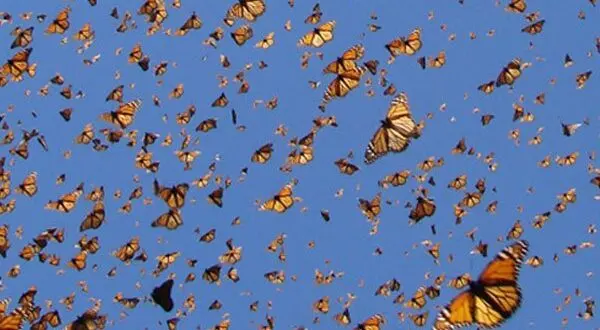
The term "kaleidoscope" is a poetic metaphor that captures the visual experience of seeing many butterflies in flight. When a large group of these insects takes to the air simultaneously, their diverse wing patterns and vibrant colors create a shifting, symmetrical display reminiscent of the optical toy invented by David Brewster in 1817. This evocative name has been adopted by nature enthusiasts and writers to describe the mesmerizing movement of migratory species, such as the Monarch.
Beyond the aesthetic appeal, there is no scientific basis for the term. Entomologists typically classify butterfly groups based on behavior, such as "migrating" or "roosting." While "kaleidoscope" is not a formal taxonomic term, it has become the standard collective noun in English-language literature. Using this term helps convey the beauty of the spectacle, even if it lacks the precision of biological nomenclature used in academic research papers.
How to identify a butterfly swarm
Identifying a gathering of butterflies requires observing their behavior and the environmental context. Most butterflies are solitary, but certain species congregate for specific survival reasons. Migratory species, like the Monarch, often gather in massive numbers to conserve heat during long journeys or to rest during overwintering periods. Other species may form groups at mud puddles to extract essential minerals and salts from the soil, a behavior known as "puddling."
When observing these groups, look for these key indicators:
- Shared environmental triggers, such as a water source or a nectar-rich meadow.
- Synchronized flight patterns during migration events.
- Clustered resting positions on tree trunks or branches during cool mornings.
- High densities of a single species in a localized area.
If you see hundreds of butterflies together, you are likely witnessing a migration or a localized feeding event rather than a permanent social structure.
Where to see large groups of butterflies
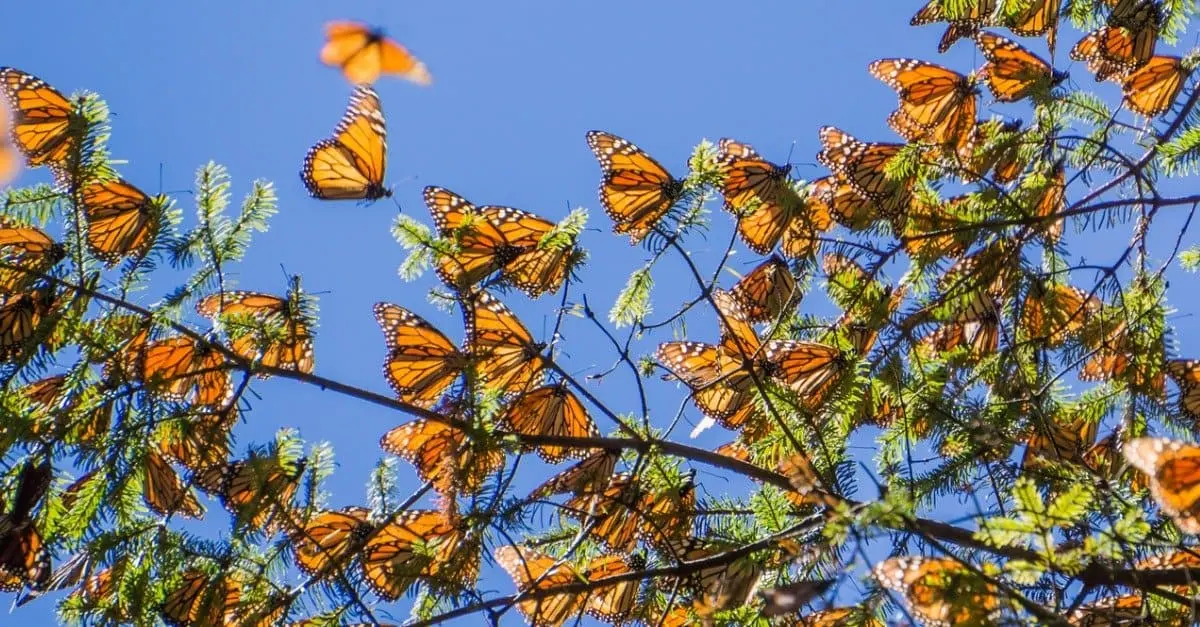
Finding a large gathering of butterflies depends heavily on the time of year and the local ecosystem. Migratory paths are the most reliable places to witness these events. In North America, the Monarch migration is a globally famous phenomenon, with millions of butterflies traveling thousands of miles to reach overwintering sites in central Mexico or along the California coast. These sites provide a unique opportunity to see them in such high density that they cover entire trees.
If you are looking for smaller, more localized gatherings, consider these habitats:
- Riparian zones near rivers or streams where mud puddles are common.
- Wildflower meadows during the peak blooming season in mid-summer.
- Protected forest edges that offer shelter from high winds.
- Botanical gardens that maintain specific host plants for local species.
Always check local wildlife reports to determine the peak migration dates for your specific region, as these windows are often very short.
Common mistakes when observing butterflies
A frequent mistake observers make is approaching a group too quickly, which can startle the insects and cause them to disperse. Butterflies are highly sensitive to movement and vibrations, and a sudden gesture can disrupt their feeding or resting behavior. To get a better look, move slowly and maintain a respectful distance, allowing the butterflies to become accustomed to your presence. Using binoculars is a highly effective way to observe them without causing unnecessary stress.
Another common error is assuming that all butterflies are social. Unlike bees or ants, butterflies do not work together for the benefit of a colony. If you see a group, it is an incidental gathering caused by external factors like food availability or climate. Misunderstanding this can lead to incorrect assumptions about their intelligence or social hierarchy. Always remember that their proximity to one another is a byproduct of shared environmental needs, not a sign of cooperation or communal living.
How to protect butterfly populations
Protecting butterfly populations requires a focus on habitat preservation and the reduction of chemical usage in local environments. Butterflies rely on specific host plants to lay their eggs and nectar-rich flowers to sustain their energy. By planting native species in your garden, you provide the necessary resources for local populations to thrive. Avoid using pesticides, as these chemicals are often lethal to butterflies and can destroy the delicate balance of the ecosystem they depend upon for survival.
To support butterfly conservation, follow these practical steps:
- Eliminate the use of synthetic insecticides and herbicides in your backyard.
- Provide a shallow water source, such as a dish with sand and water, for puddling.
- Support local land trusts that preserve meadows and forest corridors.
- Participate in community science projects that track migration patterns and population counts.
By creating a butterfly-friendly environment, you contribute to the health of local pollinators and ensure that future generations can enjoy the beauty of these insects. Consistent conservation efforts are the only way to maintain the populations needed to create the natural spectacles we call kaleidoscopes.
Key facts
- A group of butterflies is most commonly referred to as a "kaleidoscope."
- Another poetic term used to describe a gathering of butterflies is a "rabble."
- Scientists often use the simple term "swarm" when referring to large groups of butterflies in flight.
- Butterflies do not typically live in social colonies, so these collective nouns are mostly used for migratory or roosting events.
- Monarch butterflies are the most famous species to form large, dense clusters while overwintering in forests.
- You can spot a "kaleidoscope" most easily during the peak of migration seasons in spring and autumn.
The bottom line
While the term "kaleidoscope" is the most popular and evocative name for a group of butterflies, it is primarily a poetic label rather than a strict scientific classification. Because these insects are solitary by nature, they only gather in large numbers during migration or roosting. Observing these temporary clusters is a rare and beautiful spectacle that highlights the fascinating, transient behaviors of these delicate winged creatures.
People also ask
Do butterflies stay together in groups throughout their lives?
No, most butterflies are solitary insects that only congregate during migration or to share nectar sources. They do not maintain social structures or hive-like behaviors.
Why do butterflies form large groups?
They gather primarily for protection from predators, to conserve heat during cold nights, or to follow specific migratory pathways. These groupings are usually temporary and driven by environmental conditions.
What is the difference between a butterfly and a moth group?
While butterflies are called a kaleidoscope, a group of moths is traditionally referred to as an "eclipse." Both terms are largely literary rather than scientific.
How many butterflies make up a kaleidoscope?
There is no set number required to form a kaleidoscope; it can range from a few individuals to thousands during mass migration events. The term is descriptive rather than a formal biological classification.
Is it harmful to touch butterflies when they are grouped together?
Yes, handling butterflies can damage the delicate scales on their wings, which they need for flight and temperature regulation. It is best to observe them from a distance to avoid disrupting their rest.
Where is the best place to see a large group of butterflies?
Look for overwintering sites, such as the oyamel fir forests in Mexico for Monarchs, or near abundant wildflower patches during peak blooming seasons. Calm, sunny days are ideal for observing their flight patterns.
This answer was created with the help of AI research tools and reference sources. Spotted an error? Let us know — we correct mistakes quickly. See our editorial policy.