How are fossils formed?
Short answer
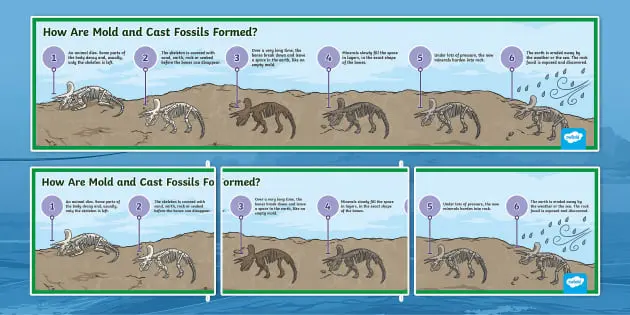
Fossils form when organisms are rapidly buried by sediment, protecting them from scavengers and decay. Over millions of years, minerals from groundwater seep into the bones or shells, replacing organic material through permineralization. This process turns the remains into rock, preserving the structure within sedimentary layers until they are eventually exposed by erosion.
On this page
How does the fossilization process work?
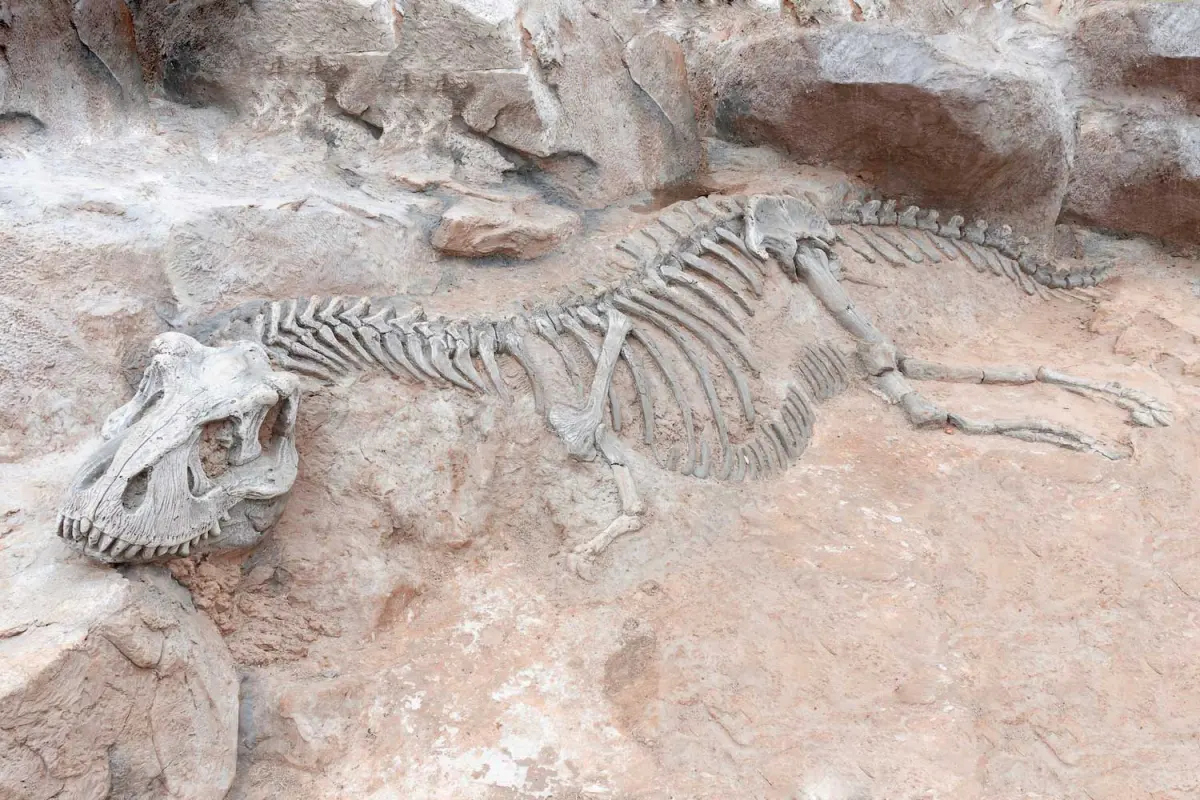
Fossilization is a rare geological event that requires specific conditions to preserve biological remains. Most organisms decompose quickly when exposed to oxygen, bacteria, or scavengers. For a fossil to form, the organism must be buried rapidly in a medium like mud, silt, or volcanic ash, which seals the remains away from the elements.
Once buried, the surrounding sediment exerts pressure as it accumulates into thick layers. Over geological time, groundwater rich in dissolved minerals—such as silica, calcium carbonate, or iron—percolates through the porous spaces of the bones, teeth, or shells. These minerals precipitate out of the water, filling the cellular voids and hardening the structure into rock. This process, known as permineralization, is responsible for the heavy, stone-like fossils found in museums today.
How long does it take to form a fossil?
The time required for fossilization varies significantly based on the environment and the type of mineralization occurring. While there is no fixed timeline, the process generally spans thousands to millions of years. Rapid mineralization can occur in specific chemical environments, such as hot springs, but the deep burial required for most dinosaur-era fossils typically takes millions of years to complete.
- Immediate burial in sediment prevents decay.
- Compaction of layers creates sedimentary rock.
- Mineral-rich water replaces organic tissues.
- Geological uplift and erosion eventually reveal the specimen.
The duration is also influenced by the stability of the Earth’s crust. Tectonic activity can move buried fossils deep into the mantle where they are destroyed by heat and pressure, or it can push them toward the surface. Therefore, the age of a fossil is often tied to the age of the sedimentary rock layer, or stratum, in which it is encased.
Where are the best places to find fossils?
Fossils are almost exclusively found in sedimentary rock formations, such as sandstone, limestone, or shale. Igneous and metamorphic rocks are generally unsuitable because the extreme heat and pressure involved in their formation would melt or distort biological remains. Enthusiasts should look for areas where these sedimentary layers have been exposed by natural forces.
- Riverbanks and creek beds where water has cut through rock layers.
- Coastal cliffs where wave action constantly erodes the shoreline.
- Construction sites or quarries that have excavated deep into the earth.
- Badlands or desert regions with minimal vegetation covering the ground.
When searching, prioritize areas identified on geological maps as sedimentary basins. These regions were historically lakes, shallow seas, or river deltas, which were ideal environments for rapid burial. Always ensure you have legal permission to explore these sites, as many fossil-rich areas are protected by government regulations or private property laws.
Common mistakes when identifying fossils
One of the most frequent errors beginners make is confusing geological formations with biological remains. Many rocks contain patterns, such as dendrites—mineral deposits that look like ferns or tree branches—which are often mistaken for plant fossils. Similarly, nodules or concretions can form in rounded, bone-like shapes, leading collectors to believe they have discovered a vertebrate remain when they have actually found a mineral cluster.
To improve your identification skills, consider these practical steps:
- Examine the texture; real fossils often show distinct biological structures like bone marrow pores or growth rings.
- Check for symmetry, as natural biological organisms often display patterns that random mineral formations lack.
- Use a hand lens to look for fine details that indicate cellular structure rather than crystalline growth.
- Consult local field guides or geological societies to understand what types of fossils are common in your specific region.
Avoid the temptation to assume every uniquely shaped rock is a fossil. If a specimen appears to be a fossil, document its exact location and the surrounding rock type before attempting to remove it.
Why do fossils become exposed to the surface?
The discovery of a fossil is usually the result of erosion, which acts as a natural excavation tool. Over millions of years, wind, rain, and ice wear away the overlying layers of rock and soil that once protected the fossil. This process, known as denudation, eventually brings the fossilized remains to the surface where they can be spotted by researchers or amateur collectors.
Human activity also plays a significant role in modern fossil discovery. Large-scale mining operations, road construction, and agricultural plowing frequently disturb deep layers of earth that would otherwise remain hidden for eons. While these activities can lead to the destruction of fossils, they also provide the only opportunity for scientists to study specimens that would never have reached the surface through natural erosion alone. Once exposed, fossils are fragile and susceptible to weathering, so professional extraction is necessary to preserve the integrity of the find for future scientific analysis.
Key facts
- Most fossils form in sedimentary rock, such as limestone, sandstone, or shale, which protects remains from scavengers and decay.
- Rapid burial by sediment like mud, silt, or volcanic ash is essential to prevent the biological breakdown of an organism.
- Permineralization occurs when mineral-rich groundwater flows through porous bone or wood, depositing crystals that replace organic material.
- Only a tiny fraction of organisms that have ever lived become fossils, as the process requires specific, rare environmental conditions.
- Soft-bodied organisms rarely fossilize because they lack hard parts like teeth, shells, or bones that withstand pressure over time.
- When searching for fossils, focus on areas where sedimentary rock layers are exposed, such as cliffs, riverbanks, or road cuts.
The bottom line
Fossilization is a rare geological process that requires rapid burial in sediment followed by mineral replacement over thousands or millions of years. By understanding that only hard parts typically survive in sedimentary layers, you can better identify potential sites. Remember that patience and adherence to local laws are essential, as most organic matter decays long before it has the chance to become a permanent geological record.
People also ask
How long does it take for a fossil to form?
The process of fossilization typically takes at least 10,000 years, though most fossils are millions of years old. The speed depends on the mineral content of the surrounding sediment and the stability of the geological environment.
Can fossils be found in volcanic rock?
Fossils are almost never found in igneous rock like lava or granite because the extreme heat destroys organic material. However, fossils can be preserved in volcanic ash layers if the organisms are buried quickly during an eruption.
What is the difference between a mold and a cast fossil?
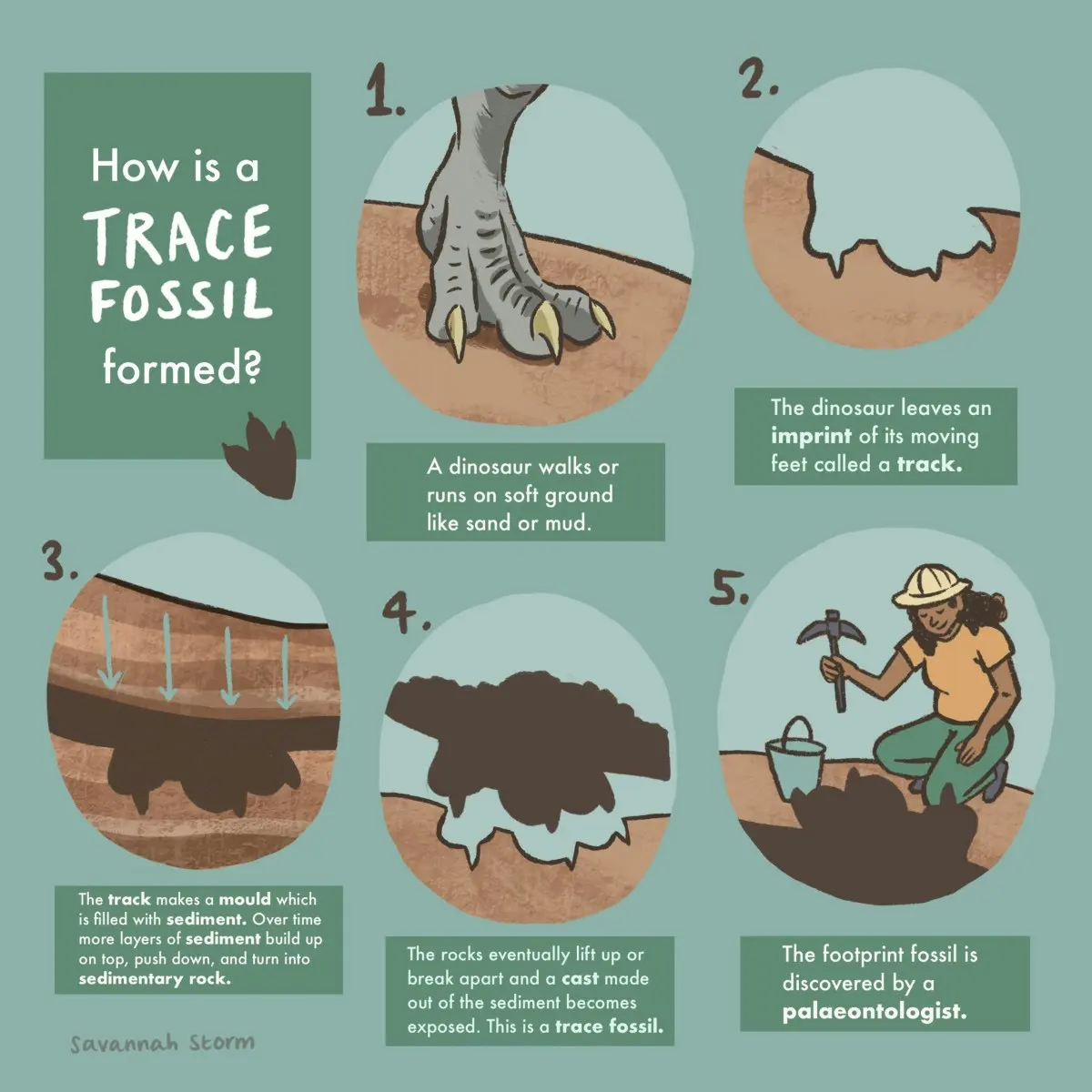
A mold forms when an organism leaves an impression in sediment that hardens, while a cast forms when that mold is later filled with minerals. The cast creates a three-dimensional replica of the original object's exterior shape.
Are all fossils made of stone?
Most fossils are petrified, meaning their organic material has been replaced by minerals like silica or calcite. Some exceptions include insects trapped in amber or organisms preserved in frozen permafrost, which may retain original tissue.
What are trace fossils?
Trace fossils are not the remains of the organism itself but evidence of its activity, such as footprints, burrows, or coprolites. These provide valuable information about the behavior and movement of extinct animals.
Is it legal to collect fossils?
Laws regarding fossil collection vary significantly by location, with strict protections on public lands and national parks. Always verify local regulations and obtain necessary permits before removing any specimens from the ground.
This answer was created with the help of AI research tools and reference sources. Spotted an error? Let us know — we correct mistakes quickly. See our editorial policy.