What are the three types of rocks?
Short answer
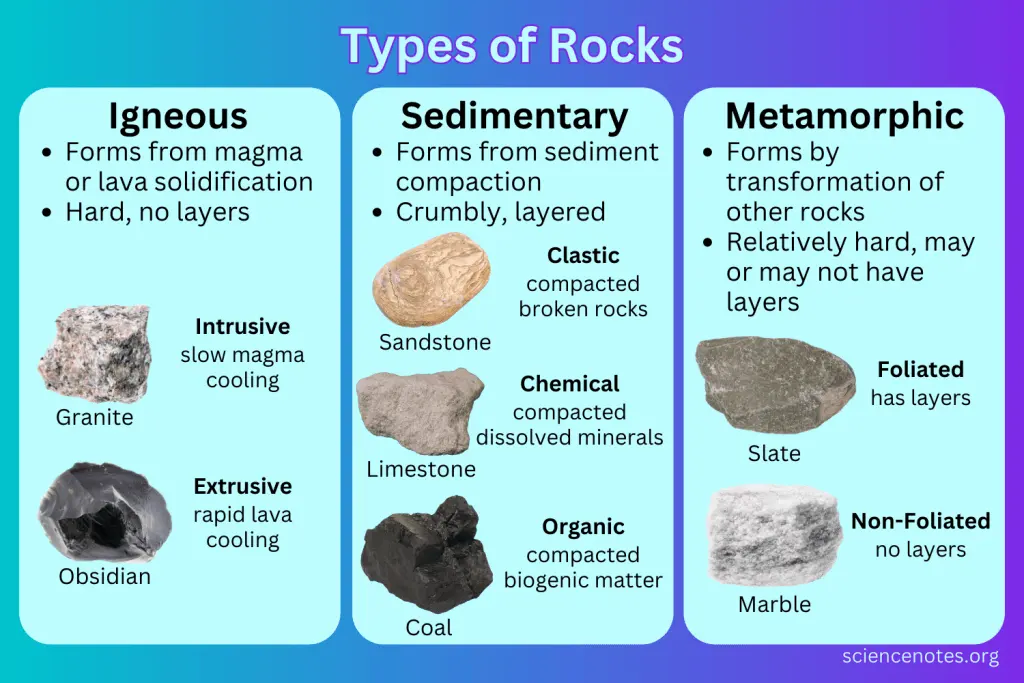
The three primary types of rocks are igneous, sedimentary, and metamorphic. These classifications are based on the geological processes that formed them. Igneous rocks originate from cooling magma or lava, sedimentary rocks form from the accumulation of mineral particles or organic matter, and metamorphic rocks arise from existing rocks altered by intense pressure and heat.
On this page
How are igneous rocks formed?
Igneous rocks are created through the cooling and solidification of molten rock, known as magma when beneath the surface or lava when it erupts. This process is the primary way new crust is added to the Earth. Geologists categorize these rocks based on where the cooling occurs, which dictates the size of the mineral crystals visible to the naked eye.
Intrusive igneous rocks, such as granite, form deep underground where the cooling process is slow, allowing large, coarse crystals to develop over thousands of years. Conversely, extrusive rocks like basalt cool rapidly on the surface, resulting in a fine-grained or glassy texture. The chemical composition, ranging from silica-rich to iron-rich, further defines the rock's density and color.
- Granite: Coarse-grained, light-colored, common in continental crust.
- Basalt: Fine-grained, dark-colored, common in oceanic crust.
- Obsidian: Volcanic glass that cools so quickly no crystals form.
- Pumice: Highly porous rock formed during explosive volcanic eruptions.
Why do sedimentary rocks form?
Sedimentary rocks are formed at or near the Earth's surface through the accumulation, compaction, and cementation of mineral particles or organic remains. Over millions of years, layers of sediment—such as sand, mud, and pebbles—are deposited by wind, water, or ice. As more layers pile up, the weight of the overlying material presses the bottom layers into solid rock in a process called lithification.
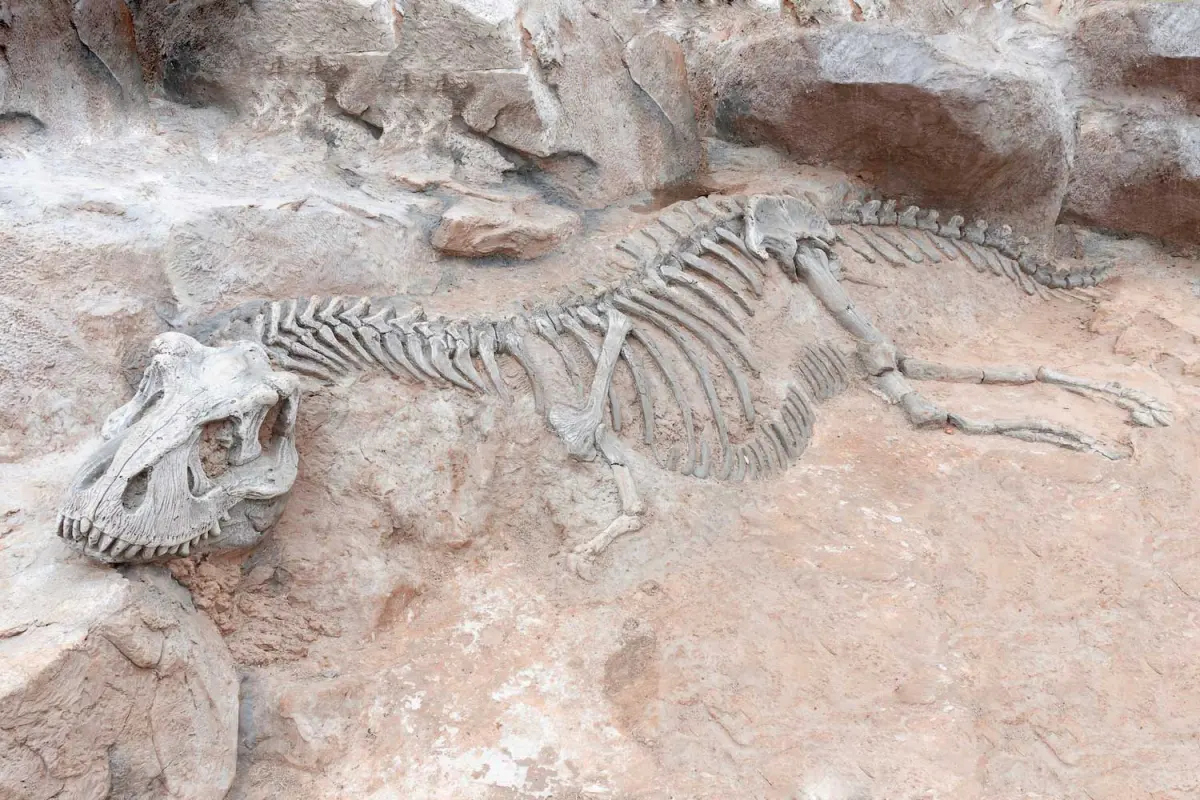
These rocks are unique because they often contain fossils, which provide scientists with a historical record of ancient life and environmental conditions. They are typically organized in distinct horizontal layers known as strata. Because they form at low temperatures and pressures, they are often softer and more porous than other rock types, making them susceptible to erosion by weather and water.
- Weathering breaks down existing rocks into smaller particles called sediment.
- Erosion and transport move these particles to basins or ocean floors.
- Deposition creates layers that eventually harden into rock through pressure.
How does metamorphism change existing rocks?
Metamorphic rocks are the result of the transformation of existing igneous, sedimentary, or other metamorphic rocks. This process happens deep within the Earth’s crust where extreme heat and intense pressure cause the minerals to chemically change or physically realign without melting. If the rock were to melt entirely, it would become magma and eventually form an igneous rock instead.
The degree of change depends on the intensity of the heat and pressure applied during the process, which geologists call metamorphic grade. Low-grade metamorphism might only slightly alter the rock, while high-grade metamorphism can completely change its mineral composition and structure. This often results in foliation, a layered or banded appearance caused by the alignment of minerals under directional stress. Common examples include limestone turning into marble or shale transforming into slate.
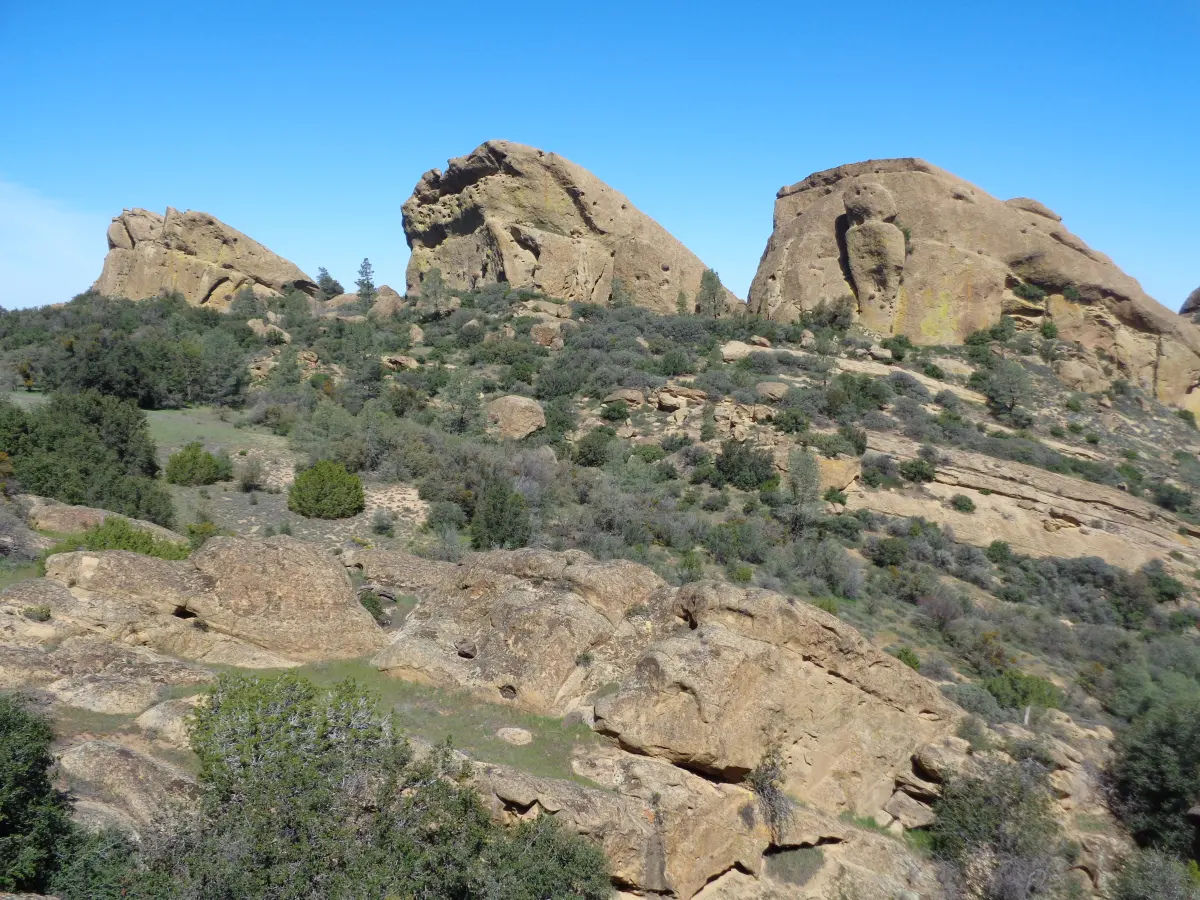
How to identify rock types in the field
Identifying rocks requires a systematic approach, focusing on texture, hardness, and mineral content. To begin, observe the overall appearance of the rock. If it has visible, interlocking crystals, it is likely igneous. If it displays distinct layers or contains visible grains like sand, it is likely sedimentary. If the rock appears banded, shiny, or distorted, it is likely metamorphic.
A common mistake is assuming that all dark rocks are volcanic or that all layered rocks are sedimentary. To avoid this, use a simple scratch test to determine hardness or look for specific features like fossils or vesicles—tiny holes left by gas bubbles in volcanic rock. Carrying a small hand lens and a basic field guide will significantly improve your accuracy when examining samples in their natural environment.
- Check for layering: If layers are present, it is almost certainly sedimentary.
- Look for crystals: Large, interlocking crystals suggest an igneous origin.
- Test for foliation: Banded or wavy patterns indicate a metamorphic history.
- Examine for fossils: Sedimentary rocks are the only type likely to contain them.
Common mistakes when classifying rocks
One of the most frequent errors beginners make is failing to distinguish between minerals and rocks. A rock is a solid aggregate of one or more minerals, whereas a mineral is a naturally occurring inorganic solid with a definite chemical composition. When identifying a specimen, focus on the bulk composition rather than a single shiny crystal embedded within the matrix.
Another common mistake is ignoring the context of where the rock was found. While rocks can be moved by glaciers or human activity, finding a rock in a specific geological setting often provides clues about its origin. For instance, finding a large deposit of limestone suggests that the area was once covered by a shallow sea, even if the region is currently dry land. Always consider the environmental history of the location to ensure your classification aligns with the broader geological context of the area.
Key facts
- Igneous rocks form from the cooling and solidification of molten magma or lava.
- Sedimentary rocks are created through the accumulation, compaction, and cementation of mineral particles or organic matter.
- Metamorphic rocks develop when existing rocks undergo intense heat and pressure, altering their chemical and physical structure.
- Identifying rocks requires examining grain size, texture, and mineral composition through a hand lens.
- Avoid misidentifying rocks by checking for layering, which is common in sedimentary types but rare in igneous formations.
- Always perform a scratch test using a steel nail or copper penny to help determine the hardness of a mineral sample.
The bottom line
The Earth’s crust is composed of three distinct rock types: igneous, sedimentary, and metamorphic. Each category is defined by its unique formation process, involving cooling magma, compacted sediment, or heat-induced transformation. Understanding these classifications allows you to interpret the geological history of any landscape. By observing texture, hardness, and layering, you can effectively identify the rocks you find in nature and understand their origins.
People also ask
How can I tell if a rock is igneous?
Look for a crystalline texture, which indicates the rock cooled from a molten state. Igneous rocks often appear uniform and may contain visible, interlocking mineral grains or small holes called vesicles.
What is the difference between magma and lava?
Magma is molten rock located beneath the Earth's surface, while lava is molten rock that has erupted onto the surface. Both materials form igneous rocks once they lose heat and harden.
Why are fossils only found in sedimentary rocks?
The extreme heat and pressure required to create metamorphic rocks or the high temperatures of igneous processes typically destroy organic remains. Sedimentary rocks form at lower temperatures, allowing bones and shells to be preserved.
Can one type of rock turn into another?
Yes, the rock cycle describes how geological processes constantly recycle materials. For example, igneous rock can erode into sediment, eventually forming sedimentary rock, or be buried to become metamorphic rock.
What is the most common rock type on Earth's surface?
While the Earth's crust is primarily composed of igneous rock, sedimentary rock covers about 75 percent of the land surface. This thin veneer of sediment is what we most frequently encounter in our daily lives.
How does pressure change a rock?
Intense pressure, often caused by tectonic plate collisions, forces minerals to realign or recrystallize. This process creates foliation, which is the layered or banded appearance characteristic of many metamorphic rocks like gneiss.
This answer was created with the help of AI research tools and reference sources. Spotted an error? Let us know — we correct mistakes quickly. See our editorial policy.