Where do capybaras live?
Short answer
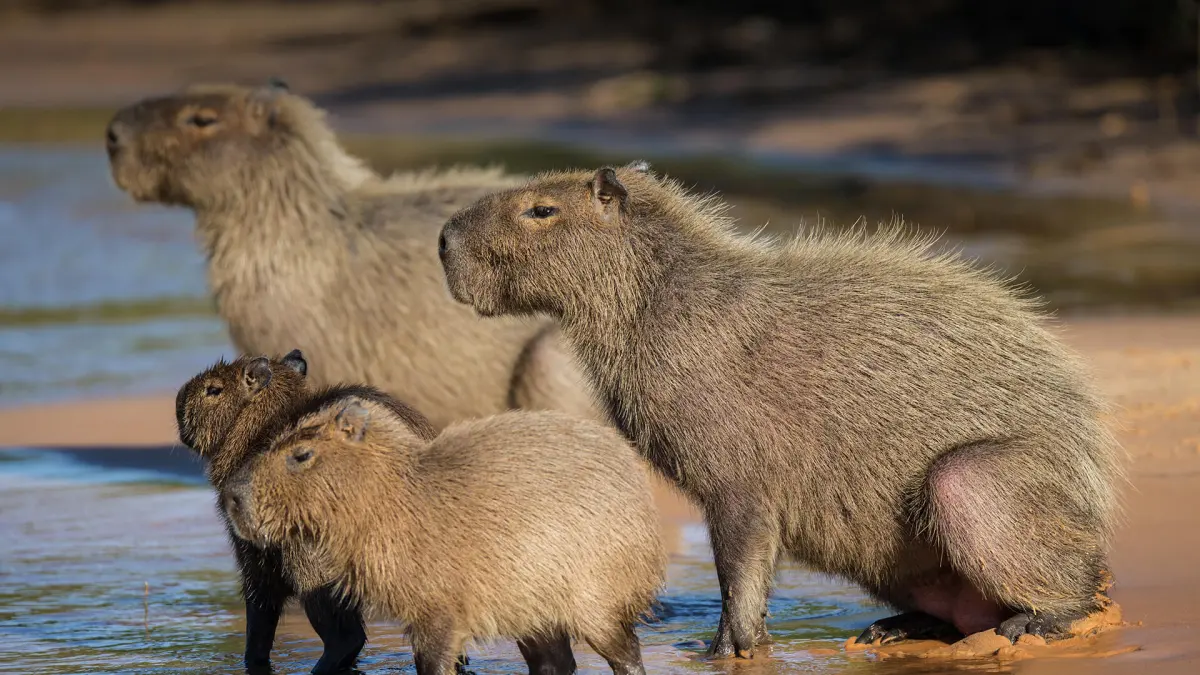
Capybaras are native to South America, inhabiting nearly every country on the continent except Chile. They thrive in tropical and temperate regions, specifically near permanent bodies of water like rivers, lakes, marshes, and flooded savannas. These semi-aquatic rodents require consistent access to water for thermoregulation, mating, and protection from land-based predators.
On this page
Where do capybaras live in the wild?
Capybaras are endemic to South America, with a range stretching from the Panama Canal region in the north down to northern Argentina. They are highly adaptable to various ecosystems, provided there is a reliable water source nearby. You can find them in the dense rainforests of the Amazon, the expansive wetlands of the Pantanal in Brazil, and the grassy plains of the Llanos in Venezuela and Colombia.
Their distribution is primarily limited by the availability of standing water. Because they are semi-aquatic, they spend a significant portion of their day submerged to keep their skin moist and to escape the heat of the sun. They are social creatures that live in groups ranging from ten to over one hundred individuals depending on the density of the habitat. While they do not migrate long distances, they may move between different water sources if their primary habitat dries up during seasonal droughts.
How to identify a capybara habitat
If you are searching for capybaras in the wild, look for areas where land meets water seamlessly. Their preferred habitats feature specific characteristics that support their unique lifestyle. Identifying these markers can help you understand why they choose certain regions over others.
- Permanent water bodies: Look for slow-moving rivers, lagoons, or marshes that do not dry up entirely.
- Dense vegetation: They require tall grasses and aquatic plants for both food and cover.
- Open grazing areas: They need clearings near the water to forage for grasses and reeds during the cooler parts of the day.
- Soft soil: They prefer muddy banks, which allow them to wallow and regulate their body temperature effectively.
Avoid looking in high-altitude mountain ranges or extremely arid deserts. Capybaras cannot survive in environments that lack the humidity and aquatic resources necessary for their physiological needs. They are rarely found far from the water's edge, as it serves as their primary refuge from jaguars, caimans, and anacondas.
Why do capybaras stay near water?
The capybara is biologically engineered for an aquatic lifestyle. Their eyes, ears, and nostrils are positioned on the top of their heads, allowing them to remain almost entirely submerged while keeping a lookout for predators. This adaptation is essential for survival in the wild, as it allows them to hide in plain sight among river reeds.
Water is also vital for their social structure and reproductive health. Mating typically occurs in the water, and it serves as a communal space where the group bonds. Furthermore, the water provides a necessary cooling mechanism. Because they have relatively thin hair and sensitive skin, prolonged exposure to the intense South American sun can lead to overheating or severe sunburn. By spending their midday hours in the water, they effectively manage their internal temperature and keep their skin healthy.

Common mistakes when tracking capybaras
Many enthusiasts fail to see capybaras because they look in the wrong types of environments or approach too quickly. A common mistake is assuming that these animals are strictly nocturnal; while they are often more active at dawn and dusk, they can be seen throughout the day if they feel secure. Another error is searching in areas with heavy human traffic or industrial development.
- Do not attempt to approach them on foot, as they are skittish and will quickly dive into the water.
- Avoid wearing bright colors that contrast sharply with the natural riverbank environment.
- Do not assume that a muddy bank is empty; capybaras often remain perfectly still in the water with only their noses exposed.
- Refrain from making loud noises, as they have excellent hearing and will retreat to deeper water long before you see them.
Patience is the most important tool for any observer. If you find a promising spot, remain stationary and quiet for at least thirty minutes. Often, the animals will emerge from the reeds once they perceive that the area is safe and free from immediate threats.
Can capybaras live in other parts of the world?
While capybaras are native to South America, some small, localized populations have been reported in other parts of the world due to accidental or intentional human introduction. For example, there have been sightings in parts of Florida in the United States. However, these are not natural populations and often struggle to establish themselves long-term without the specific climate and habitat conditions found in their native range.
In captivity, capybaras can live in zoos or specialized sanctuaries globally, provided the facility can replicate their environmental requirements. This includes large, heated pools and access to specific aquatic vegetation. Without these specialized conditions, they are prone to health issues such as dry skin, joint problems, and stress. It is important to remember that keeping capybaras as pets is illegal or highly regulated in many jurisdictions due to their complex social needs and the difficulty of providing a proper habitat. They are wild animals that require significant space and constant access to water to thrive throughout their entire lifespan.
Key facts
- Capybaras are native to South America and inhabit every country on the continent except for Chile.
- They are semi-aquatic mammals that strictly reside in areas near permanent bodies of water like lakes, rivers, and marshes.
- These animals require dense vegetation for both food and cover to hide from predators like jaguars and caimans.
- Capybaras are highly social and live in groups ranging from 10 to 20 individuals, though some herds can reach 100 during the dry season.
- If you are observing them in the wild, maintain a distance of at least 50 feet to avoid startling them into the water.
- Avoid feeding wild capybaras, as human food can cause digestive issues and disrupt their natural foraging behaviors.
The bottom line
Capybaras are highly specialized, semi-aquatic mammals endemic to South America, thriving in regions with abundant water and dense vegetation. As the world’s largest rodents, they rely on social structures and aquatic environments for survival. While they are fascinating to observe in their natural habitats, they are not suitable for domestic life, as they require specific environmental conditions that are nearly impossible to replicate in a typical home.
People also ask
Can capybaras live in North America?
Capybaras are not native to North America, but small invasive populations have been reported in places like Florida. These sightings are usually the result of escaped or released exotic pets rather than natural migration.
Do capybaras make good house pets?
While they are often portrayed as docile, capybaras are wild animals that require massive enclosures and access to a large swimming pool. They are prone to extreme stress in domestic settings and can become destructive or aggressive when confined.
How long can a capybara stay underwater?
Capybaras are excellent swimmers and can stay submerged for up to five minutes at a time. They often hide underwater to escape predators or to regulate their body temperature during the heat of the day.
What do capybaras eat in their natural habitat?
Their diet consists almost entirely of grasses and aquatic plants. They are grazers that spend much of their day feeding on the lush vegetation found along riverbanks.
Are capybaras nocturnal?
They are primarily crepuscular, meaning they are most active during the dawn and dusk hours. However, they may shift their activity patterns to nighttime if they feel threatened by human activity or predators.
Do capybaras live in the Amazon Rainforest?
Yes, they are common throughout the Amazon basin. They thrive in the river systems and flooded grasslands that define the region's diverse ecosystem.
This answer was created with the help of AI research tools and reference sources. Spotted an error? Let us know — we correct mistakes quickly. See our editorial policy.