How do you draw a capybara?
Short answer
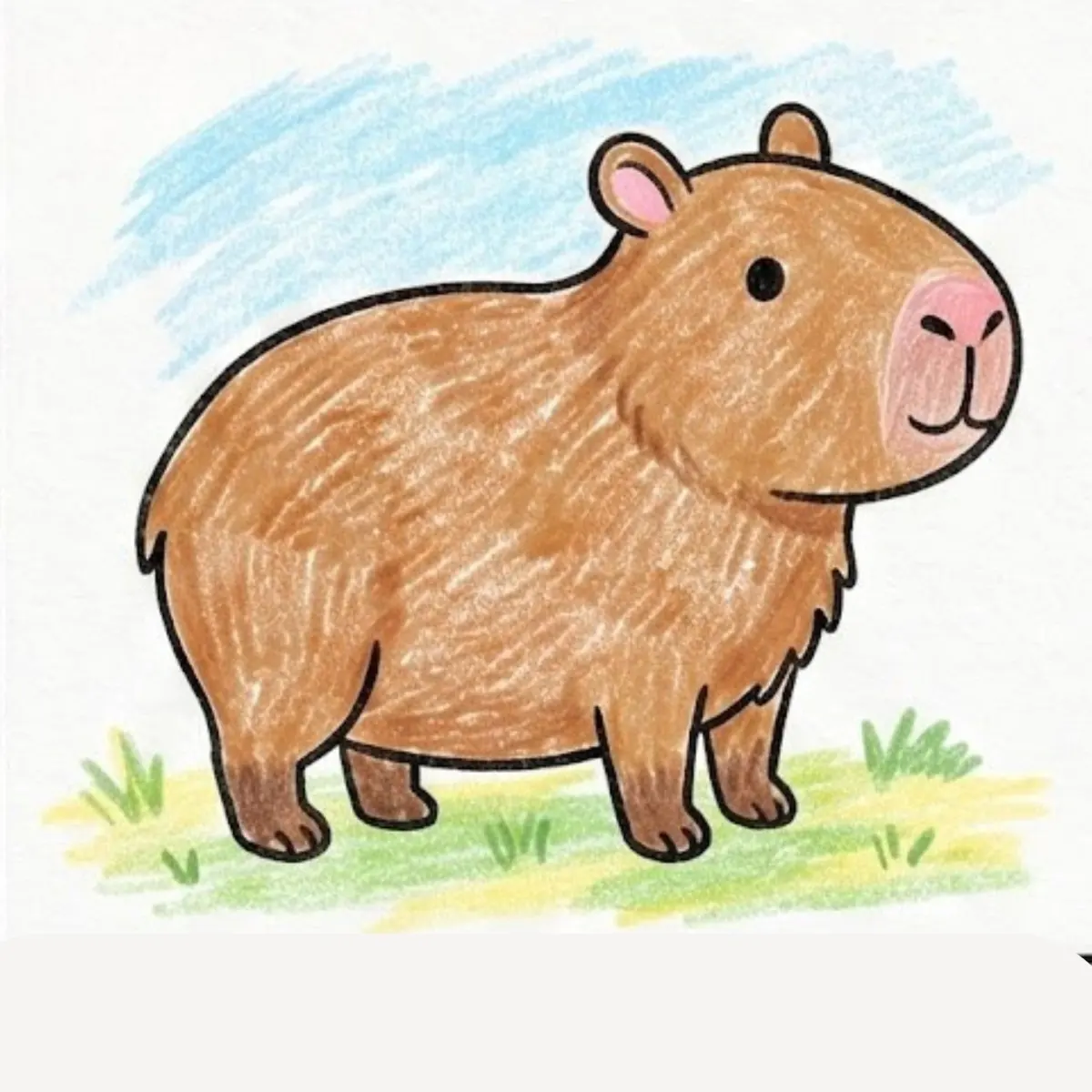
Drawing a capybara requires capturing its unique, barrel-shaped body and blunt, square-like snout. Focus on the animal's heavy, rounded silhouette and small, high-set features. By breaking the anatomy down into simple geometric shapes—specifically ovals and rectangles—you can easily construct the proportions of the world's largest living rodent on paper.
On this page
How to sketch basic capybara shapes
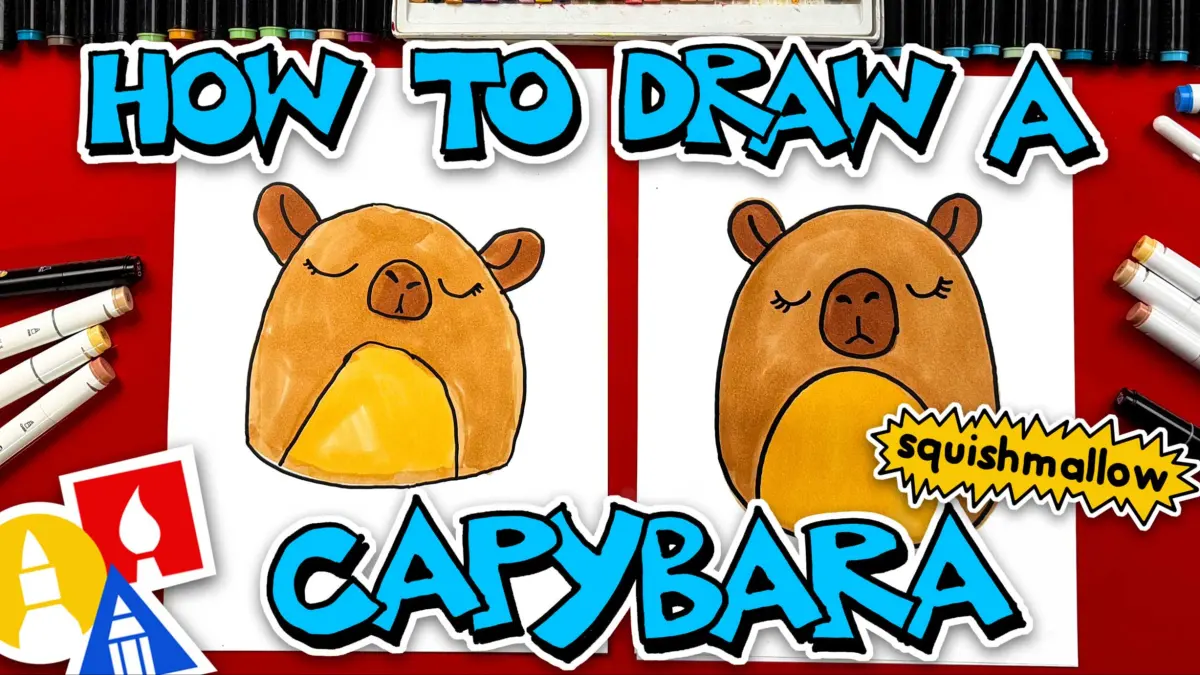
To begin your drawing, visualize the capybara as a series of heavy, rounded forms. Start by sketching a large, horizontal oval to represent the main body, which should be significantly longer than it is tall. Add a smaller, slightly rectangular shape at the front for the head, ensuring it connects smoothly to the body line without a distinct neck. Capybaras are known for their sturdy, compact build, so avoid drawing an overly slender or athletic frame.
Once the primary masses are established, refine the outline to reflect the animal's natural posture. Capybaras often sit in a "loaf" position, tucked close to the ground, or stand with a slight forward hunch. Use these steps to establish your foundation:
- Draw a large, elongated oval for the torso.
- Place a smaller, blocky shape at the front for the head.
- Connect the two with a gentle curve, keeping the back line relatively flat.
- Add four short, thick cylinders underneath for the legs.
What are the key facial features
The face is the most distinctive part of a capybara, characterized by a blunt, square-shaped muzzle and eyes positioned high on the skull. When drawing the head, keep the snout broad and somewhat flat at the front, resembling a rounded box. The nostrils are positioned near the top of the snout, which helps the animal breathe while partially submerged in water. Keep the ears small, rounded, and set back toward the crown of the head.
Positioning the eyes correctly is essential for achieving an accurate likeness. Because capybaras are semi-aquatic, their eyes, ears, and nostrils are aligned near the top of their head. Follow these guidelines for the facial details:
- Place the eyes high on the head, roughly one-third of the way down from the top.
- Draw the nose as a small, dark triangle or a simple slit near the front edge of the muzzle.
- Keep the mouth line short and horizontal, starting just beneath the nostrils.
- Use minimal detail around the eyes, as they are small and dark, often blending into the surrounding fur.
How to draw capybara fur and texture
Capybara fur is coarse, sparse, and wiry, which means you should avoid drawing soft, fluffy strokes. Instead of using dense, hair-like lines, focus on the overall silhouette and use occasional short, flicking marks to suggest texture along the edges. The coat color is generally a uniform reddish-brown or grayish-brown, so keep your shading consistent across the body. Focus your texture efforts on the areas where the fur might gather, such as the base of the neck or the haunches.
When applying shading, remember that the capybara’s skin is often visible beneath the thin hair. Use a light touch to indicate the direction of the fur growth, which typically flows from the head toward the tail. Avoid cross-hatching or heavy scribbling, as this will make the animal appear too furry. A clean, simplified approach works best to highlight the animal's iconic, rugged appearance and its distinct, barrel-like physical structure.
Common mistakes when drawing capybaras
One of the most frequent errors is giving the capybara a long, thin neck or a pointed, fox-like nose. In reality, the head transitions directly into the body with very little neck visible, creating a continuous, heavy profile. Another common mistake is drawing the legs too long or too thin. The limbs should appear sturdy and relatively short, as they are designed for walking on muddy banks and paddling through water.
Proportion is the most critical element to master to avoid a cartoonish look. Beginners often make the ears too large or the body too arched, which distracts from the animal's calm, sedentary nature. Keep these tips in mind to maintain accuracy:
- Avoid drawing a visible neck; the head should feel like an extension of the torso.
- Ensure the legs are thick and end in blunt, webbed-looking feet.
- Do not make the snout tapered; keep it wide and blunt to maintain the rodent's signature look.
- Resist the urge to add whiskers or excessive facial hair, as these are often subtle.
Best techniques for shading and depth
To give your drawing three-dimensional depth, identify a single light source and apply shadows accordingly. Since the capybara has a rounded, barrel-shaped body, the shadows should follow the curve of the torso. Darken the underside of the belly and the inner sides of the legs to create a sense of weight. Use a soft blending tool or a light pencil stroke to transition between the highlights on the back and the shadows beneath the body.
Finally, consider the environment to ground your subject. Adding a simple suggestion of water or reeds can provide context and help hide the feet if you find them difficult to render accurately. Keep the background minimal to ensure the capybara remains the focal point of the composition. By focusing on the interplay of light and shadow on the animal's simple, robust form, you will successfully capture the essence of this gentle, iconic creature.
Key facts
- Capybaras are the world’s largest rodents, characterized by a barrel-shaped body and a blunt, square-like snout.
- Start your drawing with a large horizontal oval for the body and a smaller, slightly tilted square or rounded rectangle for the head.
- The eyes, ears, and nostrils are positioned high on the head, which is an evolutionary adaptation for swimming.
- Capybaras lack a visible tail, so ensure the rear of your drawing remains rounded and smooth.
- Their legs are relatively short, with the front legs appearing slightly shorter than the back legs.
- Focus on the texture of the fur by using short, sparse, coarse-looking strokes rather than smooth, continuous lines.
The bottom line
Drawing a capybara requires focusing on its unique, barrel-like silhouette and blocky facial features. By prioritizing the rounded, tailless body shape and high-set facial sensory organs, you can create an accurate representation of this giant rodent. Remember to keep the legs stout and the fur texture coarse. With these key anatomical proportions in mind, you can easily capture the calm, friendly essence of this fascinating semi-aquatic creature.
People also ask
Why do capybaras look like they have square heads?
Their facial structure is dominated by a heavy, square-shaped muzzle that houses large, continuously growing incisors. When drawing, emphasize the flat top of the snout and the prominent, blocky jawline to capture their distinct appearance.
Should I draw a capybara with toes or hooves?
Capybaras have four toes on their front feet and three on their back feet, which are partially webbed for swimming. Avoid drawing hoof-like structures, as these are rodents, not ungulates.
How do I draw the capybara's ears?
Their ears are small, rounded, and sit quite high on the sides of the head. Keep them simple and circular to avoid making the animal look like a rabbit or a dog.
What is the most common mistake when drawing a capybara?
Many artists mistakenly add a long tail, which capybaras do not have. Always ensure the rear end is rounded and ends abruptly near the base of the hind legs.
How do I make the capybara look relaxed?
Capybaras are known for their calm demeanor, so draw them with a slightly drooping eyelid and a neutral, horizontal mouth line. Avoid sharp or aggressive facial expressions to maintain their signature gentle look.
Do capybaras have visible whiskers?
Yes, they have stiff, sparse whiskers around the nose and mouth area. Add a few short, straight lines near the muzzle to provide a realistic, tactile detail to your sketch.
This answer was created with the help of AI research tools and reference sources. Spotted an error? Let us know — we correct mistakes quickly. See our editorial policy.