What is a cast shadow?
Short answer
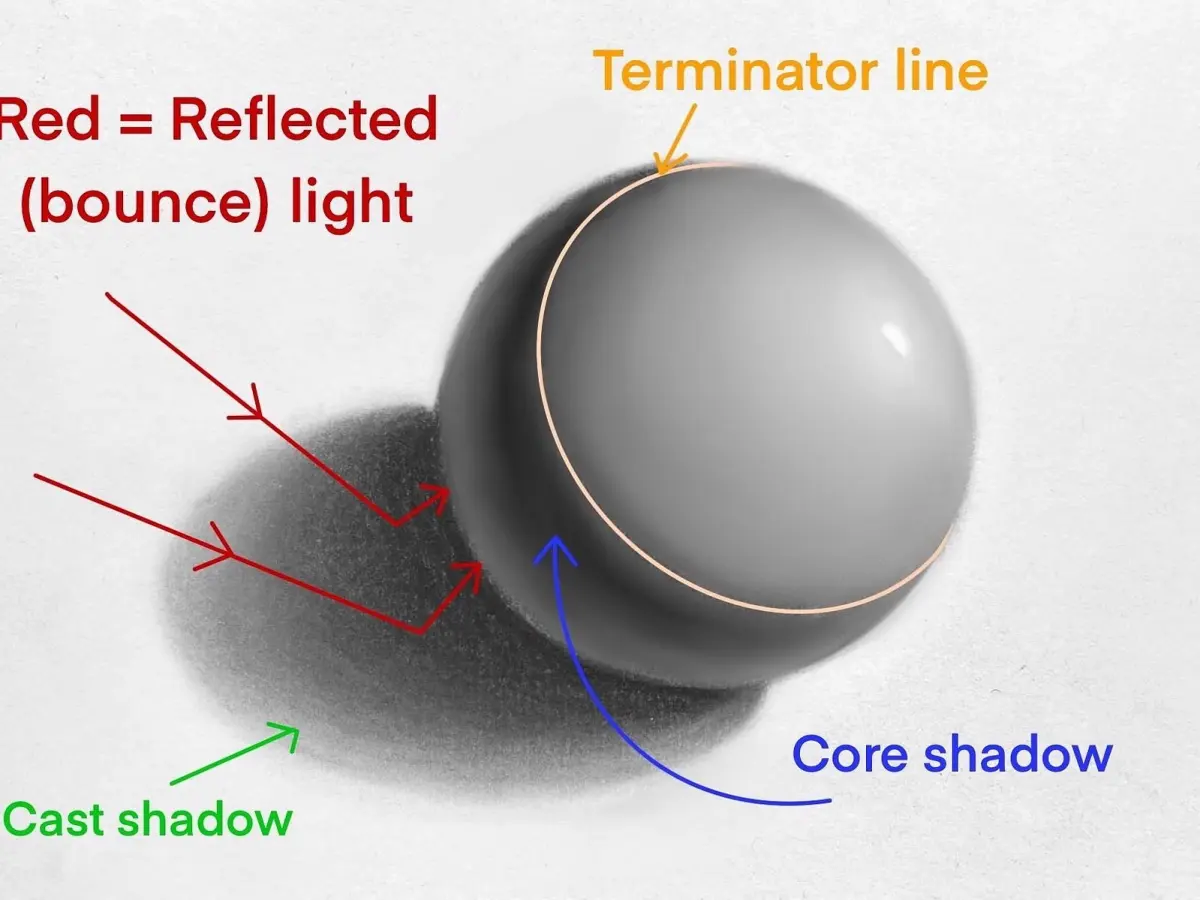
A cast shadow is a dark area projected onto a surface when an object obstructs a light source. Unlike a form shadow, which exists on the object itself, a cast shadow is detached from the source of the obstruction. It provides essential spatial information, anchoring objects within a three-dimensional environment.
On this page
Why a cast shadow happens
A cast shadow occurs when an opaque object blocks the path of light rays traveling from a source. As light travels in straight lines, it cannot bend around solid matter, creating a region of darkness behind the object. The shape and intensity of this shadow depend entirely on the relationship between the light source, the object, and the surface upon which the shadow falls.
The physics of shadow formation involves two distinct parts: the umbra and the penumbra. The umbra is the darkest central portion where the light source is completely blocked. Surrounding this is the penumbra, a lighter, blurred edge where the light source is only partially obscured. Understanding these components is critical for artists and photographers who want to replicate natural light behavior.
- The umbra represents total blockage of the light source.
- The penumbra represents partial blockage, creating soft edges.
- The distance between the object and the surface determines the shadow's sharpness.
How to identify shadow parts
To analyze a cast shadow, you must distinguish it from the form shadow. The form shadow is the side of an object facing away from the light, showing the object's volume. The cast shadow, however, is a separate shape that stretches across the ground or nearby walls. It is typically darker and sharper near the base of the object.
As the shadow moves further from the object, it usually becomes lighter and more diffused. This transition occurs because the light source is rarely a single point; it usually has physical dimensions. As the distance increases, more light from the edges of the source can "wrap" around the object, softening the shadow's edges. Observing these changes allows you to determine the light's direction and intensity.
- Locate the light source to find the direction of the shadow.
- Identify the contact point where the object touches the surface.
- Observe the gradient from the dark umbra to the soft penumbra.
Factors affecting shadow appearance
Several variables dictate how a cast shadow appears in reality. The size and distance of the light source are the most influential factors. A small, distant light source, such as the sun, creates sharp, well-defined shadows. Conversely, a large or close light source, like a softbox in a studio, produces broad, hazy shadows that lack a distinct umbra.
The surface texture also plays a significant role in how the shadow is perceived. On a smooth, flat surface, the shadow retains its intended shape and clarity. On a rough or uneven surface, the shadow will distort, following the contours of the terrain. Furthermore, the color of the surface can influence the shadow; while shadows are generally dark, they often pick up ambient light reflected from the environment, leading to subtle color shifts.
- Distance of the light source from the object.
- Size and intensity of the light source.
- Angle of the light relative to the surface.
- Surface texture and color.
Common mistakes when drawing shadows
One frequent error is failing to maintain the correct perspective of the shadow. Artists often draw shadows that do not align with the light source's position, making the image feel disjointed or physically impossible. To avoid this, always establish a "vanishing point" for your light source and ensure the shadow's length and direction consistently follow that path.
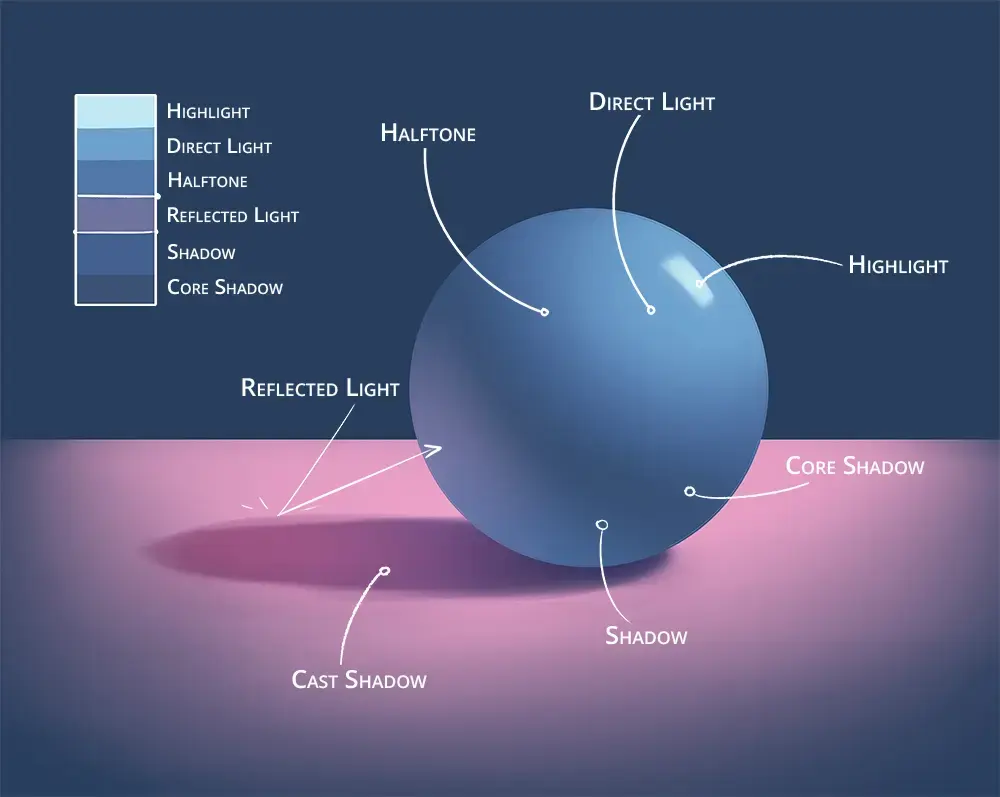
Another common mistake is making the shadow a uniform, flat black. In nature, shadows are rarely pure black because light bounces off surrounding objects and fills the area with color. Using a flat, dark tone makes an image look two-dimensional and lifeless. Instead, use subtle gradients and incorporate reflected light to give the shadow depth, weight, and a sense of belonging within the depicted space.
- Ignoring the light source's specific angle.
- Drawing shadows with uniform, harsh edges.
- Using pure black instead of deep, chromatic tones.
- Forgetting to account for the surface's curvature.
Practical tips for lighting design
When setting up lighting for photography or film, use cast shadows to create drama and depth. A shadow should never be an afterthought; it is a powerful tool for visual storytelling. By moving your light source higher or lower, you can dramatically change the length and mood of the shadow, which helps define the emotional tone of a scene.
Experiment with multiple light sources to create overlapping shadows, which adds complexity and realism to a setup. If you need to soften a harsh shadow, place a diffusion material between the light and the object. This spreads the light rays, creating a larger, softer source that results in a more pleasing, gradual transition between light and dark. Mastering these techniques will transform how you perceive and manipulate light in your creative work.
Key facts
- A cast shadow is the dark area projected onto a surface when an object obstructs a light source.
- Shadows consist of two main parts: the umbra, which is the darkest central region, and the penumbra, the lighter outer edge.
- The length of a cast shadow is determined by the angle of the light source relative to the object.
- To make a shadow sharper, move the light source closer to the object or use a smaller, more concentrated light.
- To soften a shadow, increase the size of the light source or place a translucent material like white fabric between the light and the object.
- Avoid placing your light source directly behind the subject if you want to create depth, as this often flattens the visual perspective.
The bottom line
A cast shadow is a fundamental element of visual perception, created when an object blocks light from reaching a surface. By understanding the relationship between light positioning, object distance, and surface geometry, you can manipulate shadows to create depth, drama, or clarity in art and photography. Mastering these principles allows you to control how light defines form and spatial relationships in any environment.
People also ask
Why do shadows change size throughout the day?
Shadows change length because the sun’s position in the sky shifts as the Earth rotates. When the sun is low on the horizon, it casts long shadows, whereas it casts short shadows when it is directly overhead at midday.
What is the difference between a form shadow and a cast shadow?
A form shadow is the dark side of the object itself that is turned away from the light. A cast shadow is the projection of that darkness onto a secondary surface, such as the ground or a wall.
Can an object have more than one cast shadow?
Yes, an object will produce multiple cast shadows if there are multiple light sources present. Each light source creates its own unique shadow path based on its specific angle and intensity.
Why do some shadows look blurry while others are sharp?
The sharpness of a shadow depends on the size and distance of the light source. A large light source, like a cloudy sky, creates soft, blurry edges, while a small, intense point light creates crisp, defined edges.
Do colors exist within a cast shadow?
Shadows are rarely pure black and often contain reflected light from surrounding surfaces. For example, a shadow on a red wall may appear slightly reddish because it picks up light bouncing off the environment.
How can I eliminate a cast shadow in photography?
You can eliminate shadows by using multiple light sources to fill in the dark areas or by using a light diffuser. Positioning the light directly in front of the subject also minimizes visible shadows behind them.
This answer was created with the help of AI research tools and reference sources. Spotted an error? Let us know — we correct mistakes quickly. See our editorial policy.