Why can't penguins fly?
Short answer
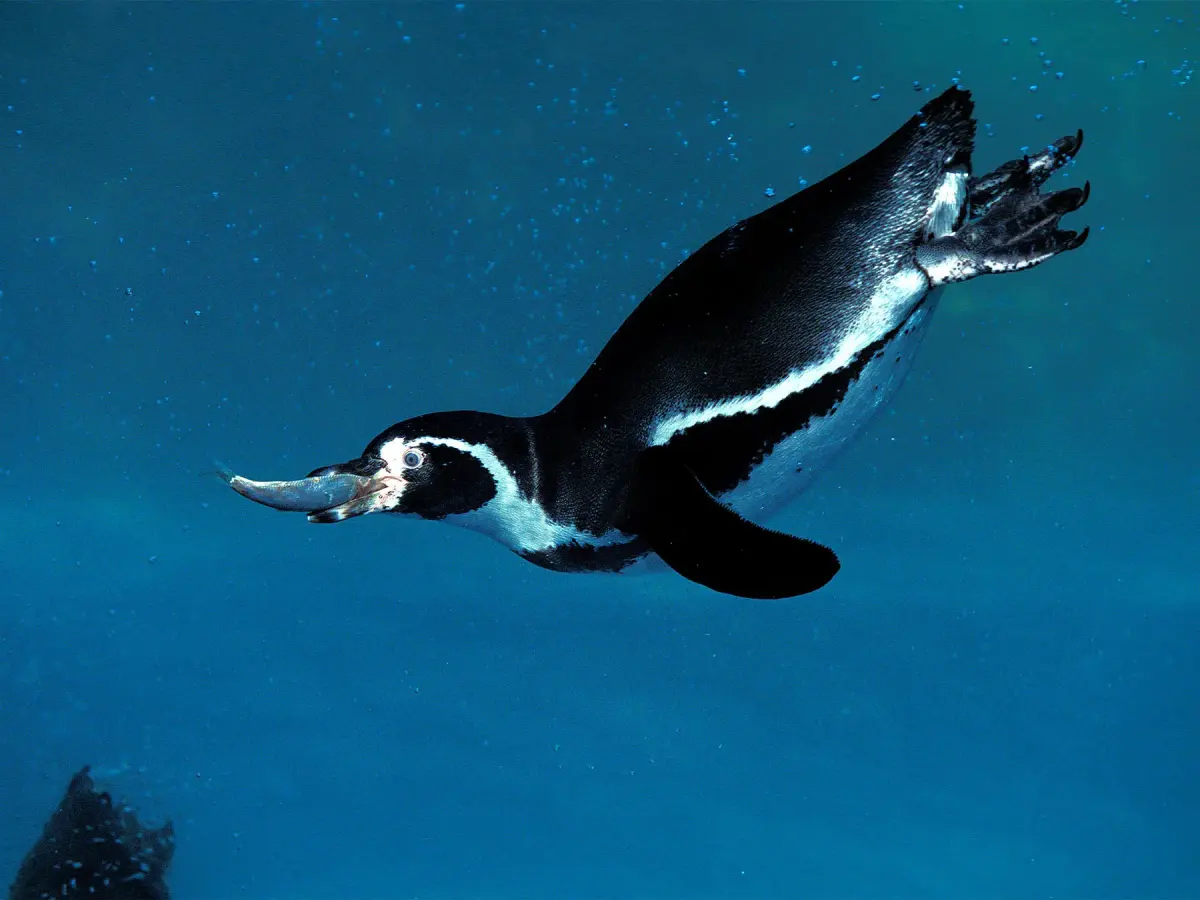
Penguins cannot fly because their bodies have evolved specifically for efficient swimming rather than aerial flight. Their wings have transformed into stiff, flat flippers, and their bones are dense to reduce buoyancy. While these adaptations make them poor fliers, they allow penguins to navigate underwater with incredible speed, agility, and grace.
On this page
Why did penguins stop flying?
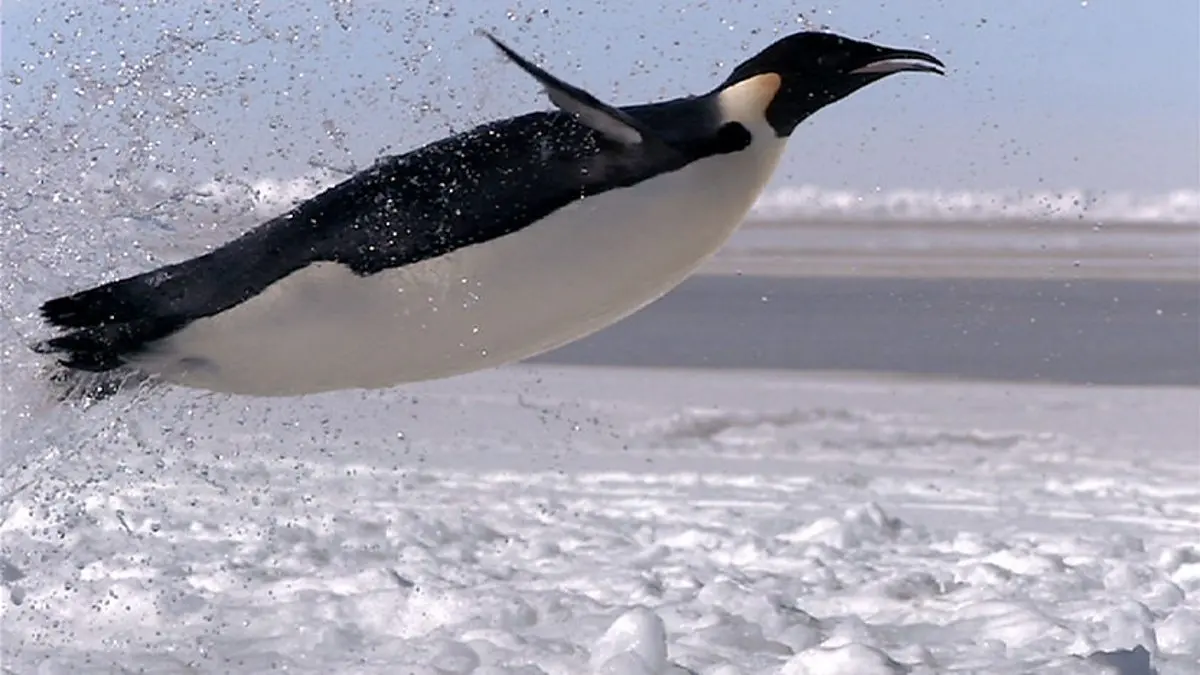
The evolution of flightlessness in penguins is a classic example of a trade-off in natural selection. Millions of years ago, the ancestors of modern penguins were likely capable of flight, but they began spending more time hunting in the ocean. Over time, the physical requirements for high-speed swimming—such as powerful flippers and streamlined bodies—became more important for survival than the ability to take to the air.
This transition occurred roughly 60 million years ago, shortly after the mass extinction event that eliminated non-avian dinosaurs. As marine environments became rich with food sources, penguins occupied a niche that favored deep-sea foraging. Fossils from this era, such as those of the giant Kumimanu biceae, show that early penguins were already losing their aerial capabilities as they grew larger and more adapted to aquatic life.
How do penguin wings work underwater?
Penguin wings are structurally distinct from the wings of birds like eagles or gulls. Instead of being light and flexible, a penguin’s wing is a rigid, blade-like flipper with fused joints. This design acts like a hydrofoil, allowing the bird to "fly" through the water by generating lift and thrust in a dense medium that is much heavier than air.
Their swimming mechanics are highly efficient, often reaching speeds of up to 20 miles per hour. To manage this movement, they utilize a specialized musculature system that powers deep, rhythmic strokes. Consider these primary physical adaptations for underwater flight:
- Dense, heavy bones that act as ballast to help them dive deep.
- Stiffened flippers that resist bending under the pressure of water.
- Streamlined, torpedo-shaped bodies that minimize drag while swimming.
- Powerful pectoral muscles that provide the force needed for constant propulsion.
What are the physical differences between flight and swimming?
Flying in the air requires a low body mass and a high surface area to generate lift against gravity. Penguins have moved in the opposite direction, favoring a heavy, compact frame that helps them remain submerged. Their feathers are also unique; they are short, stiff, and packed tightly together to create a waterproof barrier that keeps their skin dry and warm in freezing temperatures.
While a bird in the air must constantly fight gravity, a penguin in the water must manage buoyancy. By keeping their bones dense rather than hollow, penguins can easily control their depth without expending excessive energy. This physiological shift is a permanent commitment to an aquatic lifestyle. If they were to regain the ability to fly, they would need to sacrifice the very traits that make them the most efficient hunters in the Southern Ocean.
How do penguins stay safe without flight?
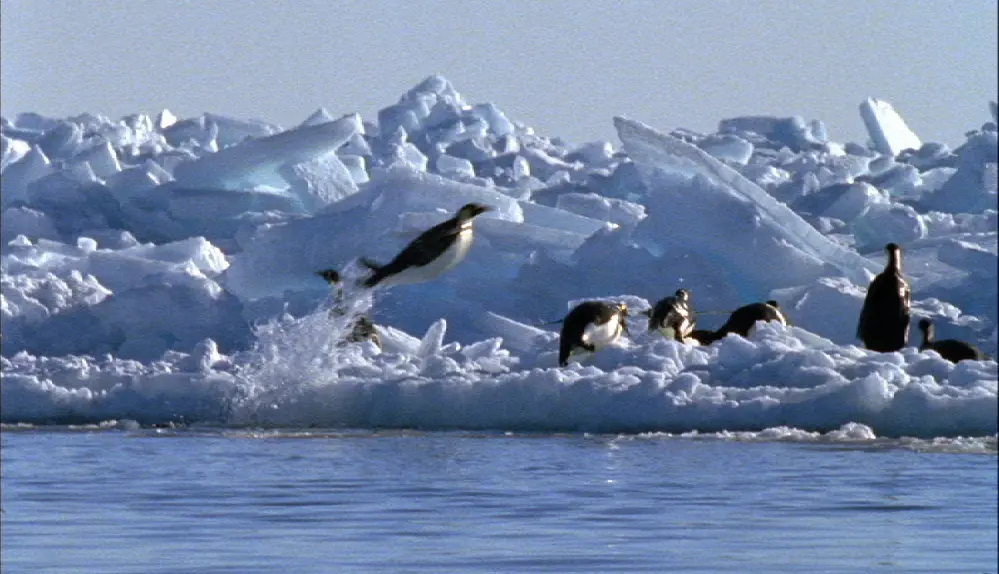
Flightlessness makes penguins vulnerable to land-based predators, which is why they have evolved specific behavioral strategies to compensate. Most species live in remote, isolated areas like Antarctica or sub-Antarctic islands where terrestrial predators are scarce. They also rely on large, dense colonies to provide safety in numbers, making it harder for a single predator to single out an individual.
When on land, penguins are often clumsy and slow, but they have developed clever ways to move across difficult terrain:
- Tobogganing: They slide on their bellies and push with their feet to move quickly over ice.
- Huddling: During harsh winters, they pack together in massive groups to share body heat.
- Vigilance: They use loud vocalizations to communicate warnings to others in the colony.
- Camouflage: Their countershading—black backs and white bellies—helps them blend into the dark water or bright surface when viewed from above or below.
Common mistakes when studying penguin evolution
A frequent error is assuming that flightlessness is a "failure" of evolution. In reality, it is a highly successful specialization. Another common mistake is believing that all penguins live in ice-covered environments; while the Emperor penguin does, many species, such as the Galapagos penguin, thrive in much warmer, temperate climates. Understanding this diversity is key to appreciating how they adapted to various marine ecosystems globally.
Observers often mistakenly think that penguins struggle to move because they are "lazy" or "awkward." In truth, their gait is a direct result of their anatomy being optimized for the water. To better understand their biology, researchers look at how their metabolic rates change during long dives. By focusing on their aquatic performance rather than their terrestrial limitations, it becomes clear that penguins are not "broken" birds, but rather masters of a different, more challenging environment. Their existence proves that evolution prioritizes survival in a specific habitat over maintaining ancestral traits that are no longer useful for daily life.
Key facts
- Penguins belong to the order Sphenisciformes, which evolved from flying ancestors roughly 60 million years ago.
- Their wings have evolved into stiff, flat flippers that are highly efficient for "flying" through dense water.
- The energy cost of flapping wings in water is significantly lower than the cost of flying through air for a bird of their body mass.
- Dense, solid bones act as ballast, allowing penguins to dive deep without the buoyancy issues hollow-boned flying birds face.
- Penguins maintain a thick layer of blubber and tightly packed feathers to survive freezing temperatures, which adds significant weight.
- A penguin's center of gravity is positioned to optimize swimming speed, which can reach up to 22 miles per hour in species like the Gentoo.
The bottom line
Penguins traded the ability to fly for superior swimming efficiency. By evolving dense bones and stiff, paddle-like flippers, they became masters of the ocean, capable of deep dives and rapid underwater navigation. While they cannot take to the skies, their specialized anatomy allows them to thrive in harsh environments where flying would be energetically expensive and less effective for hunting the abundant marine life they rely on.
People also ask
Are there any penguins that can fly?
No, all 18 living species of penguins are flightless. While they share a common ancestor with flying seabirds like petrels, they have completely adapted to an aquatic lifestyle over millions of years.
Do penguins have hollow bones like other birds?
Unlike most birds that have light, hollow bones to aid in flight, penguins have heavy, solid bones. This anatomical feature acts as a weight to help them remain submerged while diving for prey.
How deep can penguins dive?
The Emperor penguin is the deepest diver, capable of reaching depths of over 1,800 feet. They can remain underwater for more than 20 minutes on a single breath.
Do penguins use their feet to swim?
Penguins primarily use their flippers for propulsion and steering, much like a propeller. Their feet are used mostly for steering and braking when they are near the surface or exiting the water.
Why don't penguins get cold in the water?
They possess a dense layer of down feathers covered by overlapping waterproof feathers that trap a layer of warm air against their skin. Additionally, a thick layer of fat provides essential insulation in sub-zero temperatures.
Can penguins walk on land?
Penguins move on land by waddling or hopping, which is an energy-efficient way to travel for their body shape. Some species even slide on their bellies, known as tobogganing, to move quickly over ice and snow.
This answer was created with the help of AI research tools and reference sources. Spotted an error? Let us know — we correct mistakes quickly. See our editorial policy.