How do hummingbirds fly?
Short answer
Hummingbirds fly by rotating their wings in a unique figure-eight pattern, generating lift on both the forward and backward strokes. Unlike most birds that only gain lift on the downstroke, hummingbirds use flexible shoulder joints to invert their wings. This specialized mechanics allows them to hover, fly backward, and maneuver with unmatched precision.
On this page
How do hummingbird wings move?
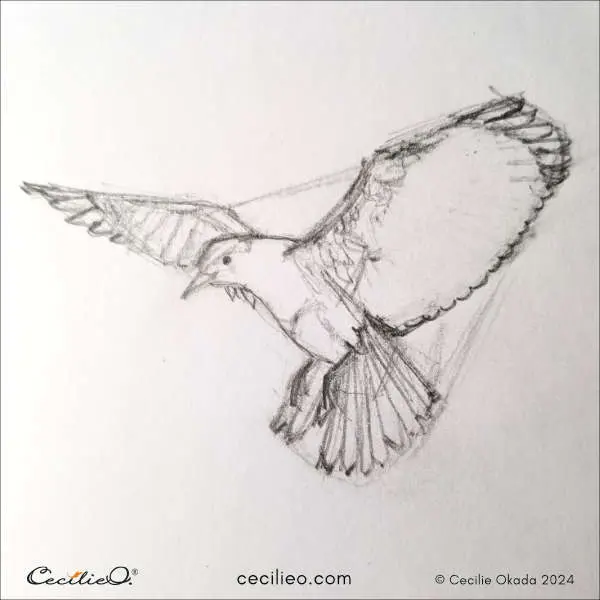
Hummingbird flight relies on a unique anatomical structure that allows for extreme wing rotation. While most birds flap their wings up and down, hummingbirds utilize a complex figure-eight motion. Their shoulder joints are highly flexible, enabling the wing to rotate nearly 180 degrees at the base. This rotation allows the bird to maintain a constant angle of attack, creating lift on both the forward and backward strokes.
This continuous lift mechanism is essential for the high-energy demands of hovering. Because the wing produces force in both directions, the bird remains suspended in mid-air with remarkable stability. This motion is supported by powerful pectoral muscles that make up nearly 30 percent of the bird’s total body weight. By flapping at rates of 50 to 80 beats per second, they can maintain position even in gusty wind conditions.
How fast can hummingbirds fly?
Hummingbirds are among the fastest birds relative to their size, with some species reaching impressive top speeds. During courtship displays, the male Anna’s hummingbird can reach speeds of up to 60 miles per hour in a dive. Even in level flight, these birds typically travel between 25 and 30 miles per hour. Their flight speed is a critical adaptation for escaping predators and reaching distant nectar sources quickly.
The speed of their flight is matched by their incredible acceleration capabilities. They can go from a complete hover to full speed almost instantly. This agility is necessary for their survival, as they must navigate dense foliage and defend their territories from rivals. Their flight patterns are characterized by:
- Rapid, darting movements between flowers.
- Sudden stops and vertical ascents.
- High-speed chases during territorial disputes.
- Precise hovering to insert their long bills into blossoms.
Why do hummingbirds hover?
Hovering is the hallmark of hummingbird flight and the primary way they feed. By keeping their bodies nearly horizontal while their wings beat in a horizontal plane, they stay perfectly still in front of a flower. This stationary position allows them to use their long, specialized tongues to lap up nectar from deep within blooms. Without the ability to hover, they would be unable to access the high-energy sugar sources required to fuel their rapid metabolism.
Hovering is an incredibly taxing activity that requires constant energy intake. To maintain this level of performance, hummingbirds must consume nectar equivalent to half their body weight every day. They also supplement their diet with small insects to obtain necessary proteins and fats. When food is scarce, they enter a state of torpor, a deep sleep that lowers their heart rate and body temperature to conserve energy until conditions improve.
How to observe hummingbird flight patterns
If you want to witness these birds in action, you must create an environment that encourages them to hover and maneuver. Setting up a nectar feeder is the most effective way to attract them to your yard. Place feeders in open areas with clear lines of sight so the birds feel safe while feeding. You can observe their flight mechanics best by watching for these specific behaviors:
- Position yourself at least 10 feet away to avoid startling them.
- Look for the "blur" of the wings, which indicates a high-frequency beat.
- Observe the tail feathers, which act as rudders for sharp, sudden turns.
- Watch for the bird tilting its body to adjust its flight path toward a new flower.
Common mistakes when watching hummingbirds
Many people fail to see the nuances of hummingbird flight because they move too quickly or use improper equipment. A common mistake is standing too close to a feeder, which causes the birds to fly away before you can observe their hovering technique. Additionally, using low-quality binoculars makes it difficult to track their rapid wing movements. To improve your viewing experience, keep these tips in mind:
- Avoid wearing bright colors that might confuse the birds or cause them to investigate your clothing.
- Use a camera with a high shutter speed if you intend to capture their flight on film.
- Do not use flash photography, as the sudden burst of light can disorient the birds and disrupt their feeding rhythm.
- Be patient, as these birds are naturally skittish and may take several days to become comfortable with your presence in the garden.
Key facts
- Hummingbirds are the only birds capable of sustained hovering and flying backward.
- Their wings rotate 180 degrees at the shoulder, allowing them to generate lift on both the forward and backward strokes.
- A hummingbird’s heart can beat up to 1,260 times per minute during intense flight.
- Their wing beat frequency ranges from 10 to 80 beats per second depending on the species and maneuver.
- To maintain flight, they consume half their body weight in sugar daily, often visiting thousands of flowers.
- Avoid using red-dyed sugar water in feeders, as the chemicals can be toxic; use a simple four-to-one water-to-sugar ratio instead.
The bottom line
Hummingbirds achieve their unique flight capabilities through a specialized shoulder joint that allows for a figure-eight wing motion. By generating lift on both the upstroke and downstroke, these birds master hovering, backward flight, and rapid acceleration. To support this high-energy lifestyle, they require constant access to nectar. Providing a clean, sugar-water feeder is an excellent way to observe their remarkable aerial agility up close.
People also ask
How fast can a hummingbird fly?
Most hummingbirds cruise at speeds of 25 to 30 miles per hour. During courtship dives, some species can reach speeds exceeding 50 miles per hour.
Do hummingbirds fly at night?
No, hummingbirds are diurnal and do not fly at night. They enter a state of torpor, a deep sleep-like hibernation, to conserve energy until sunrise.
Why do hummingbirds make a humming sound?
The sound is produced by the rapid vibration of their wings against the air. The frequency of the wing beats creates the distinct buzzing noise heard by human ears.
Can hummingbirds walk or hop?
Hummingbirds possess very weak legs and feet that are not designed for walking. They use their feet primarily for perching on branches or scratching their heads.
How do they navigate during migration?
Hummingbirds use a combination of innate instinct, celestial navigation, and memory of geographic landmarks. They often return to the exact same feeders year after year.
How long can they hover in one spot?
They can hover for extended periods as long as they have sufficient energy reserves. This ability is essential for feeding from flowers that do not provide a place to land.
This answer was created with the help of AI research tools and reference sources. Spotted an error? Let us know — we correct mistakes quickly. See our editorial policy.