What is a group of flamingos called?
Short answer
A group of flamingos is most commonly called a flamboyance. While this is the most popular term, they are also frequently referred to as a colony, a stand, or a regiment. These collective nouns reflect the birds' tendency to gather in massive, vibrant groups while feeding or nesting in shallow wetlands.
On this page
Why are flamingos called a flamboyance?
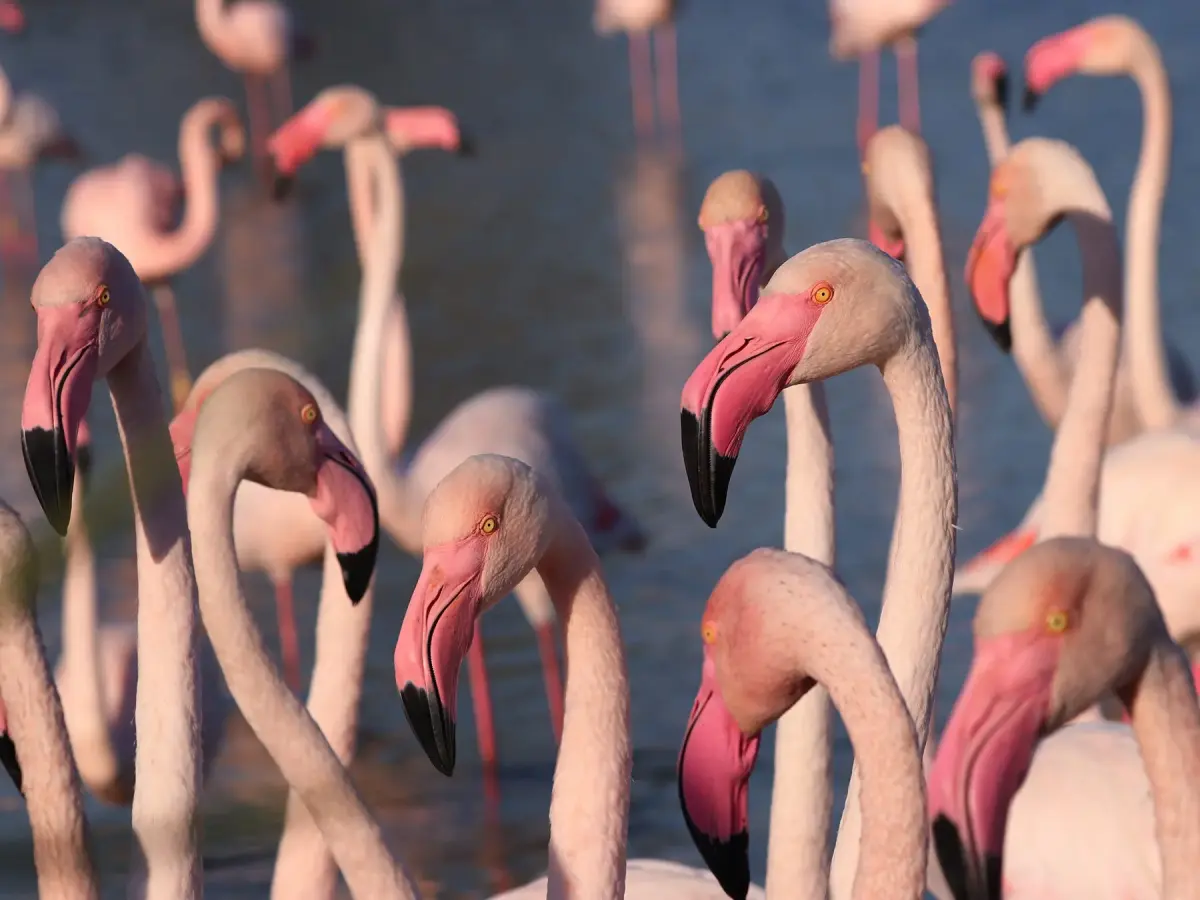
The term "flamboyance" is derived from the French word "flamboyant," which means "flaming" or "brilliant." It perfectly captures the visual impact of a large gathering of these birds, whose bright pink, orange, or red plumage creates a stunning display. When hundreds or thousands of flamingos congregate, their collective color intensity is so striking that the term serves as both a literal and poetic description of their appearance in the wild.
Beyond the aesthetic appeal, the name highlights the social nature of the species. Flamingos are highly gregarious birds that rely on large numbers for survival, protection, and successful breeding. By grouping together, they create a sea of color that can be disorienting to potential predators, effectively using their "flamboyance" as a defensive mechanism. This unique collective noun has become standard in both ornithological literature and general conversation, solidifying its place in the English language as the most recognized term for a flamingo gathering.
Where do flamingos congregate in large groups?
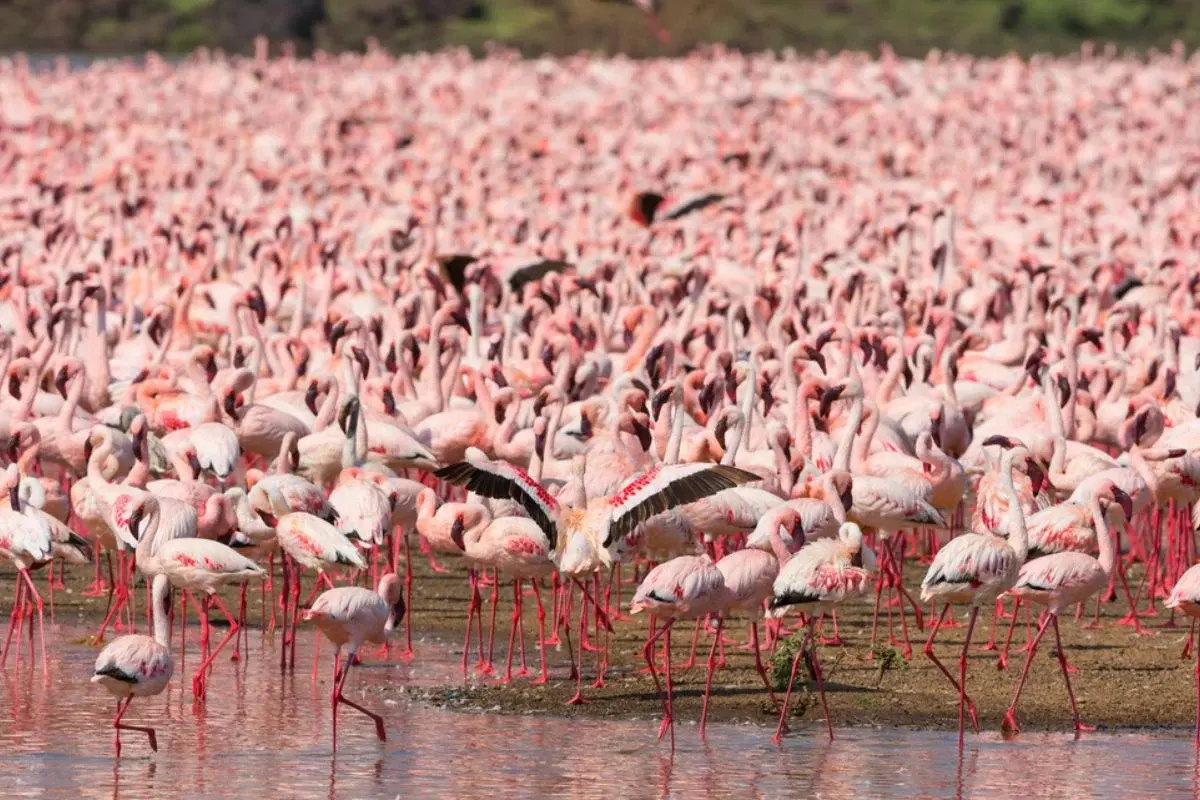
Flamingos are specialized feeders that thrive in extreme environments, such as alkaline or saline lakes. These areas, often found in regions like East Africa, the Andes, and the Caribbean, provide the specific types of algae and small crustaceans that give flamingos their characteristic pink hue. Because these food sources are often concentrated in specific patches, the birds must gather in massive numbers to exploit the available resources efficiently.
When observing these groups, you will notice specific behaviors that define their colonial structure:
- Feeding: They use their specialized bills to filter-feed while walking through shallow water.
- Preening: They spend significant time cleaning their feathers to maintain their water-repellent properties.
- Courtship: They engage in synchronized group displays, including head-flagging and wing-saluting, to stimulate breeding.
- Nesting: They build tall, cone-shaped mud mounds in dense clusters to protect their eggs from rising water levels or heat.
How to identify a flamingo colony
Identifying a flamingo colony is usually straightforward due to the sheer size and noise of the group. A healthy colony can consist of thousands of individuals, making them visible from great distances. When searching for them, look for large, shallow bodies of water with minimal vegetation, as these environments are preferred for their safety and food availability.
If you are planning to observe a colony, follow these steps to ensure a successful experience:
- Research the specific season, as many flamingo species migrate based on water levels and food availability.
- Use binoculars or a spotting scope to observe them from a distance to avoid causing stress or flight.
- Listen for their vocalizations, which are often described as goose-like honking, as these sounds can help you locate a hidden group.
- Check for the presence of nesting mounds, which indicate a permanent or semi-permanent settlement rather than a transient feeding flock.
Common mistakes when observing flamingos
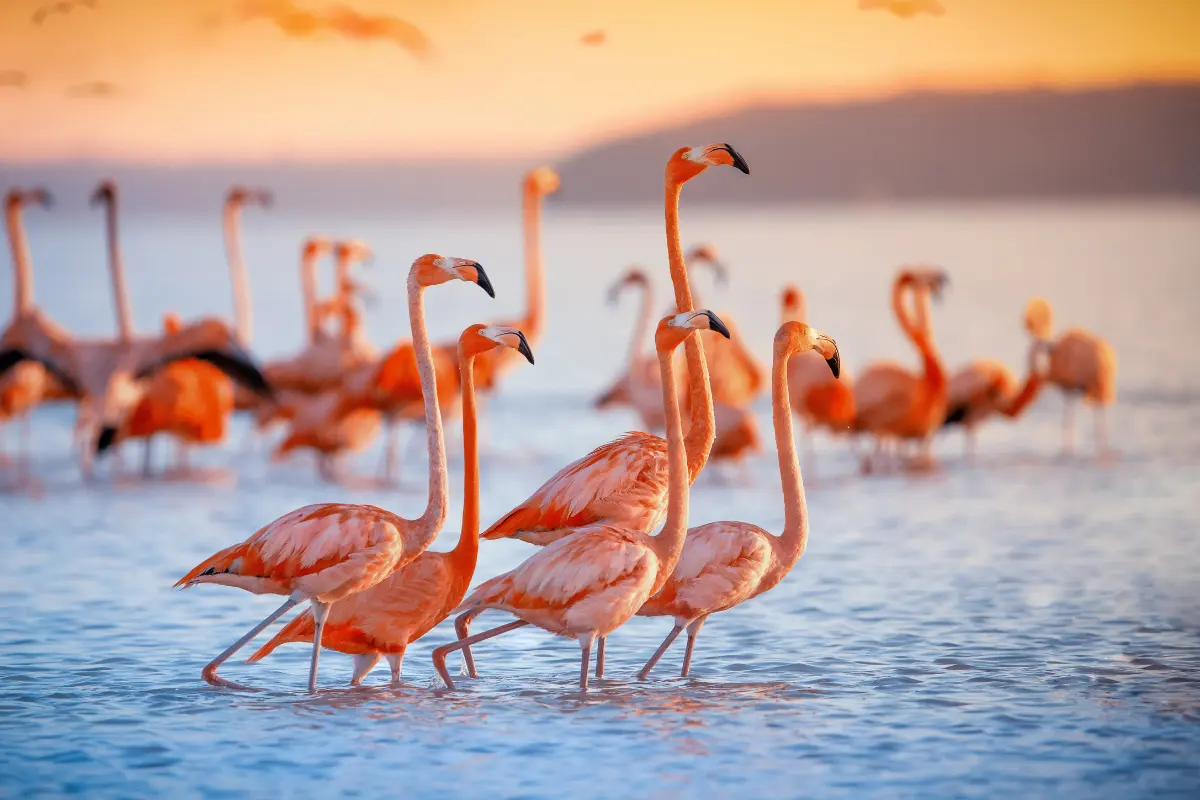
One of the most frequent errors observers make is approaching a colony too closely. Flamingos are sensitive to human presence, especially during the nesting season. If they feel threatened, they may abandon their nests or flightless chicks, which can lead to significant population declines. Always maintain a respectful distance and use long-range photography equipment to capture images without disrupting their natural behaviors.
Another mistake is assuming that all groups are identical in behavior or species. There are six distinct species of flamingos, and their social dynamics can vary significantly depending on their habitat. For example, some species are highly migratory and move between lakes frequently, while others are more sedentary. Failing to account for these differences can lead to incorrect assumptions about why the birds are behaving in a certain way. Always research the specific species native to the region you are visiting to gain a better understanding of their unique social structure and requirements.
What is the difference between a flock and a colony?
While "flamboyance" is the specific term for a group of flamingos, scientists often use the words "flock" and "colony" to describe their behavior in different contexts. A flock generally refers to a group of birds that are moving or feeding together, often in a more transient or temporary state. In contrast, a colony refers to a more established group that has gathered specifically for the purpose of breeding and raising young in a shared location.
Understanding these distinctions helps clarify the social complexity of these birds. A large group of flamingos might be a foraging flock one day and a nesting colony the next, depending on the environmental conditions and the time of year. By using these terms accurately, observers can better describe the life cycle and social habits of these birds. Whether you call them a flamboyance, a flock, or a colony, the sight of these birds working in unison remains one of the most remarkable spectacles in the natural world.
Key facts
- A group of flamingos is most commonly referred to as a "flamboyance."
- Other accepted collective nouns include a "stand," a "colony," or a "regiment."
- These birds are highly social and often gather in groups numbering in the thousands.
- Flamingos congregate in large numbers to deter predators and increase the success of finding mates.
- The term "flamboyance" is considered the most descriptive term due to the birds' vibrant pink plumage.
- When observing a group, avoid sudden movements to prevent startling them into taking flight.
The bottom line
While "flamboyance" is the most popular and evocative term for a group of flamingos, they are also correctly called a colony, stand, or regiment. These social birds rely on their massive numbers for protection and successful breeding in harsh environments. Whether you call them a flamboyance or a colony, observing these vibrant creatures in their natural habitat remains a spectacular sight for any wildlife enthusiast.
People also ask
Why are flamingos pink?
Flamingos derive their pink or orange coloration from carotenoid pigments found in the algae, larvae, and crustaceans they consume. If a flamingo does not have access to these specific food sources, its feathers will gradually fade to a dull white or gray.
How many flamingos can be in a single colony?
A single colony of flamingos can contain anywhere from a few dozen individuals to more than 100,000 birds. These massive gatherings are common in large alkaline or saline lakes where food is abundant.
Do flamingos mate for life?
While flamingos are generally monogamous during a single breeding season, they often choose new partners each year. They engage in complex group courtship displays, including head-flagging and wing-saluting, to synchronize the colony for breeding.
How do flamingos sleep?
Flamingos often sleep while standing on one leg to conserve body heat and reduce muscle fatigue. Scientists believe this behavior helps them maintain balance and stability even in shallow, moving water.
Where do flamingos live?
Flamingos are found on every continent except Antarctica and Australia. They typically inhabit tropical and subtropical regions, favoring saline lagoons, salt pans, and large alkaline lakes.
Read the full answer →Can flamingos fly?
Yes, flamingos are strong fliers and are capable of traveling hundreds of miles between different feeding and breeding sites. They require a running start across the water to generate enough speed for takeoff.
This answer was created with the help of AI research tools and reference sources. Spotted an error? Let us know — we correct mistakes quickly. See our editorial policy.