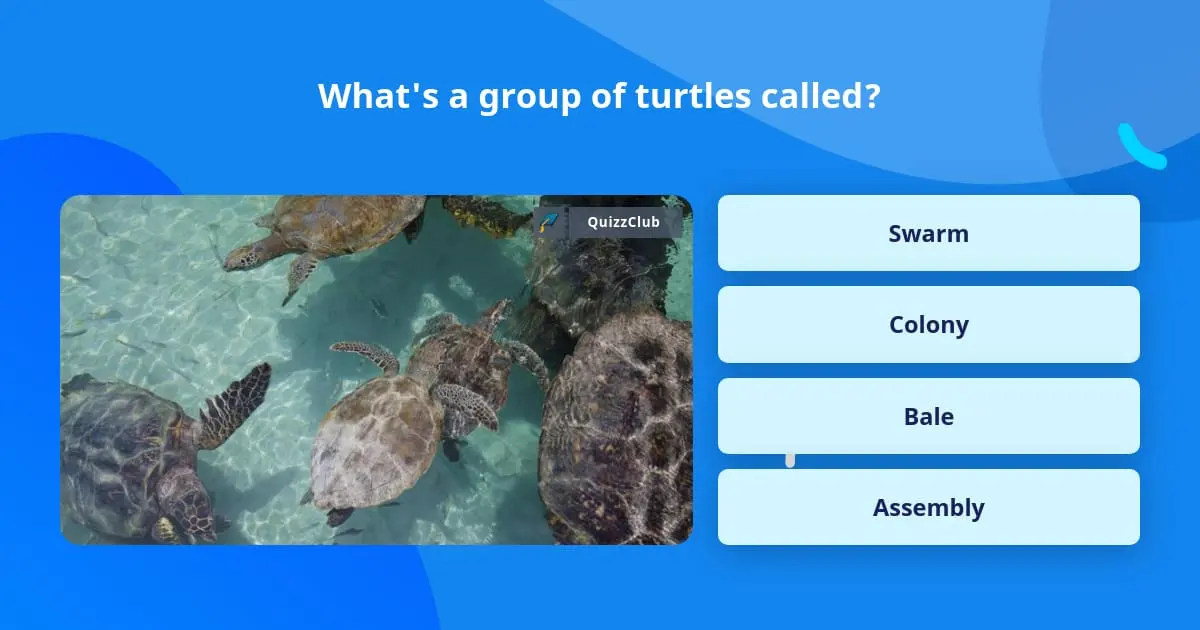
What is a group of turtles called?
Short answer
A group of turtles is most commonly called a bale, though they are also referred to as a dole, a turn, or a nest. While these collective nouns exist, they are rarely used in scientific literature. In nature, turtles are solitary creatures and do not form complex social groups or organized herds.
On this page
What is a group of turtles called?
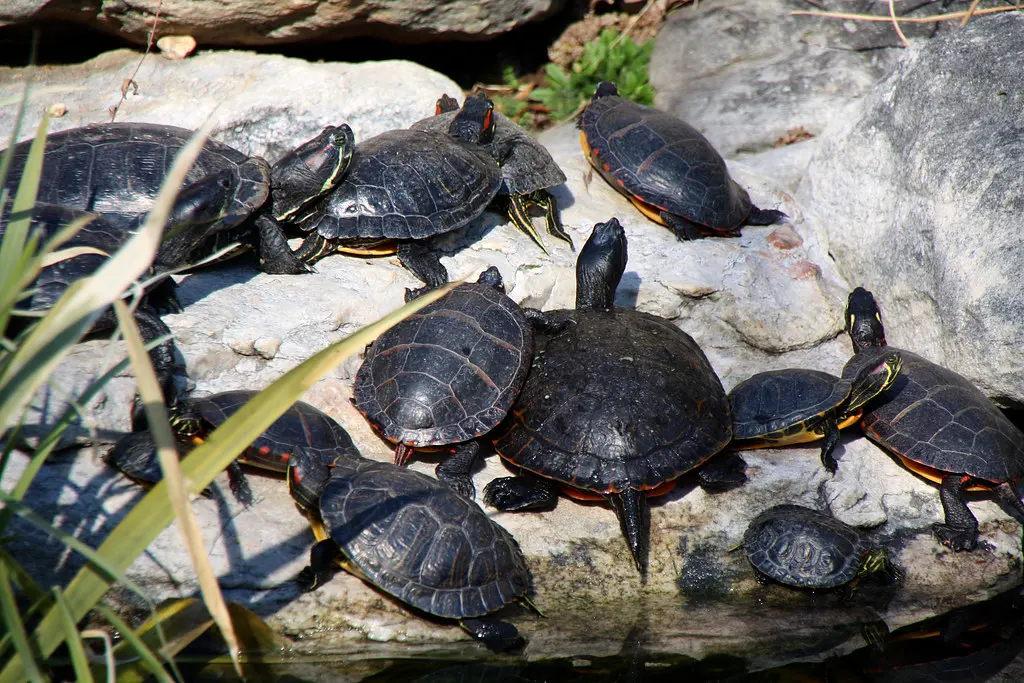
The term "bale" is the most widely recognized collective noun for a group of turtles, particularly when they are seen basking together on logs or riverbanks. Other terms such as a "dole" or a "turn" are sometimes used in literary contexts, though these are largely archaic and hold no biological significance. Because turtles are ectothermic, they often congregate in specific areas to regulate their body temperature, which is why people frequently observe them clustered together.
It is important to note that these groupings are circumstantial rather than social. Unlike mammals or birds that form packs or flocks for protection or hunting, turtles do not possess the cognitive drive to maintain group cohesion. When you see a group of turtles, you are witnessing individuals taking advantage of a shared resource, such as a sunny spot or a plentiful food source, rather than a coordinated social unit.
Why do turtles gather in groups?
Turtles congregate primarily due to environmental necessity rather than social interaction. The most common reason for this behavior is thermoregulation. As cold-blooded reptiles, turtles must absorb heat from their surroundings to boost their metabolism, aid digestion, and maintain immune function. A log or rock that receives optimal sunlight becomes a high-value resource, leading multiple individuals to occupy the same space simultaneously.
Beyond thermoregulation, turtles may gather in specific locations for the following reasons:
- Abundance of food: Areas with high concentrations of aquatic vegetation or insects attract many individuals.
- Reproductive cycles: During nesting season, females often congregate near suitable egg-laying sites.
- Limited habitat: In fragmented environments, turtles may be forced to share smaller patches of suitable water or land.
- Predator avoidance: In some cases, being part of a larger group can slightly reduce the individual risk of predation through the "many eyes" effect.
How do turtles interact with each other?
While turtles are generally solitary, they are not entirely devoid of social behavior. Some species exhibit subtle forms of communication, particularly during courtship. Male turtles may use visual displays, such as head bobbing or fanning their front claws in front of a female, to signal their intentions. These interactions are brief and typically do not lead to long-term associations between individuals.
Aggression can occur when resources are scarce or when turtles are kept in confined spaces, such as in captivity. In these scenarios, turtles may bite or push one another to secure a better basking spot or a larger portion of food. Understanding these behaviors is crucial for anyone keeping turtles as pets, as overcrowding often leads to stress, shell damage, and the spread of infections. Providing adequate space is the primary way to mitigate these negative social interactions.
Common mistakes when identifying turtle groups
A frequent error is assuming that all reptiles found in a group belong to the same species. In many aquatic environments, it is common to see painted turtles, sliders, and snapping turtles basking on the same log. Observers often mistakenly label this collection as a single group, failing to recognize that these animals are merely coincidental neighbors. Another mistake is attributing human-like social structures to these reptiles, such as assuming they are "hanging out" or playing.
To avoid misidentifying or misinterpreting turtle behavior, follow these guidelines:
- Observe from a distance to avoid startling the animals, which causes them to dive into the water.
- Use binoculars to distinguish between different species based on shell patterns and head markings.
- Note the environmental conditions, such as the position of the sun, to understand why they are gathered.
- Avoid assuming that a large number of turtles indicates a healthy ecosystem, as it could simply mean that suitable basking spots are extremely limited.
How to observe turtles in the wild
Observing turtles in their natural habitat is a rewarding experience that requires patience and a quiet approach. Turtles are highly sensitive to vibrations and movement; they will often retreat into the water long before a human reaches the shoreline. To maximize your chances of seeing a natural "bale," choose a location with minimal foot traffic and approach the water's edge slowly. Early morning is often the best time, as turtles move to sunny areas as the air warms.
When visiting turtle habitats, adhere to these ethical practices:
- Keep a respectful distance to prevent unnecessary stress to the animals.
- Never attempt to touch or handle wild turtles, as this can introduce pathogens or cause them to drop their eggs.
- Leave the environment exactly as you found it, ensuring that logs and rocks—the turtles' essential basking sites—remain undisturbed.
- Report sightings to local wildlife agencies if you are participating in citizen science projects, as your data can help researchers track population health and migration patterns across different regions.
Key facts
- A group of turtles is most commonly referred to as a "bale" or a "dole."
- When turtles are found basking together on a log or rock, they are often called a "nest" or a "turn."
- The term "bale" is derived from the way turtles cluster together, resembling a tightly packed bale of hay.
- Scientists and researchers typically use the term "aggregation" to describe groups of turtles in the wild.
- Turtles are generally solitary reptiles, so large groups usually only form for specific reasons like mating or basking.
- Avoid using the word "herd" or "pack," as these terms are biologically inaccurate for reptiles and are reserved for mammals.
The bottom line
While turtles are primarily solitary creatures, you will frequently see them congregating in groups known as a bale or a dole. These gatherings are usually temporary and driven by the need to bask in the sun or access prime feeding grounds. Understanding these collective nouns helps clarify their natural behaviors, though it is important to remember that they do not function as a social unit.
People also ask
Do turtles live in groups?
Most turtle species are solitary animals that do not require social interaction to thrive. They generally only congregate in specific areas due to environmental factors like sun exposure or food abundance.
Why do turtles bask in groups?
Turtles are ectothermic, meaning they rely on external heat sources to regulate their body temperature. By basking together on logs, they maximize their exposure to sunlight and increase their metabolic efficiency.
Are there different names for baby turtles?
A group of baby turtles is commonly referred to as a "hatch" or a "clutch." These terms specifically describe the offspring that emerge from a single nest of eggs.
Do sea turtles travel in groups?
Sea turtles are highly migratory and solitary creatures that travel across vast oceans alone. They only gather in large numbers during the nesting season when females return to beaches to lay eggs.
Is it common to see a "bale" of turtles in a pond?
Yes, it is very common to see a bale of aquatic turtles, such as sliders or painted turtles, resting on logs. This behavior is a practical way for them to dry their shells and eliminate algae or parasites.
How do you identify a group of tortoises?
A group of tortoises is often called a "creep." Unlike aquatic turtles, some tortoise species show slightly more social tolerance, though they still do not form complex social structures.
This answer was created with the help of AI research tools and reference sources. Spotted an error? Let us know — we correct mistakes quickly. See our editorial policy.