What is a group of crows called?
Short answer
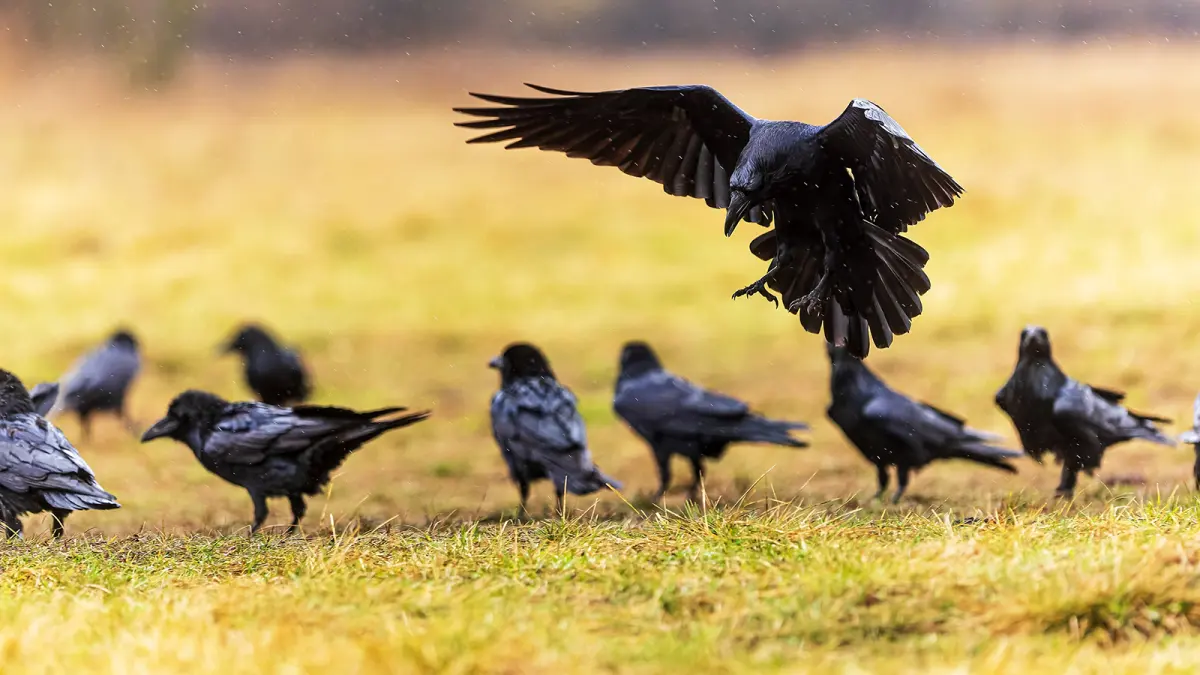
A group of crows is most famously known as a murder. This term originates from folk tales and superstitions dating back to the Middle Ages, which associated the birds with death due to their scavenging habits. While "murder" is the standard poetic collective noun, ornithologists typically refer to any gathering as a flock.
On this page
Why is a group of crows called a murder?
The term "a murder of crows" belongs to a category of linguistic curiosities known as terms of venery, or collective nouns for animals. These poetic designations gained popularity in the 15th century through literature like "The Book of Saint Albans," which listed various colorful names for groups of creatures. The association with death likely stemmed from the birds' opportunistic behavior as scavengers on battlefields and near cemeteries.
Because crows are highly intelligent and often congregate near carrion, medieval observers viewed them as omens of misfortune. While scientists do not use this term in formal research, it has persisted in the English language as an evocative metaphor. It highlights the cultural history of human interaction with these birds rather than any biological aggression within the species itself.
How do crows behave in large groups?
Crows are highly social animals that often gather in massive communal roosts, especially during the autumn and winter months. These roosts can contain hundreds or even thousands of individuals, providing safety in numbers and a platform for social interaction. By clustering together, they can better defend against predators and share information about food sources located in the surrounding landscape.
Within these large gatherings, crows exhibit complex social structures and communication patterns. They use a variety of vocalizations, ranging from harsh caws to complex clicks, to signal threats or coordinate movements. Researchers have observed that these birds often return to the same roosting sites year after year, demonstrating a strong sense of site fidelity and memory.
- Roosts provide warmth during cold nights.
- Communal living helps crows learn about new foraging opportunities.
- Large numbers make it difficult for hawks and owls to launch surprise attacks.
What is the difference between a murder and a parliament?
Confusion often arises between collective nouns for different types of birds, particularly crows and owls. While a group of crows is a murder, a group of owls is referred to as a parliament. This distinction is purely literary and does not reflect the actual social behaviors of the species involved. Owls are generally solitary hunters, whereas crows are famously gregarious and cooperative.
Other birds have their own unique collective nouns that reflect perceived traits or historical whimsy. For example, a group of ravens is called an unkindness or a conspiracy, reflecting their dark plumage and reputation in folklore. Understanding these terms requires looking at the history of English literature rather than the field of biology.
- Identify the species based on size and beak shape.
- Observe the social behavior to see if they are foraging or roosting.
- Consult a field guide to verify the correct collective noun.
Where can you see large groups of crows?
You are most likely to encounter a large gathering of crows in open areas such as agricultural fields, parks, or near landfills. During the day, they disperse to forage for food, but they often return to specific, sheltered locations at dusk to roost. Urban environments have become increasingly popular for these birds due to the abundance of food waste and the heat islands created by buildings.
If you want to observe a large group, look for tall, dense trees or power lines near open foraging grounds. Crows prefer locations that offer a clear line of sight to watch for predators while allowing them to remain close to their companions. Observing them from a distance is best, as they are cautious birds that will disperse if they feel threatened by human presence.
- Look for roosts in late afternoon as the sun begins to set.
- Check areas near water sources, as crows frequently bathe in groups.
- Avoid making sudden movements or loud noises that might startle the flock.
Common mistakes when identifying crow gatherings
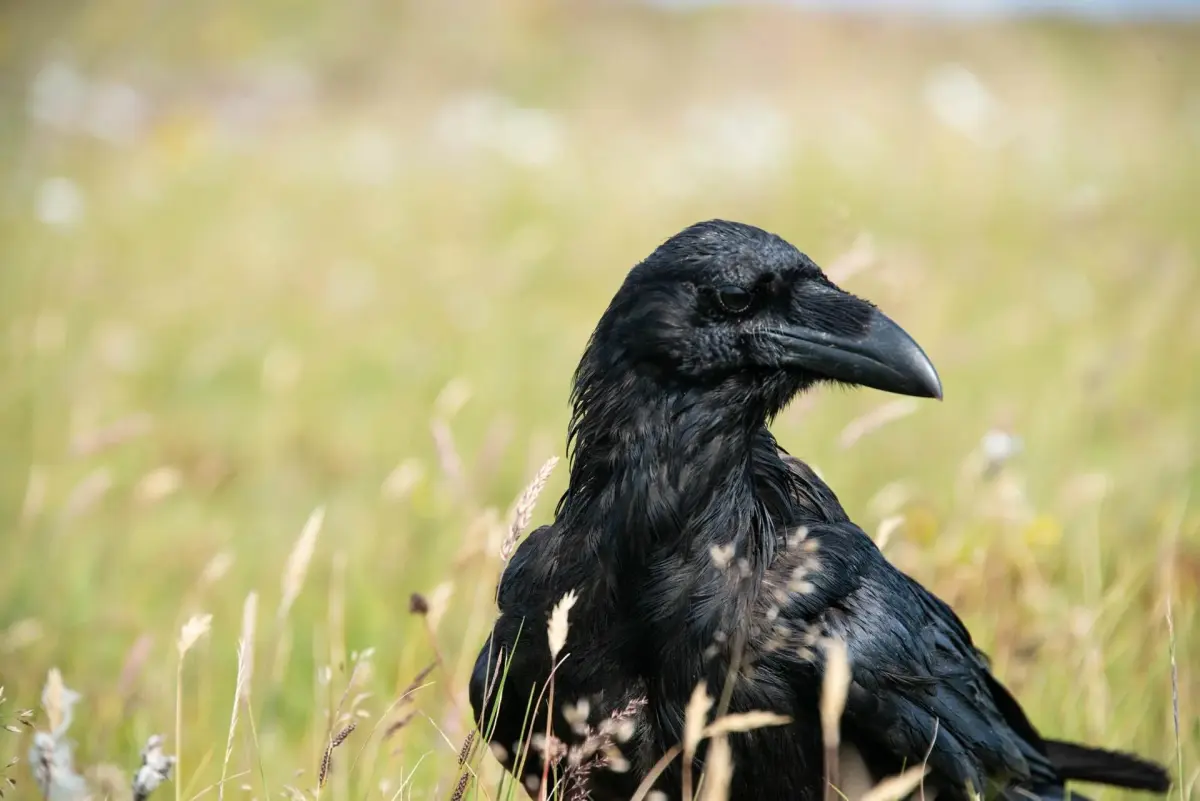
One frequent error is confusing crows with their larger relatives, the common ravens. While both are members of the Corvid family, ravens are larger, have wedge-shaped tails, and typically travel in pairs rather than large groups. Mistaking a group of crows for a flock of blackbirds is also common, though blackbirds are significantly smaller and exhibit different flight patterns.
Another mistake is assuming that a group of crows is always a murder. In scientific contexts, using the term "flock" is perfectly acceptable and often preferred for clarity. Avoid attributing malicious intent to their behavior; while they are loud and sometimes aggressive toward hawks, they are simply acting according to their evolutionary instincts for survival. By observing them with patience, you can appreciate their intelligence without relying on outdated superstitions or folklore.
Key facts
- A group of crows is most commonly referred to as a "murder."
- This term originates from folk tales and superstitions that associated crows with death and bad omens.
- In ornithology, scientists often use the neutral term "flock" to describe these gatherings.
- Crows are highly social birds that often roost in groups numbering in the thousands during winter months.
- These large communal roosts serve as protection against predators and help the birds share information about food sources.
- To distinguish between species, note that a group of ravens is specifically called an "unkindness" or a "conspiracy."
The bottom line
While the poetic term "murder" is the most famous collective noun for crows, it remains a linguistic curiosity rather than a scientific designation. These highly intelligent corvids are better understood as social creatures that thrive in complex communal groups. Whether you call them a flock or a murder, observing their sophisticated behavior and social interactions provides a fascinating glimpse into the lives of these adaptable urban survivors.
People also ask
Why are crows considered intelligent?
Crows possess large brains relative to their body size and exhibit complex problem-solving skills. They are known to use tools, recognize individual human faces, and communicate using a variety of distinct vocalizations.
Do crows mate for life?
Yes, crows are generally monogamous and often remain with the same partner for many years. Both parents participate in building the nest, incubating eggs, and feeding the fledglings.
Are crows and ravens the same bird?
While they belong to the same genus, Corvus, they are different species. Ravens are significantly larger, have heavier bills, and possess a wedge-shaped tail compared to the crow's fan-shaped tail.
What do crows eat?
Crows are opportunistic omnivores that consume almost anything available. Their diet includes insects, seeds, fruits, small animals, carrion, and human food scraps found in trash.
How long do crows live in the wild?
In the wild, crows typically live between 7 and 10 years. However, some individuals have been documented living into their late teens or early twenties under optimal conditions.
Are crows protected by law?
In many regions, including the United States, crows are protected under the Migratory Bird Treaty Act. This law makes it illegal to harm, capture, or kill them without specific permits.
This answer was created with the help of AI research tools and reference sources. Spotted an error? Let us know — we correct mistakes quickly. See our editorial policy.