What is a group of octopuses called?
Short answer
There is no single, scientifically recognized collective noun for a group of octopuses because they are solitary creatures. While some people colloquially use the term "consortium," it is not an official biological classification. In nature, octopuses rarely congregate, making the concept of a group name largely a linguistic curiosity rather than a zoological reality.
On this page
Why do octopuses live alone?
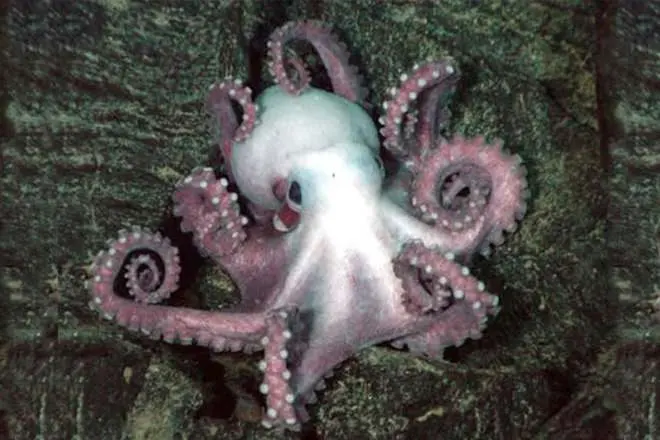
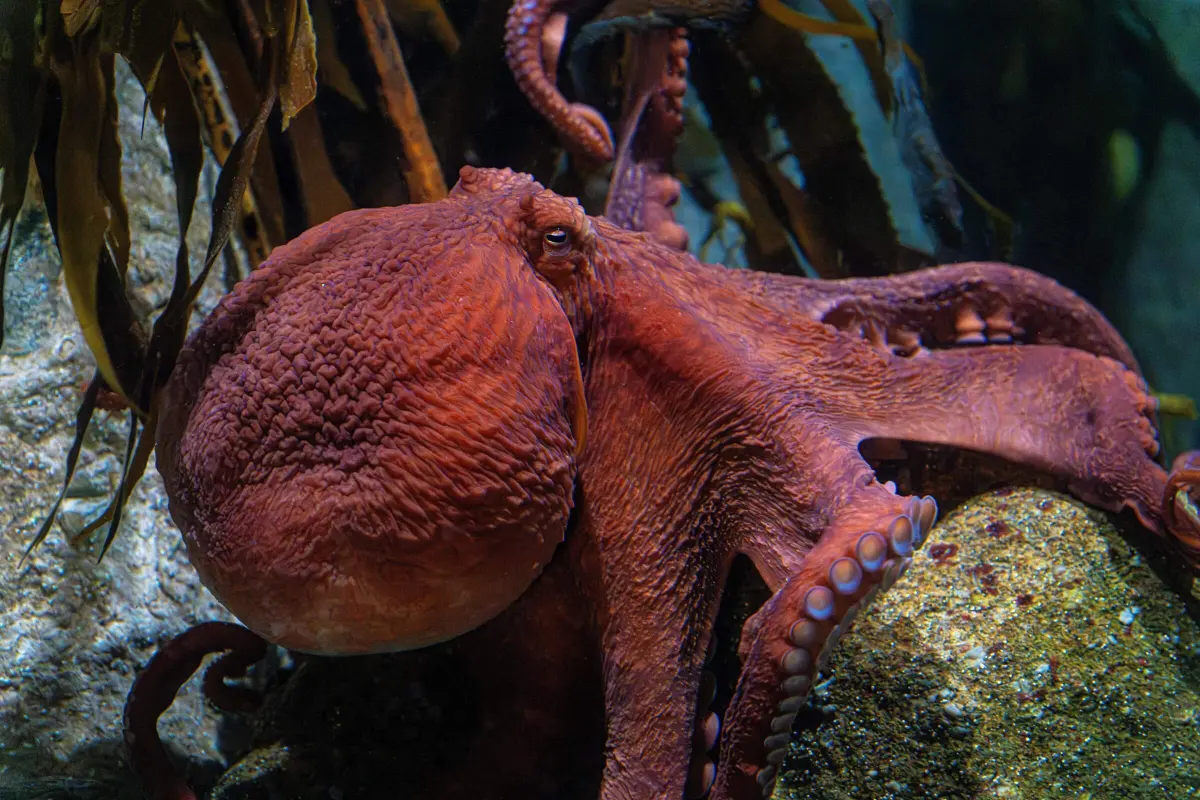
Octopuses are famously antisocial animals that prefer to live in isolation for the majority of their lifespans. Unlike schooling fish or social mammals, these cephalopods do not derive any survival benefit from traveling or hunting in packs. Their solitary nature is primarily driven by their need to avoid detection by predators and their intense competition for limited food resources within their specific territories.
Because they are highly intelligent and possess complex nervous systems, octopuses require significant amounts of prey to sustain their high metabolic rates. If they were to group together, they would quickly deplete the local food supply, leading to starvation. Furthermore, their lack of a social structure means they do not have the behavioral mechanisms required to communicate or cooperate with others of their species. Consequently, they spend their days hiding in dens, crevices, or camouflaged against the seafloor, only emerging to hunt or mate.
What is the correct plural of octopus?
A common point of confusion regarding these animals is the correct way to pluralize the word "octopus." Many people mistakenly believe that "octopi" is the plural form, based on the assumption that the word has Latin roots. However, "octopus" is derived from the Ancient Greek word "oktōpus," which means "eight-foot." Following the rules of Greek etymology, the plural should be "octopodes," pronounced "oc-TOP-o-deez."
In modern English, the most widely accepted and practical plural is simply "octopuses." This follows standard English rules for pluralization and is the term preferred by most biologists and lexicographers. If you are writing for a general audience, "octopuses" is the safest and most accurate choice. Using "octopi" is often considered a hypercorrection, as it incorrectly applies Latin grammar to a Greek-derived word. To summarize the usage, consider these options:
- Octopuses: The standard, widely accepted English plural.
- Octopodes: The technically correct Greek-derived plural, often used in academic contexts.
- Octopi: A common but etymologically incorrect form that is generally discouraged.
How do octopuses interact during mating?
While octopuses are solitary, they must eventually seek out others of their species to reproduce. During the mating season, males and females briefly overcome their antisocial instincts to engage in a complex courtship ritual. Males often use specialized arms called hectocotyli to transfer spermatophores to the female. This process is usually brief and can be dangerous, as the female may sometimes perceive the male as prey or a threat.
Once mating is complete, the pair immediately separates and returns to their solitary lives. In many species, the male dies shortly after mating, and the female will spend the remainder of her life guarding her eggs until they hatch. Because they do not engage in social bonding or long-term pair formation, there is no opportunity for them to form groups or pods. Their interactions are strictly functional and temporary, ensuring the continuation of the species without requiring the development of social structures or group identities.
Common mistakes when identifying octopus behavior
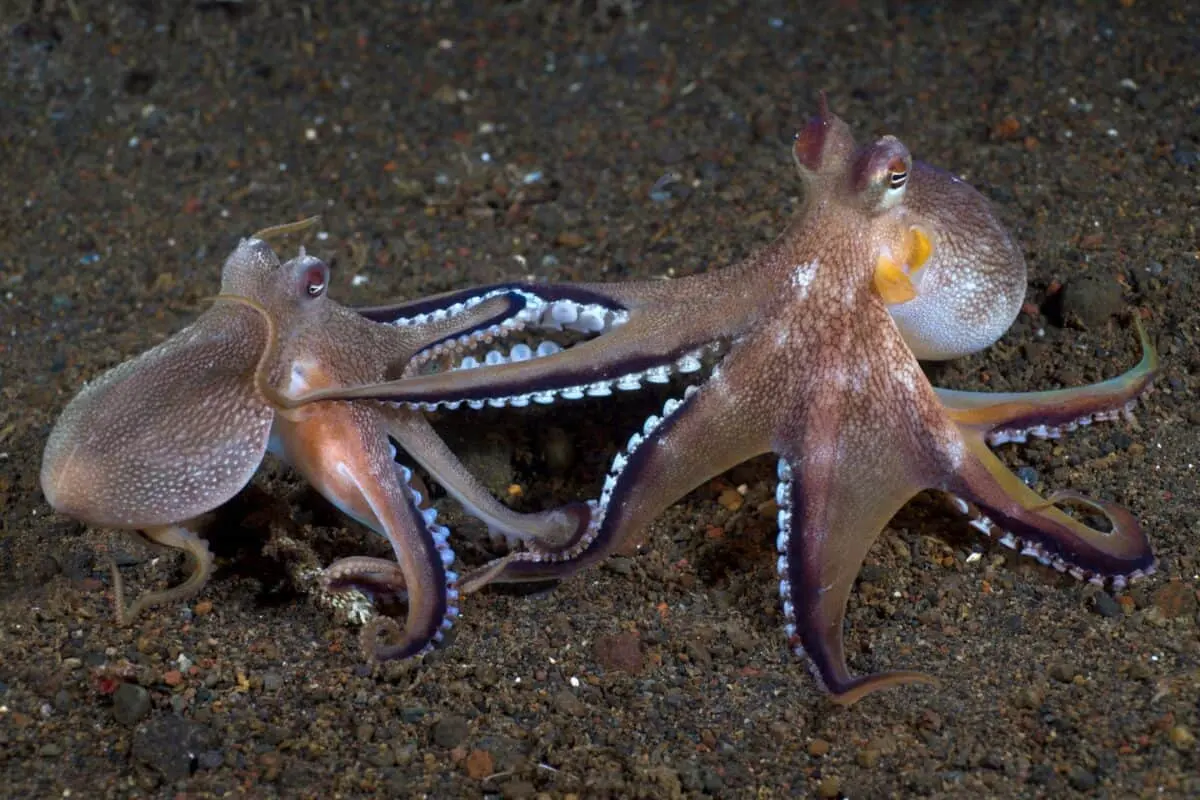
A frequent error among observers is misinterpreting the presence of multiple octopuses in one area as a social group. In reality, if you see several octopuses in close proximity, it is almost certainly a coincidence caused by a high density of available dens or an abundance of food in that specific location. They are not interacting with one another; they are merely occupying the same space independently.
To avoid misidentifying solitary behavior as social behavior, follow these observational guidelines:
- Observe the distance between individuals: If they maintain a significant buffer zone and show no interest in each other, they are simply neighbors, not a group.
- Monitor for aggressive displays: If one octopus approaches another, watch for color changes or posturing, which are signs of territorial defense rather than social interaction.
- Check for environmental factors: Look for high-quality shelter or prey concentrations that might draw multiple individuals to the same small area.
- Note the duration of proximity: If the animals move away from each other within a few minutes, it confirms they are not traveling together.
How to refer to groups in creative writing
Since there is no formal collective noun, writers often have the freedom to invent descriptive terms when discussing octopuses in fiction or poetry. While "consortium" is the most common colloquial suggestion, it lacks any basis in biological science. If you are writing a piece where you need to describe a gathering of these animals, you can use creative metaphors that highlight their unique characteristics.
When choosing a term, consider the specific context of your narrative to ensure it resonates with the reader. Here are a few creative suggestions for collective nouns:
- A "tentacle" of octopuses: Emphasizes their most recognizable physical feature.
- A "camouflage" of octopuses: Highlights their ability to blend into their surroundings.
- A "mystery" of octopuses: Reflects their elusive and intelligent nature.
- A "squirm" of octopuses: Plays on their fluid, boneless movement through the water.
Ultimately, because these animals are so fundamentally solitary, any collective noun will remain a stylistic choice rather than a scientific one. Using descriptive language allows you to capture the essence of the animal while acknowledging that they do not naturally form groups.
Key facts
- Octopuses are solitary creatures and do not naturally form social groups in the wild.
- Because they are antisocial, there is no widely accepted or official collective noun for them.
- Some people use the term "consortium" to refer to a group of octopuses, though this is rarely used by scientists.
- In informal settings, you may hear them referred to as a "flamboyance," though this term is technically reserved for squid.
- If you encounter multiple octopuses in one area, it is likely due to an abundance of food or a mating event rather than social behavior.
- Avoid using the word "school" or "herd," as these terms imply a level of group coordination that octopuses do not possess.
The bottom line
Because octopuses are famously solitary animals that avoid interaction with their own kind, there is no official collective noun for them. While some casual observers might suggest terms like a "consortium," these are not recognized by the scientific community. If you see several octopuses together, you are witnessing a rare environmental coincidence rather than a social gathering. They remain independent, highly intelligent, and strictly antisocial creatures.
People also ask
Are octopuses dangerous to humans?
Most octopuses are shy and will retreat if approached, though all species possess venom. The blue-ringed octopus is the only species known to be lethal to humans due to its potent tetrodotoxin.
How long do octopuses typically live?
Most octopus species have short lifespans, often living only one to two years. Larger species, such as the Giant Pacific Octopus, can live up to five years in optimal conditions.
Do octopuses have brains in their arms?
While they have a central brain, two-thirds of an octopus's neurons are located in its arms. This allows the arms to act independently, sensing and reacting to the environment without constant input from the main brain.
Can octopuses change color to communicate?
Octopuses use specialized skin cells called chromatophores to change color and texture rapidly. While primarily used for camouflage, these displays also serve as warnings or courtship signals to other octopuses.
How many hearts does an octopus have?
An octopus has three hearts. Two hearts work exclusively to pump blood through the gills, while the third heart circulates oxygenated blood to the rest of the body.
Why do octopuses die after mating?
Both males and females undergo a process of senescence, or rapid biological decline, after reproduction. This is a programmed end-of-life process that ensures the parents do not compete with their offspring for resources.
This answer was created with the help of AI research tools and reference sources. Spotted an error? Let us know — we correct mistakes quickly. See our editorial policy.