How long do bumblebees live?
Short answer
Bumblebee lifespans vary significantly based on their role within the colony. Worker bees typically live for two to six weeks, while males generally perish shortly after mating. The queen is the only member that survives through the winter, often living for about one year to establish a new colony each spring.
On this page
How long do different bumblebees live?
The lifespan of a bumblebee is dictated by its specific function within the colony structure. Workers, which are all female, spend their short lives foraging for nectar and pollen, maintaining the nest, and protecting the queen. Because of the intense physical labor and exposure to predators, their lives are brief, usually lasting between 14 and 42 days.
Males, known as drones, have a singular purpose: to mate with new queens. Once they leave the nest, they do not return and spend their time searching for partners. Their lifespan is typically shorter than that of workers, as they lack a stinger for defense and often die within a few weeks of reaching maturity. The queen, however, follows a different biological clock. She is the only member of the colony designed to hibernate, allowing her to survive the winter and restart the cycle the following spring.
What is the life cycle of a bumblebee colony?
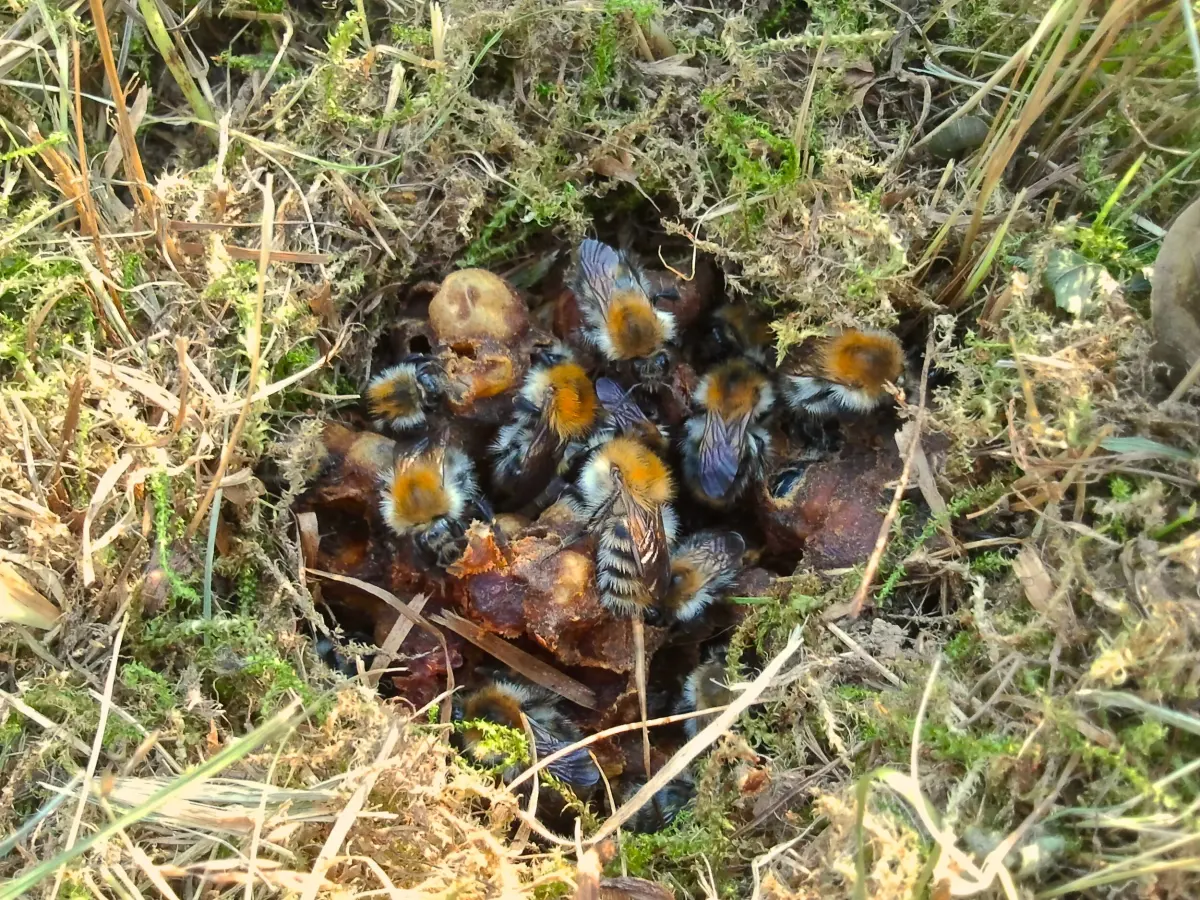
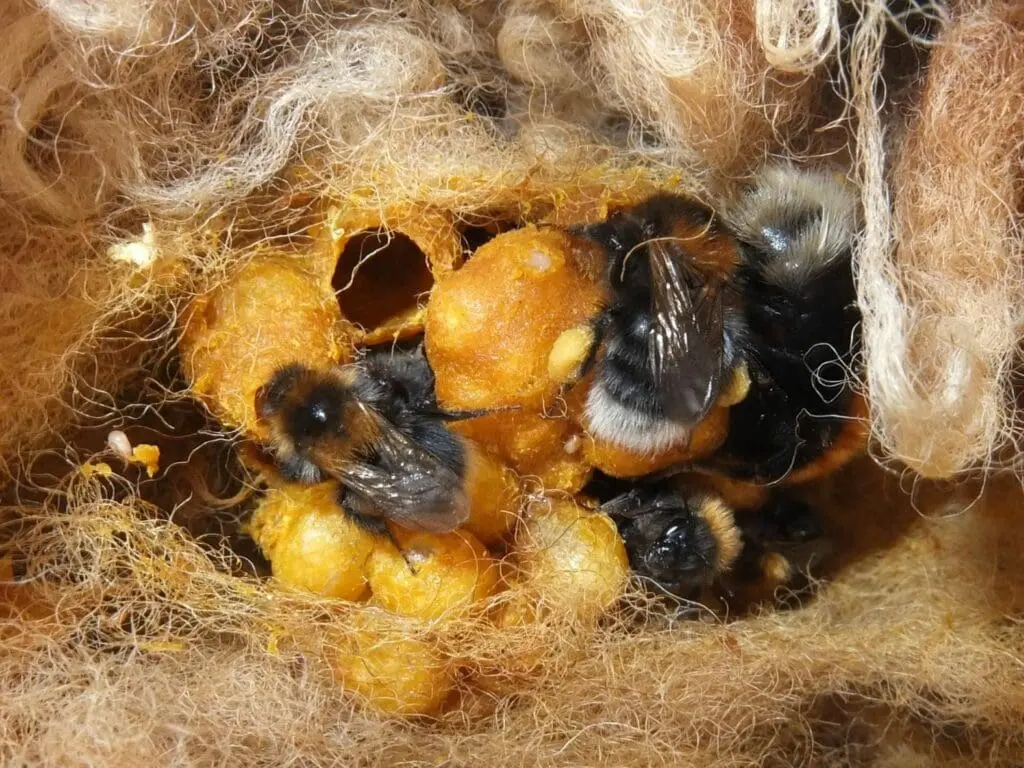
A bumblebee colony is an annual cycle that begins in early spring when a queen emerges from hibernation. She spends several weeks searching for a suitable nesting site, often in abandoned rodent burrows or thick grass. Once she establishes the nest, she lays her first batch of eggs, which will become the initial generation of worker bees.
The colony grows throughout the summer as the queen focuses exclusively on egg-laying. By late summer, the colony reaches its peak population, and the queen begins producing new queens and males. Once these reproductive individuals leave the nest to mate, the original queen and the worker bees slowly die off as autumn temperatures drop. The life cycle can be summarized by these key phases:
- Spring: Queen emergence and nest establishment.
- Early Summer: Rapid growth of the worker population.
- Late Summer: Production of new queens and drones.
- Autumn: Colony decline and death of the old queen.
- Winter: New queens enter diapause in underground burrows.
How do bumblebees survive the winter?
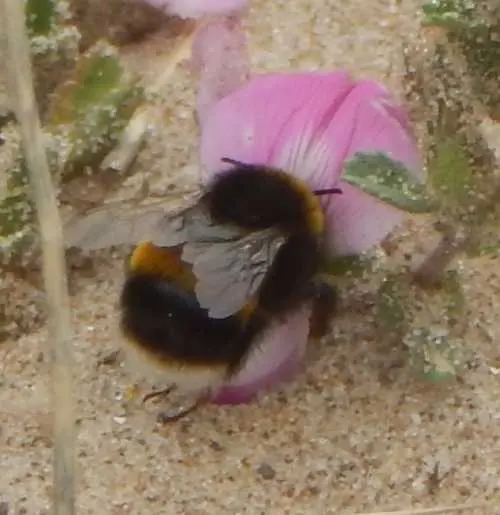
Only the newly mated queens survive the winter months, a process known as diapause. After mating in late summer, these young queens feed heavily to build up fat reserves. They then dig a small chamber in the soil, usually on a north-facing slope to avoid premature warming, and enter a state of suspended animation.
During this period, their metabolic rate drops significantly, allowing them to endure freezing temperatures without food. They remain in these underground burrows for several months, emerging only when the soil warms and early spring flowers begin to bloom. This survival strategy is critical for the species, as it ensures that the colony can be re-established annually. Without this specialized hibernation, the entire population would vanish, as bumblebees do not store enough honey to sustain a colony through the winter like honeybees do.
How to support bumblebees in your garden?
Providing a hospitable environment is one of the best ways to extend the local bumblebee population's health. Bumblebees require a consistent supply of nectar and pollen from early spring through late autumn. By planting a variety of native flowers, you ensure that workers have enough energy to sustain their short lifespans and that new queens have the resources to build fat reserves before winter.
To create a bee-friendly space, follow these practical steps:
- Plant a diverse range of flowers that bloom at different times of the year.
- Avoid using pesticides or herbicides, as these chemicals can be lethal to foraging bees.
- Leave patches of undisturbed soil or long grass, which provide potential nesting sites for queens.
- Provide a small water source, such as a shallow dish with pebbles, so bees can drink without drowning.
- Avoid "tidying up" your garden too aggressively in the autumn, as queens may be nesting in leaf litter or hollow stems.
Common mistakes when helping bumblebees
One of the most frequent errors people make is assuming that all bees behave like honeybees. Unlike honeybees, which live in large, perennial hives, bumblebees are solitary for most of their lives and live in much smaller, temporary colonies. Trying to "rescue" a bumblebee that appears tired on the ground is often unnecessary; it is frequently just a worker taking a rest to digest nectar.
Another common mistake is providing sugar water as a long-term solution. While a drop of sugar water can help a starving bee recover enough energy to fly to a flower, it lacks the essential proteins and nutrients found in pollen. Over-reliance on artificial feeding can also discourage bees from visiting natural plants, which are necessary for pollination. Finally, many gardeners mistakenly destroy bumblebee nests, thinking they are aggressive. In reality, bumblebees are generally docile and will only sting if their nest is directly threatened or if they are handled roughly. By understanding their short, seasonal nature, you can better appreciate their vital role in the ecosystem.
Key facts
- Worker bumblebees typically live for two to six weeks depending on their role and colony needs.
- New queen bumblebees live for about one year, including a period of hibernation during the winter.
- Bumblebee colonies are annual, meaning the entire colony dies in late autumn except for the newly mated queens.
- Male bumblebees, or drones, live for only a few weeks and do not participate in colony maintenance or foraging.
- You can support local populations by planting native flowers that bloom from early spring through late autumn.
- Avoid using pesticides in your garden, as these chemicals significantly shorten the lifespan of foraging bees.
The bottom line
The lifespan of a bumblebee is brief and highly dependent on its caste and the season. While workers perish after a few weeks of intensive foraging, the future of the species rests on the survival of new queens through winter hibernation. By maintaining pesticide-free gardens with diverse floral resources, you provide essential energy for these vital pollinators to complete their life cycles and sustain local ecosystems.
People also ask
Do male bumblebees sting?
No, male bumblebees do not have a stinger and are incapable of stinging. They are generally docile and spend their short lives searching for a mate.
Why do bumblebee colonies die out every year?
Bumblebee life cycles are synchronized with the seasons. Once the weather turns cold, the workers and old queen die, leaving only the young, mated queens to survive the winter in underground burrows.
How can I tell if a bumblebee is dying?
A lethargic bumblebee on the ground may simply be exhausted or cold. If it is not injured, you can place it on a nectar-rich flower to help it regain energy.
Do bumblebees reuse their nests?
No, bumblebees do not reuse old nests. New queens must find a fresh location, such as an abandoned rodent burrow or a dense clump of grass, to establish a colony each spring.
How long is the incubation period for bumblebee eggs?
Once a queen lays eggs, they typically hatch into larvae within four days. The larvae then develop for about two weeks before pupating and eventually emerging as adult workers.
Are bumblebees social insects?
Yes, bumblebees are primitively social insects that live in colonies. Unlike honeybees, their colonies are much smaller, usually consisting of only 50 to 400 individuals at their peak.
This answer was created with the help of AI research tools and reference sources. Spotted an error? Let us know — we correct mistakes quickly. See our editorial policy.