How big do bumblebees get?
Short answer
Bumblebees typically range from 0.5 to 1 inch (12 to 25 millimeters) in length. Size varies significantly based on the bee’s role within the colony, with queens being the largest and workers often being much smaller. Environmental factors, such as food availability during the larval stage, also dictate the final adult size.
On this page
How big do different bumblebees get?
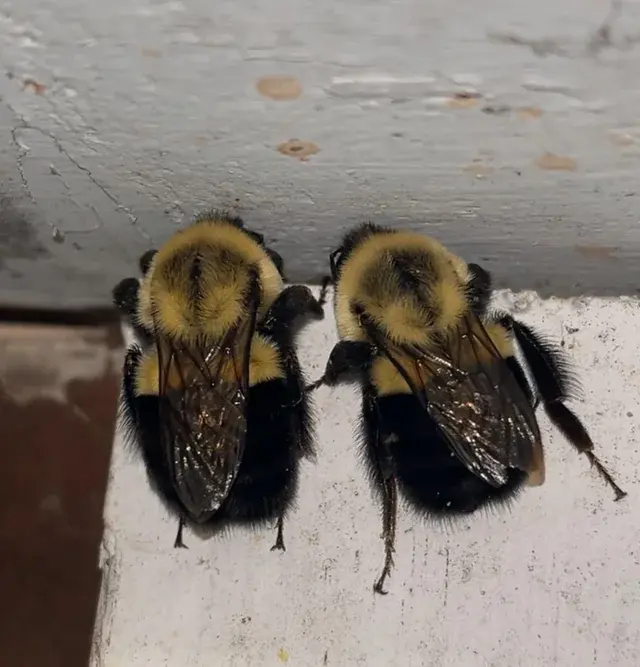
Bumblebees are characterized by their robust, fuzzy bodies, but their dimensions are not uniform across the colony. The queen is consistently the largest member, often reaching lengths of 20 to 25 millimeters. She requires this larger size to support the development of her ovaries and to survive the winter hibernation period.
Workers, which are all female, exhibit the most significant variation in size. Depending on the species and the colony's health, a worker can be as small as 10 millimeters or as large as 18 millimeters. Males, known as drones, typically fall into the mid-range of these sizes. They do not have stingers and are generally more slender than the queens.
- Queens: 20–25 mm
- Workers: 10–18 mm
- Drones: 12–18 mm
This size hierarchy is a functional adaptation. Larger workers are often tasked with foraging for nectar and pollen, while smaller workers may stay closer to the nest to tend to the brood. This division of labor ensures the colony operates efficiently throughout the spring and summer months.
Why do bumblebees vary in size?
The size of a bumblebee is primarily determined during its larval stage. When a queen establishes her nest, her first brood is often smaller because she must forage alone, which limits the amount of food she can provide to the larvae. As the colony grows and more workers begin foraging, the food supply increases.
Larvae that receive a more consistent and abundant supply of pollen and nectar grow into larger adults. This process is known as nutritional programming. If a larva experiences periods of food scarcity, it will likely emerge as a smaller adult. This flexibility allows the colony to adjust its workforce composition based on the available resources in the surrounding environment.
Environmental temperature also plays a role in development. Bumblebees are endothermic, meaning they can generate their own body heat. Larger bees have a lower surface-area-to-volume ratio, which helps them retain heat more effectively in cooler climates. Consequently, species living in northern latitudes or high altitudes often trend toward larger average body sizes compared to their tropical counterparts.
How to identify bumblebee sizes in the garden
Identifying bumblebees by size requires careful observation, as many other insects mimic their appearance. When you spot a bumblebee, look for the characteristic dense hair, known as pile, which gives them their "fuzzy" look. A very large bee seen early in the spring is almost certainly a queen that has recently emerged from hibernation.
To accurately estimate size, compare the bee to the flower it is visiting. Common garden flowers provide a reliable scale for observation. If you are interested in tracking the bees in your garden, consider these steps:
- Observe the bee from a distance of at least three feet to avoid disturbing its foraging.
- Note the bee's length relative to the petals of the flower it is landing on.
- Check for the presence of pollen baskets on the hind legs, which are often visible on larger foraging workers.
- Keep a simple logbook noting the date and the relative size of the bees you see throughout the season.
Avoid using flash photography or sudden movements, as these can startle the bees. By consistently monitoring the same patch of flowers, you will begin to notice the shift from larger queens in early spring to a mix of sizes as the summer progresses.
Common mistakes when observing bumblebees
A frequent error is confusing bumblebees with other insects that share similar color patterns. Hoverflies, for example, are often mistaken for small bumblebees because they have yellow and black stripes. However, hoverflies have only one pair of wings and much larger eyes, whereas bumblebees have two pairs of wings and a more rounded, hairy body shape.
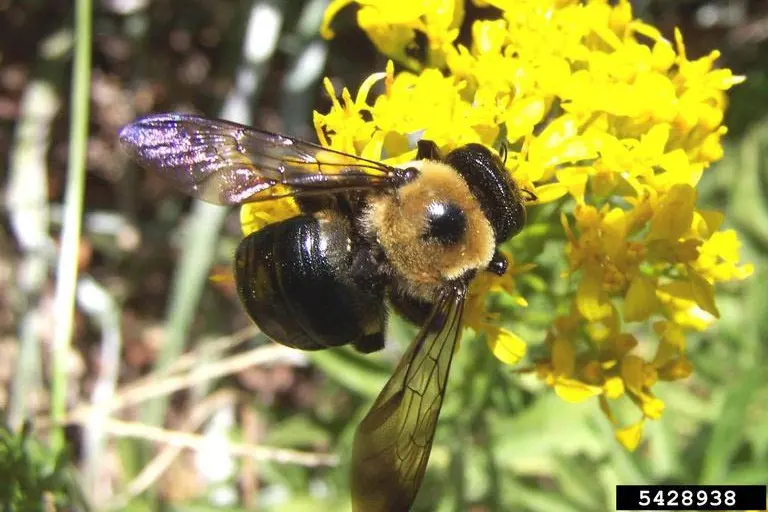
Another common mistake is assuming that all large, fuzzy bees are bumblebees. Carpenter bees are often confused with bumblebees because of their size. You can distinguish them by looking at their abdomen; carpenter bees typically have a shiny, hairless black patch on their upper abdomen, while bumblebees are densely covered in hair from head to tail.
Do not attempt to handle bees to measure them. Even though bumblebees are generally docile, they will sting if they feel threatened or crushed. Always maintain a respectful distance to ensure both your safety and the well-being of the insect. Observing from a distance provides all the information needed without risking a painful encounter.
How to support bumblebee health and growth
Providing a habitat that offers a continuous supply of food is the best way to ensure that bumblebees in your area reach their full potential. A colony with access to diverse, high-quality nectar and pollen sources will produce larger, healthier workers. Focus on planting native flowers that bloom at different times throughout the growing season.
Avoid the use of pesticides in your garden, as these chemicals can interfere with larval development and foraging behavior. Even sub-lethal doses can impact a bee's ability to navigate or collect food effectively. By maintaining a chemical-free environment, you allow the colony to focus its energy on growth and reproduction.
- Plant a variety of native flowers like clover, foxglove, and sunflowers.
- Leave patches of undisturbed soil or leaf litter for nesting sites.
- Provide a shallow water source with stones for the bees to land on safely.
- Minimize the use of outdoor lighting at night, which can disrupt the activity cycles of various pollinators.
By creating a supportive environment, you help the colony thrive, ensuring that the bees you see are robust and capable of fulfilling their vital role in the ecosystem.
Key facts
- Bumblebees generally range from 0.5 to 1.0 inch (12 to 25 millimeters) in length depending on the species and caste.
- Queens are significantly larger than workers, often appearing bulkier and more robust to support egg-laying functions.
- The largest bumblebee species, Bombus dahlbomii from South America, can reach lengths of up to 1.6 inches (40 millimeters).
- Size variation within a colony is common because larvae receive different amounts of food during development.
- Avoid mistaking large carpenter bees for bumblebees; carpenter bees have shiny, hairless abdomens, while bumblebees are fuzzy all over.
- To identify a bumblebee's relative size, look for the "pollen basket" on the hind legs, which is only present on female workers and queens.
The bottom line
Bumblebees vary in size based on their species and their specific role within the colony, typically measuring between 0.5 and 1.0 inch. While queens are generally the largest members, individual worker size fluctuates due to larval nutrition. Understanding these variations helps distinguish bumblebees from other pollinators. Always observe them calmly from a distance, as these fuzzy insects are generally docile unless their nest is threatened.
People also ask
Do larger bumblebees sting more painfully than smaller ones?
There is no direct correlation between a bumblebee's size and the intensity of its sting. While larger bees have more venom, the pain level is primarily determined by the individual's reaction and the specific species involved.
Why do some bumblebees look much smaller than others?
Size differences occur because workers are fed varying amounts of nectar and pollen during their larval stage. Smaller workers, often called "minims," typically perform tasks inside the nest, while larger workers forage outside.
Can you tell the age of a bumblebee by its size?
No, a bumblebee's size is fixed once it emerges from its pupal stage as an adult. They do not grow larger over time, though their wings may become frayed or their hair may wear off as they age.
Are bumblebees the largest bees in the world?
No, the giant resin bee and the Wallace's giant bee are significantly larger than any bumblebee species. Bumblebees are considered large compared to common honeybees, but they are not the record holders for size.
Does the queen bumblebee stay inside the nest all year?
The queen only stays inside during the initial nest-founding phase in the spring. Once her first brood of workers matures, she remains in the nest to lay eggs while the workers handle all foraging duties.
How can I safely observe bumblebee sizes in my garden?
Stand still and observe flowers from a distance of a few feet to avoid startling the insects. Using binoculars or a camera with a macro lens allows you to compare the sizes of different individuals without interfering with their flight paths.
This answer was created with the help of AI research tools and reference sources. Spotted an error? Let us know — we correct mistakes quickly. See our editorial policy.