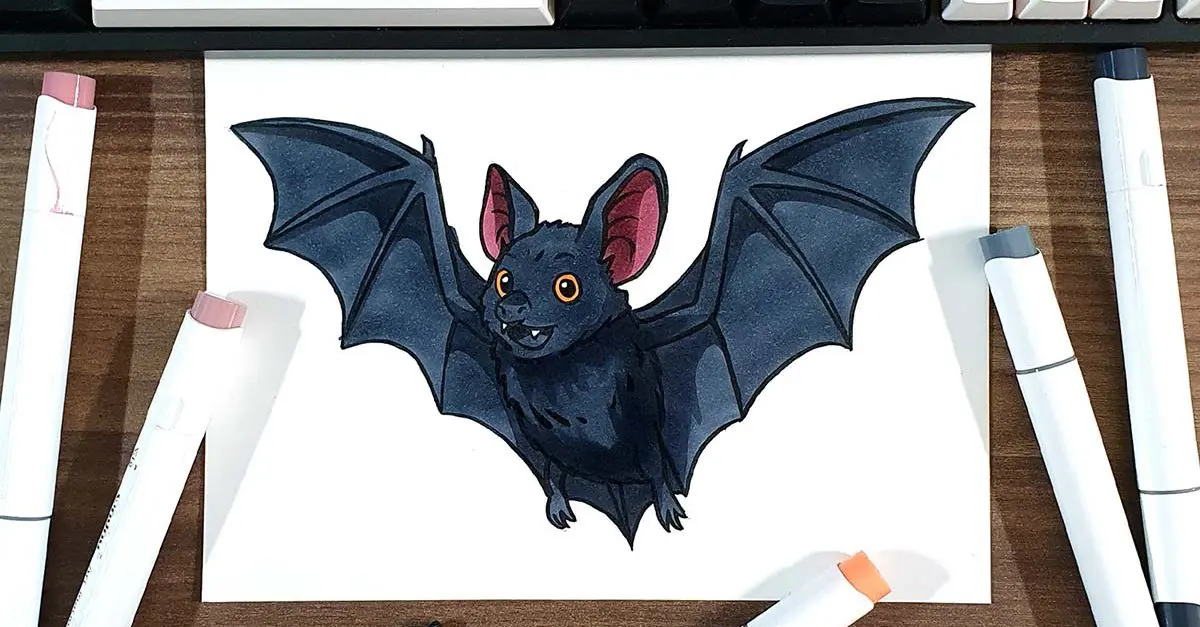
How big do bats get?
Short answer
Bat sizes vary significantly across the order Chiroptera. The smallest species, Kitti’s hog-nosed bat, weighs about two grams with a six-inch wingspan. In contrast, the largest flying foxes, such as the giant golden-crowned flying fox, can weigh up to three pounds and possess wingspans reaching nearly six feet in total length.
On this page
How big are the smallest bats?
The title for the world’s smallest mammal is held by Kitti’s hog-nosed bat, also known as the bumblebee bat. Found in parts of Thailand and Myanmar, these tiny creatures weigh approximately two grams, which is roughly the weight of a single U.S. penny. Their bodies are no larger than a human thumb, making them incredibly difficult to spot in their limestone cave habitats.
Despite their diminutive size, these bats are highly efficient hunters. They feed primarily on small insects and spiders, using echolocation to navigate through dense vegetation. Because of their tiny mass, they have extremely high metabolic rates and must consume a significant portion of their body weight in food every single night to survive.
- Average weight: 1.5 to 2 grams.
- Body length: 29 to 33 millimeters.
- Wingspan: Approximately 15 centimeters.
How big are the largest bats?
The largest bats in the world belong to the family Pteropodidae, commonly known as flying foxes or fruit bats. These animals do not use echolocation; instead, they rely on their keen sense of smell and large eyes to find fruit and nectar. The giant golden-crowned flying fox, native to the Philippines, is often cited as the largest species by wingspan.
These impressive animals can reach a wingspan of up to 1.7 meters, or nearly six feet. While their wingspan is massive, their body weight is relatively light compared to their size, usually topping out around 1.2 to 1.5 kilograms. This lightweight skeletal structure is an evolutionary adaptation that allows them to glide long distances between feeding grounds in the rainforest canopy.
- Wingspan: Up to 1.7 meters.
- Weight: Up to 1.5 kilograms.
- Diet: Primarily figs and other tropical fruits.
How do wingspans compare to body size?
A bat's wingspan is almost always significantly larger than its body length, as the wings are essentially modified hands with skin membranes stretched over elongated fingers. This structural design allows for the high maneuverability required for hunting insects or navigating through dense forest foliage. The ratio of wing area to body mass, known as wing loading, determines how a bat flies.
Bats with low wing loading, such as the small, agile species that hunt insects, can hover and make sharp turns in tight spaces. Larger bats with higher wing loading, like the flying foxes, are built for endurance and long-distance flight rather than quick, acrobatic maneuvers. Understanding these physical proportions helps researchers classify how different species interact with their specific environments.
- Measure the body length from the nose to the base of the tail.
- Extend the wings fully to measure from tip to tip.
- Calculate the ratio to determine if the species is built for speed or endurance.
Why do bat sizes vary so much?
The wide range of sizes in the bat population is primarily driven by their specific ecological niches and dietary requirements. Smaller bats generally hunt insects, which requires high-speed aerial agility and the ability to detect tiny, fast-moving prey. Being small allows these bats to maneuver through narrow spaces and expend less energy while maintaining high flight speeds.
Conversely, larger bats often feed on fruit or nectar, which are stationary food sources. Because they do not need to chase their food, they do not require the same level of extreme agility. Their larger size allows them to travel long distances between trees, carrying heavier loads of fruit back to their roosts. This evolutionary specialization ensures that different species can coexist in the same ecosystem without competing for the exact same resources.
Common mistakes when estimating bat size
A frequent error people make when viewing bats is overestimating their size due to the visual distortion caused by their wings. Because a bat's wings are so large relative to its body, it is common to assume the animal is much heavier or larger than it actually is. When observing a flying fox in flight, the silhouette can appear quite imposing, leading to exaggerated reports of their physical proportions.
Another mistake is assuming that all large bats are dangerous or aggressive. In reality, the largest bats are almost exclusively vegetarians that pose no threat to humans. When trying to identify a bat's size in the wild, it is best to use binoculars and compare the bat to known reference points, such as the diameter of a tree branch or the size of a nearby bird. Avoid making assumptions based on shadows or nighttime sightings, as these conditions often obscure the true dimensions of the animal.
Key facts
- The giant golden-crowned flying fox is the world's largest bat, reaching a wingspan of up to 5.6 feet.
- Most bat species are small, with the Kitti’s hog-nosed bat weighing less than a penny at about 2 grams.
- Bats are categorized into two main groups: megabats, which eat fruit, and microbats, which primarily hunt insects.
- A bat's size is determined by its wingspan rather than its body weight, as wings require significant surface area for flight.
- If you find a grounded bat, never touch it with bare hands to avoid potential rabies exposure or injury to the animal.
- To help local bats, avoid using pesticides in your garden, as these chemicals reduce the insect populations that bats rely on for food.
The bottom line
While bats range dramatically in size from the tiny, insect-eating Kitti’s hog-nosed bat to the massive, fruit-loving giant golden-crowned flying fox, they all share specialized adaptations for flight. Whether weighing as little as a coin or boasting a wingspan over five feet, these mammals play essential roles in ecosystems worldwide. Understanding their diverse physical traits helps clarify their vital importance to pollination, seed dispersal, and pest control.
People also ask
Do large bats pose a danger to humans?
Most large bats, such as flying foxes, are frugivores that eat fruit and nectar rather than hunting animals. They generally avoid human contact and are not aggressive unless handled or threatened.
How do bats manage to fly despite their size?
Bats have evolved lightweight, flexible skeletons and thin, elastic skin membranes that stretch over elongated finger bones. This anatomy allows them to generate lift and maneuver efficiently through the air.
Are there any bats that eat meat?
Yes, some species like the spectral bat and the greater false vampire bat are carnivorous and hunt small vertebrates. These species are typically mid-sized and use specialized teeth to consume their prey.
Why are some bats so much smaller than others?
Size variation is largely driven by dietary specialization and the need for energy efficiency. Smaller bats often rely on high-frequency echolocation to catch tiny insects, which requires a compact, agile body.
Can I keep a large bat as a pet?
Keeping a bat as a pet is illegal in most jurisdictions and highly impractical. They require specialized diets, large flight enclosures, and expert veterinary care that cannot be provided in a home setting.
How long do the largest bats live?
Large fruit bats can be surprisingly long-lived, with some individuals in captivity reaching 20 to 30 years of age. Their longevity is aided by a lack of natural predators and stable food sources in the wild.
This answer was created with the help of AI research tools and reference sources. Spotted an error? Let us know — we correct mistakes quickly. See our editorial policy.