What is a supermoon?
Short answer
A supermoon occurs when a full moon coincides with the moon's perigee, its closest point to Earth in its elliptical orbit. This alignment makes the moon appear slightly larger and brighter than a typical full moon. While the size increase is modest, the phenomenon remains a popular and visually striking astronomical event.
On this page
Why does a supermoon happen?
The moon does not orbit the Earth in a perfect circle; its path is an ellipse, an elongated oval shape. Because of this, the distance between the Earth and the moon constantly changes throughout the month. The point in the orbit where the moon is closest to Earth is called the perigee, while the point farthest away is known as the apogee.
A supermoon happens when a full moon phase occurs at or near the perigee. Because the moon is physically closer to our planet at this time, it subtends a larger angle in the sky, appearing up to 14 percent larger and 30 percent brighter than a full moon at apogee. This optical effect is most noticeable when the moon is near the horizon, a phenomenon often enhanced by the "moon illusion," where the brain compares the moon to distant foreground objects.
How to view a supermoon effectively
Observing a supermoon requires no special equipment, as the event is easily visible to the naked eye. However, timing and location can significantly impact your experience. Because the moon appears largest when it is low on the horizon, the best time to view it is during moonrise or moonset.
To maximize your viewing experience, follow these guidelines:
- Check a local lunar calendar to confirm the exact date and time of the moonrise in your specific time zone.
- Choose a location with a clear, unobstructed view of the eastern horizon for moonrise or the western horizon for moonset.
- Avoid areas with heavy light pollution if you want to see the moon’s surface brightness contrast against the sky.
- Use a mobile app to track the moon's path across the sky to ensure you are positioned correctly before the event begins.
What is the difference between a supermoon and a regular moon?
To the casual observer, the difference between a supermoon and a standard full moon is subtle. While the technical increase in size and brightness is measurable by astronomers, the human eye often struggles to detect the change without a direct side-by-side comparison. The moon's distance at perigee is roughly 226,000 miles, compared to about 252,000 miles at apogee.
The primary distinction is the intensity of the moonlight. During a supermoon, the increased surface area and proximity result in a slightly higher albedo, or reflectivity, causing the landscape to appear more illuminated. This is particularly striking in rural areas away from artificial city lights. Even though the difference is incremental, the event serves as a valuable opportunity for public engagement with astronomy and the mechanics of our solar system.
Common mistakes when photographing a supermoon
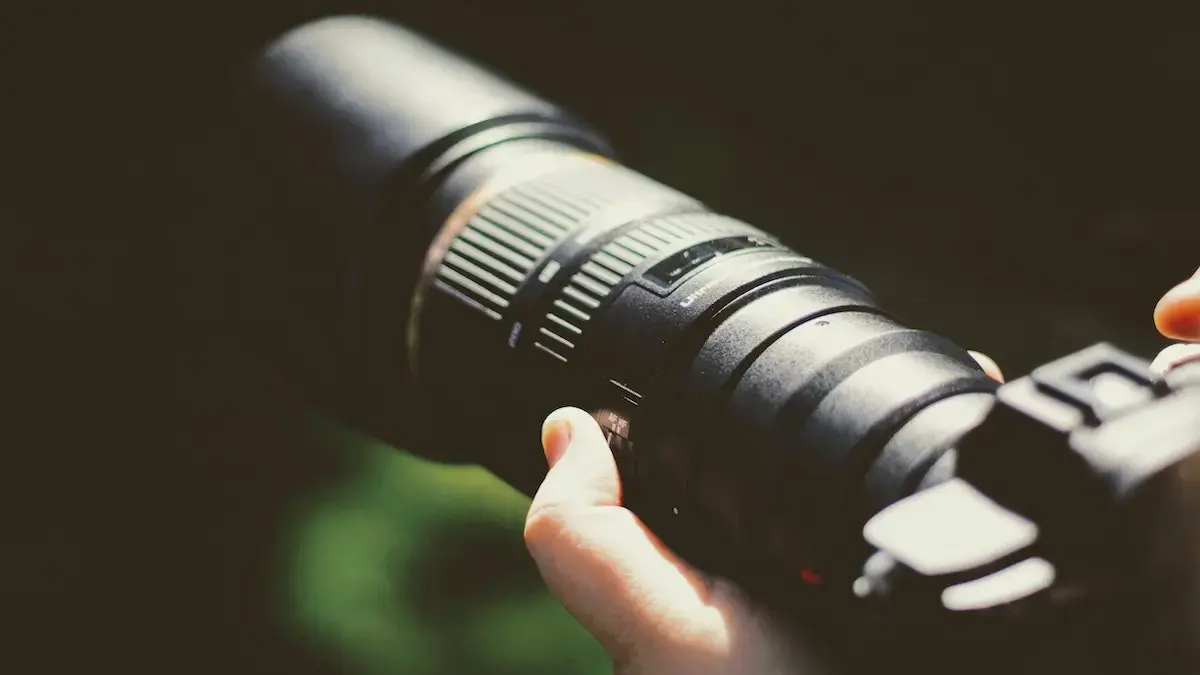
Many amateur photographers struggle to capture the scale of a supermoon, often ending up with images where the moon appears as a tiny, washed-out white dot. A common error is using a wide-angle lens, which makes the moon look significantly smaller than it appears to the human eye. To capture the moon properly, you need a telephoto lens with a focal length of at least 200mm or higher.
Follow these technical steps for better results:
- Use a sturdy tripod to eliminate camera shake, as even minor vibrations will blur the image at high zoom levels.
- Set your camera to manual mode and keep your ISO low to avoid digital noise.
- Use a fast shutter speed to compensate for the moon's movement across the sky, which is faster than most beginners realize.
- Focus manually on the moon’s craters rather than relying on autofocus, which may struggle with the high contrast of the lunar surface.
How often do supermoons occur?
Supermoons are not rare events; they typically occur three to four times per year in consecutive months. This happens because the moon’s orbit and the lunar cycle are not perfectly synchronized, allowing the perigee to align with the full moon phase several times in a row before the cycle drifts. Occasionally, there may be a year with no supermoons, or conversely, a year with five.
Because the definition of a supermoon is not strictly defined by a single distance threshold, different astronomical organizations may occasionally disagree on whether a specific full moon qualifies. Generally, if a full moon occurs within 90 percent of its closest approach to Earth, it is classified as a supermoon. This loose definition ensures that the public has multiple opportunities throughout the year to observe the moon at its most impressive, keeping interest in lunar cycles high across the globe.
Key facts
- A supermoon occurs when a full moon coincides with the moon's perigee, its closest point to Earth in its monthly orbit.
- At perigee, the moon is approximately 226,000 miles (363,300 kilometers) from Earth, compared to 251,000 miles (405,500 kilometers) at apogee.
- Supermoons appear about 14 percent larger and 30 percent brighter than a full moon at its farthest point.
- The term "supermoon" was coined by astrologer Richard Nolle in 1979 and is not an official astronomical term.
- To photograph a supermoon, use a tripod and a telephoto lens to capture detail, avoiding the common mistake of using a wide-angle lens which makes the moon look like a tiny speck.
- Do not expect a dramatic size difference; the human eye often struggles to perceive the change in scale without a reference point like the horizon.
The bottom line
A supermoon is a captivating celestial event that occurs when a full moon reaches its closest proximity to Earth. While the visual difference is subtle, it offers a great opportunity for stargazing and photography. To best enjoy the experience, view the moon as it rises or sets near the horizon, which provides a natural scale and enhances the perceived size of our nearest neighbor in space.
People also ask
How often do supermoons happen?
Supermoons typically occur three to four times a year in consecutive months. This happens because the moon's orbital cycle aligns with its phase cycle in a repeating pattern.
Are supermoons dangerous to Earth?
No, supermoons do not cause natural disasters or geological instability. The slightly increased gravitational pull can cause marginally higher high tides, known as perigean spring tides.
What is the difference between a supermoon and a micromoon?
A micromoon is the opposite of a supermoon, occurring when the full moon reaches its farthest point from Earth. It appears smaller and dimmer than an average full moon.
Do supermoons change the color of the moon?
A supermoon does not inherently change color, though it may appear orange or red when near the horizon. This is an atmospheric effect caused by light scattering through more of Earth's atmosphere.
Can I see a supermoon without any special equipment?
Yes, the moon is easily visible to the naked eye. Using binoculars or a small telescope can help you see surface features like lunar craters more clearly.
Why does the moon look bigger near the horizon?
This is known as the "moon illusion," a psychological phenomenon where the brain compares the moon to distant buildings or trees. The moon is actually the same size regardless of its position in the sky.
This answer was created with the help of AI research tools and reference sources. Spotted an error? Let us know — we correct mistakes quickly. See our editorial policy.