How do you draw moonlight?
Short answer
Drawing moonlight requires capturing the cool, desaturated glow of the lunar surface against a dark environment. Focus on high-contrast values, using blue-toned grays and stark whites to simulate luminosity. By emphasizing long, soft shadows and minimizing warm colors, you can effectively replicate the ethereal, reflective quality of light cast by the moon.
On this page
How to capture moonlight in a drawing
Moonlight is essentially reflected sunlight, but it reaches Earth with significantly lower intensity. To draw it convincingly, you must shift your palette toward cool, desaturated tones. Avoid pure black for your shadows; instead, use deep indigos, dark violets, or charcoal grays to maintain a sense of atmosphere. The key is to create a strong contrast between the light source and the surrounding darkness.
When planning your composition, identify the moon’s position first. If the moon is visible in the frame, it should be the brightest point, but avoid making it a flat white circle. Add subtle texture to suggest craters and lunar maria. If the moon is off-screen, focus on the "moonlight effect," where light spills across surfaces, creating long, soft-edged shadows that differ from the sharp, harsh shadows produced by the midday sun.
- Establish your darkest values first to set the scene's depth.
- Use a cool blue or violet wash to tint the entire paper.
- Gradually build up lighter values using white charcoal or a soft eraser.
- Soften the edges of your highlights to mimic the diffusion of night light.
Best tools for drawing moonlight
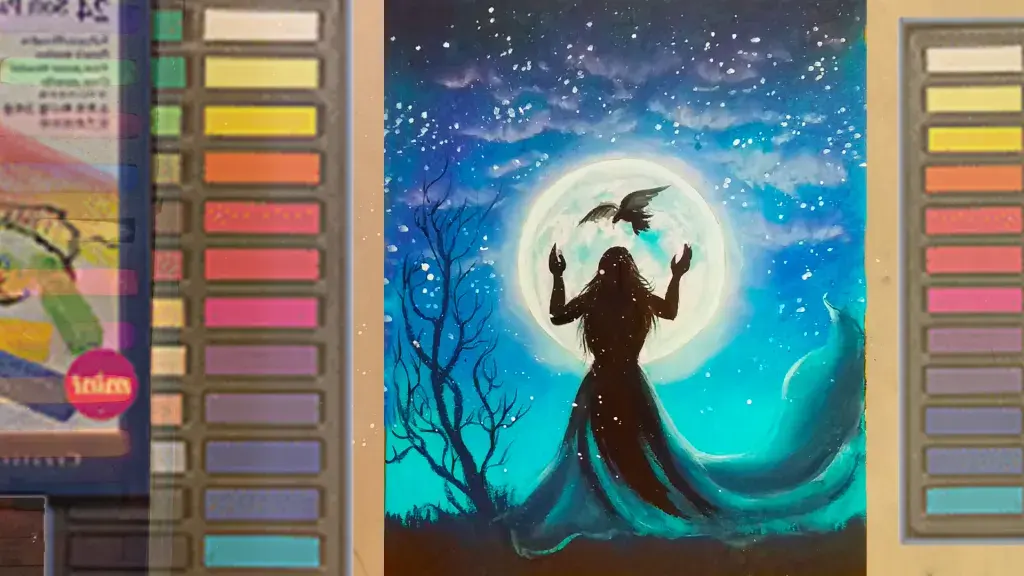
Achieving the glow of moonlight requires materials that handle blending and layering well. Toned paper is an essential tool for this subject because it provides a mid-tone base, allowing you to work both darker and lighter simultaneously. Charcoal and pastel pencils are excellent for creating the soft, hazy transitions characteristic of night scenes, while a kneaded eraser is vital for pulling highlights back out of the dark paper.
For those using digital media or traditional paints, the selection of brushes is critical. You need soft, feathered brushes to create the "halo" effect often seen around the moon due to atmospheric moisture or light scattering. Avoid hard, mechanical lines, as moonlight tends to soften the edges of objects. Using a limited palette of blues, purples, and cool grays will ensure your color harmony remains consistent with a nocturnal environment.
- Toned paper (gray or tan) for mid-tone control.
- White charcoal or pastel pencils for high-contrast highlights.
- Kneaded erasers for subtle blending and lifting pigment.
- Blending stumps to soften transitions between light and shadow.
Why moonlight looks different than sunlight
The human eye perceives light differently at night due to the Purkinje effect, which causes our color sensitivity to shift toward the blue end of the spectrum. In low-light conditions, our cone cells—responsible for color vision—become less active, while rod cells take over. This biological reality means that moonlight appears desaturated and cool to the human observer, even though the light itself is technically reflected sunlight.
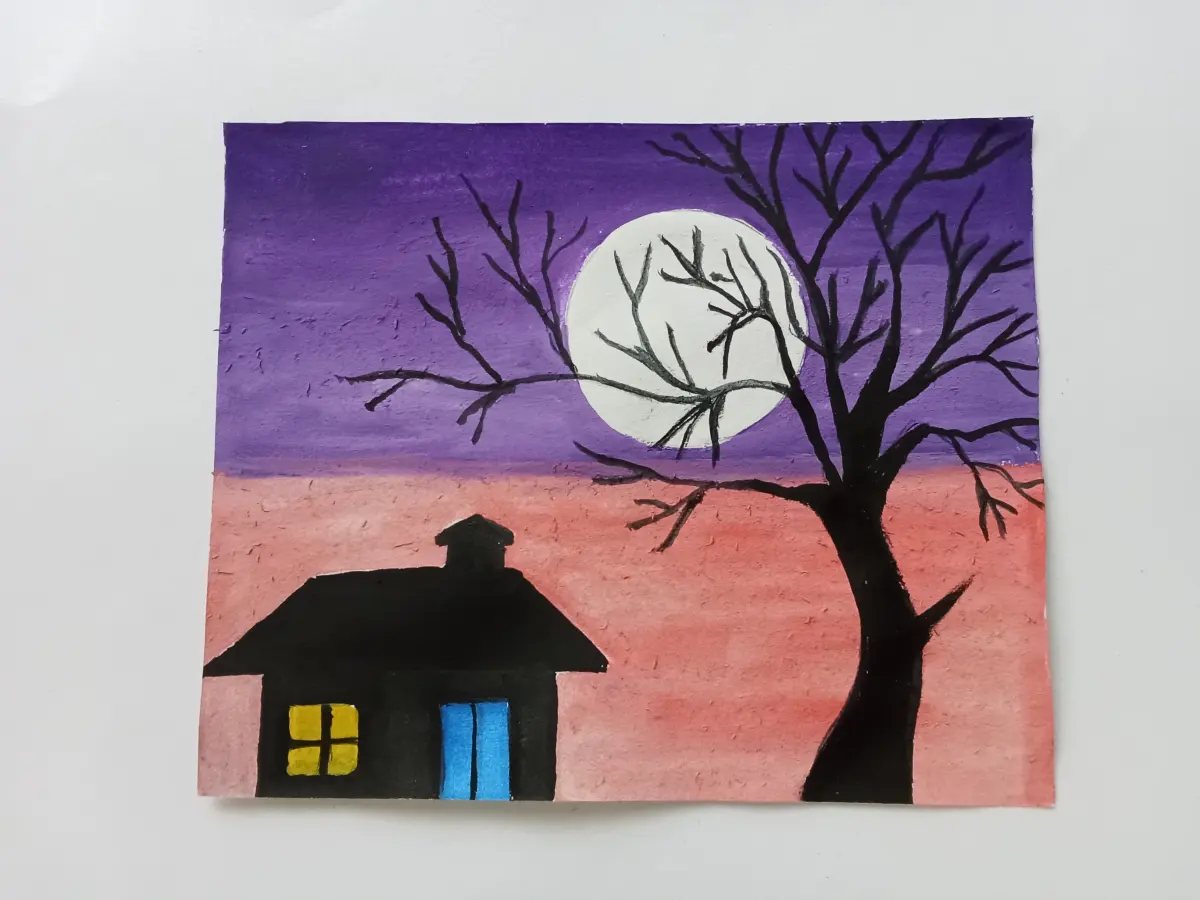
When drawing, you must mimic this phenomenon by suppressing warm colors like yellows, oranges, and reds. If you include warm light sources, such as a lantern or a window, they should appear significantly more intense than the ambient moonlight. This contrast creates a narrative focus and emphasizes the coolness of the moonlight by comparison. Understanding that moonlight is a "cool" light is the most important step in moving from a daylight landscape to a convincing night scene.
Common mistakes when drawing moonlight
A frequent error is making the sky too dark or uniform. Real night skies contain subtle gradients, often lighter near the horizon and darker toward the zenith. If you fill the sky with solid black, you lose the sense of depth and atmosphere. Another common mistake is using sharp, crisp edges for every object. Moonlight is diffused; therefore, shadows should have soft, blurry edges rather than the hard lines seen in direct sunlight.
Artists also often fail to account for reflected light within shadows. Even in the dark, light bounces off surfaces, meaning shadows are rarely completely devoid of information. By adding subtle, cool-toned reflected light into your shadow areas, you add realism and prevent the drawing from looking flat or "muddy." Remember that moonlight is reflective, so surfaces like water, glass, or wet pavement should have much brighter highlights than matte surfaces like grass or stone.
How to add texture to moonlight
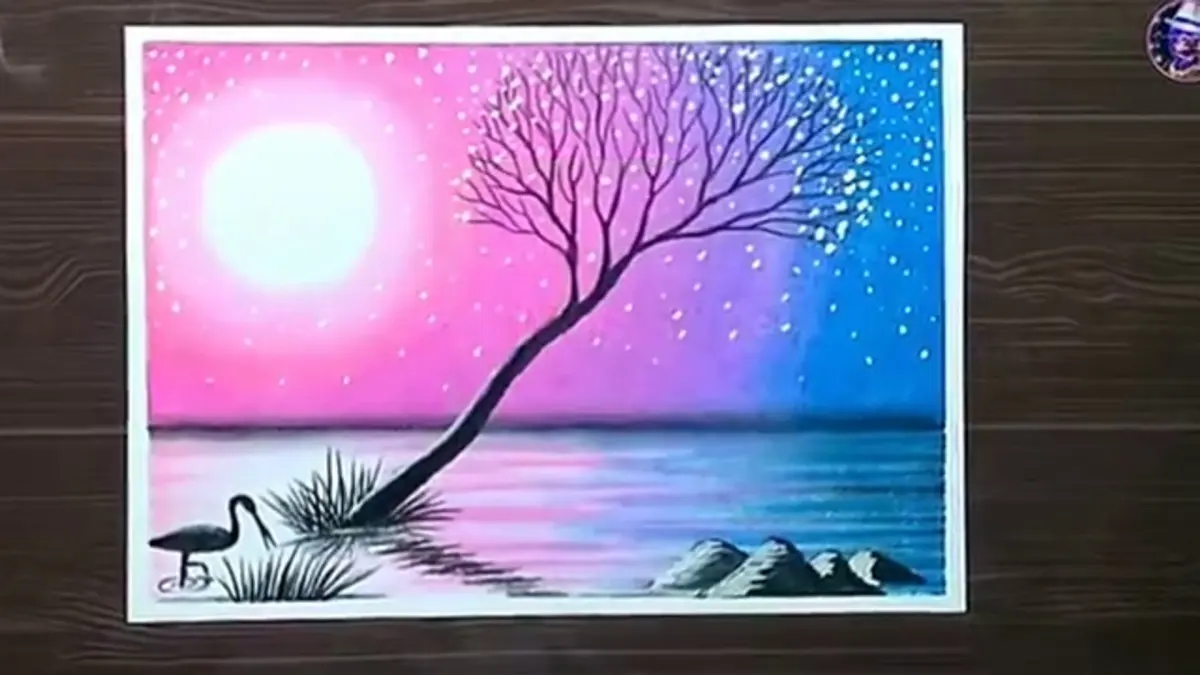
Texture is what separates a professional-looking night scene from a simple silhouette. To depict moonlight hitting a landscape, consider how different surfaces react to light. Rough textures, such as stone or bark, will catch light on their peaks while leaving deep, soft crevices in shadow. Smooth surfaces, like still water, will act as a mirror, creating a distinct, elongated path of light known as a "moon path" that stretches toward the viewer.
To render these textures effectively, use a stippling technique with your charcoal or pencil. This creates a sense of graininess that mimics the way light catches uneven surfaces in low visibility. When drawing clouds, use a light touch to allow some of the dark paper to show through, creating the appearance of thin, translucent vapor passing in front of the moon. By layering these textures, you create a sense of three-dimensional space that makes the moonlight feel present and tangible throughout the entire drawing.
Key facts
- Moonlight is actually reflected sunlight, which is why it appears as a cool, desaturated blue or silver rather than pure white.
- Use high-contrast values; moonlight creates deep, dark shadows and sharp, bright highlights on illuminated surfaces.
- Avoid using pure black for shadows; instead, mix dark blues, purples, or indigo to maintain a cool, atmospheric night tone.
- Add a "halation" or soft glow around the moon by gently blurring the edges of the light source to simulate atmospheric moisture.
- Remember that moonlight casts long, soft-edged shadows compared to the harsh, short shadows created by the sun during the day.
- Focus on the "rim light" effect, where moonlight catches the edges of objects, separating them from the dark background.
The bottom line
Drawing moonlight effectively requires mastering the balance between deep shadows and cool, subtle highlights. By prioritizing high-contrast values and using a palette of blues and purples, you can create a believable nocturnal atmosphere. Focus on the way light interacts with edges and surfaces, avoiding the temptation to over-brighten the scene. With careful attention to soft glows and long shadows, you can capture the serene essence of night.
People also ask
Why does moonlight look blue to the human eye?
While moonlight is technically reflected sunlight, the human eye’s scotopic vision—used in low light—is more sensitive to blue wavelengths. This phenomenon, known as the Purkinje effect, causes colors to shift toward the blue end of the spectrum at night.
Should I use a white pencil for moonlight highlights?
Using a pure white pencil can look too harsh or artificial against a dark background. Instead, use a pale, cool blue or a very light grey to suggest the soft, ethereal quality of reflected light.
How do I make a night sky look realistic?
Vary the size and brightness of stars rather than making them uniform dots. Incorporating a subtle gradient from a darker horizon to a slightly lighter zenith adds depth and mimics the way light scatters in the atmosphere.
What is the biggest mistake when drawing moonlight?
The most common error is making the entire scene too bright, which ruins the feeling of nighttime. Keep the overall value range dark, allowing only the primary light source and its direct reflections to stand out.
How do I capture the reflection of the moon on water?
Draw the reflection as a series of broken, horizontal lines that become wider and more distorted as they get closer to the viewer. This technique mimics the way light ripples across the surface of moving water.
Do I need to draw the moon itself in every night scene?
You do not need to show the moon to depict moonlight. Often, a scene is more compelling if the light source is just off-canvas, creating dramatic shadows that imply the moon's presence without showing it directly.
This answer was created with the help of AI research tools and reference sources. Spotted an error? Let us know — we correct mistakes quickly. See our editorial policy.