What is a baby butterfly called?
Short answer
A baby butterfly is called a caterpillar or larva. It is the second stage of the butterfly life cycle, following the egg stage. Caterpillars are specialized eating machines designed to consume plant matter, store energy, and grow rapidly before undergoing metamorphosis within a protective chrysalis to emerge as an adult butterfly.

On this page
What is a caterpillar exactly?
A caterpillar is the larval stage of a butterfly or moth. Unlike the winged adult, the larva is wingless, typically worm-like in appearance, and possesses a voracious appetite. Its primary biological function is to consume massive amounts of plant material to fuel the complex transformation process that occurs later in its life cycle.
The body of a caterpillar is highly specialized for this purpose. It features a hardened head capsule with powerful mandibles for chewing leaves and a soft, segmented body supported by three pairs of true legs and several pairs of fleshy prolegs. These prolegs allow the caterpillar to grip surfaces firmly as it navigates its host plant.
- Larvae are often host-specific, meaning they can only eat certain types of plants.
- Most caterpillars have simple eyes known as stemmata to detect light and movement.
- They grow by molting, shedding their skin multiple times as they increase in size.
How does a caterpillar grow and change?
Growth in caterpillars is not continuous because their outer skin, or cuticle, does not stretch. Instead, they go through a series of developmental stages called instars. Between each instar, the caterpillar molts, shedding its old, tight skin to reveal a larger, more flexible layer underneath that allows for rapid expansion.
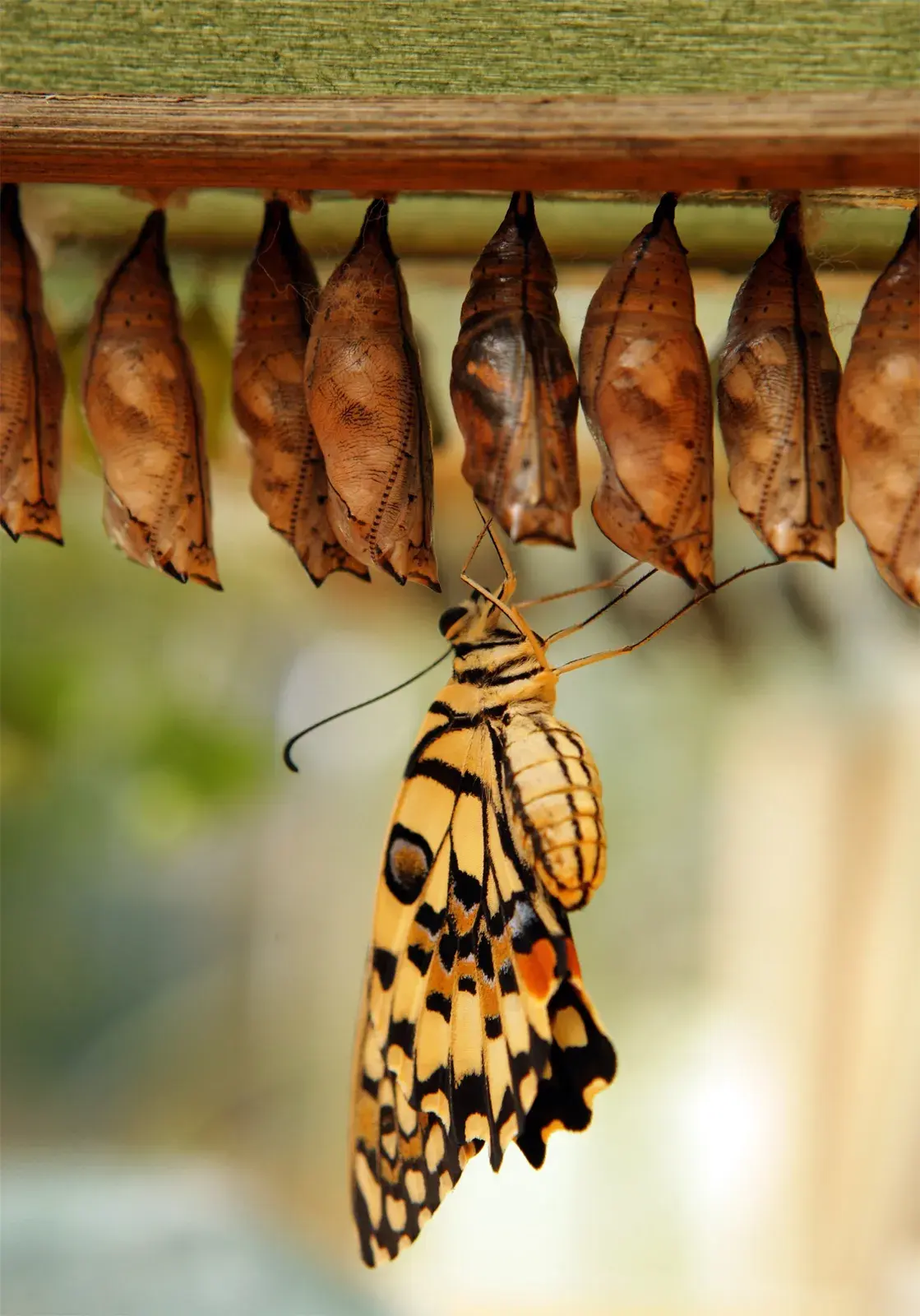
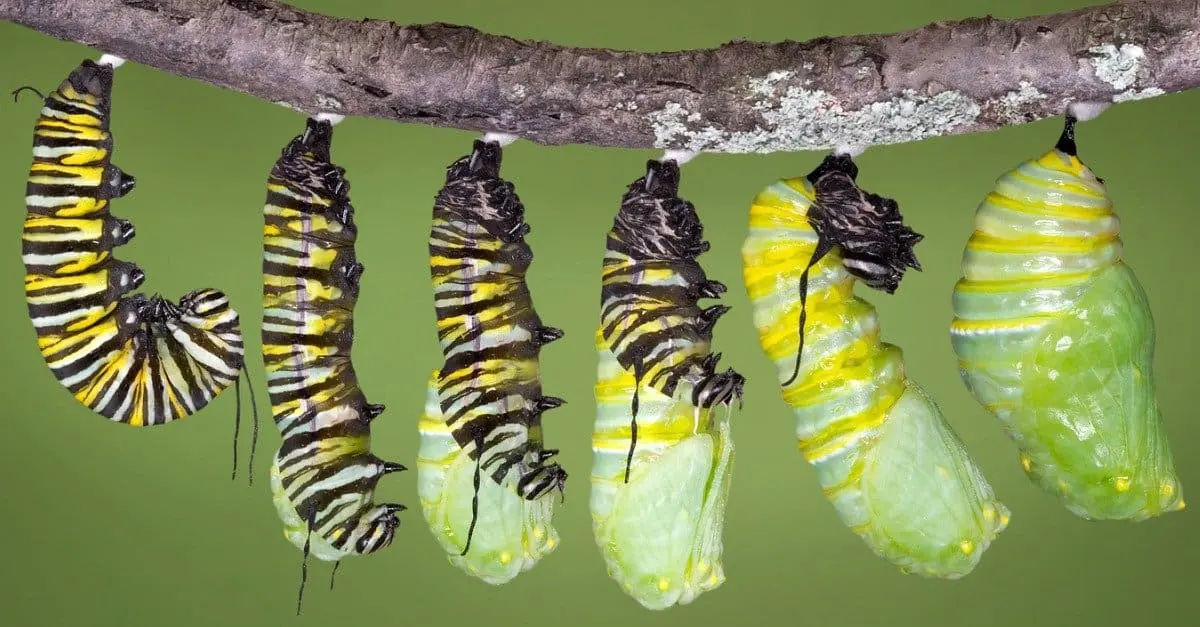
As the caterpillar nears the end of its final instar, it undergoes a dramatic physiological shift. It stops feeding, purges its digestive tract, and seeks a secure location to pupate. During this time, it attaches itself to a twig or leaf using a silk pad and transforms into a chrysalis, the protective shell where the adult body forms.
- The caterpillar finds a safe, hidden spot on a host plant.
- It spins a silk button to anchor its rear end.
- It sheds its final larval skin to reveal the chrysalis underneath.
- Tissues break down and reorganize into wings, long legs, and antennae.
How to identify common butterfly larvae?
Identifying caterpillars requires observing specific physical characteristics and the host plant they inhabit. Because many species look similar, entomologists often look for distinct patterns, hairs, or tubercles on the body. For instance, the Monarch caterpillar is easily identified by its bold yellow, black, and white stripes, which serve as a warning to predators.
When attempting to identify a caterpillar, note the environment and the specific plant it is eating. Many species are named after their preferred food source, such as the Pipevine Swallowtail or the Black Swallowtail. Taking a clear photograph from the side can help you compare the markings against regional field guides or digital databases.
- Check the number and color of the prolegs.
- Look for spines, bumps, or smooth skin textures.
- Observe the caterpillar's behavior, such as whether it curls into a ball when touched.
- Note the time of year, as certain species only appear during specific seasonal windows.
Why do caterpillars eat so much?
The primary reason for a caterpillar's intense feeding behavior is the biological requirement to store enough energy to survive the pupal stage. During metamorphosis, the organism cannot eat, yet it must power the massive cellular reorganization required to build wings, reproductive organs, and complex compound eyes. This energy must be stored as fat and protein.
This period of rapid growth is also a race against time and predation. Caterpillars are vulnerable to birds, parasitic wasps, and spiders, so they must reach their target weight as quickly as possible. By consuming leaves, they also sequester chemical compounds from the plants, which often makes them taste bitter or toxic to potential predators, providing a vital layer of defense.
- High-nitrogen diets from fresh leaves promote faster growth rates.
- Some species consume their own discarded skin after molting to recover lost nutrients.
- The efficiency of their digestive system allows them to process large volumes of plant matter daily.
Common mistakes when raising caterpillars
A frequent error beginners make is failing to provide the correct host plant. If a caterpillar is moved to a plant species it does not recognize as food, it will likely starve even if other leaves are available. Always identify the specific plant the caterpillar was found on and continue providing fresh cuttings from that exact same species throughout its development.
Another common issue is improper enclosure maintenance. Caterpillars produce significant amounts of waste, known as frass, which can harbor bacteria if allowed to accumulate in a small, humid container. It is essential to clean the enclosure daily and ensure there is adequate ventilation to prevent mold growth, which can be fatal to the developing larvae.
- Avoid handling caterpillars with bare hands to prevent transferring oils or pathogens.
- Ensure the enclosure is kept out of direct, intense sunlight to prevent overheating.
- Provide a stick or twig inside the container so the caterpillar has a place to pupate.
- Never release non-native species into the wild, as this can disrupt local ecosystems.
Key facts
- A baby butterfly is scientifically known as a larva, though it is most commonly called a caterpillar.
- Caterpillars hatch from eggs laid by adult butterflies on specific host plants that serve as their primary food source.
- The primary purpose of the larval stage is to consume massive amounts of plant matter to fuel rapid physical growth.
- As a caterpillar grows, it must molt its skin multiple times because its exoskeleton does not stretch.
- A caterpillar stores energy in the form of fat to facilitate the complex transformation process known as metamorphosis.
- Avoid handling wild caterpillars, as many species possess stinging hairs or toxins that can cause skin irritation or allergic reactions.
The bottom line
While commonly referred to as a caterpillar, the larval stage is a critical period of intense feeding and growth for a butterfly. These creatures are biologically programmed to consume host plants, molt their skins, and build energy reserves for their eventual transition into a winged adult. Understanding the specific needs of these larvae is essential for anyone interested in supporting butterfly populations within their local environment.
People also ask
How long does a caterpillar stay in the larval stage?
The duration of the larval stage varies by species and environmental conditions, typically lasting between two to five weeks. During this time, the caterpillar undergoes several growth phases called instars.
Do all caterpillars turn into butterflies?
No, many caterpillars are the larval stage of moths rather than butterflies. While both belong to the order Lepidoptera, they have distinct physical characteristics and pupation habits.
What do caterpillars eat once they hatch?
Most caterpillars consume their own eggshell first, followed immediately by the leaves of their host plant. Each species is often highly specialized and will only feed on specific types of vegetation.
Why do caterpillars have so many legs?
Caterpillars typically have three pairs of true legs on their thorax and several pairs of fleshy prolegs on their abdomen. These prolegs are equipped with tiny hooks called crochets that help them grip surfaces firmly.
How can I identify what a caterpillar will become?
Identification is best achieved by observing the host plant, the caterpillar's color patterns, and its hair or spine structure. Field guides or nature apps are useful tools for pinpointing the specific species.
Do caterpillars drink water?
Caterpillars generally obtain all the necessary hydration they need through the moisture found in the leaves they consume. They do not require a separate water source and can actually drown if placed in standing water.
This answer was created with the help of AI research tools and reference sources. Spotted an error? Let us know — we correct mistakes quickly. See our editorial policy.