Where do lions live?
Short answer
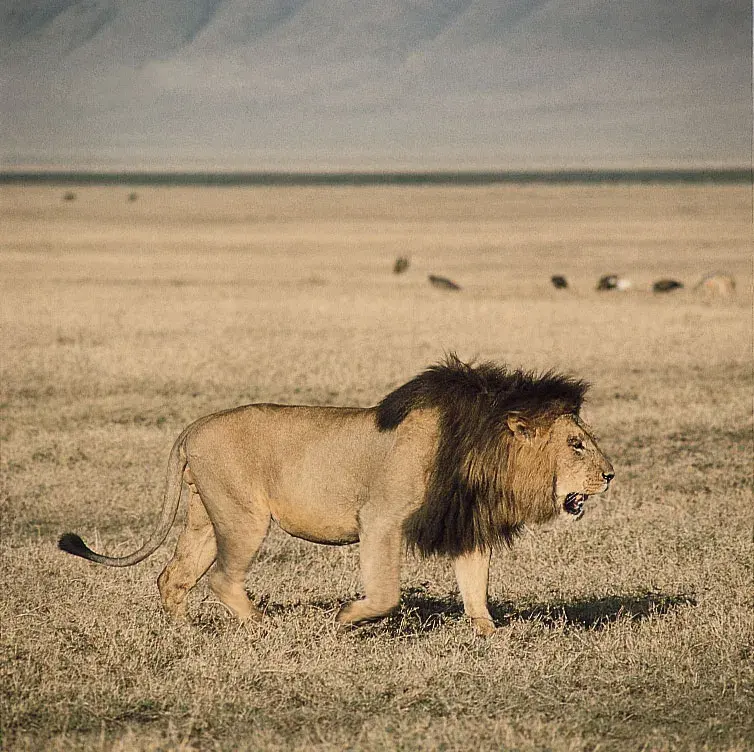
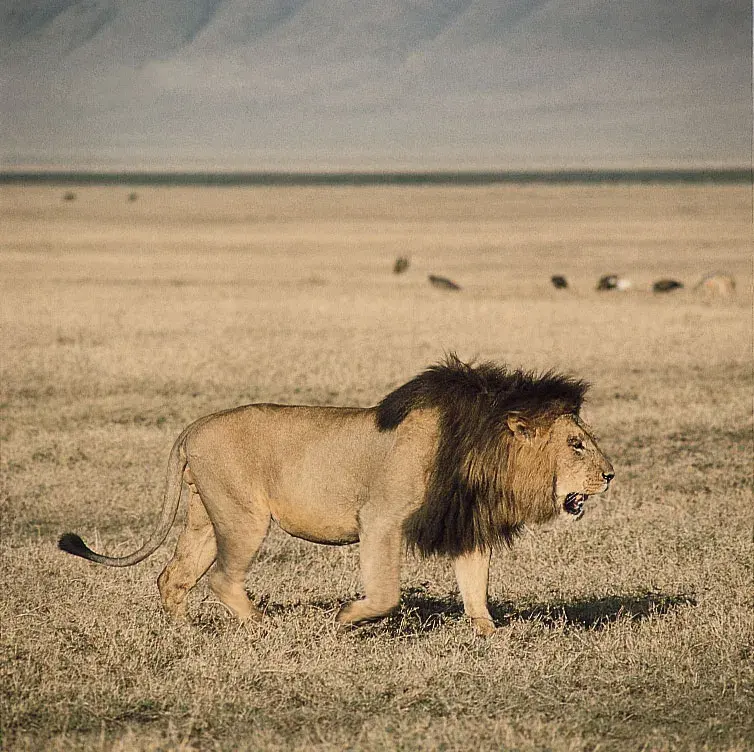
Lions primarily inhabit the savannas, grasslands, and open woodlands of sub-Saharan Africa. A small, isolated population of approximately 600 Asiatic lions persists in the Gir Forest National Park in western India. They favor areas with dense cover and reliable water sources, avoiding deep deserts and thick, impenetrable tropical rainforests.
On this page
Where do lions live in the wild today?
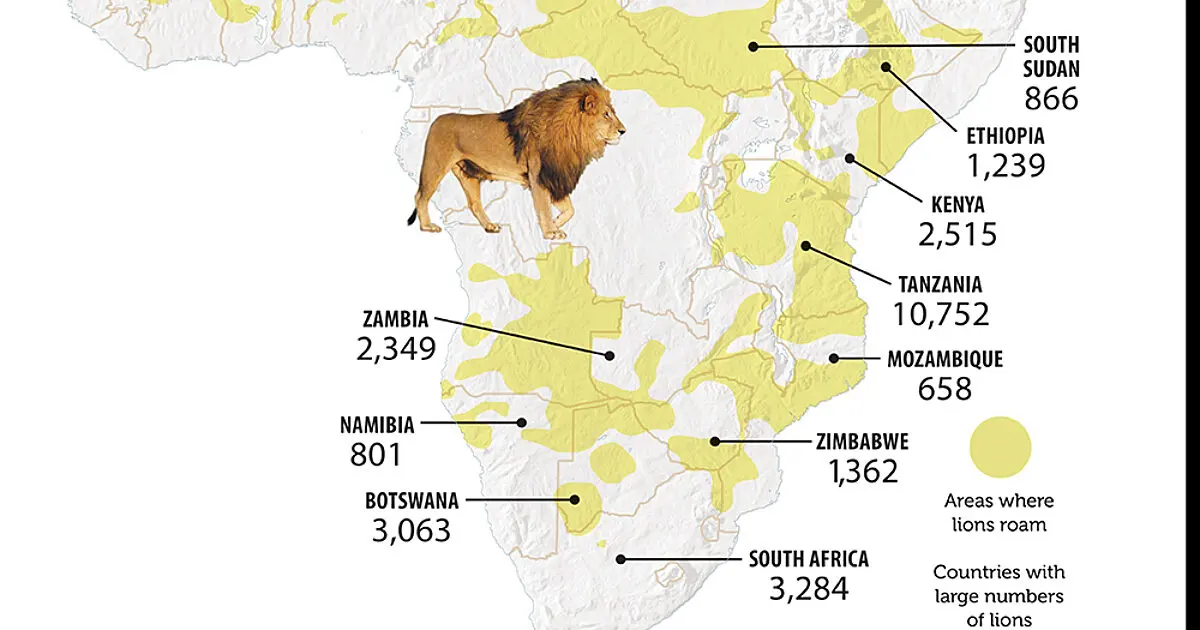
The vast majority of the world’s wild lion population resides across the African continent. Their range is largely concentrated in Eastern and Southern Africa, including countries such as Tanzania, Botswana, Kenya, and South Africa. These regions provide the expansive, open landscapes necessary for lions to hunt effectively and maintain their pride structures. While they once occupied much of North Africa and the Middle East, human encroachment and habitat loss have significantly restricted their historical range.
Today, the African lion population is fragmented into isolated pockets. Large protected areas, such as the Serengeti National Park in Tanzania and the Okavango Delta in Botswana, serve as critical strongholds. Outside of these protected zones, lions often come into conflict with human settlements, leading to further population declines. The Asiatic lion, a distinct subspecies, is found exclusively in the Gir Forest of Gujarat, India. This population is highly protected and represents the only remaining wild lions outside of Africa.
What habitats do lions prefer?
Lions are highly adaptable predators that thrive in environments where prey is abundant and cover is available for stalking. They are most commonly associated with the savanna, a biome characterized by vast grasslands dotted with shrubs and isolated trees. These open spaces allow lions to spot prey from a distance while using tall grasses to camouflage their approach. They also frequent dry woodlands and scrublands, which provide shaded areas to escape the intense midday heat.
Despite their reputation as kings of the jungle, lions rarely inhabit dense tropical rainforests or true deserts. They require a consistent supply of water, which influences their seasonal movements across the landscape. Their preferred habitats generally feature:
- Dense thickets for protection during the day.
- Open plains for coordinated group hunting.
- Proximity to permanent water holes or riverbeds.
- Sufficient populations of ungulates, such as zebras, wildebeests, and antelopes.
How to spot lions in their natural habitat?
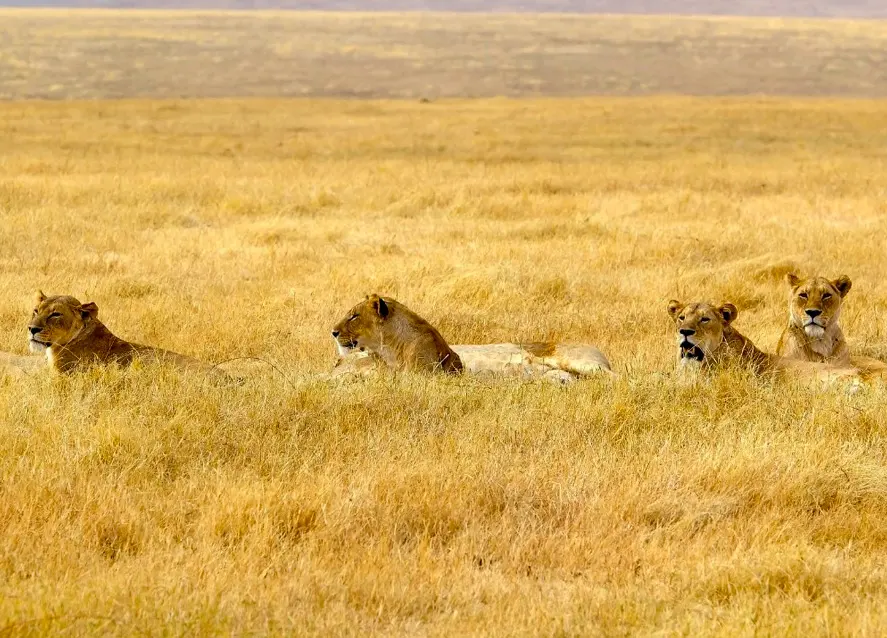
If you are planning a wildlife safari, finding lions requires patience and an understanding of their daily rhythms. Lions are primarily crepuscular and nocturnal, meaning they are most active during the twilight hours of dawn and dusk. During the heat of the day, they often retreat to the shade of acacia trees or thick bushes to conserve energy. To increase your chances of a sighting, focus on the following strategies:
- Consult with local guides who track pride movements daily.
- Visit water holes during the early morning or late afternoon.
- Look for vultures circling in the distance, which often signal a recent kill.
- Scan the base of large trees, where lions frequently lounge to avoid the sun.
Avoid assuming that lions will be active during the middle of the day. If you see a pride resting in the grass, keep a respectful distance and remain quiet to avoid disturbing their natural behavior.
Why do lions move across their territory?
Lions are territorial animals that patrol and defend areas ranging from 20 to 400 square kilometers, depending on prey density. Their movement patterns are dictated by the seasonal migration of their primary prey species. In ecosystems like the Serengeti, lions follow the massive herds of wildebeest and zebra as they travel in search of fresh grazing lands. This ensures that the pride always has access to a reliable food source throughout the year.
Social dynamics also influence their movement. A pride may split into smaller subgroups to hunt or patrol the boundaries of their territory against rival males. Young males, once they reach maturity, are often forced out of their natal pride and must roam extensively to find their own territory or challenge an existing dominant male. This dispersal behavior is essential for maintaining genetic diversity within the species and preventing inbreeding among related individuals.
Common mistakes when looking for lions?
A frequent error for visitors is underestimating the effectiveness of lion camouflage. Their tawny coats blend almost perfectly with dry, golden grasses, making them nearly invisible even when they are in plain sight. Beginners often scan the horizon for movement, but lions are masters of stillness. It is more effective to look for subtle shapes, such as the rounded ears or the twitching tail of a resting cat, rather than waiting for them to walk across your path.
Another common mistake is failing to respect the safety guidelines of national parks. Visitors often pressure drivers to get too close, which can cause the lions to abandon a hunt or become aggressive. Always adhere to the following rules:
- Never exit your vehicle unless explicitly permitted by a professional guide.
- Keep noise levels low, as lions have highly sensitive hearing and may retreat from human voices.
- Do not use flash photography, which can startle or blind the animals.
- Respect the animal's space; if a lion stands up or looks directly at your vehicle, you are likely too close.
Key facts
- Lions primarily inhabit sub-Saharan Africa, with a small, isolated population living in the Gir Forest of India.
- Their preferred habitats include savannas, grasslands, dense bush, and open woodlands where prey is abundant.
- Lions generally avoid dense rainforests and true deserts because these environments do not support their large social groups.
- A pride’s territory can range from 20 to 400 square kilometers, depending on the availability of food and water.
- You should never attempt to track lions on foot without a professional, armed guide, as they are apex predators.
- When visiting lion habitats, always remain inside your vehicle, as lions are accustomed to cars but view humans on foot as threats or prey.
The bottom line
Lions are highly adaptable predators that thrive across the diverse landscapes of sub-Saharan Africa and a small region in India. By favoring savannas and grasslands, they maintain the social structures necessary for survival. Whether you are observing them on a safari or studying their ecology, respecting their territorial nature and the fragility of their remaining habitats is essential for ensuring these iconic big cats persist in the future.
People also ask
Do lions live in the jungle?
Despite the popular nickname "king of the jungle," lions do not actually live in tropical rainforests. They prefer open plains and savannas where they can easily spot prey and coordinate group hunts.
Are there wild lions in America?
No, lions do not live in the wild in North or South America. The term "mountain lion" refers to the cougar, which is a completely different species of cat.
Why do lions live in groups?
Lions are the only cats that live in social units called prides, which typically consist of related females, their cubs, and a few adult males. This social structure helps them defend territory and hunt large animals like buffalo and zebras more effectively.
How do lions choose their territory?
Lions select territories based on the density of prey species and the availability of permanent water sources. They mark these boundaries using scent markings and loud roars to warn off rival prides.
Can lions survive in the desert?
While they avoid the driest parts of the Sahara, some populations, such as those in the Namib Desert, have adapted to arid conditions. These lions survive by traveling long distances between water holes and feeding on desert-adapted prey.
How many lions are left in the wild?
Conservationists estimate there are between 20,000 and 25,000 lions remaining in the wild today. Their populations are declining due to habitat loss, human-wildlife conflict, and the depletion of natural prey.
This answer was created with the help of AI research tools and reference sources. Spotted an error? Let us know — we correct mistakes quickly. See our editorial policy.