What are the northern lights?
Short answer
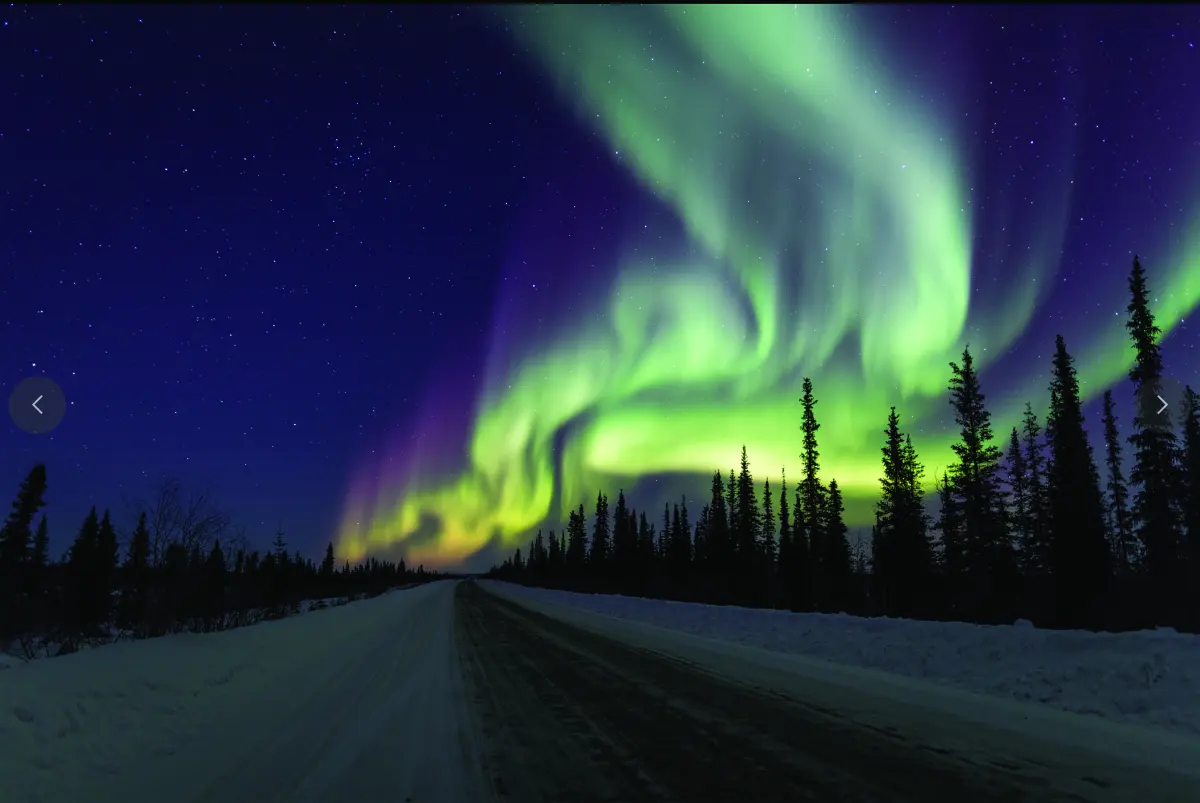
The northern lights, or aurora borealis, are natural light displays in the Earth’s sky caused by solar particles colliding with atmospheric gases. These charged particles from the sun are funneled by the Earth’s magnetic field toward the polar regions, where they create vibrant, shifting curtains of green, pink, and violet light.
On this page
Why the northern lights happen
The aurora borealis is the result of a complex interaction between the sun and Earth’s magnetosphere. The sun constantly emits a stream of charged particles known as the solar wind. When these particles reach Earth, the planet’s magnetic field acts as a shield, deflecting most of them. However, some particles are captured and funneled toward the North and South Poles.
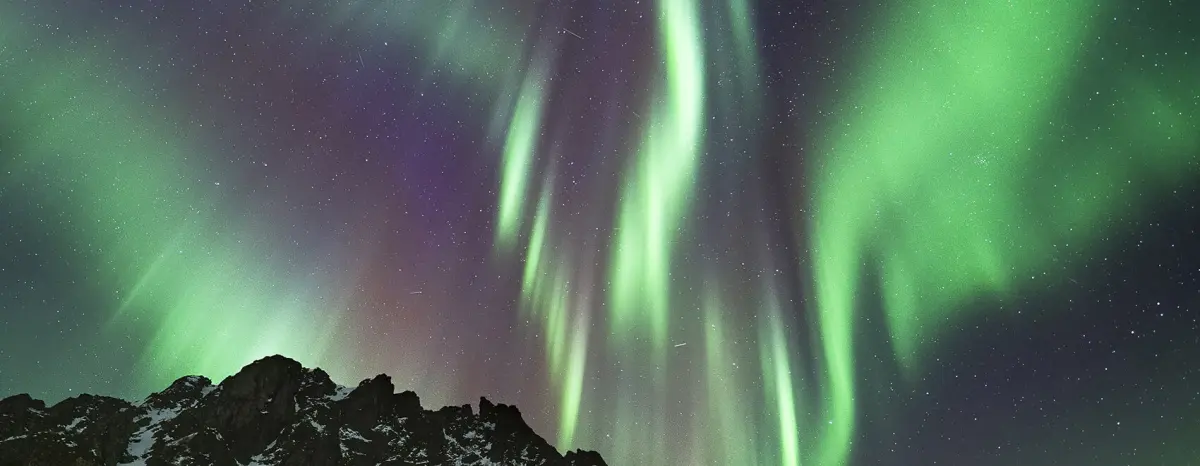
As these energetic electrons and protons enter the upper atmosphere, they collide with oxygen and nitrogen atoms. These collisions excite the atoms, causing them to release energy in the form of light. The specific color of the aurora depends on the type of gas involved and the altitude of the collision:
- Green: Caused by oxygen molecules at lower altitudes (up to 150 miles).
- Red: Produced by high-altitude oxygen (above 150 miles).
- Blue and Purple: Result from interactions with nitrogen.
Where to see the northern lights
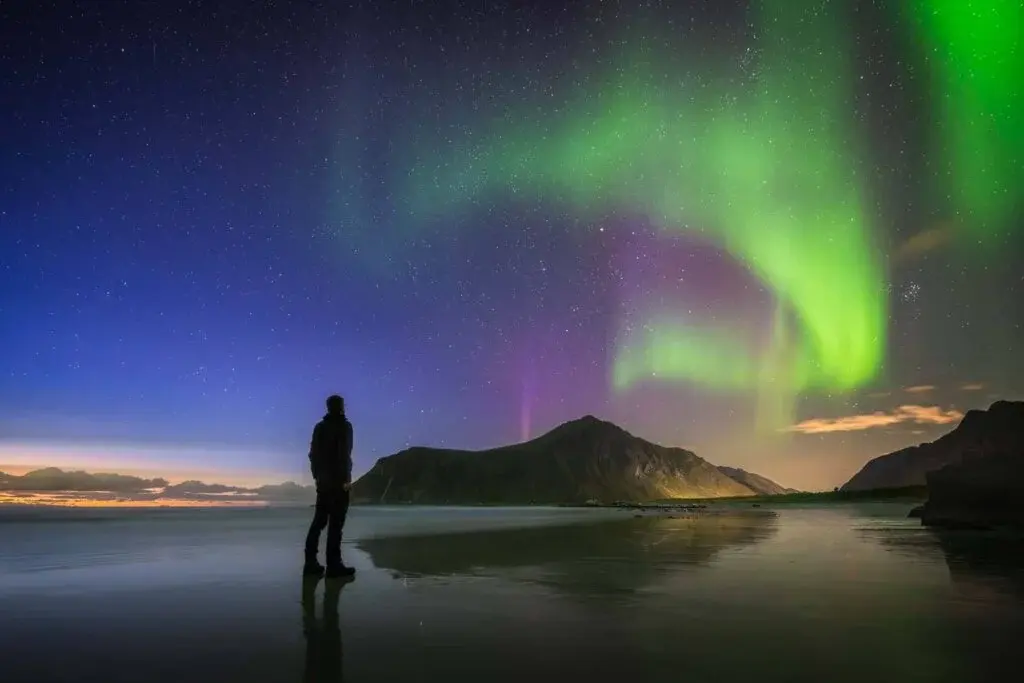
To witness the aurora, you must travel to high-latitude regions, often referred to as the "auroral zone." This area typically forms a ring around the magnetic North Pole. Prime viewing locations include northern Scandinavia, Iceland, Greenland, northern Canada, and Alaska. While the lights can occasionally be seen at lower latitudes during intense geomagnetic storms, these occurrences are rare.
When planning a trip, keep these factors in mind:
- Seek out locations with minimal light pollution, such as remote wilderness areas or national parks.
- Check the Kp-index, a scale from 0 to 9 that measures geomagnetic activity; a higher number indicates a greater likelihood of visible auroras.
- Prioritize clear, cloudless nights, as the lights occur high in the atmosphere and are easily obscured by low-hanging clouds.
Best time of year for northern lights
The aurora is technically present throughout the year, but it remains invisible during the long daylight hours of the Arctic summer. The ideal viewing window typically spans from late September to late March. During these months, the northern latitudes experience the long, dark nights necessary to see even the faintest auroral activity.
The equinoxes in September and March are often cited as the best times for viewing. Scientists have observed that the Earth’s magnetic field is better aligned with the solar wind during these periods, which can lead to more frequent and intense displays. Regardless of the month, the hours between 10:00 PM and 2:00 AM are generally the most active. Patience is essential, as the lights can appear suddenly and fade just as quickly, requiring spectators to remain vigilant throughout the night.
Common mistakes when hunting the aurora
Many first-time aurora hunters make the mistake of assuming the lights will be visible every night of their trip. Even in the best locations, solar activity is unpredictable and weather can be uncooperative. It is common for visitors to spend several nights in the cold without seeing a display, so planning a stay of at least four to five nights significantly increases your chances of success.
Another frequent error is failing to prepare for the extreme cold. Standing still for hours while waiting for the lights causes body temperature to drop rapidly. To avoid a miserable experience, follow these guidelines:
- Wear multiple layers of wool or synthetic thermal clothing rather than cotton, which traps moisture.
- Use insulated boots rated for sub-zero temperatures to keep your feet warm on frozen ground.
- Bring extra batteries for your camera or phone, as cold weather drains power significantly faster than usual.
How to photograph the northern lights
Capturing the aurora requires more than a standard smartphone camera. Because the lights are often faint and moving, you need a camera with manual settings to control exposure time. A sturdy tripod is non-negotiable, as even the slightest movement during a long exposure will turn the lights into a blurry mess.
Follow these technical steps to improve your results:
- Set your camera to manual mode and use the widest aperture available (the lowest f-number).
- Use a high ISO setting, typically between 800 and 3200, to increase light sensitivity.
- Adjust your shutter speed between 5 and 20 seconds depending on the movement and brightness of the aurora.
- Focus your lens to infinity manually, as autofocus often fails in the dark.
Avoid using a flash, as it will illuminate the foreground and wash out the delicate colors of the sky. By practicing these settings in advance, you will be prepared to capture the fleeting beauty of the northern lights when they finally appear.
Key facts
- The northern lights, or aurora borealis, are caused by charged particles from the sun colliding with gases in Earth's atmosphere.
- These displays typically occur in an oval-shaped region centered on the magnetic North Pole, known as the auroral zone.
- Oxygen atoms produce green and sometimes red light, while nitrogen atoms create blue and purple hues.
- The best viewing conditions require a dark, clear night away from light pollution, ideally during the winter months.
- Solar activity follows an 11-year cycle, with peak periods offering more frequent and intense displays.
- To photograph the lights, use a tripod, a wide-angle lens, and a long exposure setting of 5 to 20 seconds.
The bottom line
The northern lights are a spectacular atmospheric phenomenon triggered by solar winds interacting with Earth’s magnetic field. By traveling to high-latitude regions during periods of high solar activity, observers can witness these dancing ribbons of light. Success requires patience, dark skies, and clear weather. Ultimately, the aurora serves as a vivid reminder of our planet's dynamic connection to the sun and the protective power of our magnetosphere.
People also ask
Can you hear the northern lights?
While most people report silence, there are rare, anecdotal accounts of crackling or hissing sounds. Scientists believe these may be caused by electrostatic discharges near the ground, though the phenomenon remains difficult to measure.
Are northern lights dangerous to humans?
No, the aurora poses no threat to people on the ground. The atmosphere effectively shields us from the solar radiation that powers the display, though intense solar storms can occasionally disrupt satellite communications and power grids.
What is the difference between the aurora borealis and aurora australis?
The aurora borealis occurs in the Northern Hemisphere, while the aurora australis occurs in the Southern Hemisphere. Both are caused by the same physical process and mirror each other near their respective magnetic poles.
Do the lights appear every night?
No, they are not constant. Visibility depends on solar activity levels and local weather conditions, meaning even in prime locations, you may experience several nights without a display.
What is the Kp-index?
The Kp-index is a scale from 0 to 9 that measures geomagnetic activity. A higher number indicates a higher probability of seeing the lights further away from the poles.
Why are the lights mostly green?
Green is the most common color because human eyes are highly sensitive to that wavelength. It is produced when solar particles strike oxygen molecules at an altitude of about 60 to 150 miles.
This answer was created with the help of AI research tools and reference sources. Spotted an error? Let us know — we correct mistakes quickly. See our editorial policy.