Who built Stonehenge?
Short answer
Stonehenge was built by successive generations of Neolithic and Bronze Age peoples in Britain over approximately 1,500 years, beginning around 3000 BCE. No single group or individual created the monument; rather, it evolved through the collective labor of farming communities who moved, shaped, and arranged massive stones across the Salisbury Plain.
On this page
Who actually built Stonehenge?
Stonehenge was not the work of a single civilization, but rather a long-term project undertaken by Neolithic farmers and later Bronze Age settlers. Archaeological evidence suggests the site’s construction began around 3000 BCE with a simple circular earthwork, known as a henge. Over the following centuries, different groups added increasingly complex stone structures. These people were part of a sophisticated society that lived in nearby settlements like Durrington Walls, where they maintained livestock and cultivated crops.
Recent scientific analysis of human remains found at the site indicates that the builders were descendants of early farmers who migrated to Britain from the continent. They possessed advanced engineering skills, allowing them to organize large-scale communal labor. While historical myths once attributed the stones to the Druids or Merlin, modern archaeology confirms that the site predates these legends by several millennia. The builders were essentially agrarian communities with a deep cultural and spiritual connection to the landscape and celestial cycles.
How was Stonehenge constructed?
The construction of Stonehenge involved two distinct types of stone: the massive sarsens and the smaller bluestones. The sarsens, which form the iconic outer circle and trilithons, were sourced from the Marlborough Downs, located about 20 miles north of the site. The smaller bluestones, weighing up to four tons each, were transported from the Preseli Hills in Wales, a staggering distance of over 150 miles. Moving these stones required immense logistical planning, likely involving a combination of river transport and overland sledges.
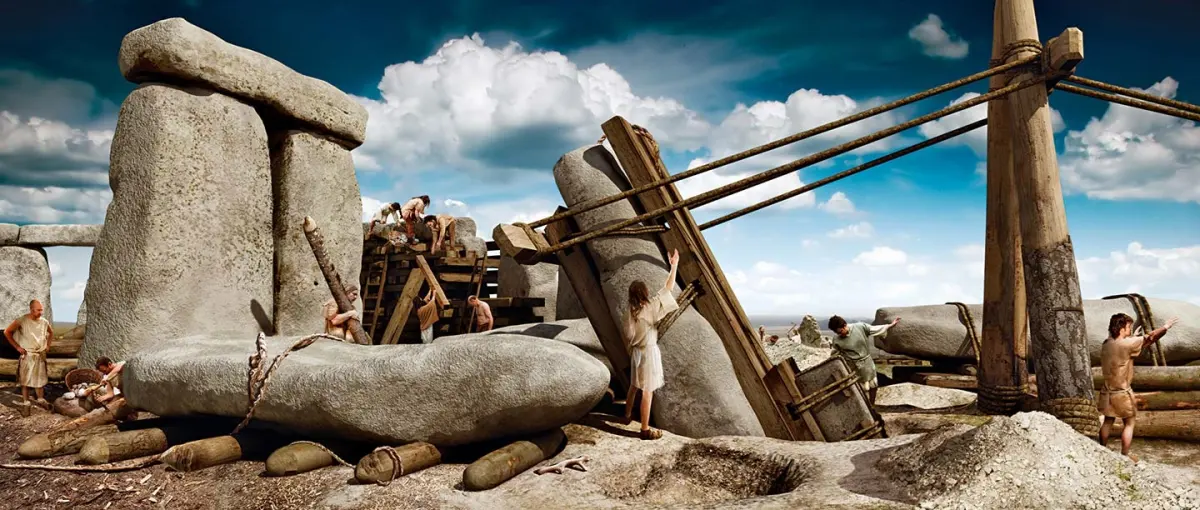
The process of erecting these stones required physical precision and specialized tools. Builders used antler picks to dig deep pits and timber levers to maneuver the stones into place. To ensure the stability of the uprights, they employed sophisticated joinery techniques, including mortise-and-tenon joints, which are typically seen in woodworking. This level of craftsmanship suggests a highly organized society capable of managing long-term, multi-generational architectural projects.
- Surveying the site to align with the summer and winter solstices.
- Digging deep foundation pits using deer antler picks and stone tools.
- Transporting stones via sledges, rollers, and potentially water rafts.
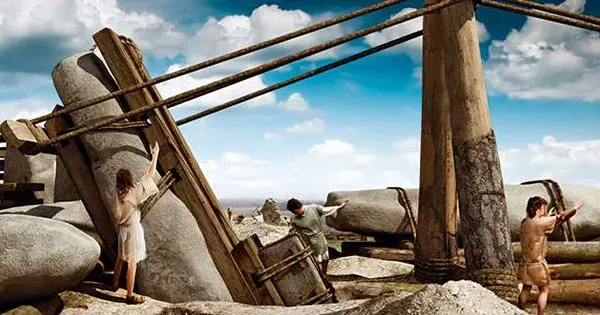
- Using timber levers and scaffolding to raise stones into an upright position.
- Carving joints and lintels to lock the stones together securely.
Why was Stonehenge built?
The primary purpose of Stonehenge remains a subject of intense academic debate, though most experts agree it served as a ceremonial or ritualistic center. Its alignment with the sunrise on the summer solstice and the sunset on the winter solstice suggests it functioned as a sophisticated calendar. For an agricultural society, tracking these solar events was essential for planting and harvesting cycles. The monument likely acted as a bridge between the living and the dead, given the large number of cremated human remains discovered within the site’s perimeter.
Beyond its astronomical function, the monument likely served as a place of pilgrimage and social cohesion. It provided a centralized location for disparate tribes to gather, trade, and perform funeral rites. The sheer effort required to construct such a landmark implies that it held profound religious significance for the people of the region. By creating a permanent stone structure, these communities were able to solidify their territorial identity and honor their ancestors in a landscape that had been sacred for generations.
- Ceremonial burial ground for elite members of society.
- Solar calendar for tracking agricultural seasons.
- A place of pilgrimage for regional tribal gatherings.
- A monument to ancestral spirits and mythological figures.
- A symbol of political power and communal unity.
Common mistakes when studying Stonehenge
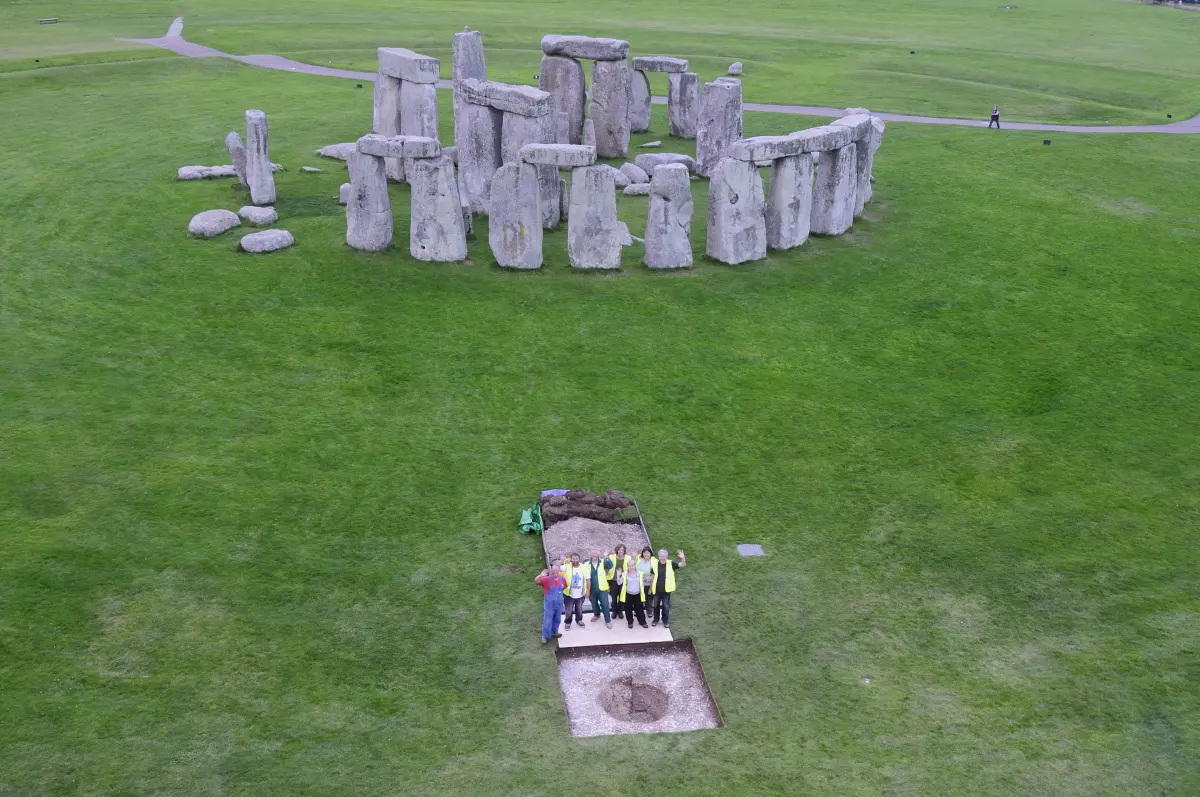
One of the most frequent errors is assuming that Stonehenge appeared in its current form overnight. In reality, the site underwent at least three major phases of development, with significant modifications occurring over 1,500 years. Another common misconception is that the stones were moved using supernatural means or ancient advanced technology. Archaeological experiments have demonstrated that the stones could be moved by human strength alone using simple tools, provided there was a large enough workforce and sufficient time.
Another mistake is ignoring the broader archaeological context of the Salisbury Plain. Stonehenge does not exist in isolation; it is part of a complex network of burial mounds, earthworks, and timber circles. Focusing solely on the stones misses the importance of the surrounding landscape, which was heavily modified to complement the monument. To understand the builders, one must look at the entire ritual complex, including the nearby Avenue and the Durrington Walls settlement, which provide vital clues about how the builders lived and interacted with their environment.
How to visit Stonehenge effectively
For those planning to visit, the best approach is to book tickets well in advance, as entry is strictly timed to manage visitor numbers. The site is managed by English Heritage, and the visitor center is located about a mile and a half from the stones. A shuttle bus runs frequently between the center and the monument, though walking the path allows for a better appreciation of the surrounding landscape and the various burial mounds scattered throughout the area.
When visiting, avoid the mistake of focusing only on the stones themselves. Take time to explore the reconstructed Neolithic houses at the visitor center, which offer a practical look at how the builders lived. Additionally, check the weather forecast, as the Salisbury Plain is notoriously exposed to wind and rain. Wearing sturdy footwear is essential for walking the grassy paths around the stones. By preparing for the elements and taking advantage of the educational exhibits, you will gain a much clearer understanding of the people who built this ancient wonder.
Key facts
- Stonehenge was constructed in several stages over approximately 1,500 years, beginning around 3000 BCE.
- The site was built by Neolithic peoples, likely a combination of local farming communities and migrating groups from across Britain.
- The massive sarsen stones were transported from the Marlborough Downs, located about 20 miles north of the site.
- Smaller "bluestones" originated in the Preseli Hills of Wales, over 150 miles away from the Salisbury Plain.
- Construction involved complex engineering, using timber rollers, sledges, and human labor to move stones weighing up to 25 tons.
- Archaeological evidence suggests the site served as a burial ground, a place of ritual healing, and an astronomical calendar.
The bottom line
Stonehenge remains a testament to the ingenuity and social organization of Neolithic Britain. Built over fifteen centuries, the monument reflects a deep connection to the landscape and the cosmos. While the exact identity of the builders remains anonymous, archaeological evidence confirms that human labor and sophisticated engineering created this iconic site. Today, it stands as a protected landmark, offering modern observers a window into ancient ritualistic life.
People also ask
Why were the stones moved such long distances?
Archaeologists believe the stones held specific spiritual or ancestral significance to the groups who moved them. Transporting materials from distant, sacred landscapes likely reinforced the identity and social unity of the builders.
How did ancient people lift the heavy lintels onto the upright stones?
Builders likely used earthen ramps to slide the heavy lintels into position atop the uprights. Once in place, they utilized levers and timber scaffolding to secure the joints, which were carved with mortise-and-tenon techniques.
Was Stonehenge built by aliens or giants?
There is no scientific evidence to support the involvement of non-human entities. Excavations consistently reveal tools, pottery, and human remains that confirm the site was built entirely by Neolithic human labor.
What is the purpose of the Heel Stone?
The Heel Stone is a large sarsen boulder positioned outside the main circle. It is famously aligned with the sunrise on the summer solstice, suggesting the site functioned as a sophisticated solar observatory.
Can visitors still touch the stones today?
No, visitors are kept behind a rope barrier to protect the monument from erosion and vandalism. Touching the stones is strictly prohibited to preserve the site for future generations.
How many people were needed to build Stonehenge?
Estimates suggest that moving a single large stone required hundreds of people working in coordination. The entire project likely involved thousands of individuals over many generations of organized community effort.
This answer was created with the help of AI research tools and reference sources. Spotted an error? Let us know — we correct mistakes quickly. See our editorial policy.