What do cougars eat?
Short answer
Cougars are obligate carnivores that primarily hunt ungulates, such as deer, elk, and moose. As apex predators, they also consume smaller prey like rabbits, rodents, and coyotes to supplement their diet. Their hunting strategy relies on stealth and ambush, allowing them to take down animals significantly larger than their own body weight.

On this page
What do cougars eat in the wild?
Cougars, also known as mountain lions or pumas, are opportunistic predators with a diet dominated by hoofed mammals. Deer are the most common prey species across their North American range, providing the bulk of their nutritional requirements. In regions where deer populations are sparse, cougars adapt by targeting elk, bighorn sheep, and moose. While adult males often pursue larger prey to sustain their high caloric needs, females with cubs may focus on smaller, more easily captured animals to minimize energy expenditure and risk.
Beyond large ungulates, cougars maintain a diverse diet that includes smaller vertebrates. This flexibility allows them to survive in varied environments, from high-mountain forests to arid deserts. Their secondary prey list includes:
- Rabbits and hares
- Porcupines
- Coyotes and bobcats
- Beavers and muskrats
- Ground-dwelling birds like wild turkeys
This varied intake ensures that cougars remain well-nourished even when their primary prey species migrate or fluctuate in population density. By consuming a wide array of species, they play a critical role in regulating the populations of various forest and grassland animals.
How do cougars hunt their prey?
Cougars are masters of the ambush, relying on patience and powerful bursts of speed rather than long-distance pursuit. They typically track prey silently, using their keen sense of smell and sharp vision to locate targets. Once within striking distance—usually less than 30 feet—they launch a sudden, explosive attack. This surprise element is essential, as it allows them to secure a grip on the prey’s neck or back before the animal can flee.
The physical mechanics of a cougar’s kill are highly efficient. They use their strong forelimbs to grapple with the prey, while their retractable claws provide the necessary traction to hold on. A lethal bite to the throat or the base of the skull is the standard method for ending the struggle quickly. This technique minimizes the risk of injury to the cougar, which is vital for a solitary predator that cannot afford to be incapacitated.
How much food does a cougar need?
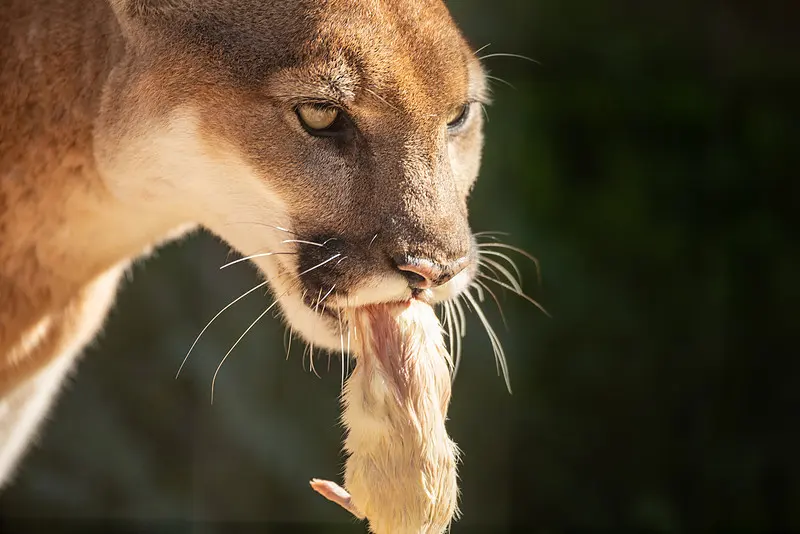
A single adult cougar requires approximately 8 to 10 pounds of meat per day to maintain its health. However, because they do not hunt every single day, their feeding patterns are cyclical. A cougar will typically kill a large deer or elk and feed on the carcass for several days, returning to it repeatedly until the meat is consumed or the remains spoil. This strategy allows them to conserve energy between hunting efforts.
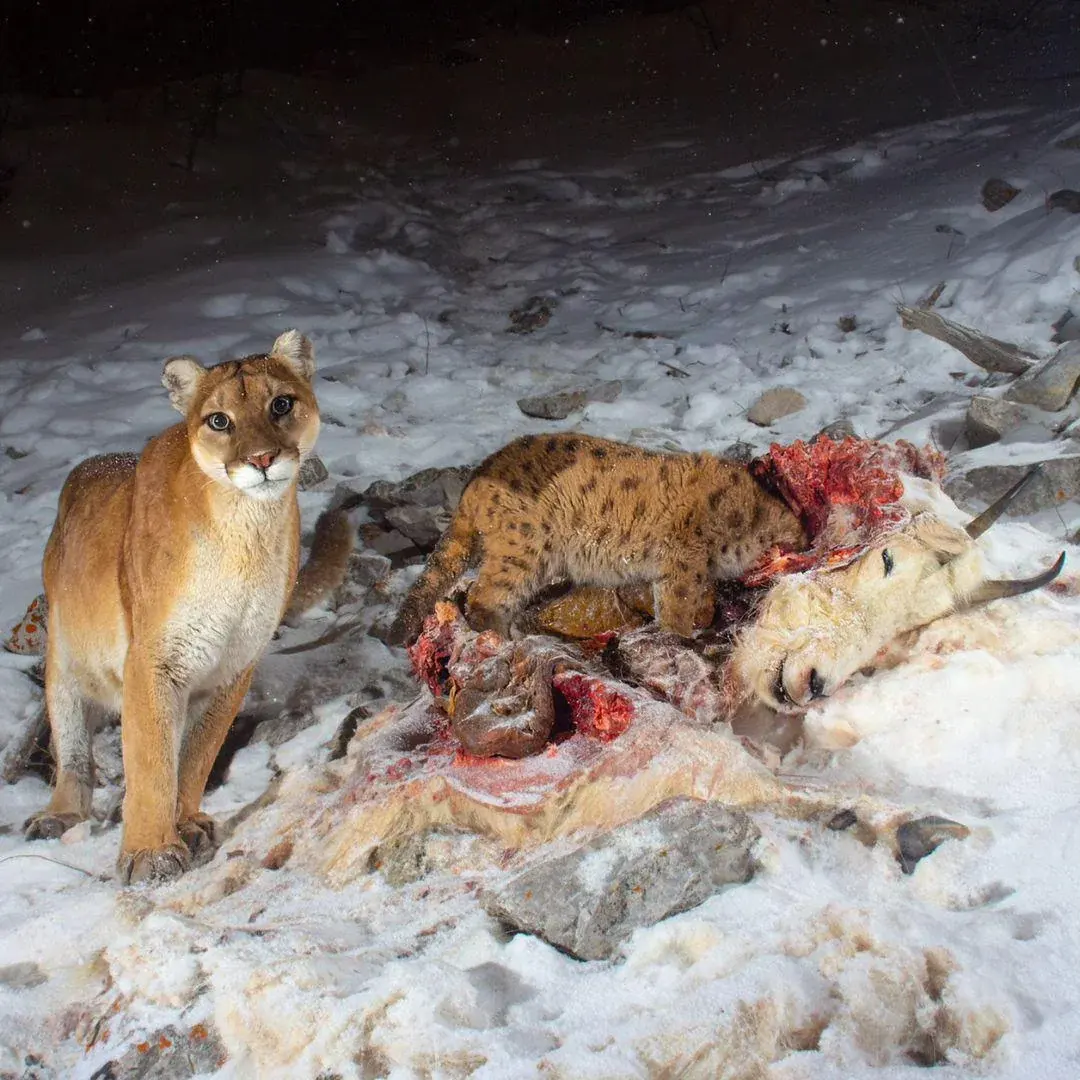
To manage their food supply, cougars often cache their kills. They cover the carcass with leaves, dirt, or snow to hide it from scavengers like bears, vultures, or coyotes. This behavior serves several practical purposes:
- It protects the food source from being stolen by competing predators.
- It keeps the meat cooler and fresher for longer periods.
- It allows the cougar to remain in a safe, hidden location while feeding.
By caching, a cougar can maximize the caloric return from a single successful hunt, often staying near a large kill for up to a week.
Common mistakes when identifying cougar kills
Many people incorrectly assume that any carcass found in the woods is the result of a cougar attack. A common mistake is failing to distinguish between a fresh kill and a scavenged carcass. Cougars leave specific "signatures" on their prey, such as deep puncture wounds on the neck and distinct drag marks where they moved the animal to a secluded spot. If you find a carcass, look for these signs before assuming a cougar is responsible.
Another error is ignoring the presence of other scavengers. If a carcass is scattered or heavily disturbed by multiple sets of tracks, it may have been finished off by bears or wolves after the cougar left. To properly identify a cougar kill, look for these indicators:
- The prey is often hidden or covered with debris.
- The hide is frequently pulled back from the carcass.
- The kill site is usually located in a sheltered or brushy area.
- There is a lack of widespread carcass scattering compared to canine kills.
Why cougars come into human areas
Cougars generally avoid human contact, but they may venture into residential areas if their natural prey base is depleted or if they find easy food sources. A major mistake homeowners make is leaving pet food, garbage, or small livestock unsecured. These items can attract deer and raccoons, which in turn draw cougars closer to human dwellings. Keeping pets indoors at night and installing motion-activated lighting can significantly reduce the likelihood of attracting these predators.
If you live in cougar country, follow these safety steps to avoid creating an attractive environment:
- Secure all livestock in sturdy, roofed enclosures.
- Remove dense brush and vegetation near your home to eliminate hiding spots.
- Keep pets inside or in a secure kennel, especially from dusk until dawn.
- Do not feed deer or other wildlife, as this brings potential prey—and thus predators—directly to your doorstep.
By managing your property responsibly, you ensure that cougars remain in their natural habitats, keeping both your family and the local wildlife safer throughout the year.
Key facts
- Cougars are obligate carnivores, meaning they rely entirely on the flesh of other animals for their nutritional needs.
- Deer are the primary food source for cougars across most of their North American range, often accounting for 60 to 80 percent of their diet.
- These predators are ambush hunters that typically kill by delivering a powerful bite to the base of the skull or the throat.
- A single adult cougar requires approximately 8 to 10 pounds of meat per day to maintain its body weight and energy levels.
- Cougars often cache their kills by covering the carcass with leaves, dirt, or snow to protect the meat from scavengers and return to it over several days.
- When hunting, avoid walking alone in dense brush or near known kill sites at dawn or dusk, as these are the peak activity hours for cougars.
The bottom line
Cougars are highly skilled, opportunistic apex predators that primarily sustain themselves on deer and other ungulates. By utilizing an ambush strategy and caching their kills, they maximize their energy efficiency in the wild. While they rarely interact with humans, understanding their hunting habits and dietary preferences is essential for safety and effective wildlife management in areas where these elusive cats maintain their vast home ranges.
People also ask
Do cougars eat humans?
Attacks on humans are extremely rare, as cougars generally avoid people and do not view them as a natural food source. Most encounters occur when a person inadvertently surprises a cat or acts in a way that triggers its predatory instinct.
How do cougars hunt their prey?
They rely on stealth and explosive power rather than long-distance chasing. A cougar will stalk within close range of its target before launching a sudden, high-speed ambush to secure the kill.
Do cougars eat livestock?
Yes, cougars will prey on sheep, goats, and calves if natural wild prey is scarce or if the livestock is left unprotected. Ranchers often use guard dogs or motion-activated lights to deter cats from approaching herds.
What do cougars eat when deer are not available?
They are opportunistic feeders and will consume elk, moose, bighorn sheep, coyotes, porcupines, and even smaller animals like rabbits or rodents. This flexibility allows them to survive in diverse environments ranging from deserts to mountain forests.
How long can a cougar go without eating?
A cougar can survive for several days without a fresh kill, especially if it has a large carcass cached nearby. However, they are most successful when they can secure a large meal every week to ten days.
Do cougars scavenge for food?
While they prefer fresh kills they have made themselves, cougars will occasionally scavenge if they are desperate. They generally avoid rotting meat, as it carries a higher risk of disease and parasites.
This answer was created with the help of AI research tools and reference sources. Spotted an error? Let us know — we correct mistakes quickly. See our editorial policy.