How much water should you drink a day?
Short answer
Most healthy adults need between 2.5 and 3.7 liters of total water daily, though individual needs vary significantly based on activity, climate, and health. Rather than following a rigid "eight glasses" rule, rely on thirst cues and the color of your urine to determine if you are adequately hydrated throughout the day.
On this page
How much water do I actually need?
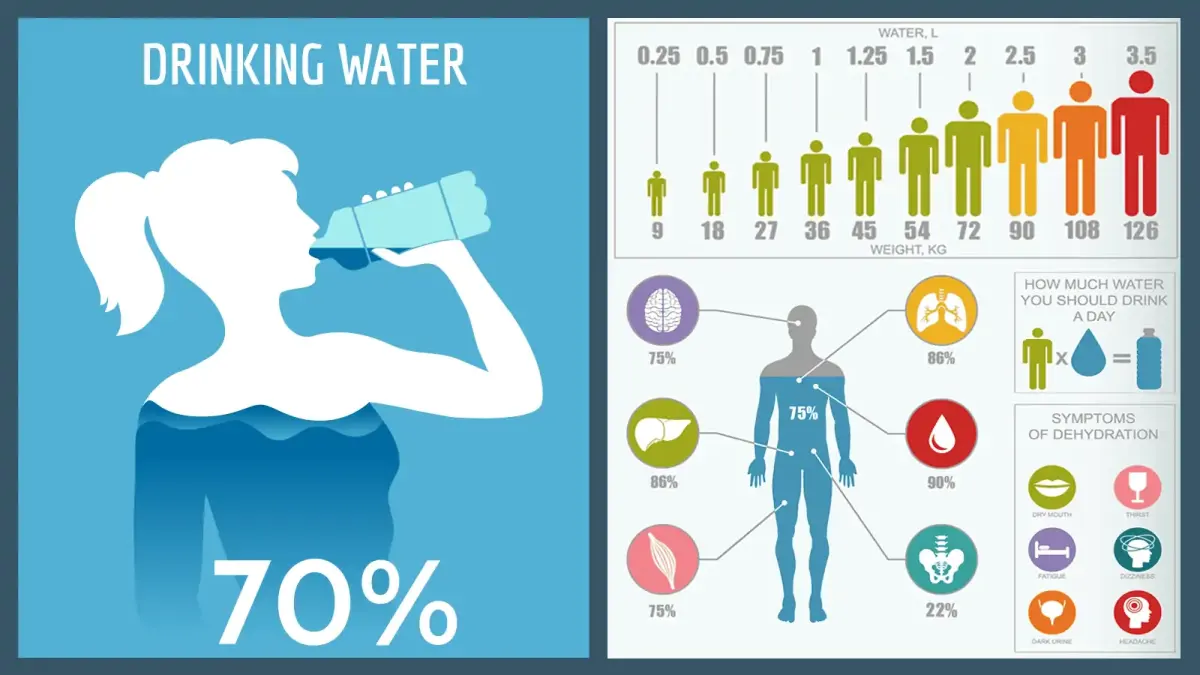
There is no single universal number for daily water intake because hydration requirements depend on body size, metabolism, and environmental factors. While the National Academies of Sciences, Engineering, and Medicine suggests about 3.7 liters for men and 2.7 liters for women, this total includes water from all beverages and moisture-rich foods. About 20 percent of your daily fluid intake typically comes from solid foods like fruits and vegetables.
You do not need to obsessively track every milliliter of water you consume. Your body possesses a sophisticated internal mechanism—thirst—that signals when your fluid levels are dropping. If you feel thirsty, your body is already signaling a need for hydration. By drinking when you feel the urge and consuming water-rich foods, you will likely meet your biological requirements without needing to carry a gallon jug everywhere you go.
Why do hydration needs change?
Your specific hydration needs fluctuate based on your daily lifestyle and the climate in which you live. Intense physical activity causes you to lose significant amounts of water through sweat, which must be replaced to maintain blood volume and core temperature. Similarly, living in a hot or humid environment increases your sweat rate, while high altitudes can lead to faster fluid loss through respiration.
Certain physiological states also require increased water intake to maintain homeostasis. For example, individuals who are pregnant or breastfeeding need extra fluids to support their body functions and produce milk. Additionally, if you are suffering from an illness that involves fever, vomiting, or diarrhea, your body loses fluids much faster than normal. In these cases, you must consciously increase your fluid intake beyond your usual habits to prevent dehydration.
- Increase intake during high-intensity workouts lasting longer than 60 minutes.
- Consume extra fluids when ambient temperatures exceed 80 degrees Fahrenheit.
- Monitor your intake closely if you are recovering from a fever or digestive illness.
- Adjust your consumption upward if you are traveling to high-altitude locations.

How to tell if you are hydrated
The most practical and reliable indicator of your hydration status is the color of your urine. When you are well-hydrated, your urine should be a pale yellow or straw color, signaling that your kidneys are effectively filtering waste without being overly concentrated. If your urine is dark yellow or amber, it is a clear sign that you need to drink more fluids immediately.
Another way to assess your needs is to pay attention to physical symptoms of mild dehydration. These signs often appear before you feel extreme thirst and can include dry mouth, fatigue, dizziness, or headaches. By observing these subtle cues, you can adjust your intake in real-time. If you find that you are rarely thirsty and your urine is consistently pale, you are likely maintaining a healthy balance of fluids throughout your day.
- Pale yellow: Optimal hydration.
- Dark yellow: Mild dehydration, increase fluid intake.
- Amber or honey-colored: Significant dehydration, drink water immediately.
- Clear: You may be over-hydrating, which can dilute essential electrolytes.

Common mistakes when drinking water
One of the most frequent mistakes people make is confusing thirst with hunger. The brain often sends similar signals for both, leading many to reach for a snack when they are actually just dehydrated. Before eating a meal or snack, try drinking a glass of water and waiting a few minutes to see if your hunger subsides. This simple habit can improve your hydration and help you avoid unnecessary calorie consumption.
Another error is waiting until you are parched to drink. By the time you feel intense thirst, you are already experiencing the early stages of dehydration, which can impact your cognitive function and physical performance. It is much better to sip water consistently throughout the day rather than chugging large amounts all at once. Drinking too much water in a very short period can also put unnecessary strain on your kidneys and lead to electrolyte imbalances.
Best ways to increase water intake
If you struggle to drink enough water, you can make the process easier by incorporating habits that fit your daily routine. Many people find that having a reusable water bottle within arm's reach serves as a visual reminder to sip throughout the day. If you dislike the taste of plain water, you can improve the flavor by adding natural infusions like cucumber slices, lemon wedges, or fresh mint leaves.
You can also boost your hydration by choosing foods with high water content during your meals. Incorporating items like watermelon, strawberries, celery, lettuce, and soups into your diet provides both nutrients and essential fluids. By focusing on these small, manageable adjustments, you can maintain proper hydration without feeling like you are forcing yourself to drink. Consistency is far more effective than trying to catch up on your daily quota during the final hours of the evening.
Key facts
- Most healthy people meet their fluid needs by letting thirst be their guide throughout the day.
- The National Academies of Sciences, Engineering, and Medicine suggests about 15.5 cups (3.7 liters) for men and 11.5 cups (2.7 liters) for women daily.
- Approximately 20 percent of daily water intake typically comes from food, such as fruits and vegetables.
- Urine color is a reliable indicator of hydration; pale yellow or straw-colored urine usually signals adequate intake.
- High-intensity exercise, hot weather, and certain medical conditions increase the body’s need for extra fluids.
- Drinking too much water, known as hyponatremia, can dangerously dilute sodium levels in the blood.
The bottom line
There is no universal "magic number" for daily water intake, as requirements depend on your activity level, environment, and biology. Instead of strictly tracking every ounce, rely on your body’s natural thirst signals and monitor your urine color. By consuming a variety of fluids and water-rich foods, you can easily maintain healthy hydration levels without the stress of rigid, one-size-fits-all consumption goals.
People also ask
Does coffee and tea count toward my daily water intake?
Yes, caffeinated beverages contribute to your total fluid intake. While caffeine has a mild diuretic effect, it does not offset the hydration provided by the water in the drink.
Should I drink water before every meal to lose weight?
Drinking water before meals may help you feel fuller, potentially reducing calorie intake. However, water alone is not a weight-loss miracle and should be part of a balanced diet.
Is it possible to drink too much water?
Yes, overhydration can lead to hyponatremia, a condition where blood sodium levels become dangerously low. This is most common among endurance athletes who consume excessive water without replacing lost electrolytes.
Do I need to drink eight glasses of water every day?
The "eight glasses a day" rule is a popular guideline, but it lacks a strong scientific basis. Individual needs vary significantly based on activity level, climate, and overall health status.
How can I tell if I am dehydrated?
Common signs of dehydration include dark-colored urine, dry mouth, fatigue, and dizziness. If you experience these symptoms, increase your fluid intake gradually until your urine returns to a pale yellow color.
Does skin health improve if I drink more water?
While proper hydration is essential for overall health, there is limited clinical evidence that drinking excess water significantly improves skin appearance. Topical moisturizers are typically more effective for skin hydration.
This answer was created with the help of AI research tools and reference sources. Spotted an error? Let us know — we correct mistakes quickly. See our editorial policy.