Why was the Taj Mahal built?
Short answer
The Taj Mahal was built by the Mughal emperor Shah Jahan as a grand mausoleum for his favorite wife, Mumtaz Mahal. Following her death in 1631 during childbirth, the emperor commissioned the white marble monument in Agra, India, to serve as an eternal testament to their enduring love and devotion.
On this page
Why was the Taj Mahal commissioned?
The construction of the Taj Mahal was born out of profound personal grief. When Mumtaz Mahal, the empress and inseparable companion of Shah Jahan, died while giving birth to their fourteenth child, the emperor was reportedly inconsolable. He sought to honor her memory by creating a structure of unparalleled beauty that would immortalize her name forever.
Beyond its romantic purpose, the monument served as a statement of Mughal imperial power and architectural sophistication. Shah Jahan utilized the vast wealth of his empire to assemble the finest artisans, stonecutters, and architects from across the Islamic world. By building this tomb, he intended to manifest a vision of paradise on earth, reflecting the Quranic descriptions of the afterlife. It remains a physical manifestation of the high point of Mughal art and culture in the 17th century.
How long did it take to build the Taj Mahal?
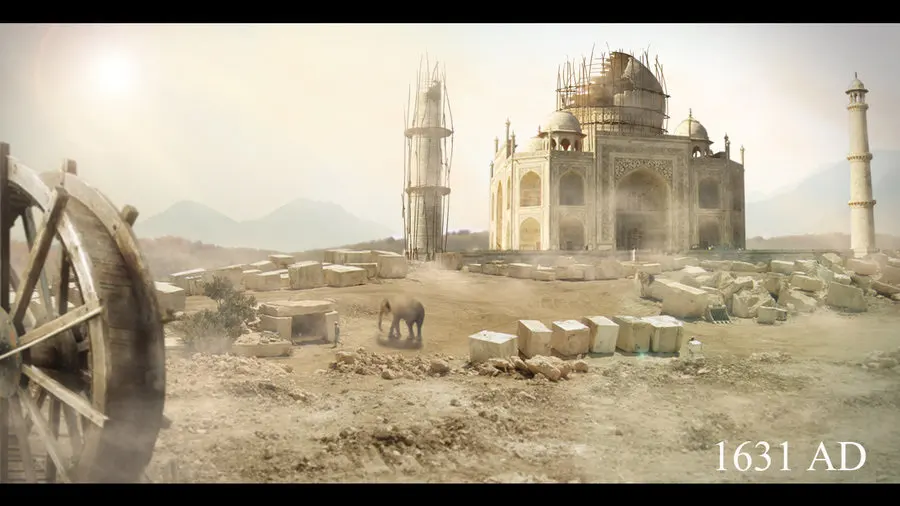
Construction of the Taj Mahal began in 1632 and spanned approximately 22 years. The main mausoleum was completed around 1648, but the surrounding buildings, gardens, and peripheral structures required several more years of labor. Thousands of workers, including over 20,000 artisans and laborers, were employed to realize the emperor's exacting vision.
The project required meticulous planning and coordination of resources from across Asia. Materials were transported by a massive fleet of over 1,000 elephants. The primary phases of construction included:
- Foundation and plinth construction (1632–1634)
- Main mausoleum structure (1634–1643)
- Interior decoration and calligraphy (1643–1647)
- Completion of the gardens and outer walls (1648–1653)
The sheer scale of the project necessitated a constant supply of white marble from Makrana and precious gemstones imported from regions as distant as China, Tibet, and Afghanistan.
What materials were used in the Taj Mahal?
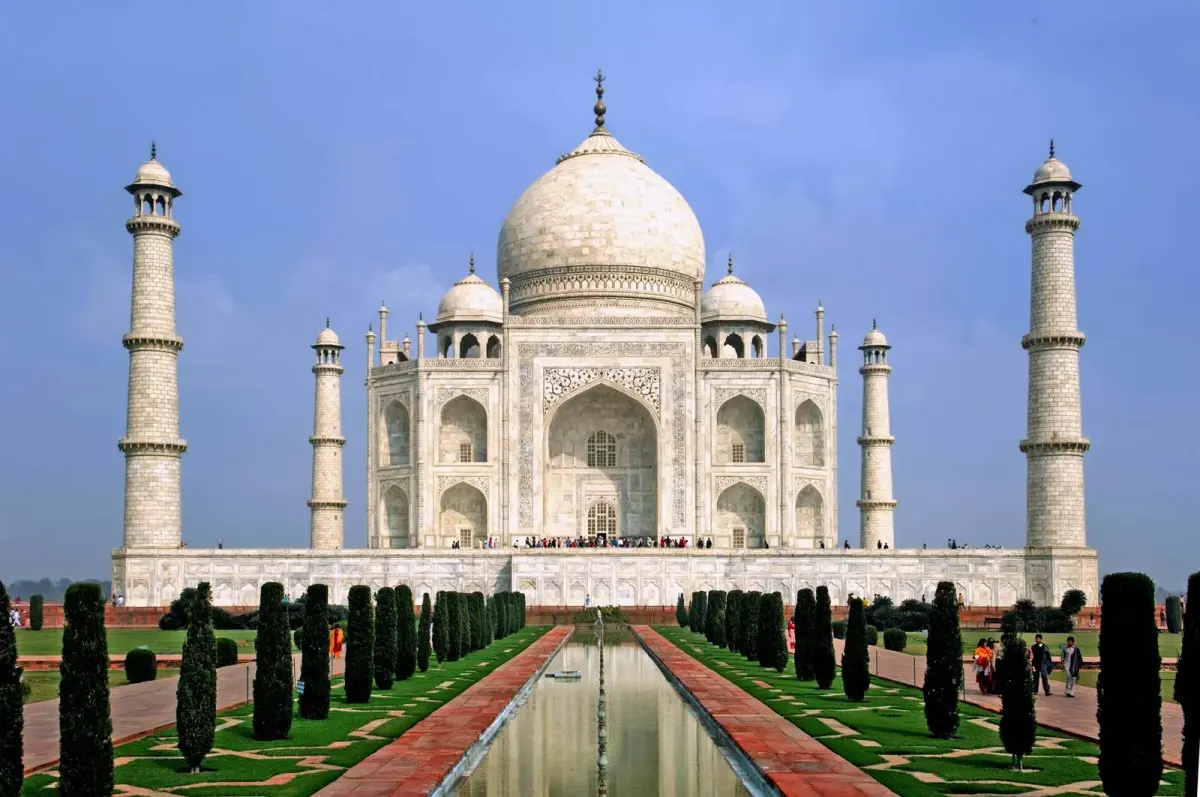
The Taj Mahal is renowned for its use of high-quality white marble, which changes color depending on the time of day and the intensity of moonlight. This marble was inlaid with semi-precious stones using a technique known as pietra dura. This process involved cutting colorful stones like lapis lazuli, jade, crystal, and turquoise into intricate floral patterns and embedding them into the marble surface.
The structure is not composed solely of marble; the core of the walls is made of brick and rubble, which is then clad in marble slabs. This construction method provided structural stability while maintaining a luxurious aesthetic. The following materials were essential to the building's durability:
- White marble for the exterior facade and domes.
- Red sandstone for the surrounding buildings and walls.
- Semi-precious stones for the intricate floral inlays.
- Mortar and lime to bind the heavy stone components.
How to visit the Taj Mahal today?
Visiting the Taj Mahal requires careful planning due to its status as a protected world heritage site. The monument is located in Agra, Uttar Pradesh, and is accessible by train or car from New Delhi. It is closed to visitors every Friday for prayers, so you must schedule your trip accordingly to avoid disappointment.
To ensure a smooth experience, follow these practical steps:
- Purchase your tickets online through the official Archaeological Survey of India website to skip long queues.
- Arrive at the gates at least 30 minutes before sunrise to capture the best photographs in the soft morning light.
- Carry minimal belongings, as large bags, food, tobacco, and electronic equipment like drones are strictly prohibited inside the complex.
- Hire a government-approved guide at the entrance to gain historical context that you might otherwise miss.
Common mistakes when visiting the Taj Mahal
One of the most frequent errors visitors make is underestimating the heat and the walking distance required to explore the entire complex. Because the site is vast, wearing comfortable walking shoes is essential. Furthermore, many tourists fail to respect the quiet atmosphere inside the mausoleum, where talking is discouraged to maintain the sanctity of the tomb.
Another common mistake is assuming that the Taj Mahal is the only attraction in the area. Many travelers overlook the nearby Agra Fort, where Shah Jahan spent his final years as a prisoner of his son, Aurangzeb. From his balcony at the fort, the former emperor could look across the Yamuna River at the Taj Mahal. To avoid these oversights, allocate at least two full days for your visit to Agra. This allows you to explore the Taj Mahal thoroughly without rushing and provides time to appreciate the broader historical context of the Mughal era.
Key facts
- The Taj Mahal was commissioned in 1632 by the Mughal emperor Shah Jahan to serve as a mausoleum for his favorite wife, Mumtaz Mahal.
- Mumtaz Mahal died in 1631 while giving birth to their 14th child, and her death deeply devastated the emperor.
- Construction of the complex took approximately 22 years, involving over 20,000 artisans and laborers from across Asia.
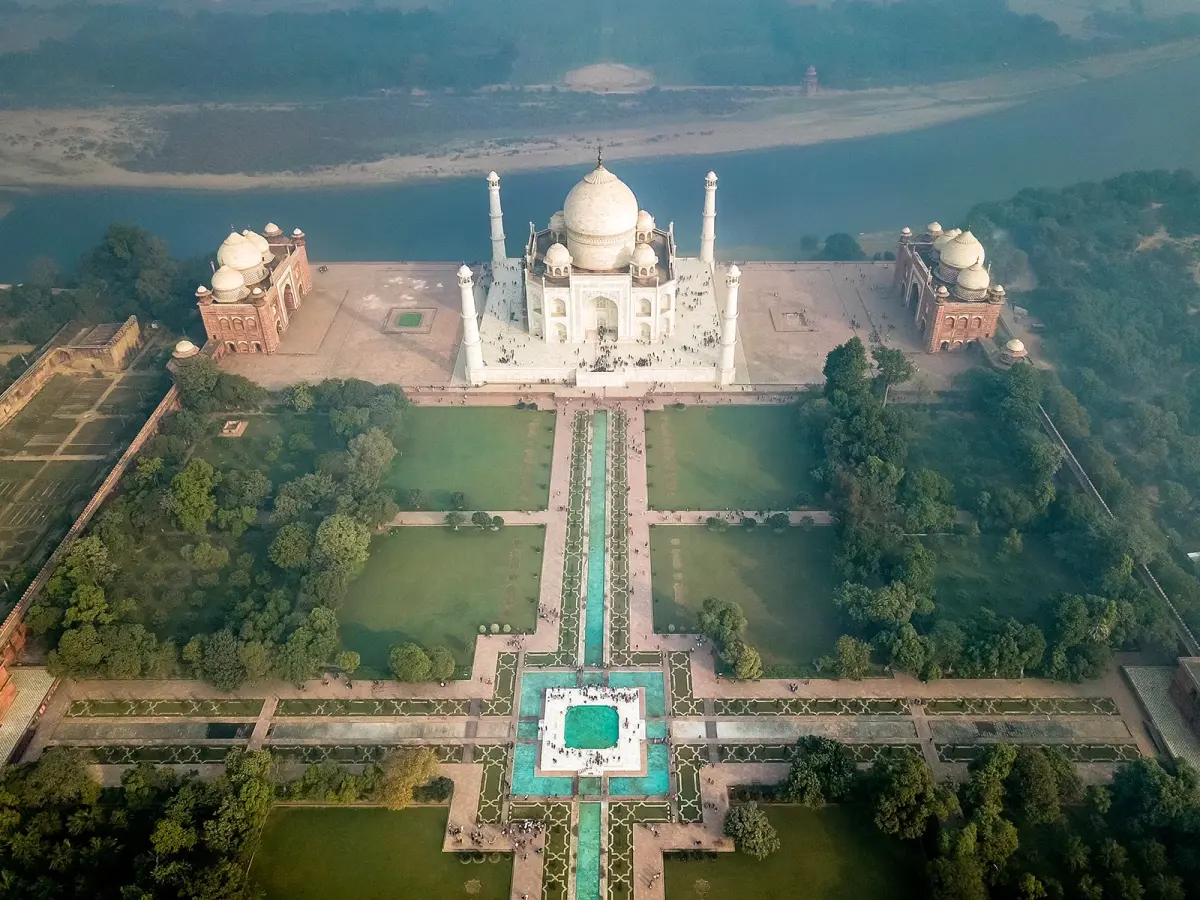
- The structure is located in Agra, India, on the southern bank of the Yamuna River to ensure a prominent view.
- It is considered the finest example of Mughal architecture, blending Indian, Persian, and Islamic styles.
- When visiting, avoid touching the marble surfaces, as oils from human skin can accelerate the degradation of the intricate inlay work.
The bottom line
The Taj Mahal stands as a monumental testament to enduring love and architectural brilliance. Commissioned by Shah Jahan to honor his late wife, Mumtaz Mahal, the structure serves as a grand mausoleum that represents the peak of Mughal design. Beyond its romantic origins, it remains a masterpiece of symmetry and craftsmanship, drawing millions of visitors annually to witness its timeless beauty and historical significance in India.
People also ask
How much did the Taj Mahal cost to build?
Historians estimate that the construction cost approximately 32 million rupees at the time. In modern currency, this would equate to nearly one billion U.S. dollars.
What materials were used to construct the Taj Mahal?
The main structure is built from white marble sourced from Makrana, Rajasthan. It is decorated with semi-precious stones like lapis lazuli, jade, and crystal using a technique called pietra dura.
Is the Taj Mahal perfectly symmetrical?
Yes, the entire complex is designed with bilateral symmetry. The only exception is the cenotaph of Shah Jahan, which was placed next to Mumtaz Mahal’s after his death, disrupting the otherwise perfect layout.
Can you go inside the Taj Mahal?
Visitors are permitted to enter the main mausoleum to view the cenotaphs of the emperor and his wife. However, the actual graves are located in a quiet, restricted crypt below the main floor.
Why does the color of the Taj Mahal seem to change?
The white marble is highly reflective and changes appearance based on the time of day and weather conditions. It often looks pinkish in the morning, milky white in the evening, and golden under moonlight.
What happened to Shah Jahan after the Taj Mahal was completed?
Shortly after the project finished, Shah Jahan was overthrown by his son, Aurangzeb. He spent the final years of his life under house arrest in the nearby Agra Fort, gazing at the monument.
This answer was created with the help of AI research tools and reference sources. Spotted an error? Let us know — we correct mistakes quickly. See our editorial policy.