Who invented the jigsaw puzzle?
Short answer
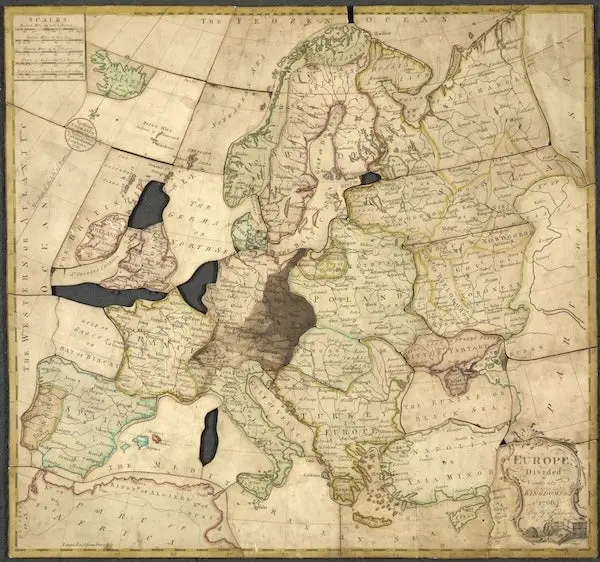
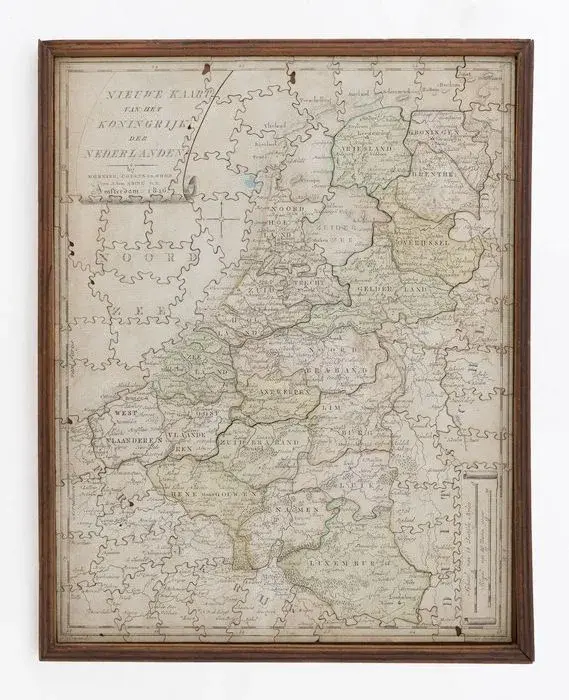
John Spilsbury, a London engraver and mapmaker, invented the jigsaw puzzle around 1760. He created these "dissected maps" by mounting maps onto mahogany boards and cutting along national borders with a fine-toothed scroll saw. Initially intended as educational tools for teaching geography to children, they later evolved into popular recreational pastimes.
On this page
Who invented the jigsaw puzzle?
John Spilsbury is credited with the invention of the jigsaw puzzle in 1760. As an apprentice to the prominent cartographer Thomas Jefferys, Spilsbury recognized the potential for using maps as instructional aids. By gluing a map of Europe onto a thin piece of hardwood and using a marquetry saw to cut along the borders of different countries, he transformed a static teaching tool into an interactive challenge.
These early puzzles were not designed for entertainment in the modern sense but were specifically marketed as educational devices for aristocrats. Children were tasked with reassembling the pieces to learn the geography of the British Empire and the European continent. Because the pieces were cut along political boundaries rather than interlocking shapes, they required a deep knowledge of geography to solve rather than simple pattern recognition.
How did jigsaw puzzles evolve?
The transition from educational tools to mass-market entertainment occurred gradually throughout the 19th and 20th centuries. While Spilsbury’s original designs were expensive to produce, the invention of the treadle-operated jigsaw in the 1880s allowed for more intricate, curved cuts. This technological shift enabled manufacturers to create interlocking pieces, which made puzzles significantly more challenging and satisfying to assemble.
During the Great Depression in the 1930s, jigsaw puzzles became a national phenomenon in the United States. They were inexpensive, provided hours of low-cost entertainment, and were often given away as promotional items by companies like Eveready and various grocery stores. This era solidified the puzzle as a staple of household leisure. Today, manufacturing techniques have evolved to include:
- Die-cutting machines that stamp out thousands of pieces per hour.
- High-resolution printing on recycled cardboard.
- Specialized software to generate unique, non-repeating piece shapes.
Best techniques for solving puzzles
Successfully completing a complex puzzle requires a methodical approach that minimizes frustration and maximizes efficiency. Beginners often feel overwhelmed by a pile of hundreds or thousands of loose pieces, but breaking the process down into logical steps makes the task manageable. The goal is to sort the chaos into organized groups before attempting to connect any segments.
- Flip all pieces face-up on a flat surface to ensure you can see every image detail.
- Separate all pieces with straight edges to establish the perimeter of the frame.
- Group remaining pieces by color, texture, or distinct patterns found in the original image.
- Assemble the border first to create a defined workspace for the interior sections.
- Build individual, recognizable objects or color blocks before connecting them to the main frame.
Why do people enjoy jigsaw puzzles?
Psychologists suggest that the appeal of jigsaw puzzles lies in the human brain's desire for order and pattern completion. When a person identifies a piece that fits perfectly into a gap, the brain releases a small amount of dopamine, the chemical associated with reward and satisfaction. This creates a feedback loop that encourages the solver to continue working toward the final image.
Beyond the neurological reward, puzzles offer a form of meditative focus. Engaging in a task that requires sustained attention can lower cortisol levels and provide a temporary escape from daily stressors. The tactile nature of handling physical pieces also provides a sensory experience that digital games cannot replicate. Whether working alone or in a group, the process of transformation—from a disorganized pile of fragments to a coherent picture—provides a tangible sense of accomplishment that is rare in modern, fast-paced environments.
Common mistakes when doing puzzles
Even experienced puzzlers can fall into traps that lead to frustration or incomplete sets. One of the most frequent errors is failing to provide enough space for the project, which often leads to lost pieces or accidental damage. Always ensure your workspace is large enough to accommodate the full dimensions of the finished puzzle plus extra room for sorting trays.
Another common mistake is assuming that two pieces fit together simply because the colors look similar. This often leads to "force-fitting," where a piece is jammed into a spot where it does not belong, potentially damaging the cardboard edges. To avoid this, follow these guidelines:
- Avoid working in areas with poor lighting, as it hides subtle color variations.
- Do not leave pieces near the edge of a table where they can be swept off and lost.
- If a piece feels like it requires force to join, stop and re-examine the surrounding area for a better fit.
- Use sorting trays to keep your categorized pieces from becoming mixed again during long sessions.
By maintaining a clean, well-lit environment and resisting the urge to force pieces together, you can ensure that the experience remains relaxing and enjoyable from the first piece to the very last.
Key facts
- John Spilsbury, a London mapmaker, is credited with inventing the jigsaw puzzle around 1760.
- He created the first puzzles by mounting maps onto mahogany boards and cutting along national borders with a scroll saw.
- Early puzzles were called "dissected maps" and were designed as educational tools for teaching geography to children.
- Puzzles remained expensive, hand-cut luxury items until the invention of the die-cutting press in the late 19th century.
- Cardboard became the standard material for mass-produced puzzles in the early 1900s, making them affordable for the general public.
- To avoid frustration, always sort pieces by edge pieces first and group remaining pieces by color or texture before starting assembly.
The bottom line
John Spilsbury transformed geography education in the 18th century by inventing the dissected map, the precursor to the modern jigsaw puzzle. While these early wooden tools were intended for elite classrooms, industrial innovations eventually turned them into a global pastime. Today, these puzzles offer a rewarding mental challenge, provided you start with the edges and organize your pieces by color to ensure a seamless assembly process.
People also ask
Why are they called jigsaw puzzles if they are no longer cut with a jigsaw?
The name persists because the original hand-cut wooden puzzles were crafted using a tool called a fretsaw or a jigsaw. While modern industrial machines use steel-rule dies to stamp out cardboard pieces, the historical name remains attached to the activity.
What is the best way to store a puzzle while working on it?
Use a dedicated puzzle mat or a large piece of stiff cardboard that can be moved easily. This allows you to slide the entire project under a bed or into a closet to protect it from pets and accidental spills.
How can I tell if a puzzle is missing a piece?
You can only confirm a missing piece once the entire puzzle is assembled. If you are certain a piece is gone, many manufacturers offer replacement services if you provide the batch number found on the box.
What makes a puzzle high-quality?
High-quality puzzles feature thick, sturdy cardboard and a "linen finish" to reduce glare. The pieces should have a distinct, tight fit so that you can lift a completed section without the pieces falling apart.
Are there different difficulty levels for puzzles?
Difficulty is generally determined by the total piece count and the complexity of the image. Puzzles with repetitive patterns, large areas of solid color, or irregular "whimsy" pieces are significantly harder than those with distinct, vibrant details.
Can I frame a completed puzzle?
Yes, you can preserve a puzzle by applying a specialized puzzle glue to the front surface. Once dried, you can mount it on a backing board and place it in a standard frame for display.
This answer was created with the help of AI research tools and reference sources. Spotted an error? Let us know — we correct mistakes quickly. See our editorial policy.