Who invented the guitar?
Short answer
The guitar does not have a single inventor. It evolved over thousands of years from ancient stringed instruments like the tanbur and oud. The modern guitar as we recognize it today emerged in 19th-century Spain, largely through the design refinements of luthier Antonio de Torres Jurado, who established the standard body shape.
On this page
How did the guitar evolve over time?
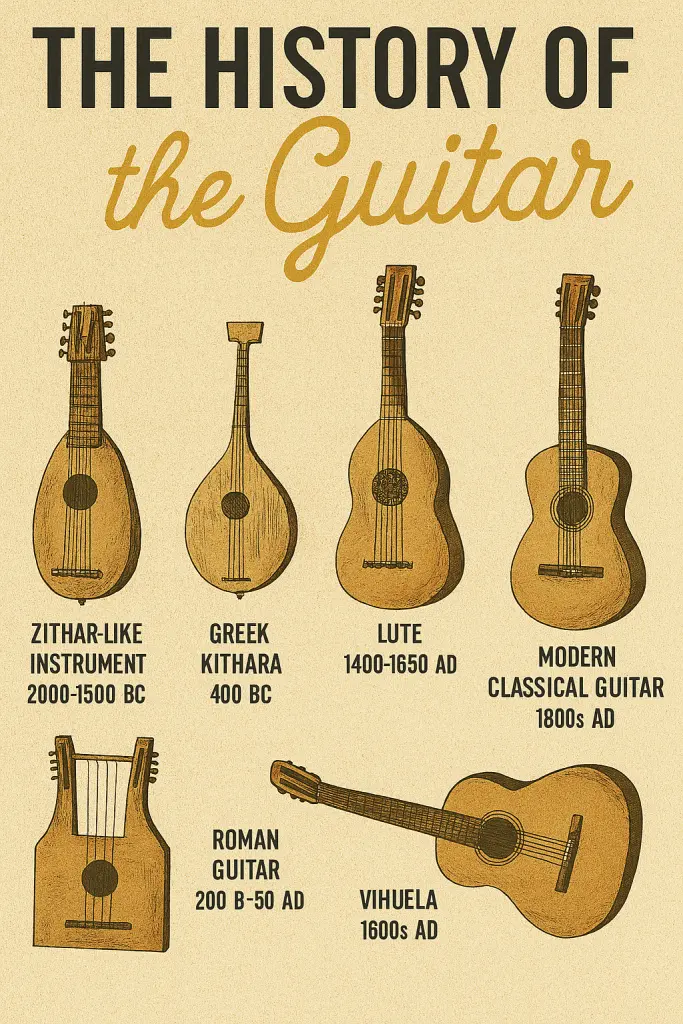
The history of the guitar is a long lineage of stringed instruments rather than a sudden invention. Early ancestors include the tanbur, used in ancient Mesopotamia, and the oud, which was brought to Europe by the Moors. These instruments featured a rounded back and a neck, setting the structural precedent for future plucked strings. By the Renaissance, the four-course guitar emerged, followed by the five-course Baroque guitar, which gained popularity across Europe.
During the 17th and 18th centuries, these instruments were smaller and quieter than modern versions. The transition to the six-string configuration became standard in the late 1700s, replacing the double-course strings with single strings. This shift allowed for easier tuning and a more consistent tone. The instrument continued to change as composers and performers demanded greater volume and sustain to fill larger concert halls. This evolutionary pressure eventually led to the structural innovations that defined the instrument in the 1800s.
Who was Antonio de Torres Jurado?
Antonio de Torres Jurado is widely considered the father of the modern guitar. Working in Spain during the mid-19th century, he revolutionized the instrument's construction by increasing the body size and refining the internal bracing system. His "fan bracing" pattern, which involved thin wooden struts glued to the underside of the soundboard, allowed the top to vibrate more freely. This design significantly increased the guitar's volume and tonal depth, creating a template that remains the industry standard for classical guitars today.
Before Torres, guitars were often inconsistent in size and sound quality. By standardizing the scale length and body proportions, he provided musicians with an instrument capable of professional performance. His work effectively bridged the gap between the experimental instruments of the past and the sophisticated tools used by modern classical guitarists. Every contemporary acoustic guitar owes a debt to the structural principles he established in his workshops in Seville and Almería.

What are the main types of guitars?
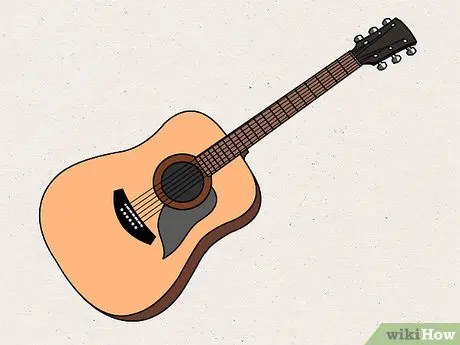
The modern guitar family is categorized primarily by how the instrument produces sound. Acoustic guitars rely on a hollow body to amplify string vibrations, while electric guitars use magnetic pickups to convert vibrations into electrical signals. Within these categories, there are several distinct variations designed for different musical genres.
- Classical Guitar: Features nylon strings, a wide neck, and a warm, mellow tone.
- Steel-String Acoustic: Uses steel strings for a brighter, louder sound, commonly used in folk and pop music.
- Electric Guitar: Requires an amplifier and allows for various sound effects and sustain.
- Archtop Guitar: Often used in jazz, featuring a carved top and f-holes similar to a violin.
- Bass Guitar: Typically has four thick strings and provides the low-end rhythmic foundation for ensembles.
Understanding these differences is essential for choosing the right instrument. A beginner interested in classical music should prioritize a nylon-string model, while someone interested in rock or blues will find the electric guitar more versatile for their specific needs.
How to choose your first guitar?
Selecting a first guitar can be overwhelming due to the sheer number of options available. The most important factor is playability, which refers to how easily you can press the strings against the fretboard. If the action—the distance between the strings and the fretboard—is too high, the instrument will be difficult to play and may discourage a beginner from practicing.
Follow these steps to ensure you select a quality instrument:
- Research the reputable brands that offer entry-level models with good quality control.
- Visit a local music shop to hold different body shapes to see which feels comfortable against your torso.
- Check the neck for any warping or sharp fret ends that might scratch your hand.
- Ask a staff member to tune the instrument and play a few chords to hear the projection.
- Ensure the tuning pegs turn smoothly without slipping or feeling overly loose.
Always avoid buying the cheapest instrument available online without testing it, as poor construction often leads to tuning instability and frustration.
Common mistakes when learning guitar?
Many new players struggle because they attempt to learn too much too quickly. A common error is neglecting the importance of basic finger strength and calluses. When you first start, your fingertips will be sensitive, and it takes time for the skin to toughen. Trying to play for hours on the first day is counterproductive and usually leads to soreness rather than progress.
Another common mistake is ignoring the importance of proper posture and hand positioning. Poor habits formed in the first few months are difficult to correct later and can lead to repetitive strain injuries. Focus on these areas:
- Keep your thumb positioned behind the neck rather than wrapping it over the top constantly.
- Sit upright to ensure your shoulders remain relaxed and your arms have a full range of motion.
- Practice with a metronome to develop a consistent sense of rhythm from the very beginning.
- Limit practice sessions to 20 or 30 minutes daily to maintain focus and prevent physical fatigue.
By maintaining a consistent, disciplined approach, you will build a solid foundation that allows you to master the instrument effectively over time.
Key facts
- The guitar does not have a single inventor; it evolved over thousands of years from ancient stringed instruments.
- The earliest ancestors of the guitar include the tanbur, the lute, and the oud, which date back to ancient Mesopotamia and Egypt.
- The term "guitar" is derived from the Spanish word guitarra, which traces back to the ancient Greek word kithara.
- Antonio de Torres Jurado is credited with designing the modern classical guitar in the mid-19th century, establishing its standard size and shape.
- The addition of a sixth string and the move to fan bracing by Torres allowed for the projection and tonal balance heard today.
- When buying a guitar, prioritize the "action"—the distance between the strings and the fretboard—to ensure the instrument is comfortable to play.
The bottom line
The guitar is not the invention of one individual but the result of centuries of cultural evolution. From ancient stringed ancestors to the refined designs of Antonio de Torres, the instrument has continuously adapted to meet the needs of musicians. Whether you play acoustic or electric, understanding this rich history helps you appreciate the craftsmanship behind your instrument as you develop your own musical voice.
People also ask
What is the difference between an acoustic and an electric guitar?
An acoustic guitar uses a hollow body to amplify sound naturally, while an electric guitar requires an external amplifier to convert string vibrations into sound. Electric guitars typically use magnetic pickups to capture these vibrations.
Who invented the electric guitar?
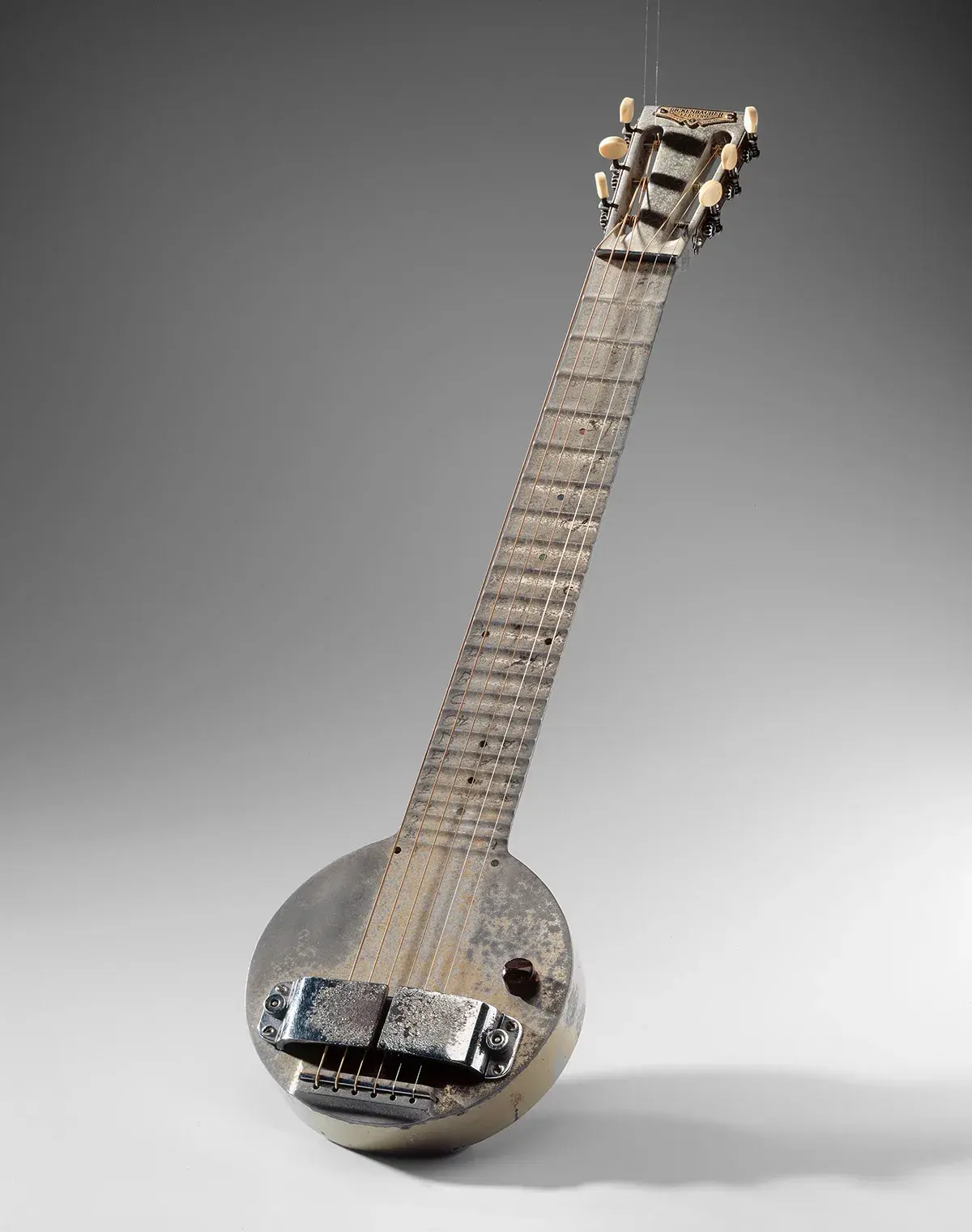
Adolph Rickenbacker and George Beauchamp are credited with creating the first commercially successful electric guitar, known as the "Frying Pan," in 1931. Les Paul and Leo Fender later popularized the solid-body electric guitar design in the 1940s and 1950s.
Read the full answer →How many strings does a standard guitar have?
A standard guitar has six strings, typically tuned to E, A, D, G, B, and E. While 7-string, 8-string, and 12-string variations exist, the six-string configuration remains the industry standard for most musical genres.
What is the best way to start learning the guitar?
Start by learning basic open chords like G, C, and D, which allow you to play thousands of popular songs. Practice for 15 to 20 minutes daily rather than once a week to build muscle memory in your fingertips.
What is a common mistake for beginners?
A common mistake is failing to keep the fingernails on the fretting hand short. Long nails prevent your fingers from pressing the strings firmly against the fretboard, which causes buzzing sounds and muted notes.
Does the wood type change the sound of the guitar?
Yes, the tonewoods used for the top, back, and sides significantly influence the instrument's resonance. For example, spruce is known for a bright, clear tone, while mahogany often provides a warmer, darker sound.
This answer was created with the help of AI research tools and reference sources. Spotted an error? Let us know — we correct mistakes quickly. See our editorial policy.