What is a group of hawks called?
Short answer
A group of hawks is most commonly called a cast, a kettle, or a boil. While "cast" typically refers to a pair of hawks, "kettle" describes a group circling high in the air on thermal currents. These terms originate from historical falconry practices and remain the standard nomenclature used by birdwatchers today.
On this page
What is the correct term for a group of hawks?
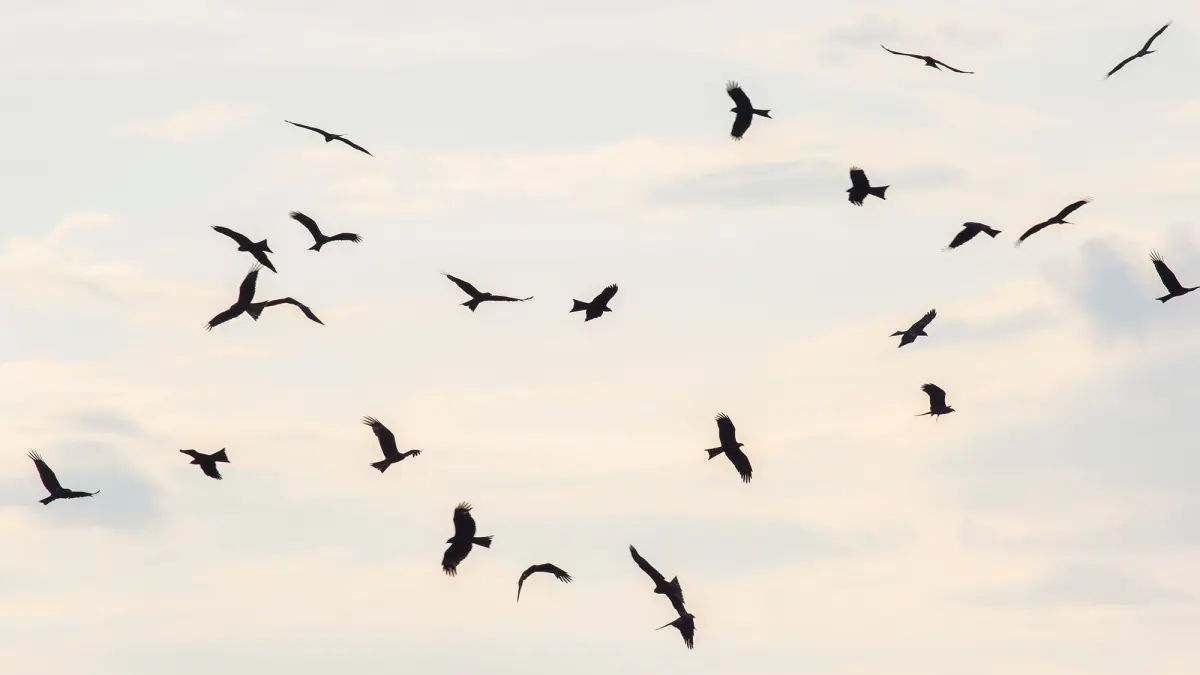
The terminology used to describe a group of hawks depends largely on their behavior and the context of the observation. The term "kettle" is the most popular descriptor for hawks seen soaring in a circular motion, often during migration. This visual phenomenon occurs when birds catch rising columns of warm air, known as thermals, to gain altitude without flapping their wings.
Beyond "kettle," bird enthusiasts and falconers use specific labels for different social structures. A "cast" refers to a pair of hawks, a term deeply rooted in the history of medieval falconry where two birds were often released simultaneously to hunt. While these collective nouns are widely recognized, they are not strictly scientific classifications. In biological research, scientists generally refer to any gathering of these birds simply as a group or a population, as hawks are primarily solitary predators rather than flocking birds.
Why do hawks form a kettle?
Hawks form kettles primarily to conserve energy during long-distance migration. By utilizing rising thermals, they can climb to great heights with minimal physical effort. Once they reach the top of a thermal, they glide toward their destination, losing altitude slowly before finding the next rising air current. This "thermal hopping" allows hawks to travel thousands of miles across continents with remarkable efficiency.
This behavior is most frequently observed during the spring and autumn migration seasons. Observers can identify a kettle by the following characteristics:
- Birds circling in a tight, rising column.
- Hawks of different species often sharing the same thermal.
- A steady movement in a specific direction once the birds reach peak altitude.
- The presence of both adults and juveniles gathering in open spaces before embarking on a long flight over large bodies of water or mountain ranges.
How to spot a kettle of hawks
Identifying a kettle requires patience and an understanding of local topography. Hawks typically seek out areas where the sun warms the ground unevenly, such as hillsides, cliffs, or large clearings. These geographical features generate the strongest thermals, which the birds use as invisible elevators to reach higher altitudes.
To successfully observe a kettle, follow these steps:
- Find an elevated vantage point with a clear view of the horizon.
- Scan the sky during mid-morning or early afternoon when solar heating is strongest.
- Look for small, dark specks circling in a tight, organized pattern.
- Use binoculars to distinguish between different species, such as Broad-winged Hawks or Turkey Vultures, which often mix in these groups.
- Watch for the moment the birds "break" from the circle and begin a long, straight glide toward the next thermal.
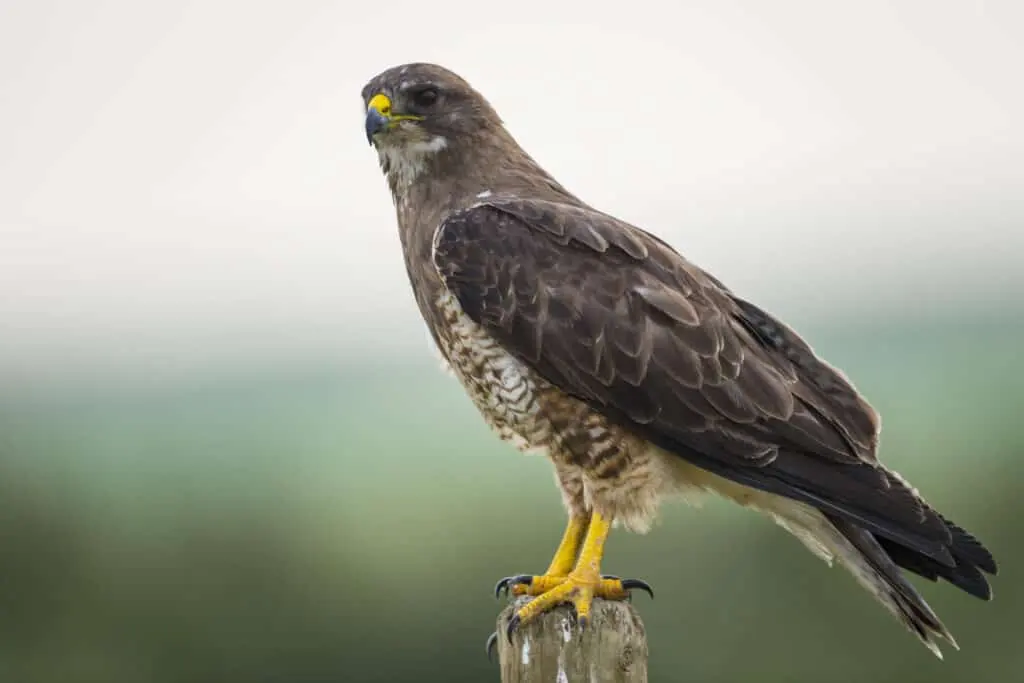
Common mistakes when identifying hawks
A frequent error among novice birders is confusing a kettle of hawks with a flock of other birds, such as crows or starlings. While hawks in a kettle move in a lazy, circular motion, other bird species often fly in tighter, more synchronized formations. Additionally, observers sometimes mistake distant soaring hawks for vultures. While both birds use thermals, vultures often hold their wings in a distinct "V" shape, whereas most hawks hold their wings relatively flat while soaring.
Another common mistake is assuming that all hawks are social. Unlike geese or starlings, which maintain complex social bonds, hawks are largely territorial and solitary. Their gathering in a kettle is a temporary, functional arrangement rather than a social one. Misinterpreting this behavior can lead to incorrect assumptions about the species' social hierarchy. Always remember that the kettle is a communal tool for migration, not a sign of a permanent social group or family unit.
Best tools for observing hawks
To get the most out of your hawk-watching experience, you need the right equipment. A pair of 8x42 or 10x42 binoculars is the industry standard, offering the perfect balance of magnification and field of view. These specifications allow you to track fast-moving birds while maintaining a bright, clear image, even in the varying light conditions often found during migration.
In addition to optics, consider the following items for a successful outing:
- A field guide specific to your region to help identify species quickly.
- A notebook or digital app to record the time, location, and number of birds.
- Weather-appropriate clothing, as hawk watching often involves standing still for long periods in exposed areas.
- A comfortable chair and a thermos of water to stay hydrated and alert.
By combining these tools with a basic understanding of hawk behavior, you can transform a casual walk into a productive scientific observation session. Always prioritize the birds' comfort by keeping a respectful distance and avoiding loud noises that might disturb their natural flight patterns during these critical energy-saving maneuvers.
Key facts
- A group of hawks is most commonly referred to as a "cast" or a "kettle."
- The term "kettle" describes hawks circling high in the sky, often using thermal currents to gain altitude.
- "Cast" is a traditional term, originally used in falconry to describe two hawks released at the same time.
- You may also hear a group of hawks referred to as a "boil" or a "knot," though these are less common.
- Hawks are generally solitary birds and do not live in social flocks like geese or starlings.
- When you see many hawks together, it is usually during migration or when they are congregating near a food source.
The bottom line
While hawks are solitary predators by nature, they are frequently seen in groups during migration or when utilizing thermal air currents. The most accurate collective nouns for these birds are a "kettle" or a "cast." Understanding these terms helps birdwatchers communicate effectively, but it is important to remember that these gatherings are temporary environmental phenomena rather than social structures found in other avian species.
People also ask
Why do hawks circle in groups?
Hawks circle in groups to utilize thermal updrafts of warm air. This allows them to gain significant altitude without expending much energy, which is essential during long-distance migration.
Is it common to see a large group of hawks?
While hawks are solitary, they can appear in large groups during seasonal migrations. At specific geographic bottlenecks, thousands of hawks may pass through an area in a single day.
What is the difference between a hawk and a falcon?
Hawks generally have broader, rounded wings and a soaring flight style, while falcons have pointed, tapered wings designed for high-speed flight. They belong to different taxonomic families.
Do hawks hunt in packs?
No, hawks do not hunt in packs. They are independent predators that rely on their own keen eyesight and talons to secure prey, such as rodents or small birds.
How can I identify a hawk in flight?
Observe the wing shape, tail length, and flight pattern. Broad wings and a fanned tail are typical of buteos, while shorter, rounded wings are characteristic of accipiters.
What is the best time of year to see groups of hawks?
The best time to observe groups of hawks is during their migration periods, which typically occur in the spring and autumn months. Many birding organizations track these movements annually.
This answer was created with the help of AI research tools and reference sources. Spotted an error? Let us know — we correct mistakes quickly. See our editorial policy.