What is the Big Dipper?
Short answer
The Big Dipper is a prominent pattern of seven bright stars located in the northern sky. It is not a formal constellation but an asterism within the larger constellation Ursa Major, the Great Bear. Often used for navigation, it serves as a reliable guide for locating the North Star, Polaris.
On this page
What is the Big Dipper made of?
The Big Dipper consists of seven primary stars that form the familiar ladle shape. These stars are named Dubhe, Merak, Phecda, Megrez, Alioth, Mizar, and Alkaid. While they appear to be clustered together from our perspective on Earth, they are actually located at vastly different distances from our solar system. Five of these stars belong to the Ursa Major Moving Group, a collection of stars that share a common origin and move through space together.
The stars vary significantly in their physical characteristics and brightness. For example, Alioth is the brightest star in the pattern, while Dubhe and Merak are the two stars that form the outer edge of the bowl. Because these stars are at different depths in space, the shape of the Big Dipper would look completely different if viewed from another star system. It is a unique perspective limited to our specific vantage point in the Milky Way galaxy.
How to find the Big Dipper in the sky
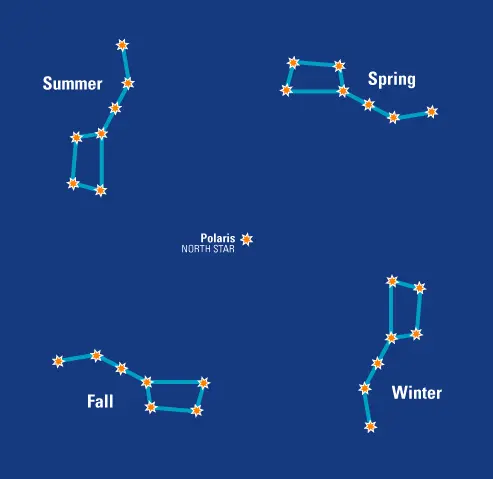
Locating the Big Dipper is a fundamental skill for amateur astronomers. Because it is circumpolar for most observers in the Northern Hemisphere, it never sets below the horizon and remains visible throughout the year. The best way to find it is to look toward the northern sky during the evening hours. Depending on the season, the orientation of the "ladle" will rotate, sometimes appearing upright and other times appearing upside down.
If you are having trouble spotting it, follow these steps to orient yourself:
- Identify the brightest star in the northern sky, which is Polaris, or the North Star.
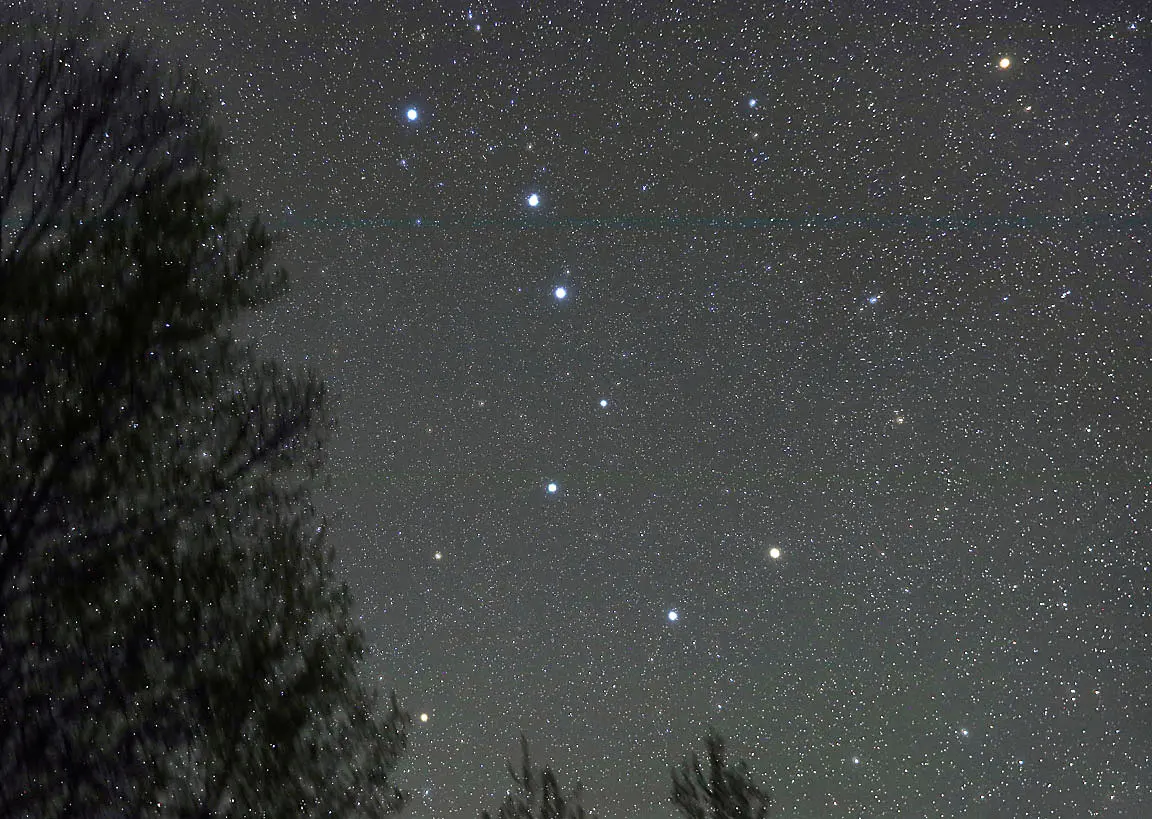
- Look for a large, bright group of seven stars that resemble a kitchen ladle or a wagon.
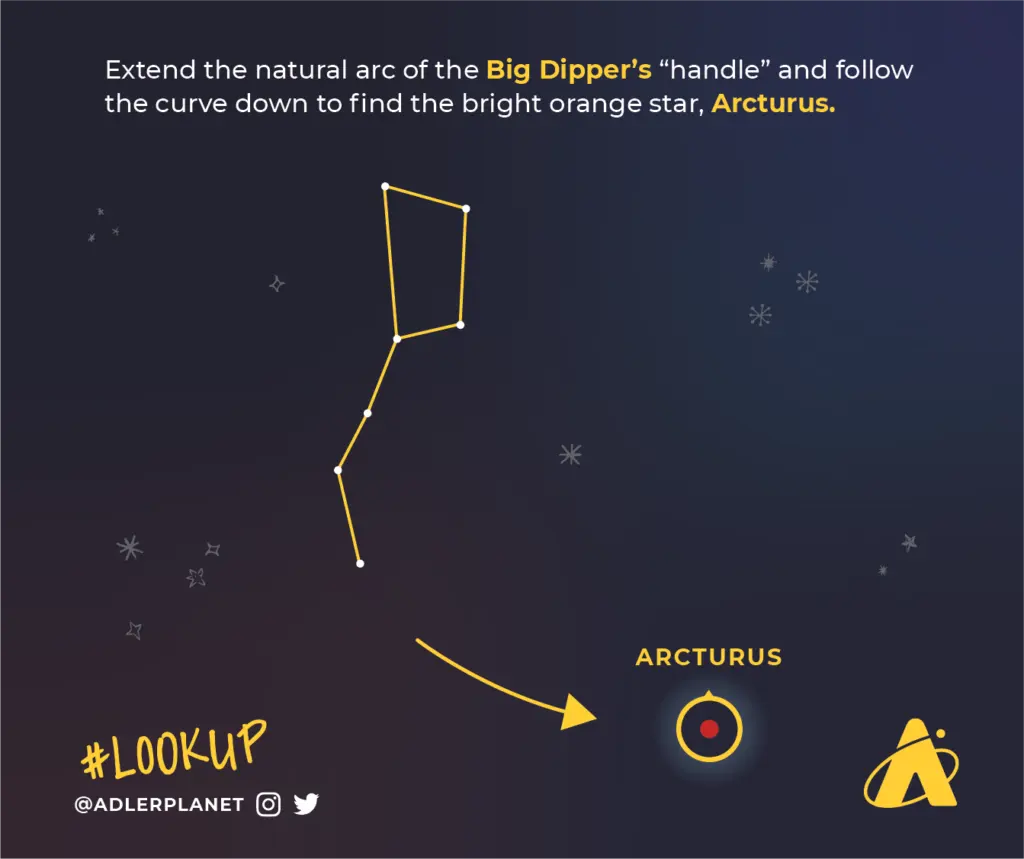
- Use the two stars at the outer edge of the bowl, Merak and Dubhe, to draw an imaginary line upward.
- Extend that line about five times the distance between those two stars to land directly on Polaris.
Why is it called an asterism?
Many people mistakenly refer to the Big Dipper as a constellation, but astronomers classify it as an asterism. A constellation is one of 88 officially recognized regions of the celestial sphere, defined by the International Astronomical Union. Ursa Major is the official constellation, covering a large patch of the sky that includes the seven stars of the Big Dipper along with many other fainter stars. An asterism is simply a recognizable pattern of stars that does not constitute a full constellation.
This distinction is important because it helps astronomers categorize the night sky more effectively. While the Big Dipper is the most famous asterism, there are many others, such as the Summer Triangle or the Teapot in Sagittarius. By focusing on these smaller, recognizable shapes, observers can learn to navigate the sky more quickly before attempting to identify the more complex and expansive official constellations that surround them.
Best time of year to see it
The Big Dipper is visible year-round in the Northern Hemisphere, but its position in the sky changes with the seasons. In the spring, the Big Dipper is high overhead during the evening, making it very easy to spot without obstructions like trees or buildings. During the autumn months, it sits lower toward the northern horizon, which can make it more difficult to see if you are in a city with significant light pollution or mountainous terrain.
To get the best view, follow these practical tips for successful observation:
- Find a location away from bright city lights to allow your eyes to adjust to the darkness.
- Check your local weather forecast for clear, cloudless nights.
- Bring a red-light flashlight to read star charts, as this preserves your night vision better than white light.
- Allow at least 20 minutes for your eyes to fully adapt to the dark before scanning the horizon.
Common mistakes when observing the Big Dipper
One of the most frequent errors beginners make is assuming the Big Dipper is always in the same place. Because the Earth rotates on its axis and orbits the Sun, the orientation of the Big Dipper changes throughout the night and the year. You might look for a "ladle" and find a "wagon" tilted on its side, which can cause confusion. Always look for the pattern of the seven stars rather than a specific orientation or angle.
Another common mistake is confusing the Big Dipper with the Little Dipper. The Little Dipper is much fainter and harder to see, containing the North Star at the tip of its handle. People often expect the Little Dipper to be a mirror image of the Big Dipper, but it is smaller and its handle curves in the opposite direction. By focusing on the bright, distinct stars of the Big Dipper first, you can use them as a reliable anchor to locate the more elusive and dimmer stars of the Little Dipper.
Key facts
- The Big Dipper is an asterism, a recognizable pattern of stars, rather than a formal constellation.
- It consists of seven bright stars located within the larger constellation of Ursa Major, the Great Bear.
- The two stars at the end of the "bowl" are known as the Pointers because they align with Polaris, the North Star.
- It is circumpolar for most of the Northern Hemisphere, meaning it never sets below the horizon and is visible year-round.
- The stars in the Big Dipper are not physically close to each other; they are located at varying distances from Earth.
- To find the North Star, draw an imaginary line from the star Merak through Dubhe and extend it five times the distance.
The bottom line
The Big Dipper serves as a vital navigational tool and an accessible entry point for amateur astronomy. By identifying its iconic bowl and handle, observers can easily locate Polaris and orient themselves within the night sky. While it is merely a small portion of the Great Bear, its consistent visibility and clear shape make it the most reliable landmark for anyone beginning their journey into stargazing.
People also ask
Is the Big Dipper a constellation?
No, the Big Dipper is an asterism. It is a prominent grouping of stars that is part of the larger official constellation Ursa Major.
Why do the stars in the Big Dipper look like they are moving?
The stars appear to move across the sky throughout the night due to Earth's rotation. Over thousands of years, the stars also undergo "proper motion," meaning their actual positions in space change slowly.
Are all the stars in the Big Dipper the same age?
No, the stars have different origins and ages. Five of the seven stars belong to the Ursa Major Moving Group, sharing a common origin, but the others are unrelated.
Can you see the Big Dipper from the Southern Hemisphere?
It is generally not visible from most of the Southern Hemisphere. Because of its location in the northern sky, it remains below the horizon for observers south of the tropics.
What is the most common mistake when looking for the Big Dipper?
People often mistake the handle for the bowl or fail to account for the season. The orientation of the Dipper changes significantly throughout the year, sometimes appearing upside down or standing on its handle.
How far away are the stars in the Big Dipper?
The stars range from approximately 58 to 124 light-years away from Earth. Because they are at such different depths, the pattern is unique to our specific vantage point in the galaxy.
This answer was created with the help of AI research tools and reference sources. Spotted an error? Let us know — we correct mistakes quickly. See our editorial policy.