Where do gorillas live?
Short answer
Gorillas live exclusively in the tropical forests of equatorial Africa. They are divided into two distinct species: the western gorilla, found in low-lying swampy forests of western central Africa, and the eastern gorilla, which inhabits the high-altitude mountainous regions and dense forests of the eastern Democratic Republic of the Congo, Rwanda, and Uganda.

On this page
Where do gorillas live in the wild?
Gorillas are endemic to the African continent, occupying a range that spans across ten countries. Their habitat is strictly confined to the equatorial belt, where the climate remains warm and humid throughout the year. These primates are highly specialized animals that rely on dense vegetation for both sustenance and shelter, making the tropical rainforests of Central Africa their primary stronghold.
The geographical distribution of gorillas is split by the Congo Basin, which acts as a natural barrier between the two main species. Western gorillas inhabit the lowland forests of countries such as Gabon, Cameroon, the Republic of the Congo, and Equatorial Guinea. In contrast, eastern gorillas are restricted to a much smaller, fragmented range further east. Their distribution is dictated by the availability of specific food sources, such as bamboo shoots, wild celery, and various fruits, which vary significantly based on elevation and local rainfall patterns.
Which countries have wild gorilla populations?
The distribution of gorillas is categorized by their specific species and subspecies. Understanding these locations is essential for conservation efforts, as each population faces unique environmental pressures and human-related threats. The following countries serve as the primary homes for remaining wild populations:
- Gabon: Holds the largest population of western lowland gorillas.
- Republic of the Congo: Features extensive swamp forests inhabited by western gorillas.
- Democratic Republic of the Congo: The only country that hosts both eastern lowland and mountain gorillas.
- Rwanda and Uganda: Famous for the high-altitude volcanic slopes where mountain gorillas reside.
- Cameroon, Central African Republic, Equatorial Guinea, Angola, and Nigeria: Host smaller, often isolated pockets of western gorilla populations.
Because gorillas are highly territorial and social, they do not migrate over long distances. They typically remain within a specific home range that provides enough forage to support their large body mass. Protecting these specific national borders is critical for the survival of the species.
How do mountain gorillas survive at high altitudes?
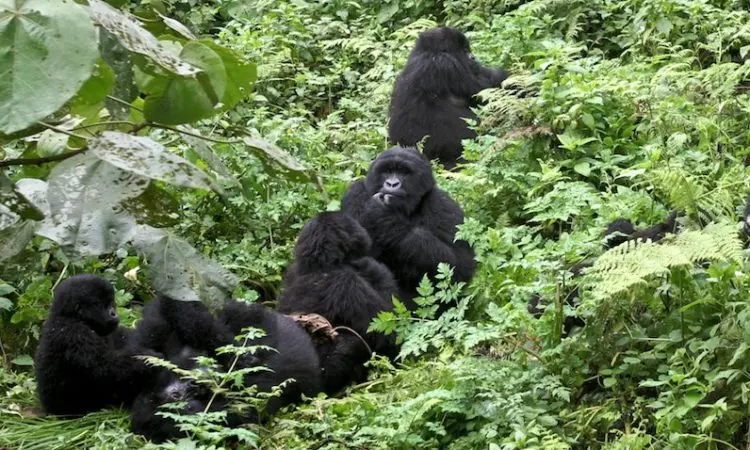
Mountain gorillas are a subspecies of the eastern gorilla that have adapted to life at elevations ranging from 8,000 to 13,000 feet. Unlike their lowland counterparts, these gorillas live in environments where temperatures can drop significantly, especially at night. To survive, they have developed thicker, longer fur that provides insulation against the cold mountain air.
Their diet also shifts to accommodate the high-altitude environment. They rely heavily on fibrous plants, roots, and bark, which are more readily available in the Afromontane forests than the fleshy fruits found in lower regions. Because they live in such a distinct niche, they are particularly vulnerable to habitat loss. If the forest canopy is cleared, the microclimate changes, making it difficult for the gorillas to maintain their body temperature and find adequate nutrition. This makes the protection of high-altitude volcanic ranges, such as the Virunga Mountains, a top priority for international wildlife organizations.
Common mistakes when looking for gorillas
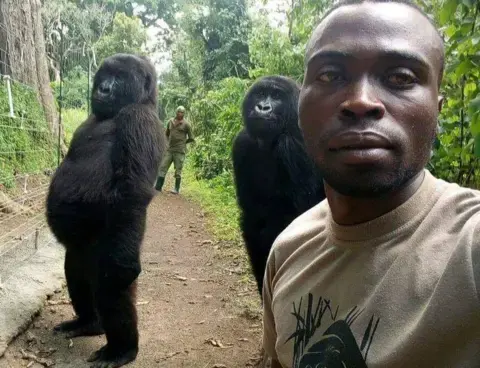
Many travelers attempt to locate gorillas in the wild without proper guidance or preparation. Attempting to track gorillas independently is a major mistake that risks both the safety of the human and the health of the animals. Gorillas are susceptible to human respiratory illnesses, and unmonitored contact can lead to fatal disease outbreaks within a troop.
- Always book a permit through an official government wildlife authority months in advance.
- Hire a certified local guide who understands gorilla behavior and forest safety.
- Maintain a distance of at least 23 feet (7 meters) at all times to prevent stress and disease transmission.
- Avoid wearing bright colors or using flash photography, as these can startle the silverback and trigger defensive behavior.
- Never attempt to feed or touch the gorillas, as this disrupts their natural social structure and risks human injury.
Following these rules ensures that your presence does not negatively impact the daily life of the troop. Professional guides are trained to read the body language of the silverback, ensuring that the group remains calm during your visit.
Why do gorillas move between forest patches?
Gorillas are essentially nomadic within their home range, moving slowly through the forest to feed. They do not have a permanent nest; instead, they construct new sleeping platforms out of vegetation every single evening. This constant movement is a survival strategy that prevents them from over-consuming the resources in any one specific area, allowing the forest vegetation to regenerate behind them.
However, human encroachment and deforestation have forced many populations into smaller, isolated fragments of forest. When these patches become too small, the gorillas are unable to move freely, which leads to inbreeding and increased competition for food. Conservationists are currently working to establish biological corridors—strips of protected land that connect isolated forest patches. By facilitating movement between these areas, these corridors allow for genetic diversity and ensure that the gorillas have access to a wider variety of plants, which is vital for their long-term health and population stability.
Key facts
- Gorillas live exclusively in the tropical forests of equatorial Africa, divided into two distinct species: the western gorilla and the eastern gorilla.
- Western gorillas inhabit the lowland swamps and forests of countries like Gabon, Cameroon, and the Republic of the Congo.
- Eastern gorillas reside in the high-altitude mountain forests of Rwanda, Uganda, and the Democratic Republic of the Congo.
- Mountain gorillas, a subspecies of the eastern gorilla, are found at elevations ranging from 8,000 to 13,000 feet.
- These primates require dense vegetation and fruit-rich areas, often traveling several miles per day to forage for food.
- To see wild gorillas, you must obtain a trekking permit in advance, as visitor numbers are strictly limited to protect the animals' health and habitat.
The bottom line
Gorillas are specialized inhabitants of Africa’s dense tropical forests, split between the lowland regions of the west and the high-altitude mountains of the east. Because they rely on specific forest ecosystems for food and shelter, their survival is inextricably linked to habitat preservation. If you plan to visit them, always book through official channels to ensure your presence supports conservation efforts rather than harming these endangered animals.
People also ask
Are gorillas found in zoos outside of Africa?
Yes, many zoos worldwide house gorillas, primarily the western lowland subspecies. These facilities contribute to conservation education and research efforts aimed at protecting the species in the wild.
Do gorillas live in the savanna?
No, gorillas are forest-dwelling animals that require thick canopy cover for protection and a constant supply of leaves, stems, and fruit. They are not adapted to the open grasslands typical of the African savanna.
How much territory does a gorilla troop need?
A gorilla home range typically spans between 5 and 15 square miles depending on food availability. Troops move slowly through this area, rarely defending strict boundaries against other groups.
Can I hike to see gorillas without a guide?
No, trekking to see wild gorillas is only permitted with an authorized local guide. This rule is essential for ensuring human safety and preventing the transmission of respiratory illnesses to the gorillas.
What is the biggest threat to gorilla habitats?
Habitat loss due to logging, mining, and agricultural expansion is the primary threat to gorillas. Poaching and the spread of infectious diseases also pose significant risks to their survival.
Do gorillas migrate seasonally?
Gorillas do not migrate in the traditional sense, but they do shift their range based on the seasonal ripening of specific fruits. They move within their established forest territory to follow these food sources.
This answer was created with the help of AI research tools and reference sources. Spotted an error? Let us know — we correct mistakes quickly. See our editorial policy.