Are gorillas dangerous to humans?
Short answer
Gorillas are not naturally aggressive toward humans, but they are powerful wild animals that can be dangerous if they feel threatened. While unprovoked attacks are extremely rare, their immense physical strength means a defensive charge can cause severe injury. Respecting their space and following expert safety protocols is essential for peaceful coexistence.
On this page
Are gorillas naturally aggressive?
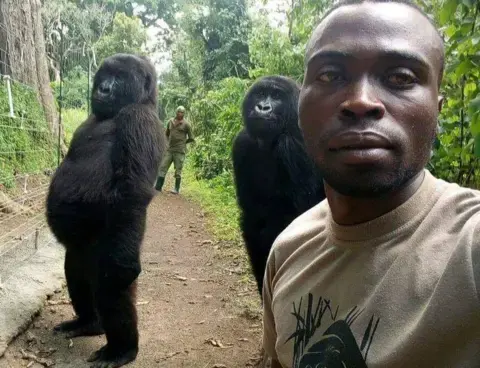
Gorillas are generally peaceful, herbivorous primates that prefer to avoid conflict rather than seek it out. They live in cohesive social groups led by a dominant silverback, whose primary role is to protect his family from predators or rival males. When humans encounter gorillas, the animals usually view them as neutral observers rather than threats, provided the humans behave calmly and respectfully.
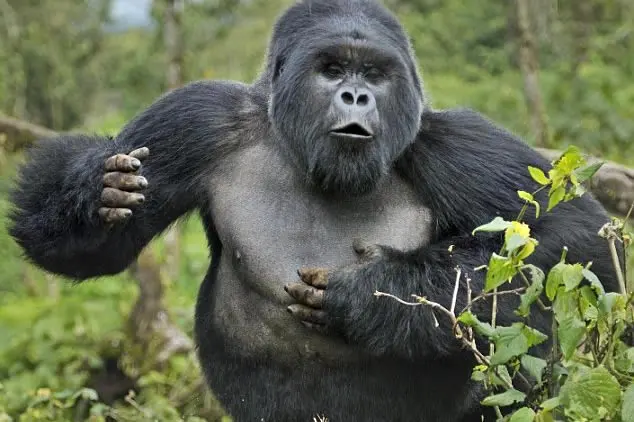
Most aggressive displays by gorillas are defensive posturing rather than an intent to harm. A silverback may beat his chest, hoot, or charge toward an intruder to intimidate them and encourage them to leave the area. If the intruder remains still and submissive, the gorilla will typically stop the display and retreat. Serious attacks on humans are almost exclusively the result of humans encroaching too closely or startling an animal that is already stressed or protecting infants.
How to behave during a gorilla encounter
If you are trekking in the wild, such as in the forests of Rwanda, Uganda, or the Democratic Republic of the Congo, you must follow strict guidelines. These rules are designed to minimize the stress placed on the animals and ensure the safety of both parties. Professional guides are trained to read the body language of the troop and will instruct you on how to position yourself.
- Maintain a minimum distance of at least 7 meters (about 23 feet) from the gorillas at all times.
- Keep your voice at a low whisper to avoid startling the animals or sounding like a rival.
- Avoid making direct, prolonged eye contact, which gorillas perceive as a challenge or an act of aggression.
- Move slowly and deliberately; sudden movements can trigger a defensive reaction from a silverback.
- Never attempt to touch or feed a gorilla, as this disrupts their natural behavior and risks disease transmission.
Why do gorillas charge at humans?
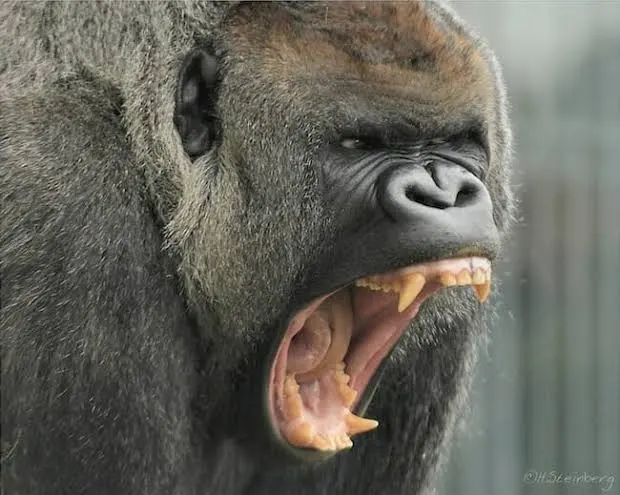
A charge is a high-intensity communication tool used by gorillas to establish boundaries. When a silverback feels that his troop is being crowded or that a specific individual is acting in a way that threatens the group’s security, he will launch a mock charge. This involves rushing toward the person at high speed, often stopping just feet away to demonstrate his power.
The goal of this behavior is to force the human to retreat or show submission. If the human runs away, the gorilla’s predatory or defensive instincts may be triggered, potentially leading to a chase or an attack. By standing your ground, staying low to the ground, and avoiding eye contact, you signal that you are not a threat. Most charges are bluffs, and the gorilla will turn away once he feels he has successfully intimidated the intruder.
Common mistakes when visiting gorillas
Many incidents occur because visitors underestimate the importance of following instructions or fail to prepare for the reality of a wild encounter. One of the most frequent errors is the failure to heed the guide's warnings regarding the distance between the group and the gorillas. When visitors push for a better photograph, they inadvertently shrink the safety margin, forcing the silverback to defend his family.
- Ignoring the guide's instructions regarding movement or positioning.
- Attempting to use flash photography, which can startle or irritate the animals.
- Failing to disclose illnesses, such as colds or flu, which can be fatal to gorillas.
- Wearing bright or reflective clothing that may distract or agitate the troop.
- Making loud noises or sudden gestures when a gorilla approaches or moves past you.
What to do if a gorilla attacks
While attacks are statistically rare, it is important to know how to minimize injury if a situation escalates. If a gorilla makes physical contact or begins a true attack, your primary objective is to make yourself appear as non-threatening as possible. Do not fight back, as you cannot win a physical contest against an animal that can weigh over 400 pounds and possesses immense muscular density.
- Drop to the ground immediately and curl into a fetal position to protect your head, neck, and vital organs.
- Keep your hands clasped behind your head or neck to provide a shield against bites or strikes.
- Remain silent and do not scream or vocalize, as this may be interpreted as a sign of continued defiance.
- Wait for the gorilla to lose interest and move away; they rarely continue an attack once they feel the threat has been neutralized.
- Once the animal has moved a safe distance away, crawl away slowly without standing up until you are well out of sight.
Key facts
- Gorillas are generally peaceful, herbivorous animals that only act aggressively when they feel threatened or provoked.
- A male silverback gorilla can weigh up to 400 pounds and possesses immense physical strength, making them formidable if they choose to attack.
- Most human-gorilla encounters occur during regulated wildlife trekking tours where gorillas are habituated to human presence.
- If a gorilla charges, the standard safety protocol is to crouch low, avoid direct eye contact, and remain completely silent.
- Running away from a gorilla is dangerous because it can trigger their predatory or territorial instinct to pursue.
- Never visit gorillas if you are sick, as their lack of immunity to human respiratory viruses can be fatal to them.
The bottom line
While gorillas are incredibly powerful, they are not inherently dangerous to humans. They are shy, gentle creatures that prefer to avoid conflict. Most negative encounters are the result of humans failing to respect personal space or ignoring safety protocols during wildlife treks. By maintaining a respectful distance, following expert guidance, and remaining calm, you can safely observe these magnificent primates in their natural forest habitats.
People also ask
Do gorillas hunt humans for food?
No, gorillas are herbivores and do not hunt humans. They consume a diet consisting primarily of leaves, stems, bamboo shoots, and fruits.
What is a mock charge?
A mock charge is a display where a gorilla rushes toward an intruder and stops abruptly to intimidate them. It is a bluff intended to warn the person to back away rather than an attempt to cause physical harm.
How should I behave when observing gorillas in the wild?
Maintain a distance of at least 23 feet (7 meters) at all times and move slowly. Keep your voice at a whisper and follow all instructions provided by your professional guide.
Are gorillas more aggressive than chimpanzees?
Gorillas are generally more stable and less prone to unprovoked aggression than chimpanzees. Chimpanzees are highly social and can be more volatile in their interactions with humans and other animals.
Can I take photos of gorillas?
Yes, photography is permitted, but you must turn off your camera flash. Bright flashes can startle or irritate the animals, potentially leading to defensive behavior.
What happens if a gorilla touches me?
You must remain still and avoid touching the gorilla back. If a gorilla approaches you, slowly back away or lower your head to show submission, as this signals that you are not a threat.
This answer was created with the help of AI research tools and reference sources. Spotted an error? Let us know — we correct mistakes quickly. See our editorial policy.