Are grizzly bears dangerous to humans?
Short answer
Grizzly bears are inherently dangerous to humans due to their size, speed, and defensive instincts. While unprovoked attacks are statistically rare, these apex predators can inflict severe injuries when surprised, protecting cubs, or defending a food source. Respecting their space and following safety protocols are essential for minimizing risks in bear country.
On this page
Why are grizzly bears dangerous to humans?
Grizzly bears (Ursus arctos horribilis) are powerful animals capable of reaching speeds up to 35 miles per hour and weighing between 400 and 800 pounds. Their danger stems primarily from their defensive nature rather than predatory intent. When a grizzly perceives a threat, its instinct is to neutralize the source of that stress, which can lead to rapid, aggressive charges.
Most attacks occur because a bear is startled at close range or feels its offspring are in jeopardy. Unlike black bears, which may climb trees to escape, grizzlies are more likely to stand their ground or attack to defend their territory. Their massive claws and powerful bite force are designed for digging and foraging, but they can easily crush bone or cause catastrophic lacerations if used against a human.
How to avoid grizzly bear encounters
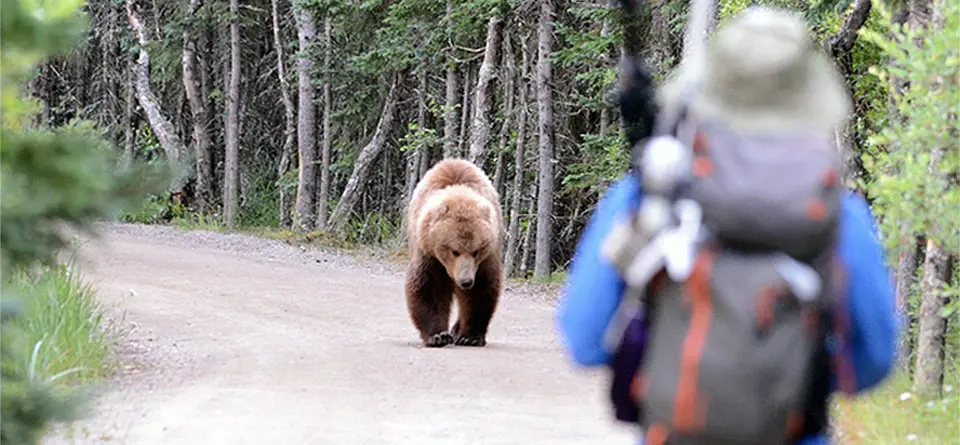
Preventing an encounter is the most effective safety strategy. When hiking in grizzly habitat, such as the Greater Yellowstone Ecosystem or Glacier National Park, you must make your presence known to avoid surprising a bear. Bears generally prefer to avoid humans and will move away if they hear you approaching, provided they have enough time to react.
- Make noise by talking, singing, or clapping, especially near rushing water or dense brush.
- Hike in groups of three or more people, as larger groups are less likely to be approached.
- Keep a clean campsite by storing all food, trash, and scented items in bear-resistant containers.
- Watch for signs of bear activity, such as fresh tracks, scat, or overturned logs.
If you see a bear from a distance, do not approach it. Give the animal plenty of space and detour around it if possible. Never attempt to feed a bear, as this habituates them to humans and significantly increases the risk of future aggressive interactions.
Best safety gear for grizzly country
Carrying bear spray is the single most effective deterrent against a grizzly attack. Bear spray contains capsaicin, a derivative of hot peppers, which creates a cloud that irritates the bear’s eyes, nose, and lungs. It is non-lethal and often stops an attack before physical contact occurs. You should carry it in an easily accessible holster, not buried inside your backpack.
- Use EPA-approved bear spray canisters that hold at least 7.9 ounces.
- Practice removing the safety clip so you can deploy it in under two seconds.
- Ensure the canister has a range of at least 20 to 30 feet.
- Check the expiration date annually and replace the canister if it has been discharged or is old.
While some people carry firearms, they are often ineffective in high-stress situations. Studies have shown that bear spray is statistically more successful at preventing injury than a firearm, as it is easier to aim and does not require the same level of precision during a charge.
What to do if a grizzly bear charges
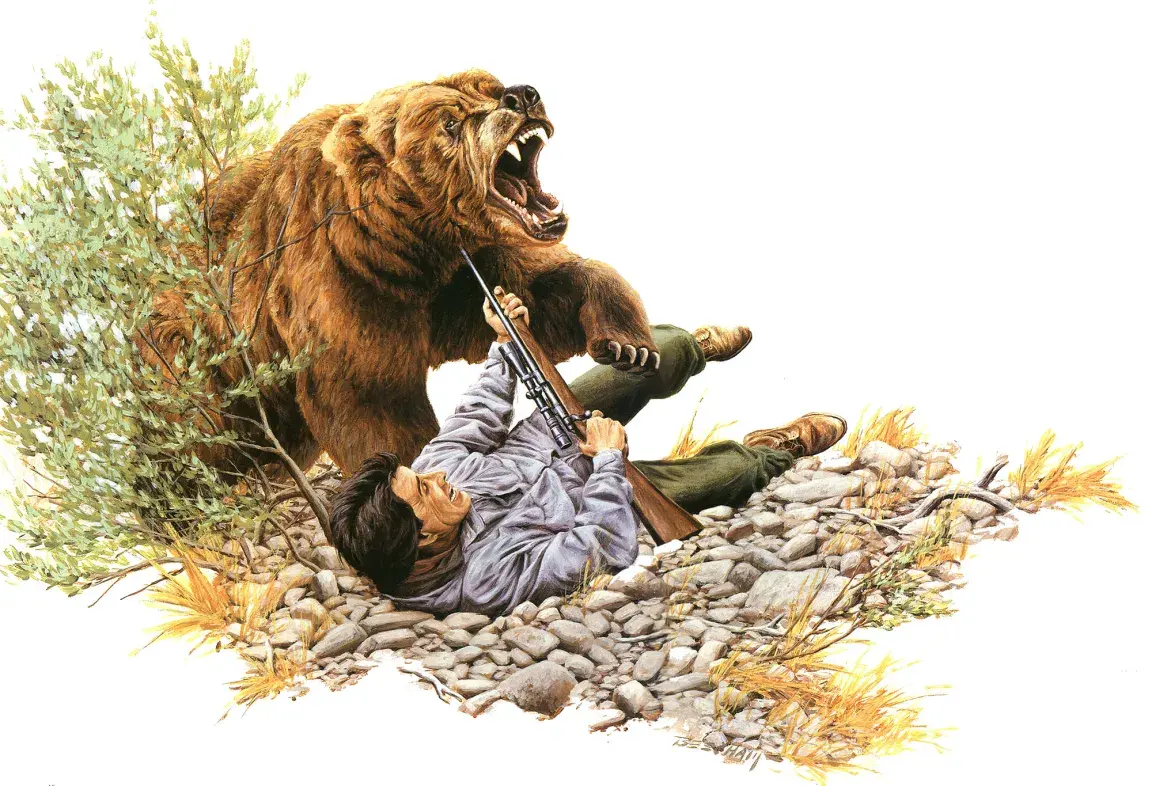
If a bear charges, your reaction depends on the bear's behavior. If the bear is charging in a defensive manner—often indicated by ears laid back, huffing, or jaw-popping—you must stand your ground. Do not run, as running can trigger the bear's predatory chase instinct, and you cannot outrun a grizzly.
- Stand still and slowly remove your bear spray from its holster.
- If the bear continues to charge, wait until it is within 30 to 60 feet before firing the spray in a downward arc.
- If the bear makes contact, drop to the ground and lie flat on your stomach.
- Protect your head and neck by clasping your hands behind your neck and spreading your elbows.
- Keep your pack on to provide a layer of protection for your back.
If the attack is defensive, the bear will likely stop once it perceives you are no longer a threat. Do not fight back during a defensive attack, as this will only escalate the bear's aggression. If the attack persists for several minutes or if the bear is stalking you, it may be a predatory attempt, in which case you should fight back with any available weapons.
Common mistakes when in bear country
One of the most frequent errors is failing to maintain situational awareness. Many hikers wear headphones or become distracted by conversation, missing the subtle auditory cues of a bear nearby. Another mistake is leaving food or scented toiletries—such as toothpaste or deodorant—in an unlocked tent. These items can attract a bear from miles away, leading to a dangerous encounter while you sleep.
Do not try to climb a tree to escape a grizzly. They are surprisingly agile and can climb faster than most humans. Additionally, do not attempt to run or drop your pack to distract the bear. Your pack serves as a vital shield for your vital organs during an attack. By staying alert, keeping your gear accessible, and understanding the nuances of bear behavior, you can safely enjoy the wilderness while respecting the grizzly’s role in its natural habitat.
Key facts
- Grizzly bears are apex predators that can weigh up to 800 pounds and reach speeds of 35 miles per hour.
- Most grizzly attacks occur when a bear is surprised at close range or is defending its cubs or a food source.
- Carrying EPA-approved bear spray and keeping it accessible on your belt is the most effective deterrent against an attack.
- Never run from a grizzly bear, as this can trigger their predatory chase instinct; instead, back away slowly while facing the animal.
- If a grizzly makes contact, drop to the ground and play dead by lying flat on your stomach with your hands clasped behind your neck.
- Keep a clean campsite by storing all food, trash, and scented items in bear-resistant containers at least 100 yards from your sleeping area.
The bottom line
While grizzly bears are powerful, dangerous animals, fatal encounters remain statistically rare for humans. By understanding their defensive nature and practicing proactive safety measures—such as carrying bear spray, hiking in groups, and securing food—you can significantly minimize risks. Respecting their space and remaining calm during an encounter are the most critical factors in ensuring both your safety and the continued protection of these iconic predators.
People also ask
Is it safe to climb a tree to escape a grizzly?
No, climbing a tree is ineffective because grizzly bears are excellent climbers. You will likely be safer staying on the ground and using bear spray if the animal approaches.
Should I play dead if a black bear attacks me?
No, you should fight back if a black bear attacks you, as they are generally less defensive than grizzlies. Playing dead is specifically recommended for grizzly or brown bear encounters.
Do grizzly bears hunt humans for food?
Predatory attacks are extremely rare, as humans are not a natural food source for grizzly bears. Most dangerous encounters are defensive reactions to perceived threats rather than hunting behavior.
How can I tell the difference between a grizzly and a black bear?
Look for the prominent shoulder hump and a dished, concave facial profile, which are distinct features of the grizzly. Black bears lack this hump and have a straighter facial profile.
Does making noise help prevent bear encounters?
Yes, talking, singing, or clapping while hiking helps alert bears to your presence. This prevents the "surprise factor" that often leads to defensive aggression from a bear.
Are grizzly bears more active at night?
Grizzly bears are primarily crepuscular, meaning they are most active during the dawn and dusk hours. However, they can be active at any time of day depending on food availability and human activity.
This answer was created with the help of AI research tools and reference sources. Spotted an error? Let us know — we correct mistakes quickly. See our editorial policy.