What is a group of zebras called?
Short answer
A group of zebras is most commonly called a dazzle. Other acceptable collective nouns include a zeal or a herd. While "herd" is the most functional term used in scientific and general contexts, "dazzle" is the specific term derived from the optical illusion created by their moving black-and-white stripes.
On this page
Why is a group of zebras called a dazzle?
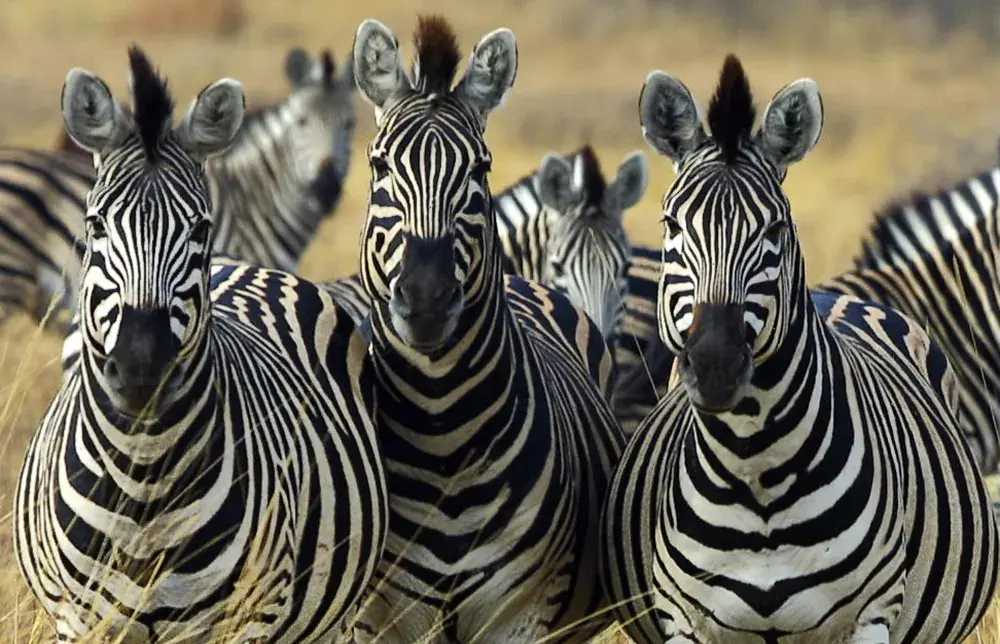
The term "dazzle" is a poetic reference to the visual effect created when a group of zebras runs together. As the animals move in a tight formation, their contrasting stripes blur and overlap, making it difficult for predators like lions or hyenas to track an individual target. This phenomenon is known as motion dazzle, which serves as a vital survival mechanism in the wild.
Beyond the descriptive nature of the term, "dazzle" has become the standard collective noun in literature and popular culture. While biologists typically prefer the more utilitarian term "herd" to describe these social groups, the word "dazzle" captures the unique evolutionary adaptation of the species. It highlights how their physical appearance is not merely for camouflage but functions as a dynamic defense strategy against threats during a high-speed flight.
How do zebras organize themselves in a herd?
Zebras are highly social animals that live in structured family groups. These groups are usually composed of one dominant stallion, several mares, and their offspring. This family unit remains stable over many years, with members grooming one another and working together to protect the young from predators.
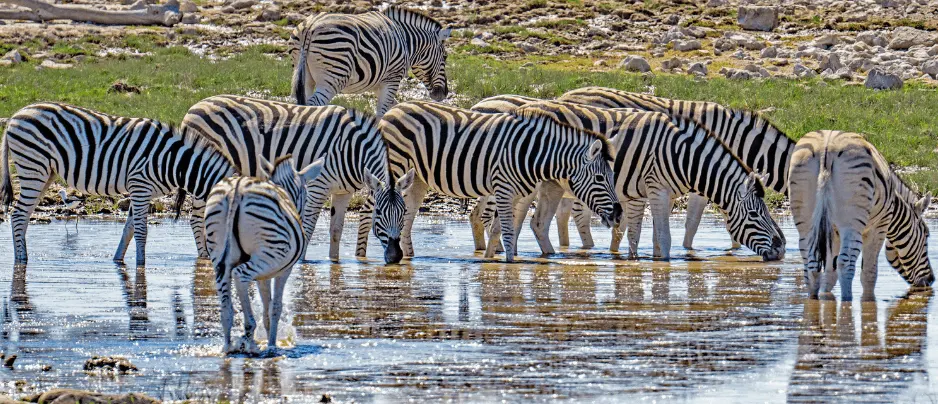
Larger aggregations, often called "super-herds," form when different family groups congregate during migration or at water holes. These massive gatherings provide increased protection, as more eyes are available to scan for danger. Social organization within these groups is maintained through a combination of vocalizations, such as barking or braying, and physical interactions like biting or nudging.
- Family units consist of a single stallion and multiple females.
- Bachelor groups are formed by young males waiting to challenge for a harem.
- Super-herds emerge during seasonal migrations to find better grazing grounds.
What are the differences between a dazzle, a zeal, and a herd?
The terminology used to describe zebra groups often depends on the context of the speaker. A "herd" is the most accurate scientific term, as it describes any large group of grazing animals living together. "Zeal" is an older, more archaic term that is rarely used in modern biology but remains a common entry in dictionaries and trivia collections.
"Dazzle" remains the most evocative term, specifically referencing the visual impact of their stripes. While these three terms are often used interchangeably, they carry different connotations:
- Herd: The standard, neutral term used by researchers and park rangers.
- Zeal: A historical term that implies a sense of energy or intense collective behavior.
- Dazzle: A descriptive term highlighting the optical confusion caused by the stripes.
Understanding these distinctions helps clarify how human language adapts to describe natural phenomena. While a scientist will always record a "herd" in their field notes, a nature writer might choose "dazzle" to better convey the visual experience of observing these animals in the African savanna.
Common mistakes when identifying zebra groups
One of the most frequent errors is assuming that all zebras belong to a single, permanent herd. In reality, the social structure is fluid, and individuals often move between smaller family groups and larger aggregations. Mistaking a temporary gathering at a watering hole for a permanent social unit is a common oversight for amateur wildlife observers.
Another mistake is failing to recognize the role of bachelor groups. These groups consist of young males that have not yet secured a harem of their own. Observers often overlook these bachelor pods, assuming that any group of zebras must be a family unit. It is also important to avoid anthropomorphizing their behavior; while they exhibit complex social bonds, their interactions are driven by survival instincts rather than human-like social constructs.
- Assuming all zebras in a group are related.
- Confusing a temporary gathering with a stable family harem.
- Misidentifying bachelor groups as family units.
- Overestimating the permanence of social bonds during migration.
How to observe zebras in the wild
If you are planning to view zebras in their natural habitat, such as the Serengeti or the Ngorongoro Crater, timing is essential. Zebras are most active during the early morning and late afternoon when temperatures are cooler. During the heat of the day, they often stand still in the shade to conserve energy, which makes them less likely to display the "dazzle" effect.
When approaching or observing a group, always maintain a respectful distance to avoid causing them stress. Sudden movements or loud noises can trigger a flight response, causing the entire group to scatter. By remaining quiet and using binoculars, you can observe their complex social dynamics, such as grooming sessions or the dominant stallion’s protective posturing, without interfering with their natural behavior.
- Research the best time of year for migration in your chosen location.
- Use high-quality binoculars to watch from a safe, non-intrusive distance.
- Remain stationary to allow the animals to become accustomed to your presence.
- Observe the interactions between the stallion and the mares to understand the group hierarchy.
Key facts
- A group of zebras is most commonly referred to as a dazzle.
- Other accepted collective nouns for zebras include a zeal or a herd.
- The term dazzle refers to the optical illusion created when a group of zebras runs together, making it difficult for predators to single out an individual.
- Zebras are highly social animals that live in stable family groups known as harems.
- A harem typically consists of one stallion, several mares, and their offspring.
- When observing zebras in the wild, avoid approaching them, as they can be aggressive and possess a powerful kick.
The bottom line
While you might hear zebras referred to as a herd, the specific collective noun for these striped equids is a dazzle. This term perfectly captures the visual confusion their patterns create for predators. Whether they are moving in small family harems or massive migratory groups, their social structure is essential for survival on the African savanna, providing both security and companionship in a challenging environment.
People also ask
Why do zebras live in groups?
Living in groups provides zebras with increased protection against predators like lions and hyenas. With more eyes on the lookout, the group can detect threats much faster than a solitary animal.
Do different zebra species form different types of groups?
Yes, plains and mountain zebras generally live in stable family harems. In contrast, Grevy’s zebras have a more fluid social structure where individuals move between groups more frequently.
How do zebras recognize each other in a herd?
Each zebra has a unique stripe pattern, much like a human fingerprint. They use these visual cues along with vocalizations and scent to identify family members within the dazzle.
Do zebras ever mix with other animals?
It is common to see zebras grazing alongside other herbivores like wildebeest, gazelles, and ostriches. These mixed-species herds share the benefit of collective vigilance against predators.
How large can a group of zebras get?
While family harems are small, several harems often congregate to form much larger herds. During seasonal migrations, these groups can number in the hundreds or even thousands.
Is it dangerous to get close to a dazzle of zebras?
Yes, zebras are wild animals and can be unpredictable. They have strong jaws for biting and powerful hooves that can cause serious injury if they feel threatened.
This answer was created with the help of AI research tools and reference sources. Spotted an error? Let us know — we correct mistakes quickly. See our editorial policy.